A frail French physicist sliced a giant lens into rings of glass, and his Fresnel lens turned feeble lighthouse lamps into beams that could be seen 20 miles out to sea
For centuries, a lighthouse was only as good as its light, and that light was pitifully weak. Then one clever idea about how to shape glass changed everything. The Fresnel lens took a flickering lamp and hurled its glow clear over the horizon.
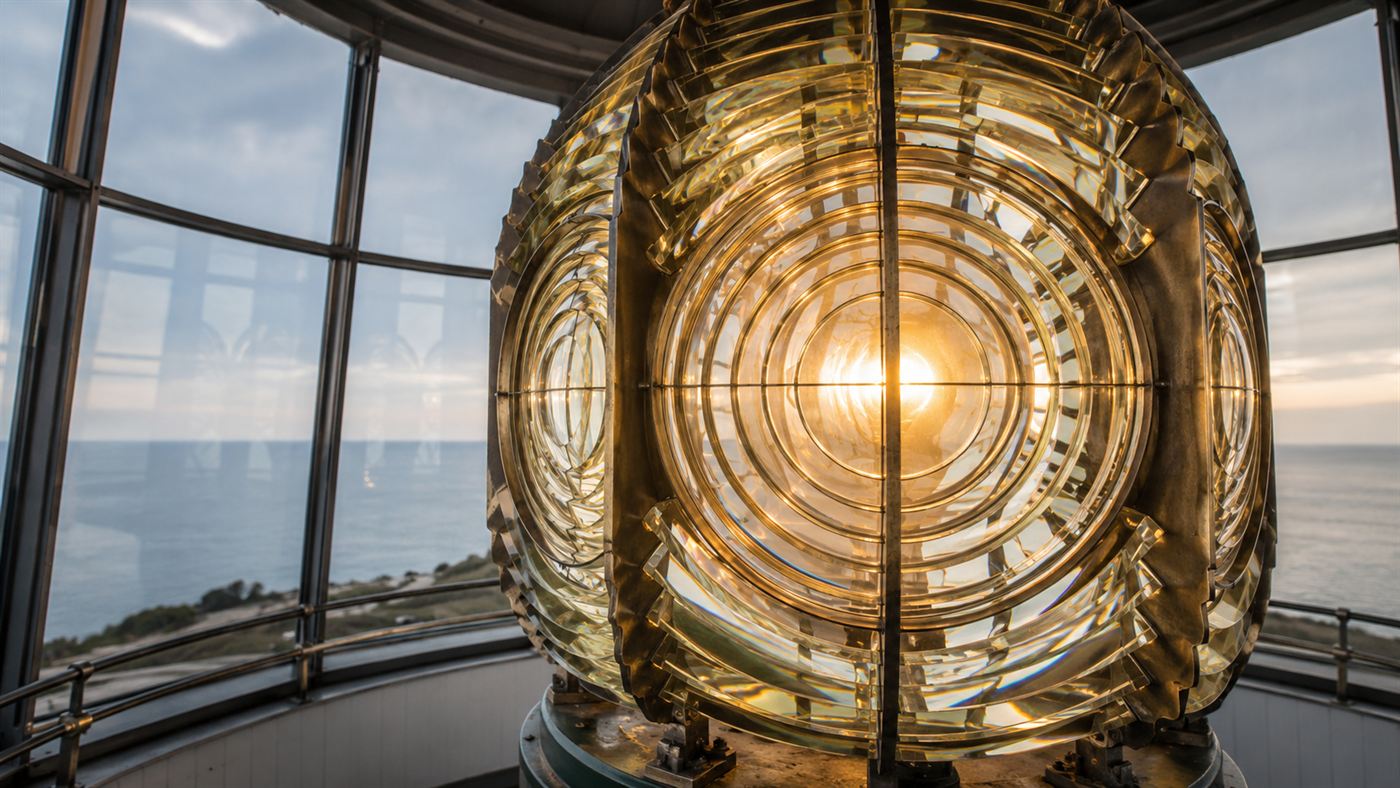
A Fresnel lens is a beehive of glass rings, each bending light toward one beam. Illustration: Watts & Wild.
We rarely think about lighthouses as feats of physics, but that is exactly what they are. A lighthouse has one job, to be seen from as far away as possible, and for most of history it failed at that job miserably. A fire or a lamp on a tower simply throws its light out in every direction, wasting almost all of it on the empty sky and sea, leaving only a faint glimmer for the ships that actually need it.
The breakthrough that finally solved this was not a brighter flame but a smarter piece of glass, the Fresnel lens. It is one of those inventions so elegant that once you understand it, it seems obvious, and yet it took a brilliant and short-lived physicist to see it. His glass rings would go on to guard the world's coasts for a century and a half.
The short version: Around 1822, the French physicist Augustin Fresnel invented a lens for lighthouses made of concentric rings of glass prisms. By keeping only the parts of a lens that bend light and discarding the rest, he built a large, thin lens that gathered a lamp's scattered light into a powerful beam visible more than 20 miles out. It became the world standard, though Fresnel died at 39, barely seeing its impact.
A light that scattered and was lost
To appreciate the Fresnel lens, you have to understand how bad the alternative was. In the early 1800s, the best lighthouses used lamps backed by polished metal reflectors, trying to bounce the light out to sea. It was a losing battle. The systems were inefficient, throwing away the great majority of the light they produced, and the resulting beam was weak and easily lost in haze or distance.
Ships paid the price in wrecks. A coastline studded with feeble lights was still a deadly place on a dark or stormy night, and the sea took a steady toll of vessels and lives. What was needed was a way to catch nearly all of a lamp's light and bend it into a single, concentrated, far-reaching beam. The problem was that an ordinary lens big enough to do the job would be a monstrous, useless block of glass.
Slicing a lens into rings
Here was the genius of Fresnel's insight. A lens bends light only at its curved surfaces. All the thick glass in the middle does nothing but add weight and absorb light. So Fresnel asked a radical question, what if you threw that useless bulk away and kept only the working surfaces?
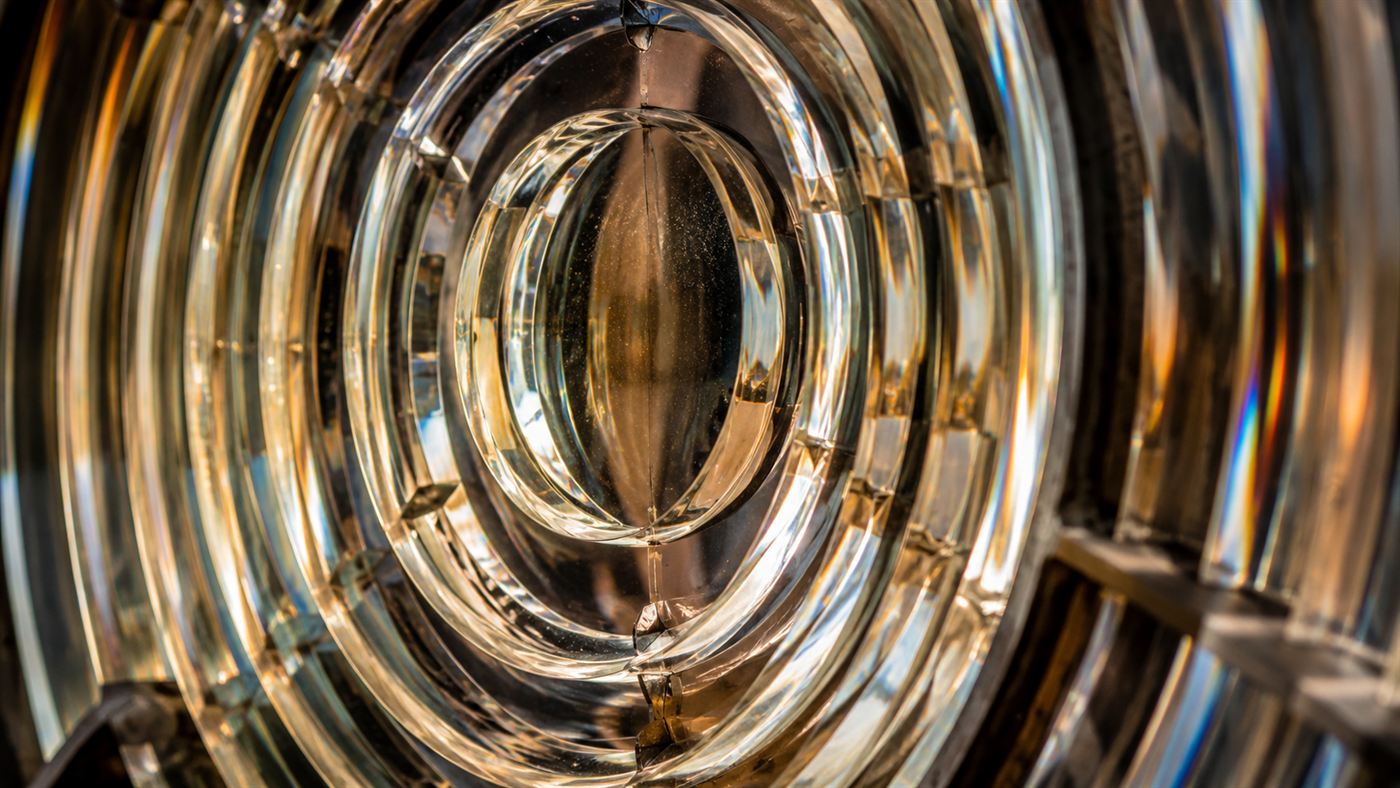
The answer was to collapse a huge lens into a set of concentric rings, each one a carefully angled prism, nested together like ripples on a pond. Every ring bends the light toward the same focus, so the whole assembly acts like a single enormous lens, yet it is relatively thin and light. It was a way to build a lens far larger and more powerful than anything that could be cast as a solid piece of glass, and it changed what a lighthouse could do.
The Fresnel lens reaches the horizon
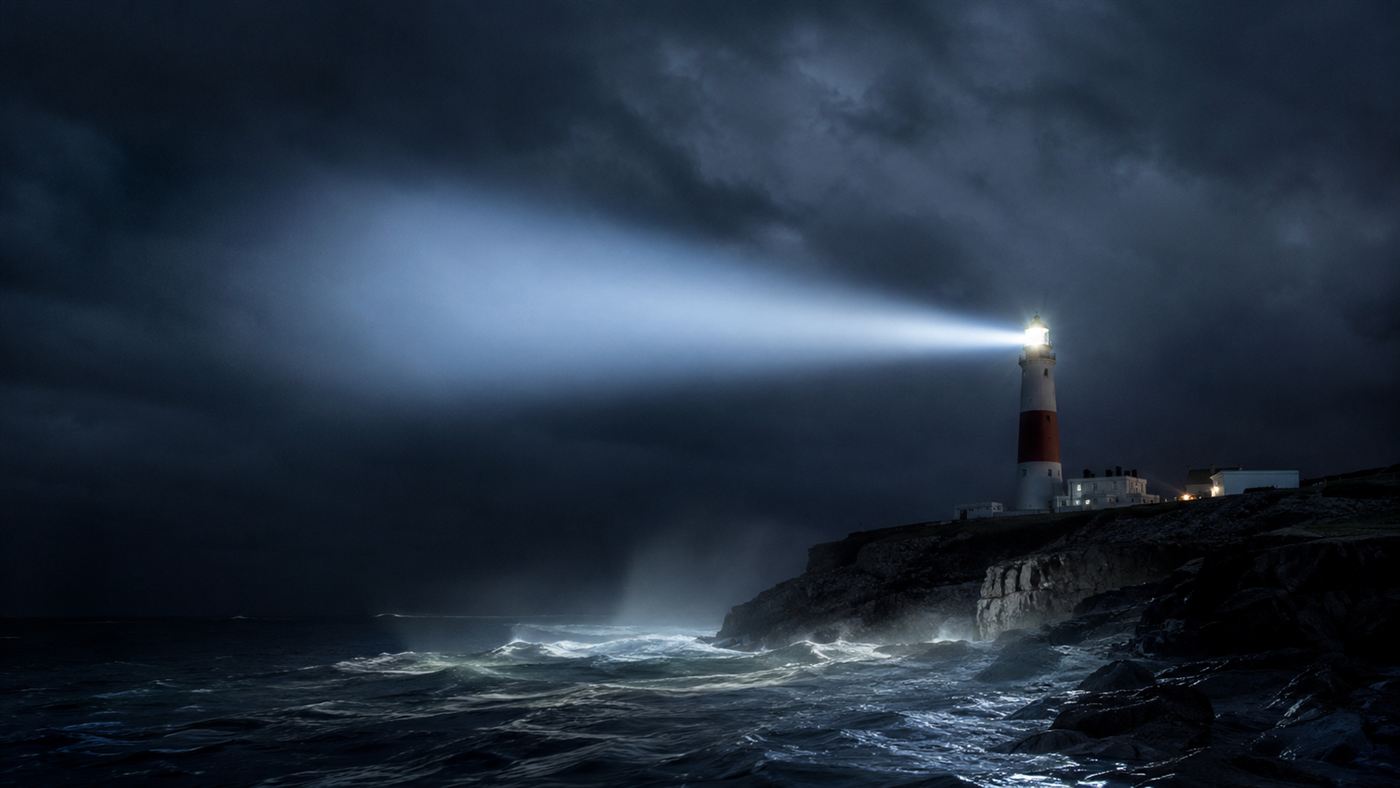
The results were spectacular from the very first tests. As IEEE Spectrum recounts, a Fresnel lens captured about 83% of a lamp's light, where the old reflector systems lost around 83% of theirs, an almost perfect reversal of fortune. In an 1822 demonstration, a test light was set on the unfinished Arc de Triomphe in Paris and seen from more than 20 miles away.
The following year, the world's first lighthouse Fresnel lens was lit at the Cordouan Lighthouse in France, and its beam reached all the way to the horizon, over 20 miles out to sea. The Fresnel lens was quickly classified into sizes called orders, from the towering first order down to the small sixth, and it spread from coast to coast around the world. For the first time, a lighthouse could truly be seen from far enough away to do its job.
The man who barely saw it work
The mind behind this was Augustin-Jean Fresnel, a French engineer and physicist who was also one of the great champions of the idea that light travels as a wave. He was a quiet, sickly man, and his health was failing even as his lens began to light the French coast.
As the US National Park Service notes, Fresnel died of tuberculosis in 1827, at just 39 years old, only a few years after his first lens was lit. He never lived to see his invention adopted around the globe, never knew how many thousands of sailors would owe their lives to his rings of glass. He gave the sea one of its greatest safeguards and then was gone, almost before it had begun.
Lighting the world's coasts
Fresnel's lens went on to light the coastlines of the world for the better part of two centuries. Its spread was not always smooth. In the United States, penny-pinching officials clung for years to inferior reflector lamps, and it took reform of the lighthouse service before, by the 1860s, American lighthouses were finally fitted with Fresnel lenses across the board.
The idea proved far bigger than lighthouses, too. The same trick of keeping only the light-bending surfaces now shapes the world in countless small ways, in car headlights, traffic signals, camera flashes, projectors and the great lenses that concentrate sunlight in solar power plants. A solution invented to guide ships in the dark quietly became one of the most widely used optical ideas ever devised.
The honest catch
Fresnel deserves enormous credit, but the tidy story of a lone genius needs a couple of honest footnotes. He was not the first to imagine a stepped lens, as earlier thinkers had floated the general idea of grinding a lens down into concentric zones. What Fresnel did was make it real, turning a clever notion into a working, buildable, world-changing device, which is arguably the harder and more important feat, but the credit is a little more shared than legend suggests.
There is a poignant final irony as well. The great Fresnel lenses that once ruled the coasts are now mostly retired, sitting in museums, made obsolete by satellite navigation and modern electronics that guide ships far more precisely than any beam of light. It is a reminder that even a brilliant technology can be superseded. And while the lens surely saved many lives, the long decline in shipwrecks owed to many things at once, better charts, steam power, improved hulls, not the lens alone. None of that dims the achievement. A frail man's rings of glass lit the way home for generations of sailors, and that is a fine thing to have left behind.
One elegant idea about glass turned dim lamps into beams that reached the horizon and guided ships home for 150 years. Is there something worth mourning in retiring the great Fresnel lenses to museums, or is that just how progress should work? Tell us what you think in the comments.
Related reading: the Bell Rock Lighthouse, built against the sea itself to hold one of these lights aloft.
More from Watts & Wild
More in Science & Tech →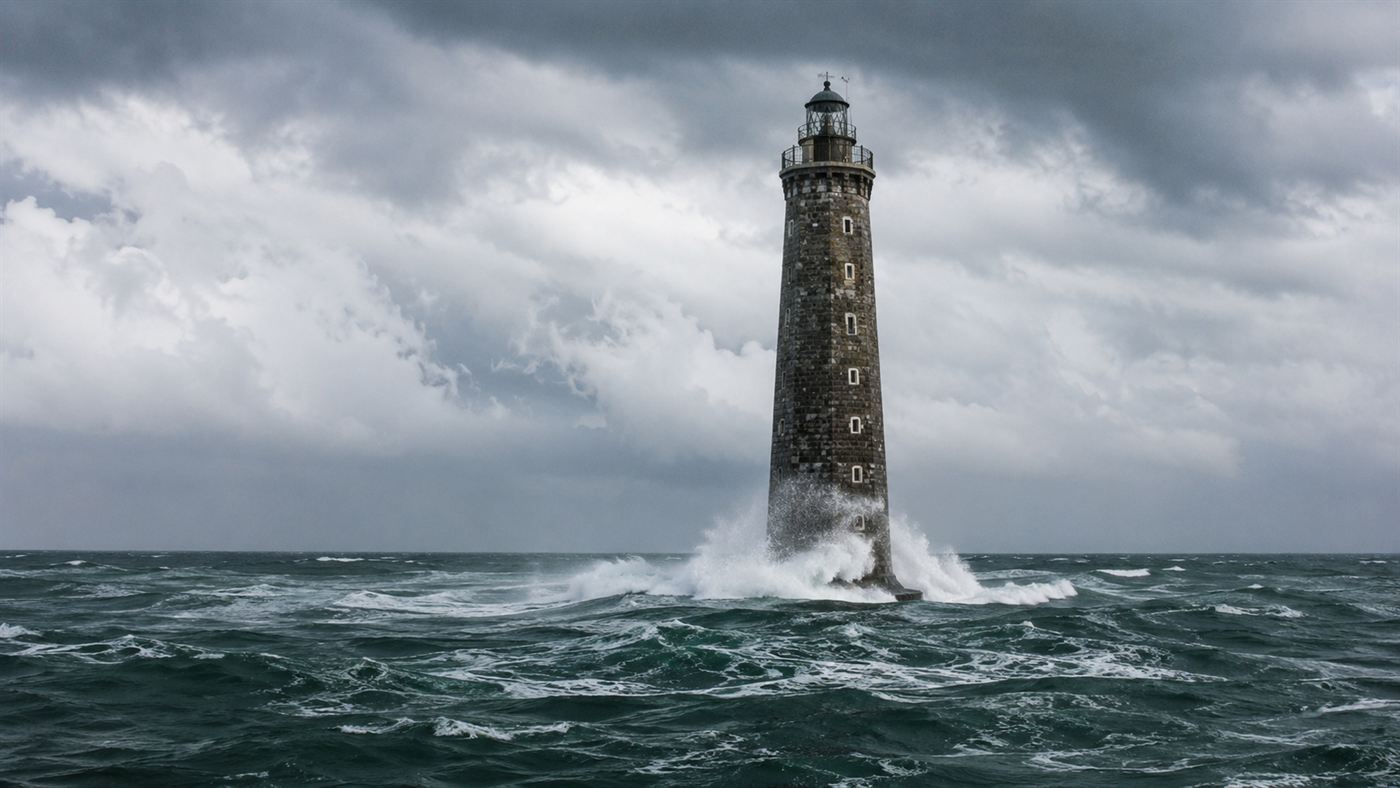

Bruno writes about energy, industry and the big machines that run the modern world, with an eye for the human story behind the engineering.