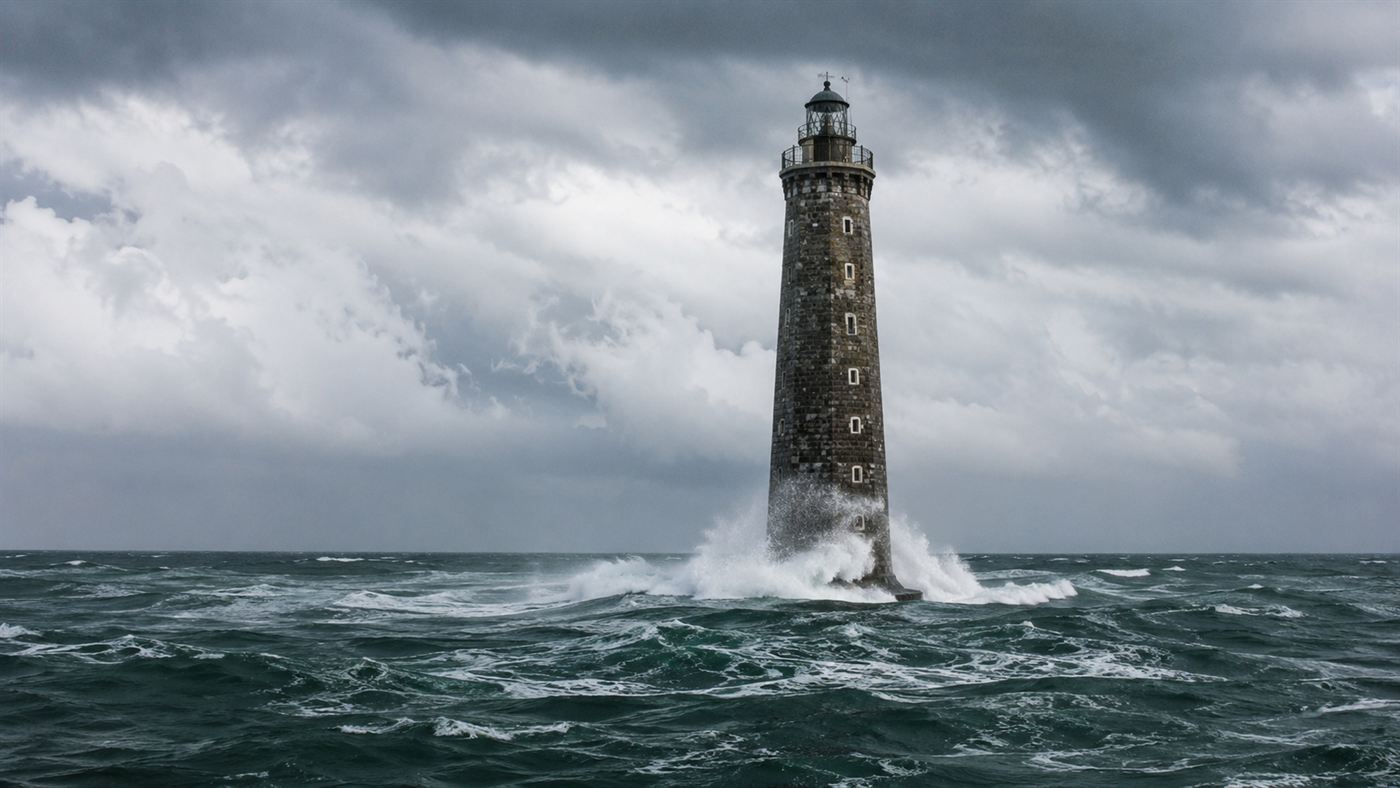
He wished to be inside his lighthouse in the greatest storm ever, and the sea granted it
In 1698 a flamboyant English inventor did something no one had managed before: he built a working lighthouse out in the open sea, on a reef that had wrecked countless ships. He was so proud of it that he made a fatal boast. Henry Winstanley wished to be inside his Eddystone Lighthouse during the greatest storm there ever was, and five years later the sea took him at his word.
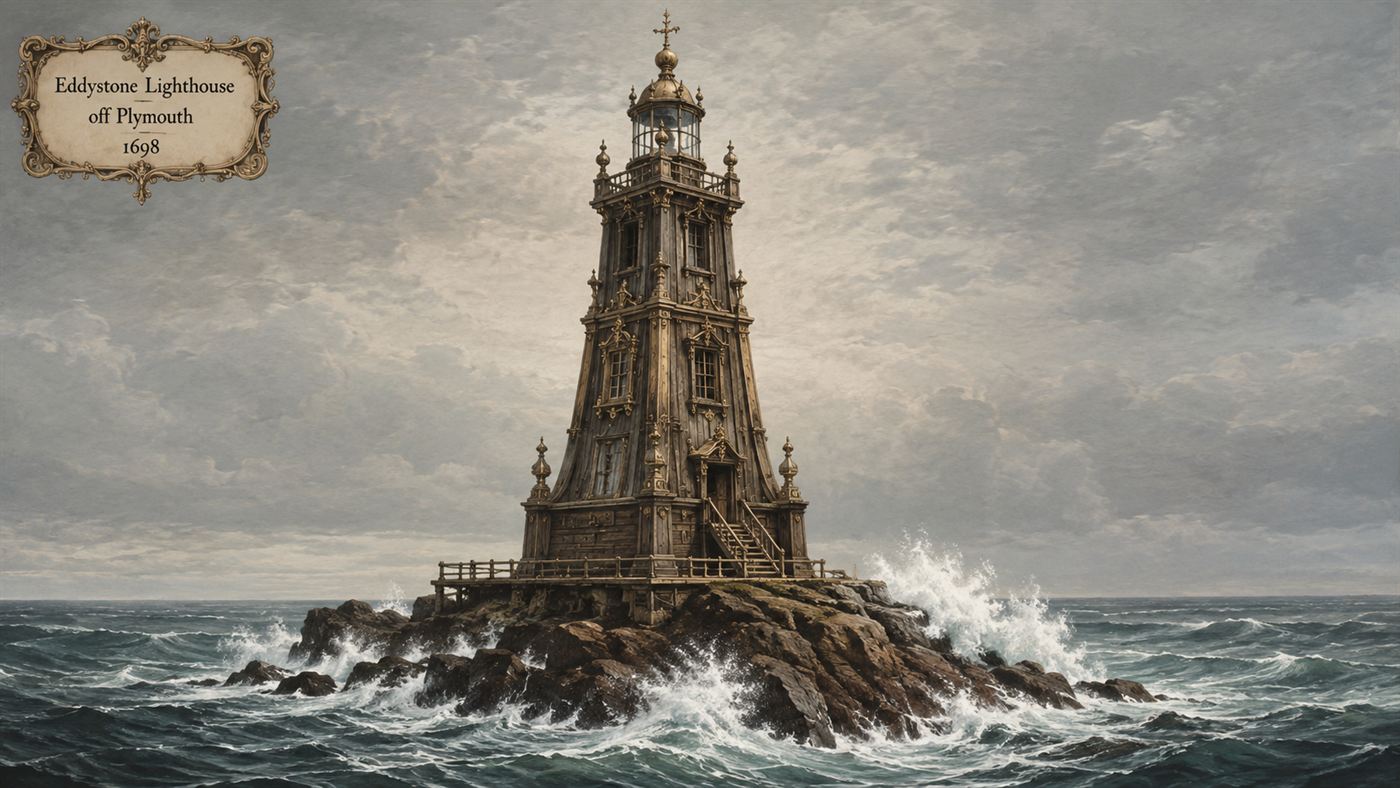
Winstanley's first tower was as much a flourish as a building, perched alone on the deadly Eddystone rocks. Illustration: Watts & Wild.
The story of the Eddystone Lighthouse is really four stories, four towers raised one after another on the same lethal rocks, each one a chapter in how humans learned to build against the full fury of the ocean. It begins with a man's pride and a terrible storm, and ends with one of the most important buildings in the history of engineering.
Few places have killed more sailors, and few have taught engineers more, than this lonely reef in the English Channel.
The rock that ate ships
The Eddystone rocks lie around fourteen miles off Plymouth, mostly hidden by the waves, exactly where ships heading in and out of the busy port would run onto them in the dark. For centuries they were a graveyard, tearing the bottoms out of vessels and drowning their crews with grim regularity.
The problem was obvious; the solution seemed impossible. How do you build a lighthouse on a rock that is underwater much of the time, miles from land, pounded by Atlantic swells? Most people assumed it could not be done at all, until a wealthy eccentric decided to try.
Why the Eddystone Lighthouse had to be built
Henry Winstanley was a painter, showman and inventor who had made a fortune and lost two of his own ships on the Eddystone rocks. Furious and determined, he set out to light them. Between 1696 and 1698, working only in the brief windows when the sea allowed, he raised the first lighthouse ever built in the open ocean, an ornate, almost fairground-like tower of wood and stone.
It worked. For the first time, ships had a light to steer clear of the killer reef. Winstanley was so confident in his creation that he made the boast that would define him, declaring that he wished to be inside his lighthouse during the greatest storm there ever was, to see how it held. It was the kind of thing a proud man says without ever expecting to be tested.
A wish granted by the sea
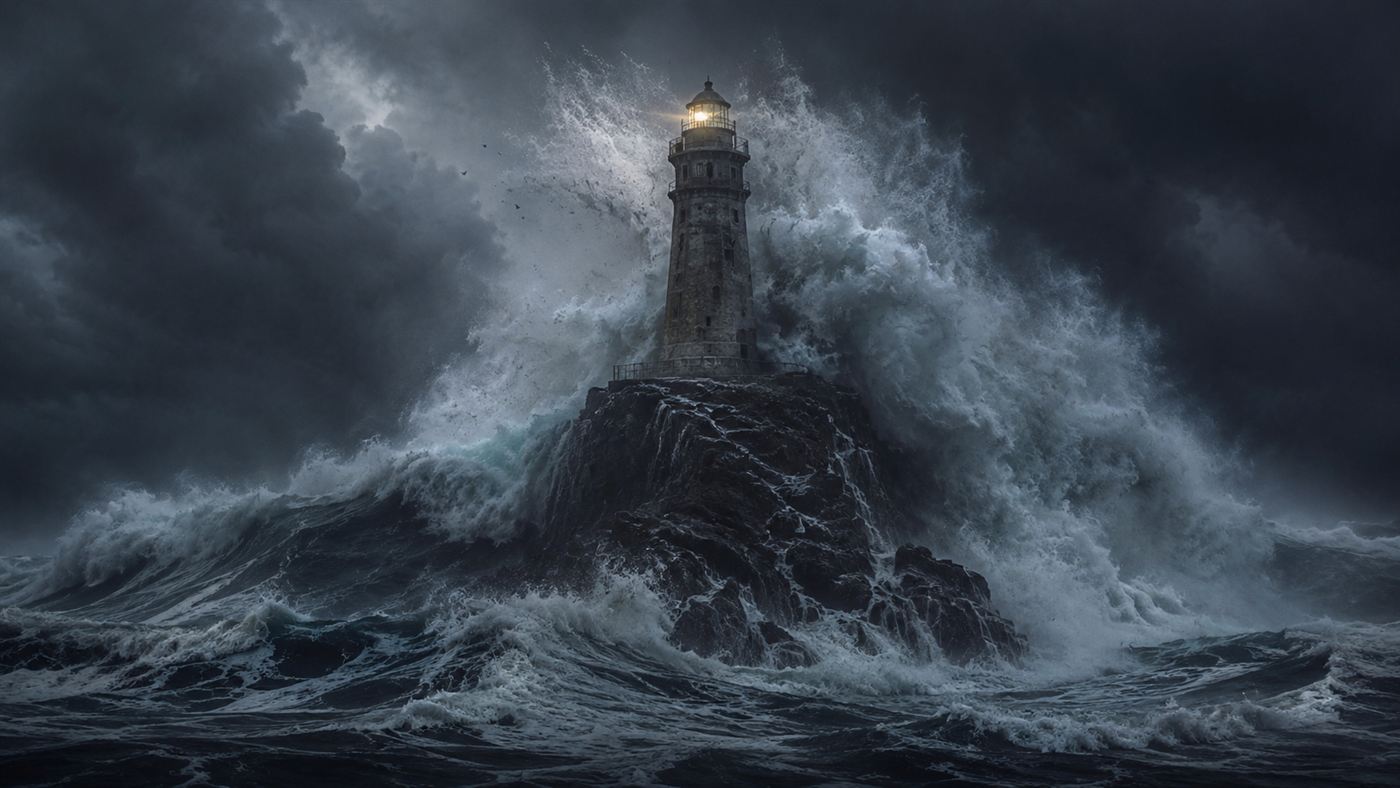
The test came on the night of 26 November 1703, when the most violent storm in recorded British history fell on southern England. Winds estimated at well over a hundred miles an hour flattened buildings, sank ships by the dozen, and killed thousands, and Winstanley happened to be out at the Eddystone that very night, making repairs to his tower.
By the next morning the lighthouse was simply gone. The storm had swept the entire structure off the rocks, and Winstanley and the men with him vanished with it, leaving almost nothing behind. The man who had wished to face the greatest storm in his lighthouse got his wish in the cruellest possible way. It is one of history's most haunting examples of being careful what you ask for.
The lighthouse built like a tree
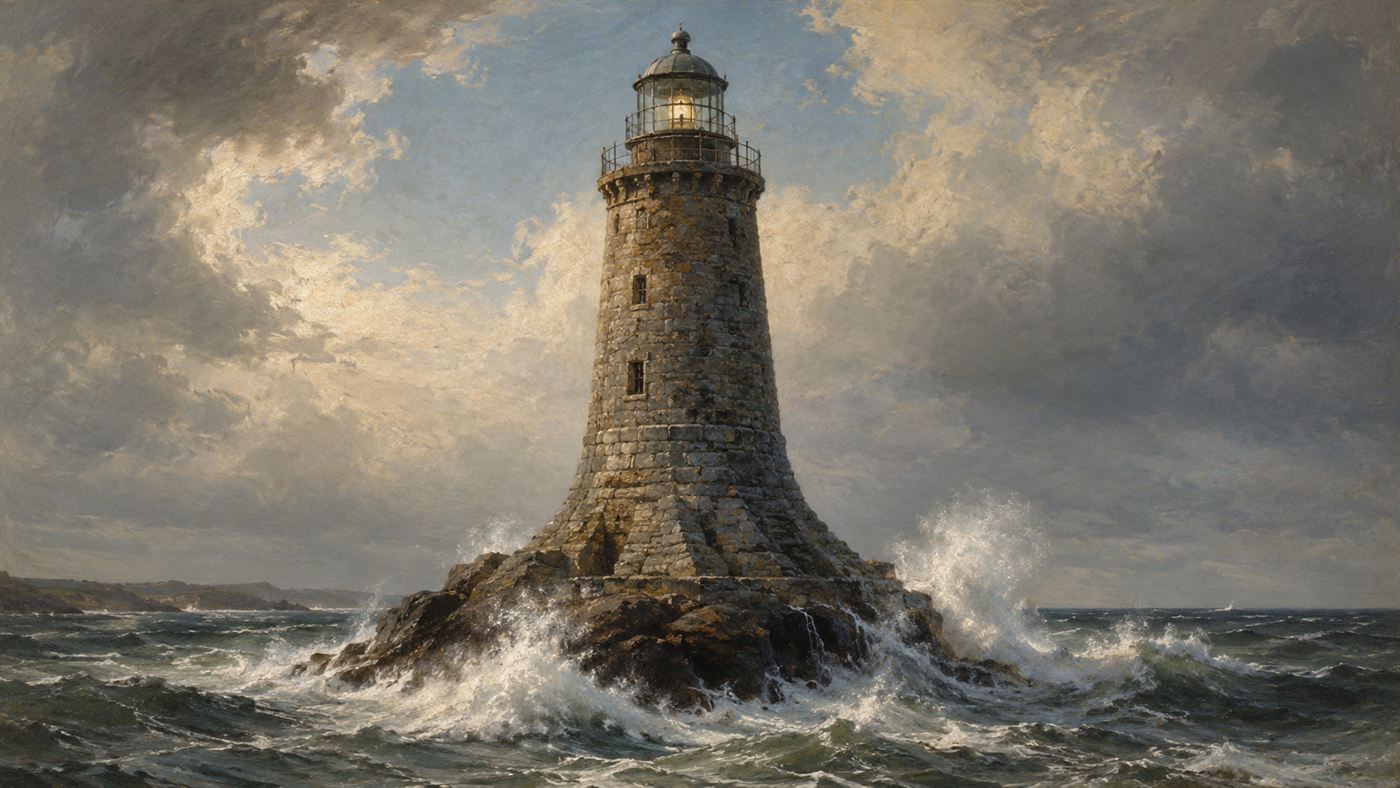
The reef went dark again, and a second, wooden tower later burned down, but the most important chapter was still to come. In the 1750s the engineer John Smeaton took on the rock and changed building forever. Inspired by the wide, sturdy base of an oak tree, he designed a tapered tower of granite blocks cut to interlock like a giant three-dimensional jigsaw, dovetailed together so the sea could not prise them apart.
To bind it all, Smeaton revived and perfected a kind of mortar that would set hard even underwater, solving the age-old problem of building in the tide. His lighthouse, completed in 1759, stood firm for over a century and is often called the foundation of modern civil engineering. When the rock beneath it finally began to give way in the 1870s, the tower itself was still so sound that its upper section was taken down and rebuilt on land at Plymouth, where it stands to this day.
What happened to the Eddystone Lighthouse?
In all, four lighthouses have stood on the Eddystone rocks. Winstanley's was lost to the storm, the second to fire, and Smeaton's was retired only because the rock under it failed rather than the tower. The current lighthouse, a taller granite tower built in 1882, still guards the reef today, the heir to more than three centuries of trial, disaster and hard-won knowledge.
Each tower learned from the last. Winstanley proved it was possible, the wooden towers showed what would not last, and Smeaton worked out how to make stone stand in the sea. Together they turned a ship-killing reef into one of the great classrooms of engineering.
Who built the Eddystone Lighthouse?
Four engineers built the four towers, but two names stand out. Henry Winstanley is remembered for his daring and his terrible end, the man who built first and paid with his life. John Smeaton is remembered for the breakthrough, the oak-tree tower of interlocking stone that finally beat the sea and earned him the title of father of civil engineering.
Between them they capture the whole arc of building against nature: the bold gamble that ends in tragedy, and the patient, clever design that learns from it and endures. The Eddystone rocks took one man who challenged the storm, and rewarded another who studied it. The sea, in the end, teaches the same lesson to everyone who builds on it.
A proud man swept away by the very storm he longed to face, and a quiet genius who answered the same sea with an oak tree made of stone. Was Winstanley a fool for tempting the storm, or a pioneer brave enough to be the first, whatever the cost? Tell us what you think in the comments.
Related reading: the Bell Rock Lighthouse, raised on a reef that vanishes under the sea twice a day.