A black hole swallows even light, so it should be impossible to photograph, yet in 2019 a team turned the whole planet into a telescope and captured the first image of one
A black hole is defined by the fact that nothing, not even light, can escape it, which makes taking its picture sound like a contradiction. And yet on April 10, 2019, scientists unveiled the first black hole image in history, a fuzzy orange ring around a pit of pure darkness, 55 million light-years away.
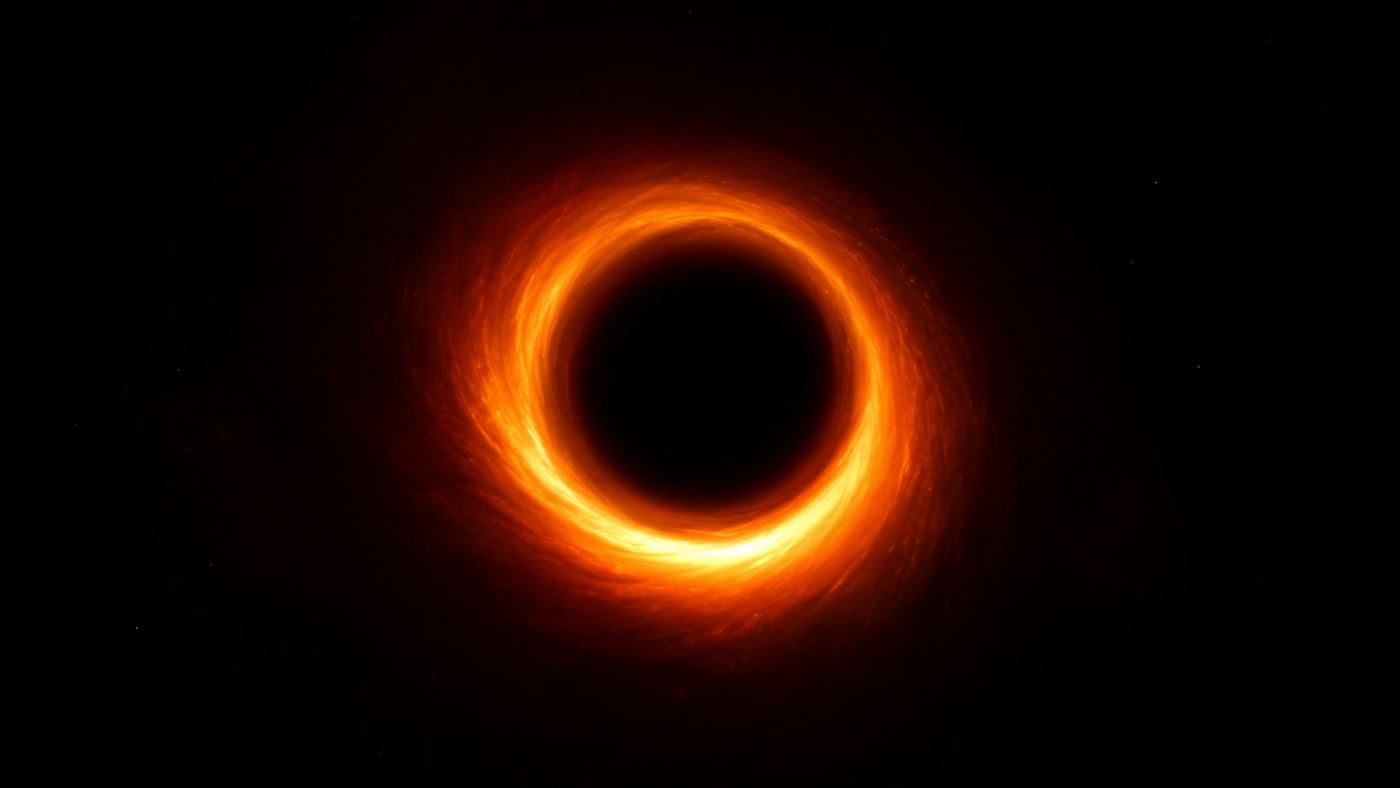
The 2019 black hole image: a ring of light bent around the dark shadow of M87's supermassive black hole. Illustration: Watts & Wild.
The first black hole image did not come from a single giant camera pointed at the sky. It came from an idea almost as strange as its subject: if no telescope on Earth is big enough to see a black hole, then build one the size of the Earth. As the Event Horizon Telescope collaboration announced, the target was the supermassive black hole at the heart of the galaxy M87, a monster with the mass of six and a half billion Suns, sitting 55 million light-years from us.
The short version: On April 10, 2019, the Event Horizon Telescope released the first image of a black hole. Because a black hole traps light, the picture shows not the object itself but its shadow, ringed by glowing gas. To capture something so distant, more than 200 scientists linked eight radio telescopes across the globe into a single Earth-sized virtual telescope.
How do you photograph a thing that eats light?
The trick is that you do not photograph the black hole. You photograph what surrounds it. A black hole is wrapped in a whirling disk of superheated gas that glows fiercely, and the black hole's monstrous gravity bends the path of that light, wrapping it into a bright ring. In the middle sits a dark circle, the shadow, marking the point of no return where anything that falls in is gone forever.
So the image everyone saw in 2019 is really a silhouette. The blackness at the center is the black hole's outline, thrown against the glow of the doomed gas spiraling around it. It was exactly the shape that Einstein's theory of general relativity had predicted a century earlier, and seeing it confirmed, in a literal picture, was one of the great vindications in the history of physics.
A telescope the size of the planet
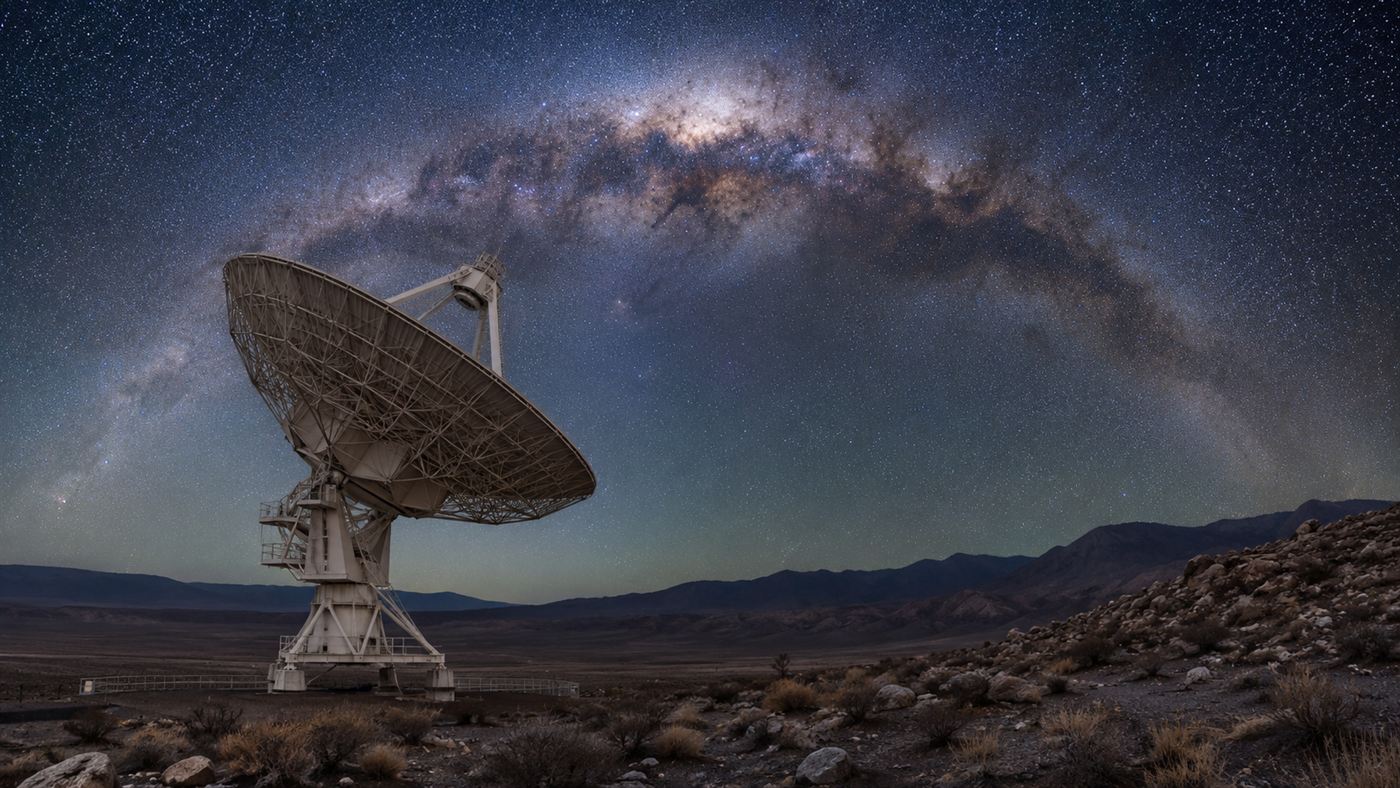
The reason it took so long is resolution. The M87 black hole is so far away that seeing its shadow is like trying to read the date on a coin in a distant city, a feat no single dish could manage. As the National Science Foundation explains, the Event Horizon Telescope solved this by linking eight radio observatories across the planet, from Hawaii to Chile to the South Pole, into one virtual instrument as wide as the Earth itself.
The observatories all stared at M87 at the same time, each recording a torrent of data, and the technique, called very long baseline interferometry, combines their signals as if they were pieces of one enormous mirror. The volume was so vast, measured in petabytes, that the internet could not carry it. The data had to be stored on stacks of hard drives and physically flown to a central lab, then painstakingly aligned over about two years before a picture could emerge at all.
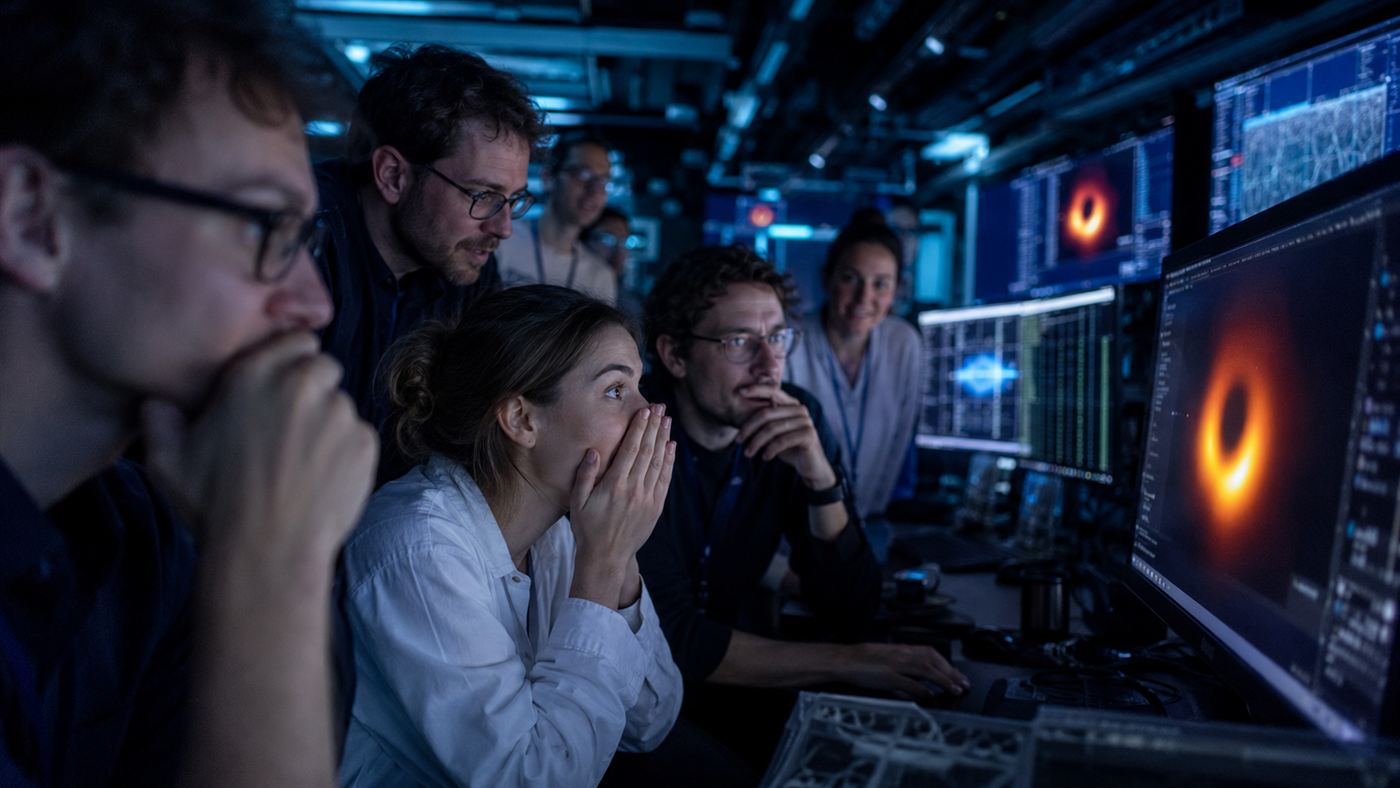
The day we saw the black hole image
When the picture was finally revealed at simultaneous press conferences around the world, it landed like a thunderclap. As CBS News reported that day, scientists had captured the first direct visual evidence of a black hole, a glowing ring that instantly became one of the most famous scientific images ever made. For all the theory and mathematics that had described black holes for decades, here at last was a photograph of one.
What made it so moving was that it confirmed general relativity in the most extreme place imaginable. Einstein's equations, written in 1915, predicted the exact size and shape of the shadow a black hole should cast, and the M87 image matched that prediction with eerie precision. A theory dreamed up with pen and paper had told us what a monster 55 million light-years away would look like, and it was right.
The face of the algorithm
Turning a mountain of radio data into a picture was its own monumental problem, and the effort produced an unexpected star. Katie Bouman, then a graduate student at MIT, had worked on the imaging algorithms that helped reconstruct the picture, and a photograph of her reacting with joy as the image came together went viral, briefly making her the public face of the whole achievement.
The truth, which Bouman herself stressed at every turn, is that the M87 black hole image was the work of more than 200 scientists over many years, not any one person. The internet, being the internet, first wildly over-credited her and then turned on her with an ugly wave of sexist attacks trying to erase her contribution entirely. Both distortions missed the real story, which is simply that a huge, diverse team of people pulled off something that had never been done, and that a young woman played a genuine and celebrated part in it.
Then we photographed our own
M87 was the proof of concept, and it opened the door to something closer to home. In 2022, the same collaboration released an image of Sagittarius A star, the supermassive black hole at the center of our own Milky Way, some 27,000 light-years away and about four million times the mass of the Sun. It was, in a sense, a family portrait, a picture of the giant our entire galaxy quietly orbits.
Ours was actually harder to capture than the far more distant M87. Because Sagittarius A star is smaller, the gas whips around it in minutes rather than days, so the black hole flickered and shifted while the telescopes watched, like trying to photograph a puppy that will not sit still. That the team managed it anyway showed the technique was no fluke, and that we now have a way to look directly at the strangest objects the universe contains.
The honest catch
It is worth being precise about what these pictures are, because the word photograph can mislead. No camera snapped the black hole in a single click. The image is a careful reconstruction from radio signals, guided by algorithms and cross-checked by separate teams who were deliberately kept apart so that no one could unconsciously nudge the data toward the ring they expected. It is blurry not because the scientists were sloppy but because they are working at the absolute physical limit of what an Earth-sized telescope can resolve.
None of that makes it less real. The ring is genuinely there, the shadow is genuinely the black hole's silhouette, and the whole thing agrees with a century-old theory to a remarkable degree. Humanity looked at an object that by its very nature cannot be seen, one so far away its light left before our species existed, and found a way to take its picture anyway. Sometimes the honest catch and the wonder are the same thing: we did the impossible, carefully, and admitted exactly how.
To see a thing that eats light, scientists turned the whole planet into a telescope and photographed a shadow 55 million light-years away. Does knowing the black hole image is a careful reconstruction rather than a simple snapshot make it more impressive to you, or less? Tell us what you think in the comments.
Related reading: How NASA revived the Voyager 1 probe from 15 billion miles away after it started sending gibberish.
More from Watts & Wild
More in Science & Tech →


Maria covers heavy industry, mega-builds, and the science that lets us see the invisible, for Watts & Wild.