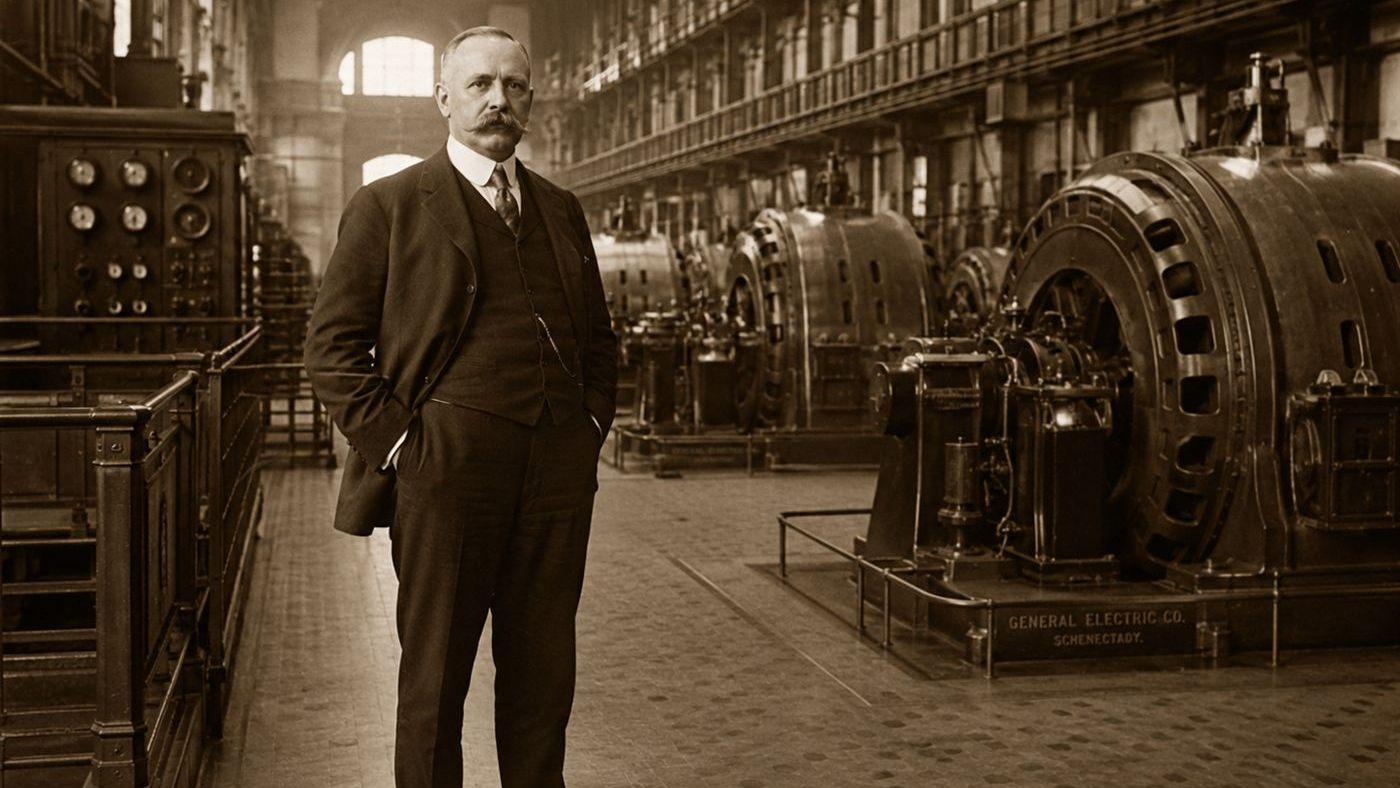
A young engineer barely out of his teens bet that electricity should come from giant distant power stations, and built the one that proved the whole modern grid right
In the 1880s nobody agreed on how electricity should reach a city. Most engineers pictured many small generators dotted around, close to their customers. A young prodigy named Sebastian de Ferranti looked at that and bet the opposite way: build one enormous power station far outside town and pump the power in. His plant at Deptford was the gamble that shaped the modern world.
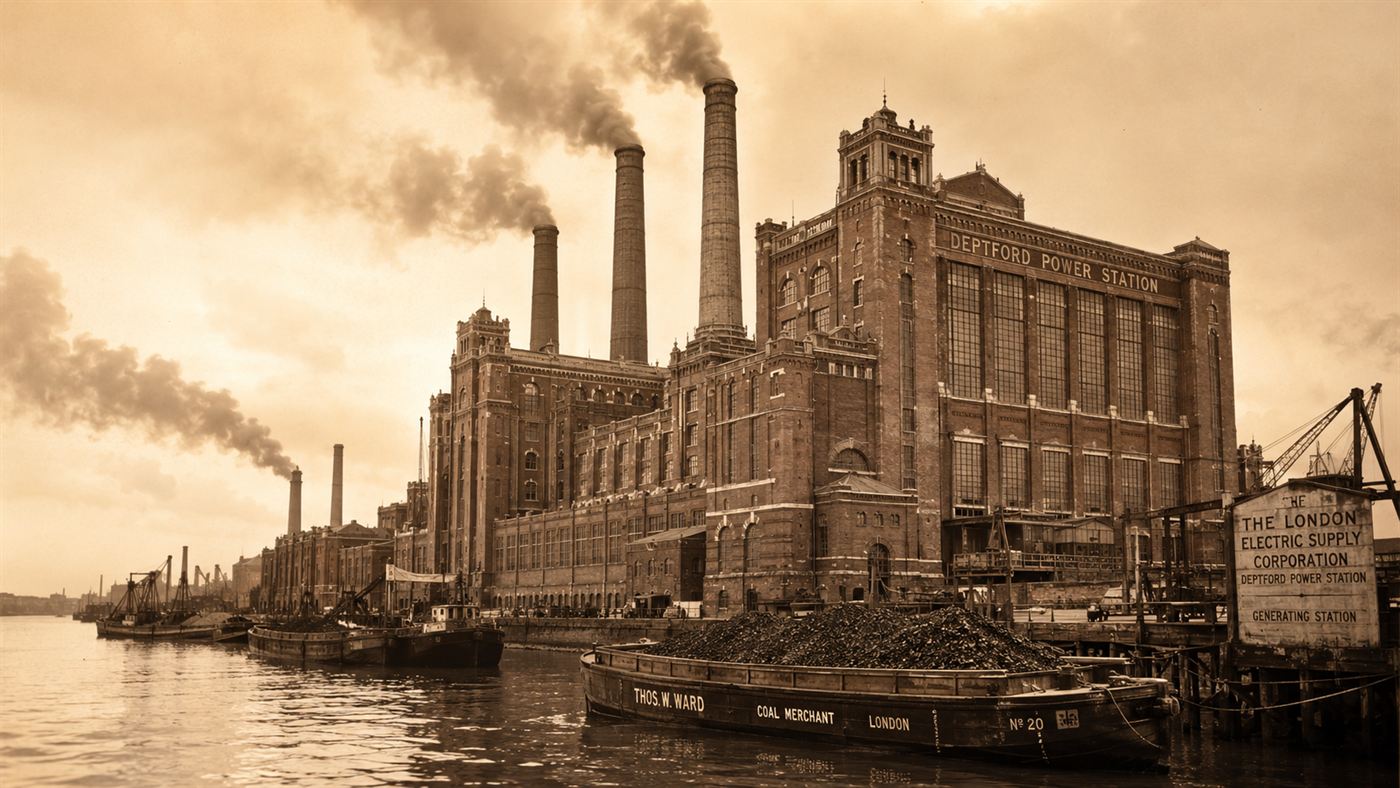
Ferranti's Deptford station was built on a scale that seemed reckless in the 1880s. Illustration: Watts & Wild.
The history of electricity is usually told through Edison and Tesla and the war of currents, but the man who arguably drew the shape of the system we actually use is far less famous. As Wikipedia records, Sebastian de Ferranti was a prodigy, the son of an Italian-born photographer in Liverpool, who designed a working dynamo while still in his teens, the machine that turns motion into electricity.
By his mid-twenties he was already a force in the new electrical industry, and he had a conviction that set him apart. Where most of his rivals thought of electricity as a local affair, generated street by street, Ferranti saw it the way we see it now: as something to be made in bulk, in one giant power station, and distributed across a whole region. The question was whether anyone would let him prove it.
How Sebastian de Ferranti bet on bigness
The chance came with the London Electric Supply Corporation, which hired Ferranti to design a system to light a vast swathe of the capital. As Grace's Guide to British industrial history records, his answer, drawn up when he was only around 28, was breathtaking in ambition. Instead of scattering small plants through the city, he proposed a single colossal station downriver at Deptford, on the Thames, generating on a scale no one had attempted.
It was deliberately sited away from the crowded centre, where land was cheap, cooling water was plentiful and coal could be delivered by barge. The plan was to generate electricity there in enormous quantity and send it several miles into central London. This is so obviously how things work today that it is hard to feel how radical it was, but at the time it struck many experienced engineers as the folly of an overconfident young man.
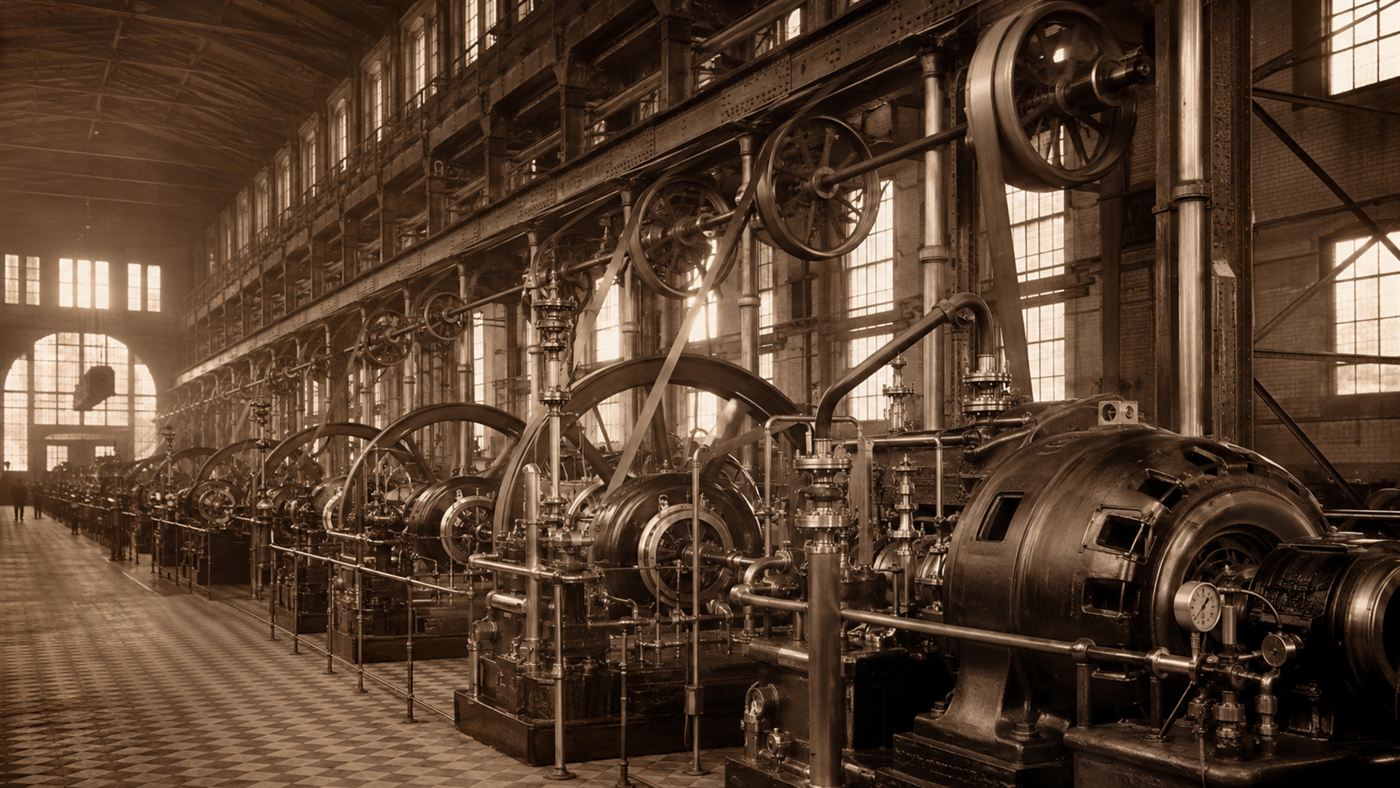
The trick was high-voltage alternating current
The reason Ferranti could even contemplate sending power miles across London came down to a choice of technology. To move electricity over distance without losing most of it as heat in the wires, you need high voltage, and the practical way to push voltage up and then safely down again is alternating current, using transformers. Ferranti committed wholeheartedly to high-voltage AC at a time when it was new and frightening.
He designed much of the equipment himself, including transformers and enormous generators, and ran the power into the city at then-astonishing voltages. He was working at the very edge of what insulation and engineering could handle, and there were failures and dangers along the way. But the core principle, generate centrally, step the voltage up for transmission and down for use, is exactly the logic of every grid on Earth today.
The honest catch
For all his vision, Deptford was not the clean triumph the principle deserved. The project ran into trouble that had little to do with the engineering: a change in the law, the Electric Lighting Acts, made it hard for big private supply companies to lay cables freely, which undercut the grand scheme. The station was also slow to reach its planned capacity and never fully became the all-conquering hub Ferranti had imagined.
It is fairer to call Deptford a magnificent proof of concept than an instant commercial success. Ferranti himself moved on, and much of the world, including the very city he wired, went on building smaller, messier, competing systems for years, the kind of fragmented muddle that people like the utility builder Samuel Insull later had to consolidate. Being right early, as so often in this field, was not the same as winning.
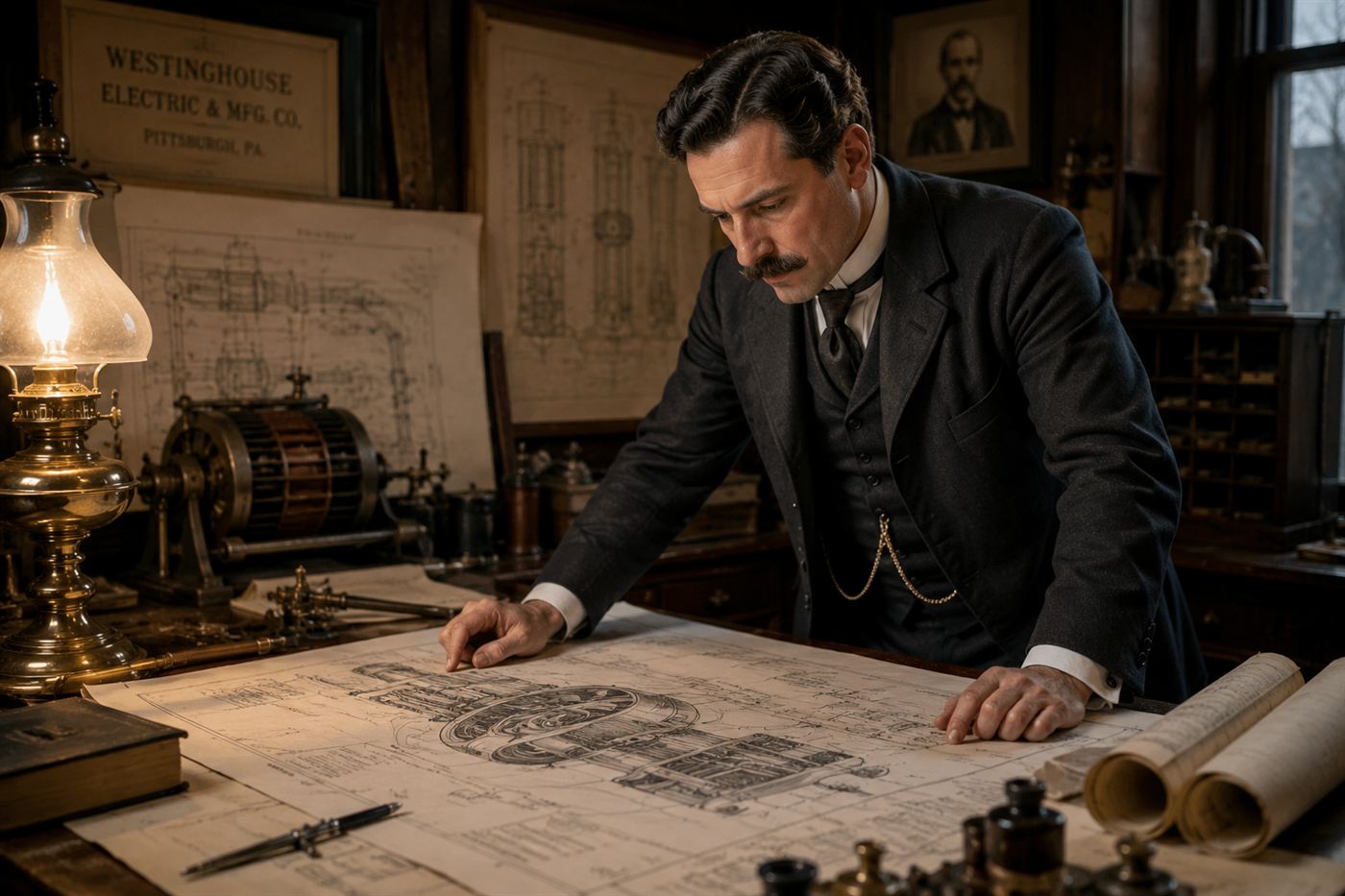
Why a half-finished power station still matters
The vindication came in the decades that followed. As cities grew, the logic of Sebastian de Ferranti's vision became unanswerable, and the world quietly rebuilt its electricity supply exactly as he had argued: a handful of giant power station sites feeding high-voltage lines that branch out to everyone. The fragmented patchwork lost; the big-and-central model won completely.
His name lives on among engineers in the Ferranti effect, a quirk of long high-voltage lines described by Britannica, that he was among the first to grapple with, but his real monument is the wall socket. Every time you plug something in and draw power that was made dozens or hundreds of miles away, you are living inside the bet a young man made at Deptford, that the future of electricity was big, central and bold.
A man barely out of his teens designed the giant central power station the whole world would copy, and got little fame for it. Why do we remember the inventors of the light bulb but not the engineer who designed the grid that powers it? Tell us in the comments.
Related reading: The bitter war between Edison and Westinghouse over whose electricity would light the world.