They laughed at this 48 mph electric car, until one beat a Lamborghini off the line
In the 1970s, Britain built a tiny electric city car so slow and so heavy that it became a punchline, a boxy little runabout that struggled to reach 48 miles per hour. Forty years later, one of the survivors was reborn as a drag-strip monster that could out-accelerate a Lamborghini. It is the same car, and the gulf between the two is the whole story of the electric age.
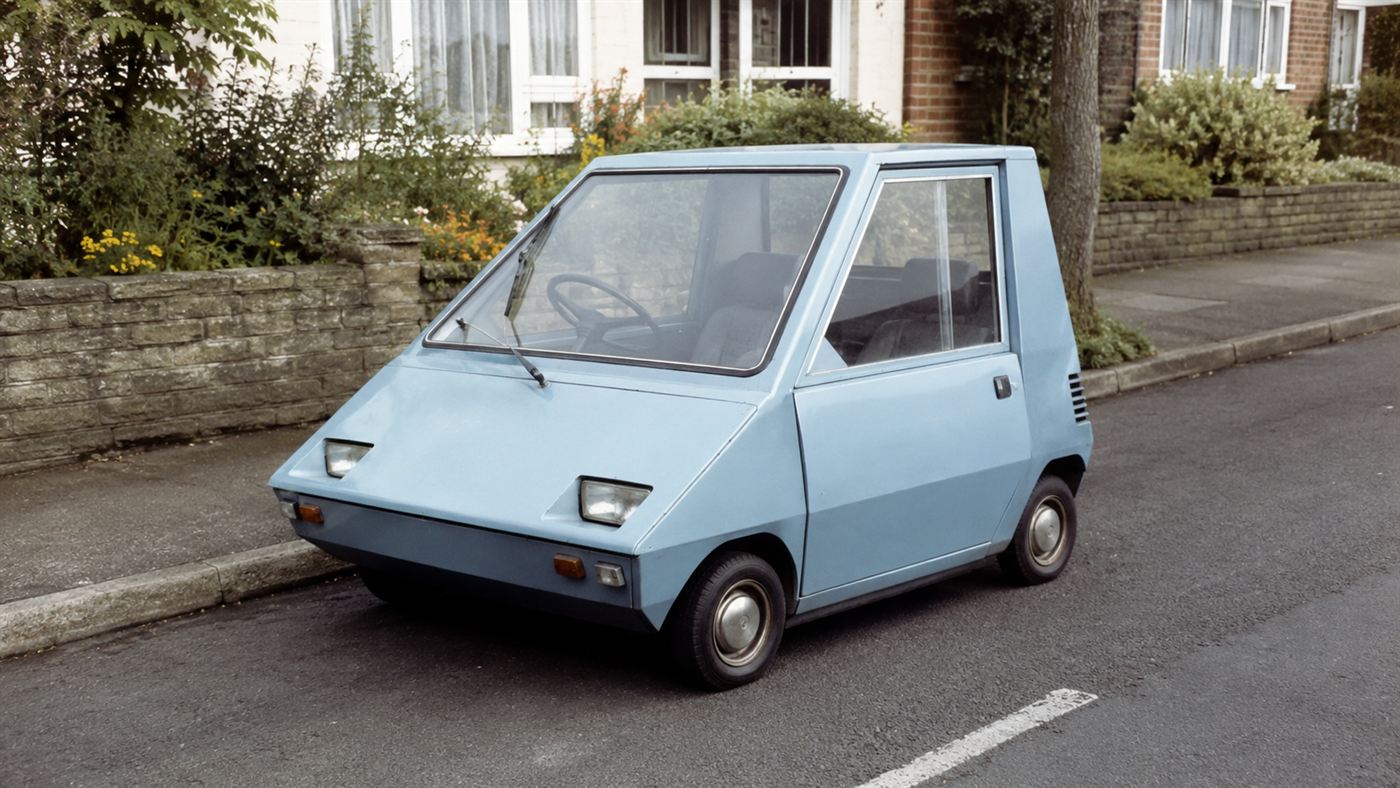
The Enfield 8000 was the size of a garden shed and about as quick. Illustration: Watts & Wild.
The Enfield 8000 arrived in 1973, a two-seat electric city car built by Enfield Automotive, a curious little firm on the Isle of Wight owned by the Greek shipping millionaire Giannis Goulandris. It was created to win a competition run by Britain's Electricity Council, which wanted a practical electric runabout for a country nervous about oil. On paper it was the future. On the road it was a struggle.
Under its slab-sided aluminium body sat an 8 horsepower motor and a heavy bank of lead-acid batteries. That gave it a top speed of around 48 miles per hour and a range of about 40 miles before it needed a long recharge. It weighed nearly a tonne despite being barely longer than a phone box, and most of that weight was battery.
Why the Enfield 8000 flopped
Only about 120 were ever built, and 65 of those went straight to electricity boards in the south of England, used as quiet little fleet cars for meter readers and engineers. Almost nobody bought one by choice, because the maths simply did not work for an ordinary driver. It cost more than a conventional small car, went a fraction of the distance, and crawled where petrol cars cruised.
The problem was not really the idea. The problem, as it had been for every electric car since the 1890s, was the battery. Lead-acid was heavy, weak and slow to charge, and no amount of clever bodywork could fix that. The Enfield was a perfectly sensible electric car cursed by being born decades before the battery it needed existed.
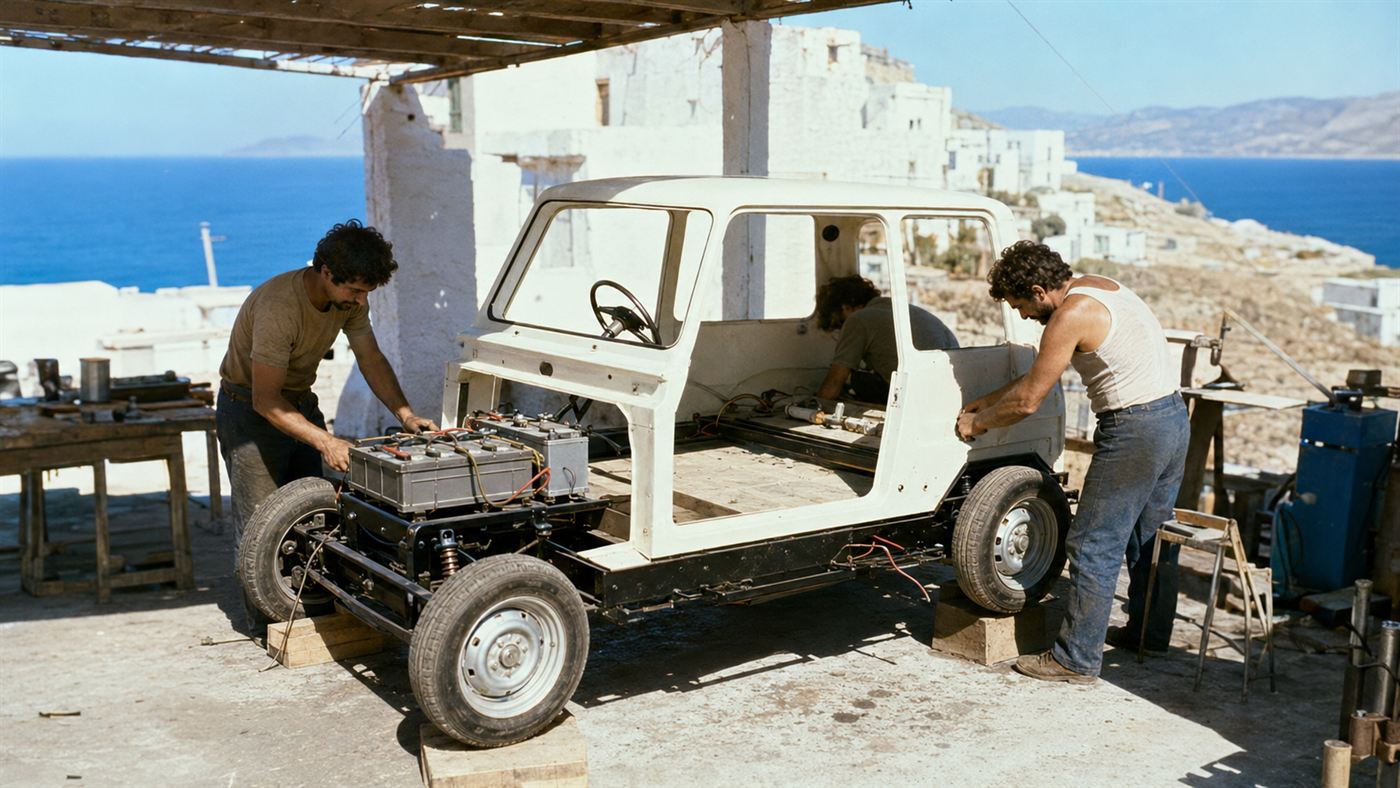
Built in Greece, shipped to Britain
The Enfield's backstory was as awkward as its performance. Soon after launch, production was moved from the Isle of Wight to the Greek island of Syros, where the owner had connections. The cars then could not even be sold in Greece because of how the country taxed electric power, so each one was built on a Greek island and shipped all the way back to the United Kingdom to be sold.
It was a slow, expensive way to make a slow, expensive car, and the whole venture lost money. By the mid-1970s Enfield Automotive had folded, and the 8000 settled into history as a quirky footnote, the kind of failed electric oddity people filed somewhere between a milk float and a joke. That should have been the end of it.
The Flux Capacitor changes everything
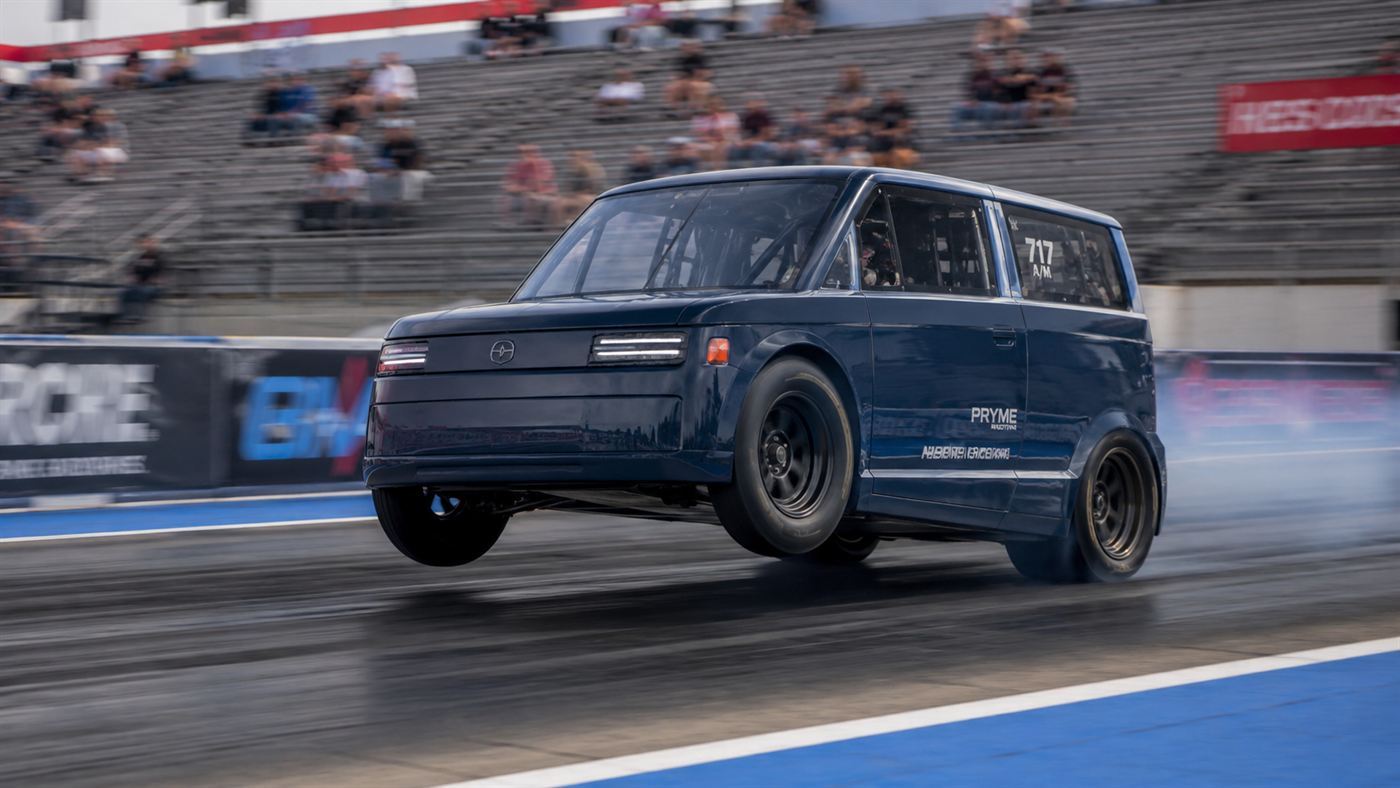
In 2009 the British motoring journalist and engineer Jonny Smith bought one of the survivors, and a few years later he began turning it into something its makers could never have dreamed of. He kept the dumpy little Enfield shell and tore out everything else, packing it with powerful aircraft-tug motors and a modern high-voltage battery. He called it the Flux Capacitor.
The result was absurd. The car that once strained to reach 48 mph could now cover a quarter mile in about nine seconds, launching hard enough to lift its wheels. By 2016 the Flux Capacitor was recognised as the world's quickest street-legal electric vehicle, and at the drag strip it humbled a Lamborghini Aventador, a McLaren, a Porsche 911 Turbo S and even a Tesla. The 1970s laughing stock had become a giant killer.
The honest catch
It is a wonderful story, but it deserves an honest footnote. The Flux Capacitor and the original Enfield 8000 share little more than a shell and a name. One was a feeble 1970s economy car, the other a one-off engineering stunt built with modern motors and lithium cells that simply did not exist in 1973. The transformation says more about how far batteries have come than about the original car.
It is also worth treating the records with care. The world's quickest street-legal EV is a narrow and shifting title, and street-legal does a lot of heavy lifting for a car like this. But the underlying truth holds. The same humble body that once embarrassed Britain's electric dreams later proved, in the most spectacular way, that the electric car was never slow by nature. It was only ever waiting for a better battery.
How fast was the original Enfield 8000?
The factory Enfield 8000 managed a top speed of roughly 48 miles per hour and a range of around 40 miles on a charge, powered by a modest 8 horsepower motor and lead-acid batteries. It was designed purely as a short-hop city car, so its job was to be cheap and quiet rather than quick, and even at that it was hard to justify against an ordinary petrol runabout.
Is the Flux Capacitor the world's fastest electric car?
It was the quickest street-legal electric vehicle over a quarter mile when it was finished in 2016, beating a string of famous supercars at the strip. Since then, electric performance has moved so fast that newer cars and purpose-built racers have gone quicker still. The Flux Capacitor's achievement stands as a record of its moment, not a permanent crown.
A car too slow and too heavy to sell in the 1970s came back four decades later to beat supercars off the line. Does the Enfield's second life prove the early electric cars were right all along, just born too soon? Tell us what you think in the comments.
Related reading: the wedge-shaped CitiCar, the strange little EV that briefly made a US firm a major carmaker.