A tiny Florida songbird was quietly wiped out when the marshes beside the Kennedy Space Center were flooded and drained, and the very last one died in a pen at Walt Disney World
While America was busy reaching the Moon from the launch pads of Florida, a small brown bird was disappearing in the marshes right next door. Almost no one noticed until it was nearly too late. Its story ends, improbably and heartbreakingly, at the happiest place on Earth.
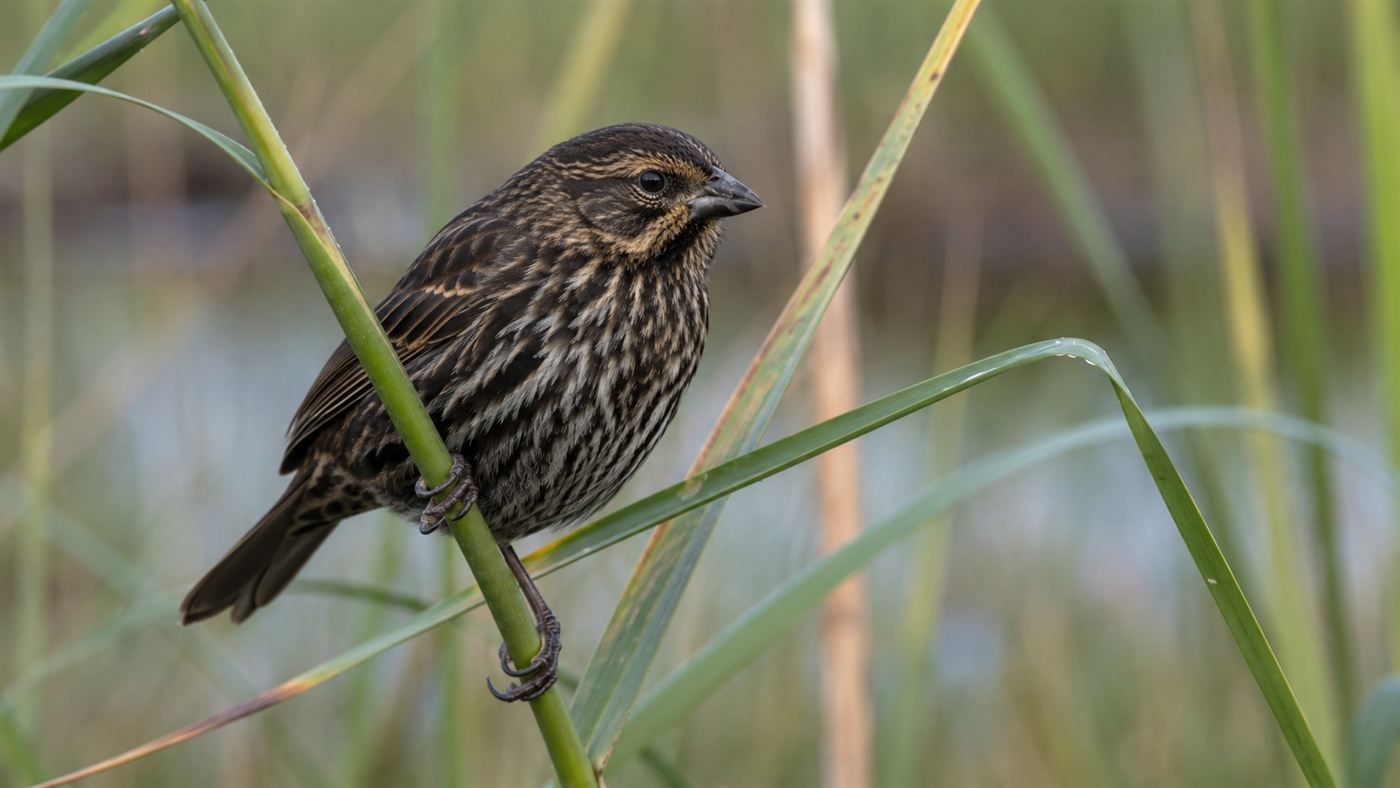
The little dark bird lived nowhere on Earth but a few Florida marshes. Illustration: Watts & Wild.
The dusky seaside sparrow was a small, dark, heavily streaked bird, a non-migratory form of the seaside sparrow that lived in one place and one place only: the cordgrass salt marshes of Merritt Island and the nearby St. Johns River, in Brevard County, Florida. It was never found anywhere else in the world, which turned out to be its doom.
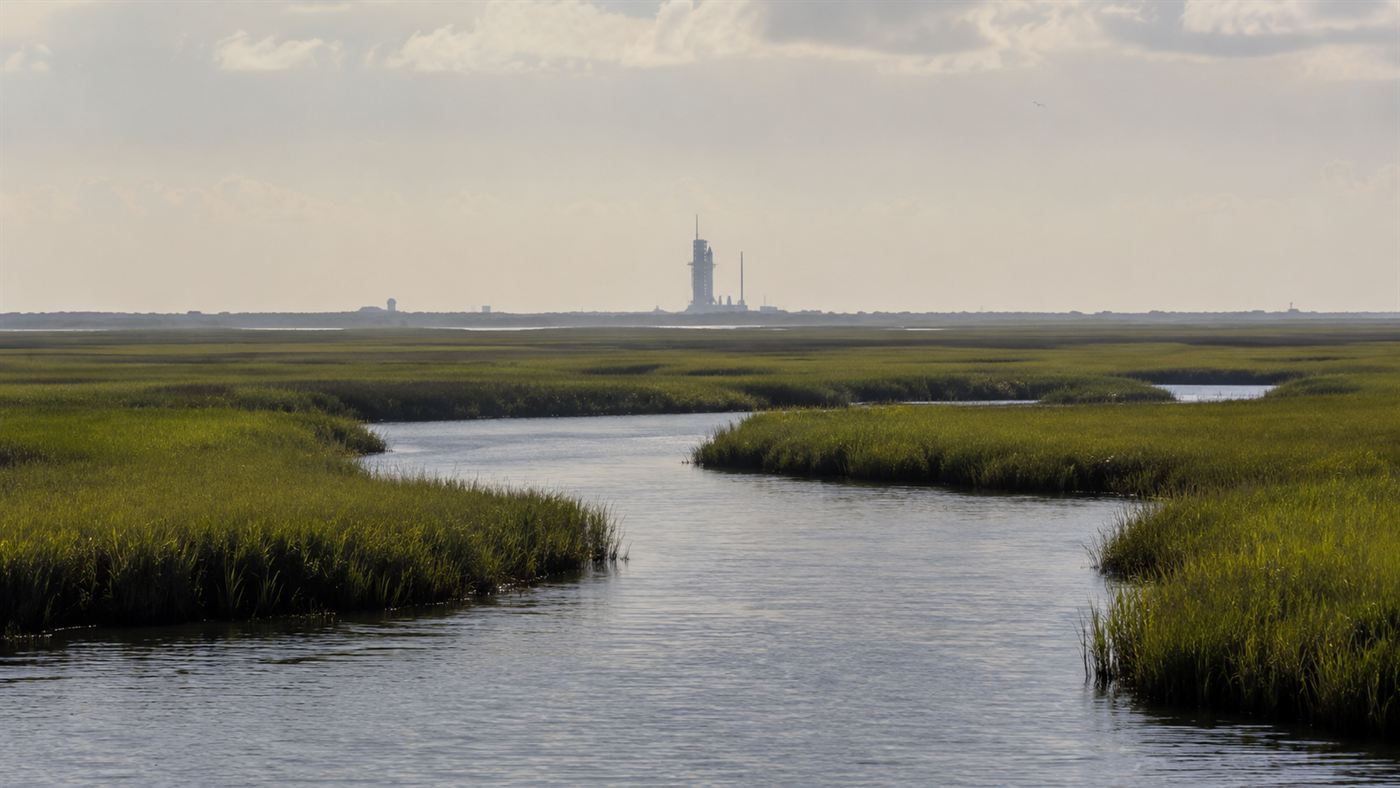
Those marshes happened to sit right beside what became the Kennedy Space Center, and in the rush of the space age they were treated as an obstacle rather than a habitat. In the span of a single human generation, one of America's most localized birds was pushed from thriving to gone, and it happened almost entirely out of public view.
The short version: the dusky seaside sparrow lived only in the marshes near the Kennedy Space Center. Flooding those marshes for mosquito control, then draining others for highways, destroyed its habitat. The population crashed to a few males, an attempt to save its genes failed, and the last bird died at Walt Disney World in 1987.
Why the dusky seaside sparrow lived in one marsh
Being so specialized was the sparrow's fatal weakness. It depended on a particular kind of moist cordgrass salt marsh to build its nests, and unlike a wide-ranging species it could not simply move somewhere else when trouble came. Its entire existence was tied to a small ribbon of Florida wetland.
For a long time that had been fine, because the marshes stretched for miles. But a bird that lives in only one habitat is only ever as safe as that habitat, and in the 1960s the wetlands around Merritt Island were about to be transformed in ways no sparrow could survive.
How the space age drowned its home
The trouble came, of all things, from mosquitoes. The marshes bred them in clouds, a torment for workers at the growing space center, so in 1963 officials simply flooded large areas of the Merritt Island marsh with impounded water to control the insects. It worked on the mosquitoes and it was catastrophic for everything that nested on the marsh floor.
The flooding drowned the cordgrass the sparrow needed, and no serious effort was made to spare the wildlife that depended on it. Meanwhile, other marshes along the St. Johns River were drained for highway construction, and earlier pesticide spraying had already poisoned the food chain. Its home was destroyed from three directions at once.
Down to the last males
The collapse was staggeringly fast. A bird that had numbered in the thousands dwindled through the 1970s until, by the end of the decade, biologists could find only a handful left, and every single one of them was male. With no females, the wild population was already effectively dead, still singing over a marsh that could no longer sustain it.
In a last effort, the remaining males were captured, and conservationists tried a controversial rescue: breeding them with a closely related subspecies to at least preserve some of the dusky's genes in hybrid offspring. It was a long shot, mixing what was left of one vanishing bird into another, and it never produced a viable path back.
Why did the last one die at Disney World?
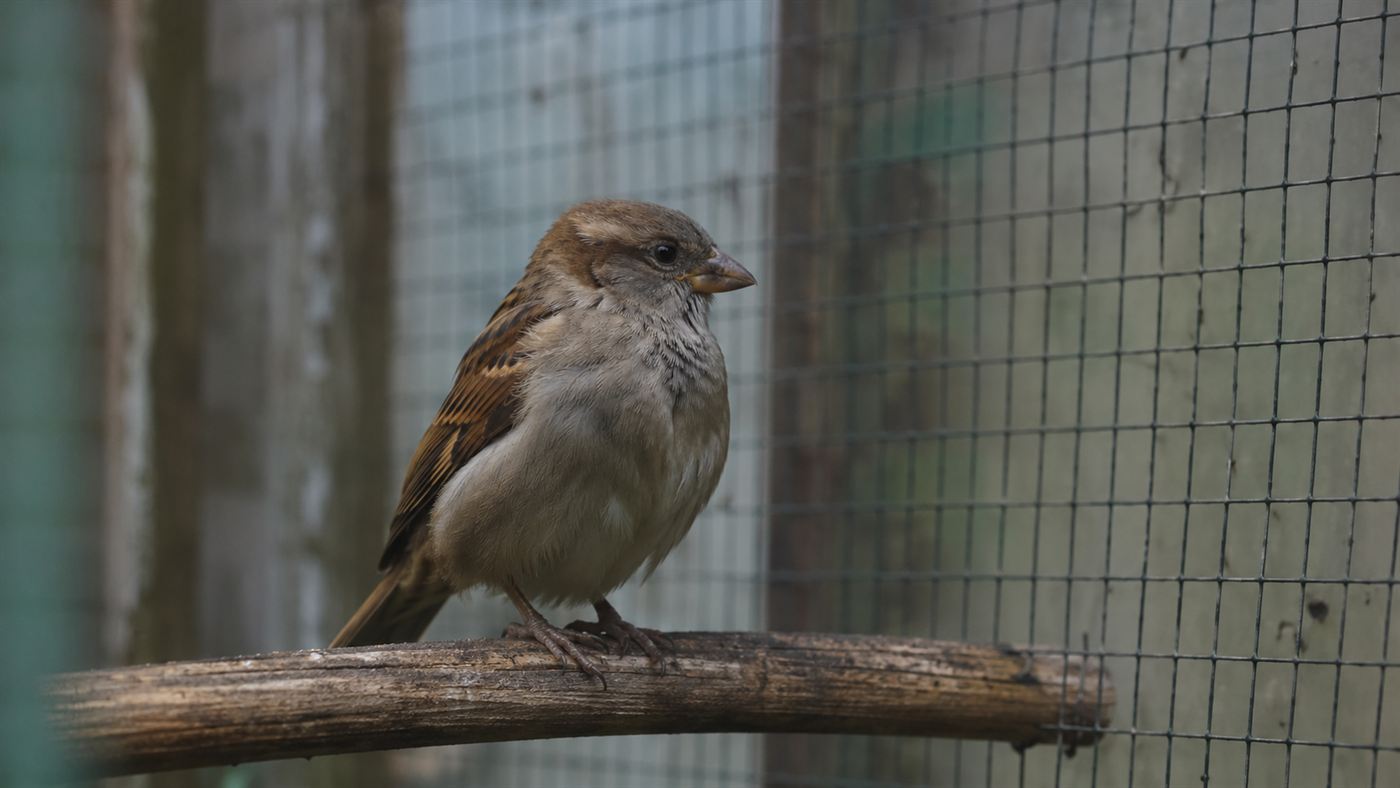
The final chapter is almost too strange to be true. The captive birds and the breeding project ended up housed at Walt Disney World's Discovery Island, a wildlife attraction near Orlando. And so the last of the line spent its final years not in a Florida marsh but on a themed island at a resort.
That last bird was an aging male known as Orange Band, blind in one eye, who lived to a remarkable age for a sparrow. When he was found dead on June 17, 1987, the dusky seaside sparrow was gone, one of the few times a distinct American bird has been watched all the way down to a single, named, final individual before it blinked out.
The honest catch
It is easy to cast the space program as the villain, but that is too simple. No one set out to kill a sparrow; the marsh was flooded to protect people from disease, and the roads were built to serve a national ambition that most Americans cheered. The extinction was less an act of malice than of not thinking to ask what else lived where the bulldozers and pumps were going.
That is precisely the lesson. The dusky seaside sparrow died from a thousand reasonable-seeming decisions, each made without weighing the small, voiceless things in the way. Its preserved tissue now sits frozen in a museum, a faint hope for some future science, and a quiet reproach about everything we lose when we only count the costs we bother to look for.
A bird found nowhere else on Earth was erased by decisions that all seemed sensible at the time, and ended its line in a cage near a theme park. When we build something great, how hard should we have to look for the small lives standing in its way? Tell us in the comments.
Related reading: the heath hen, another American bird watched down to a single last male named Booming Ben. See also the happier fate of the American alligator, pulled back from the brink.