A giant tower of stone columns rises alone out of the Wyoming plains, and almost everything famous about it, including its ominous name, rests on a mistake and an unsolved mystery
It stops travellers in their tracks: a vast, fluted pillar of rock standing by itself above the grasslands, its sides scored into enormous vertical columns. It was the first place America ever set aside as a national monument, and yet its dark name is probably an error, and how it got there is still argued over today.
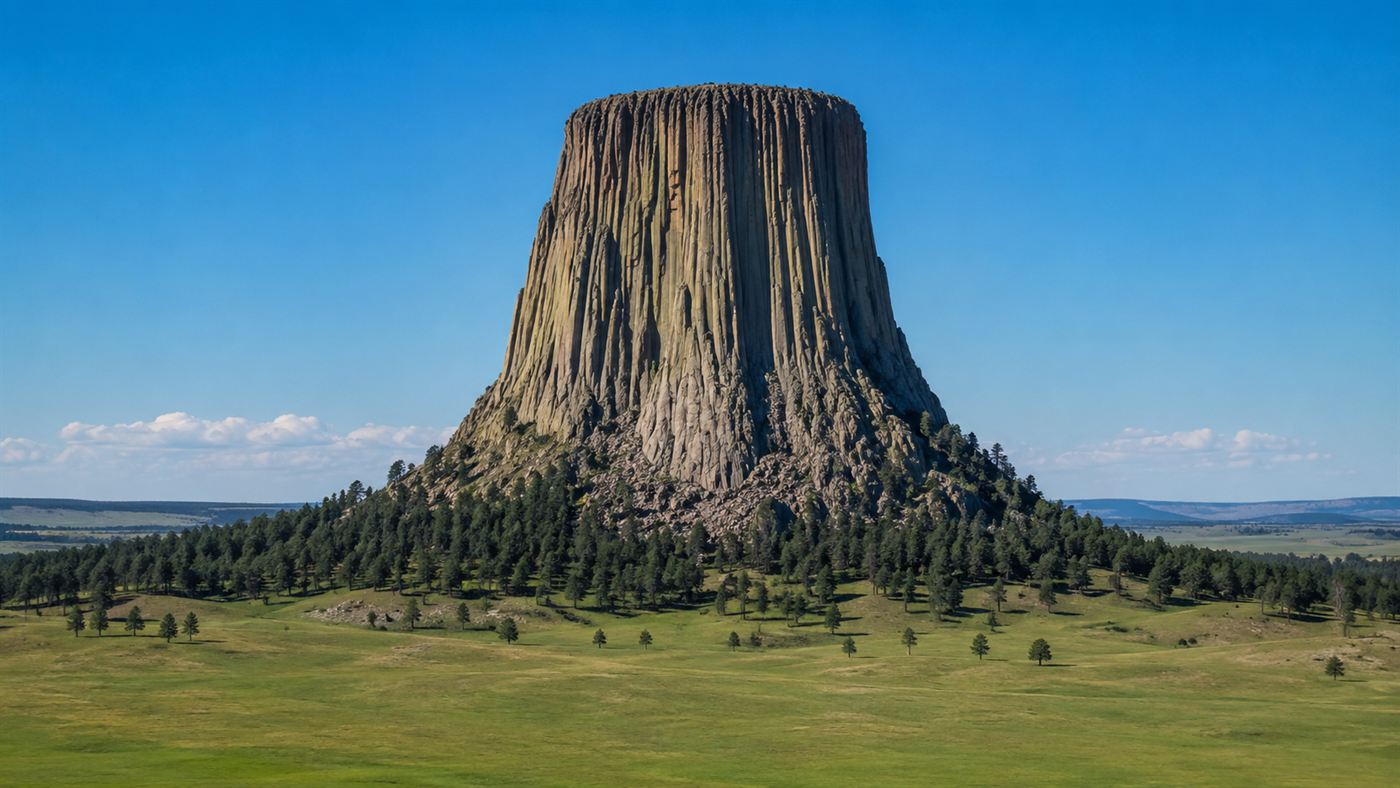
Devils Tower rises some 260 metres straight out of the Wyoming grassland. Illustration: Watts & Wild.
In the northeastern corner of Wyoming, the rolling plains are interrupted by something that looks almost artificial. A massive stump of grey rock, its flanks carved into hundreds of tall vertical columns, climbs abruptly out of the land and stands more than eight hundred feet above its base. For miles around, there is nothing else remotely like it.
To the many Native American peoples who have lived in its shadow for generations, it is a sacred place, woven into their stories and ceremonies. To the wider world it became famous as a natural wonder, a rock-climbing prize and, later, the eerie meeting place at the heart of a science-fiction film. In 1906 it was given a new and lasting role, as the very first national monument in the United States.
The short version is that this iconic landmark carries two surprising secrets. Its familiar, sinister name almost certainly comes from a translation gone wrong, and despite a century of study, geologists still cannot fully agree on how the great tower came to be.
The name that was probably a mistake
Long before it appeared on any map, the formation had names given by the Native nations of the region, and several of them centred on the same idea: the bear. Stories tell of a giant bear clawing at the rock, and the vertical grooves were seen as the marks of its claws, so the place was known by names that translate to something close to Bear Lodge.
The name Devils Tower seems to have entered the record in the 1870s, when a member of a government expedition apparently reported that local people called it something like the bad god's tower or the devil's tower. Many believe this was a mistranslation or a misunderstanding of the original bear names, and yet the ominous version is the one that stuck, and a number of tribes have long campaigned to restore a name closer to Bear Lodge.
Why is the origin of Devils Tower still debated?
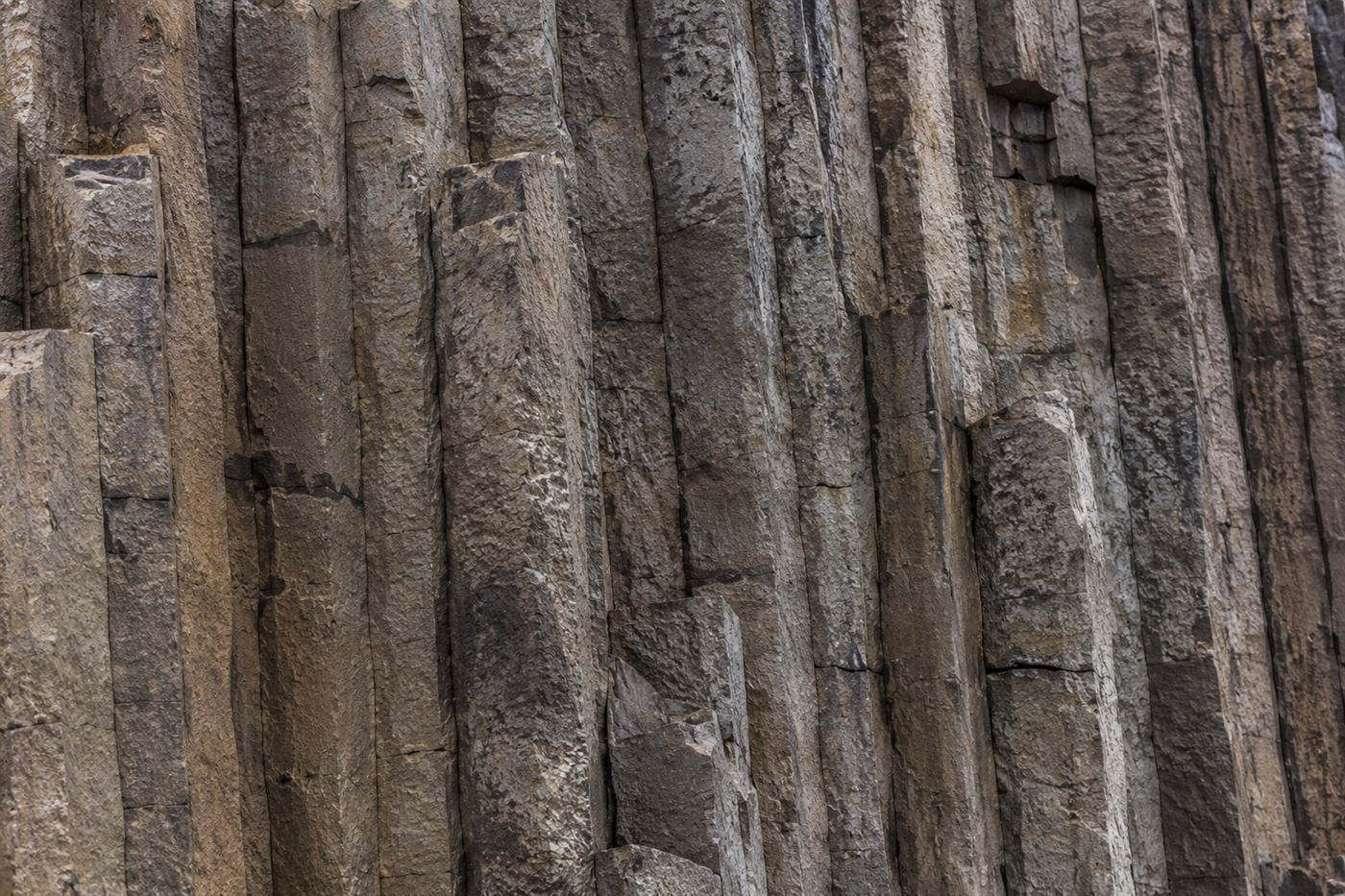
The rock itself is igneous rock, born from molten material that cooled slowly and cracked into the striking columns as it shrank, much the way drying mud splits into polygons. That much is agreed. What is not settled is the bigger picture of how the molten rock got there and what once surrounded it.
Some geologists think the tower is the hardened throat of an ancient volcano, exposed after the softer rock around it wore away. Others argue the molten rock never reached the surface at all, cooling underground before erosion stripped away everything above and left the tough igneous rock standing alone. More than a hundred years of study have narrowed the arguments without ending them, and the exact life story of Devils Tower remains genuinely open.
America's first national monument
In 1906 a new law gave the American president the power to protect places of natural or cultural importance by declaring them national monuments, and the first place chosen for that honour was Devils Tower. It set a precedent that would go on to safeguard canyons, forests and ancient ruins across the country.
Protection, though, brought its own tensions. The tower is a magnet for rock climbers drawn to its sheer columns, and their ropes and crowds sit uneasily beside the fact that the same rock is a living place of worship for Native nations. The park now asks climbers to voluntarily stay off during a sacred month each summer, an imperfect truce between very different ways of valuing the same stone.
The rock that landed in the movies
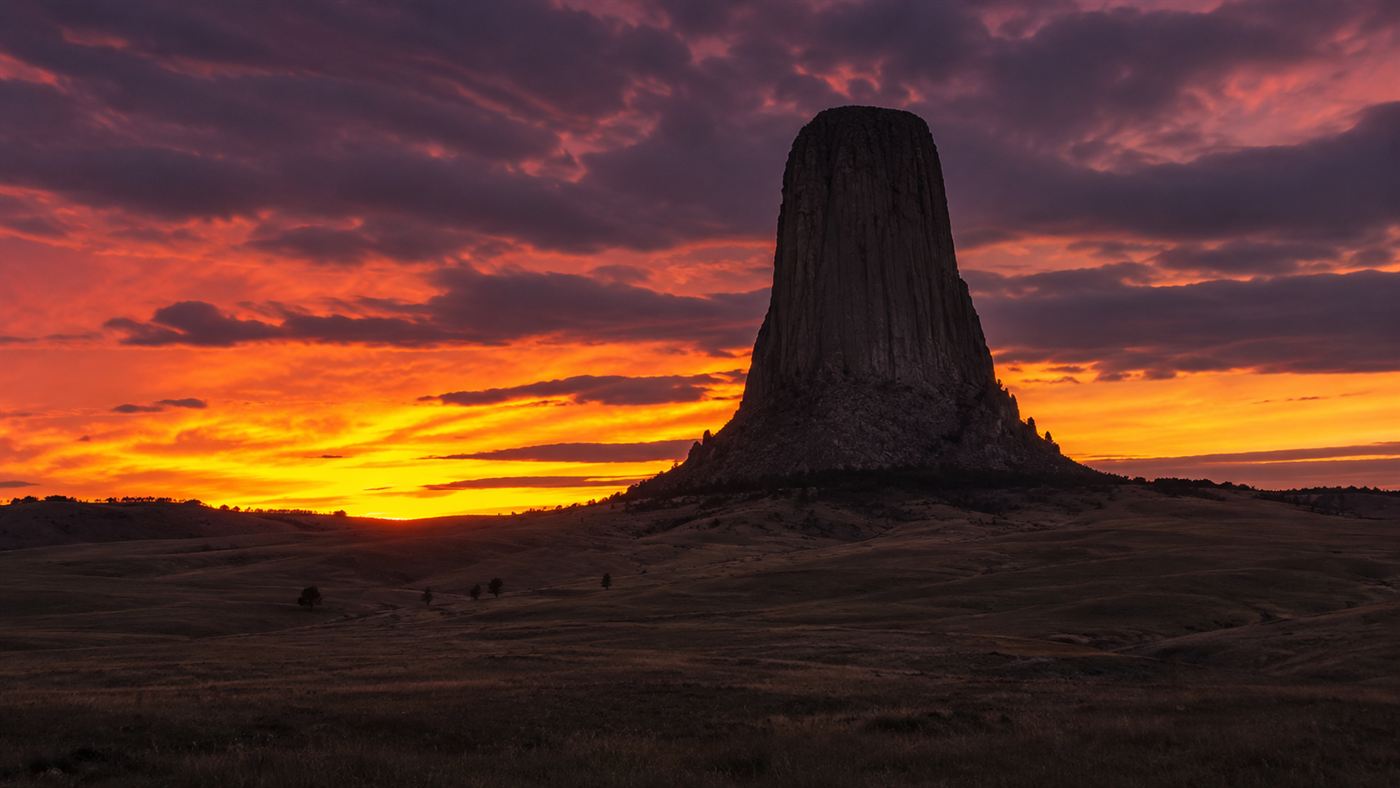
For millions of people, the tower is inseparable from the screen. Its unmistakable silhouette was chosen as the landing site for the alien spacecraft in a famous 1977 film, and afterward the image of glowing lights hovering over the great rock lodged itself in popular imagination around the world.
That fame has been a mixed blessing. It drew waves of new visitors and cemented the tower as an icon, but it also wrapped a genuinely sacred place in a layer of alien-invasion kitsch, another outside meaning laid over a landmark that already meant something deep and specific to the people who knew it first.
The honest catch
It is easy to present the mysteries here as tidy trivia, but they carry more weight than that. The disputed name is not just a fun fact; it is a real and continuing disagreement about whose story a place belongs to, with Native nations still seeking to reclaim a name that a stranger's error replaced more than a century ago.
And the geological uncertainty is a useful reminder that nature does not owe us clean answers. We can stand before an object as huge and solid as Devils Tower, study it for generations, and still be unable to say for certain how it was made. The tower keeps both of its secrets, the human one and the earthly one, and is arguably more compelling for holding on to them.
A rock so striking it became a nation's first monument and a movie's alien beacon still cannot tell us for sure how it was born, and wears a name its first people never gave it. Should a landmark like this keep the name most of us grew up with, or go back to the one that came before? Tell us what you think in the comments.
Related reading: the Yosemite firefall, another Western wonder people flock to see. See also the sailing stones that puzzled the desert for decades, and the ancient Serpent Mound whose builders remain a mystery.