A star engineer built a gleaming stainless-steel sports car with wings for doors, watched his company die in a drug scandal, and then a Hollywood film turned his flop into an icon
On paper it had everything: a famous designer, a charismatic founder, and a look like nothing else on the road. In reality it was slow, overpriced and late, and the company behind it imploded in bankruptcy and a cocaine sting. And yet, somehow, this failed car became one of the most beloved machines in the world.
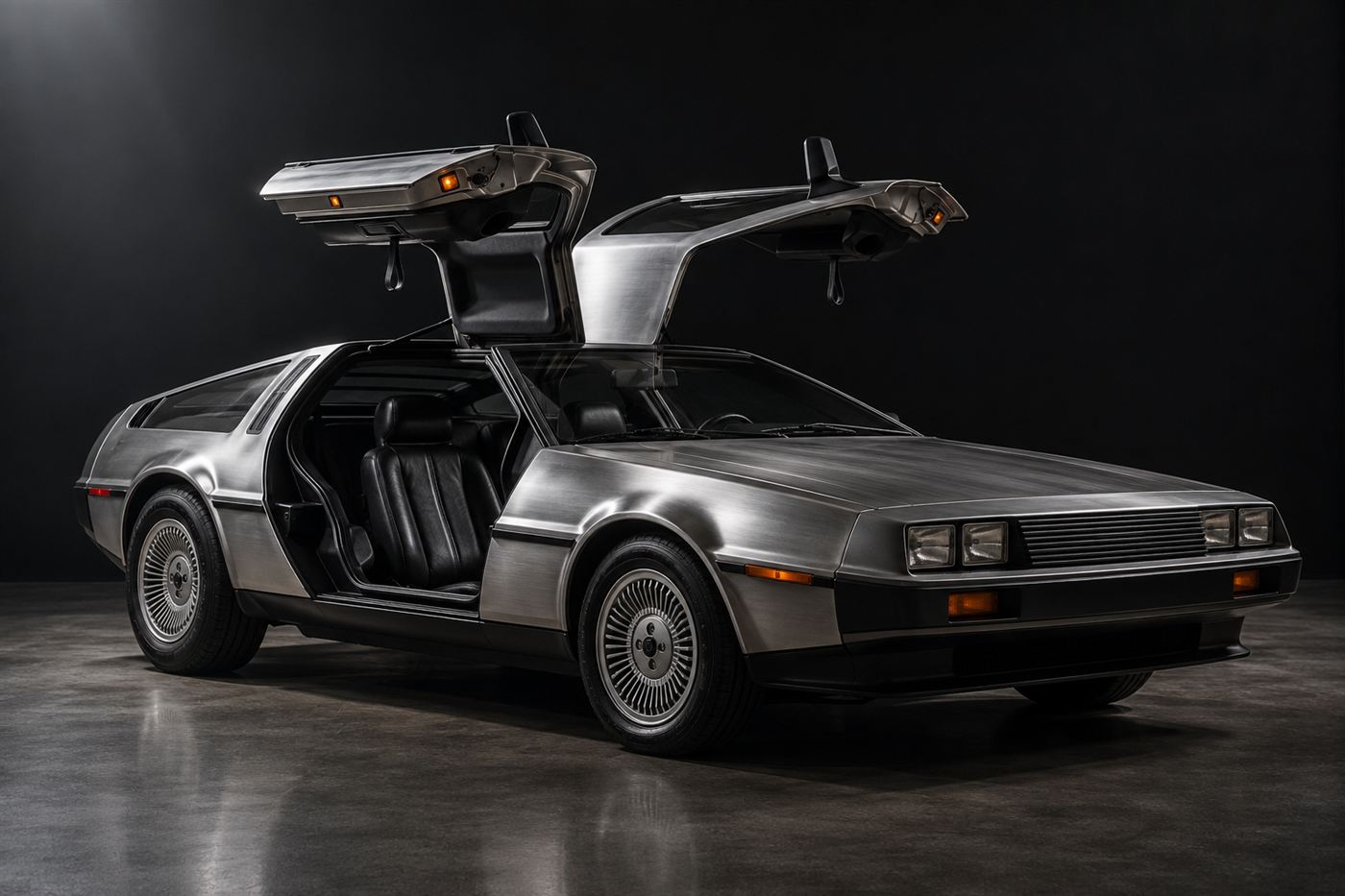
The stainless-steel body and gullwing doors made the DeLorean unmistakable. Illustration: Watts & Wild.
John DeLorean was a genuine star of the American car industry. At General Motors he had helped create the muscle car that defined a generation and became the youngest head of a division, a charismatic, flashy executive who seemed destined to run the whole company. Then, in the 1970s, he walked away to build a car with his own name on it.
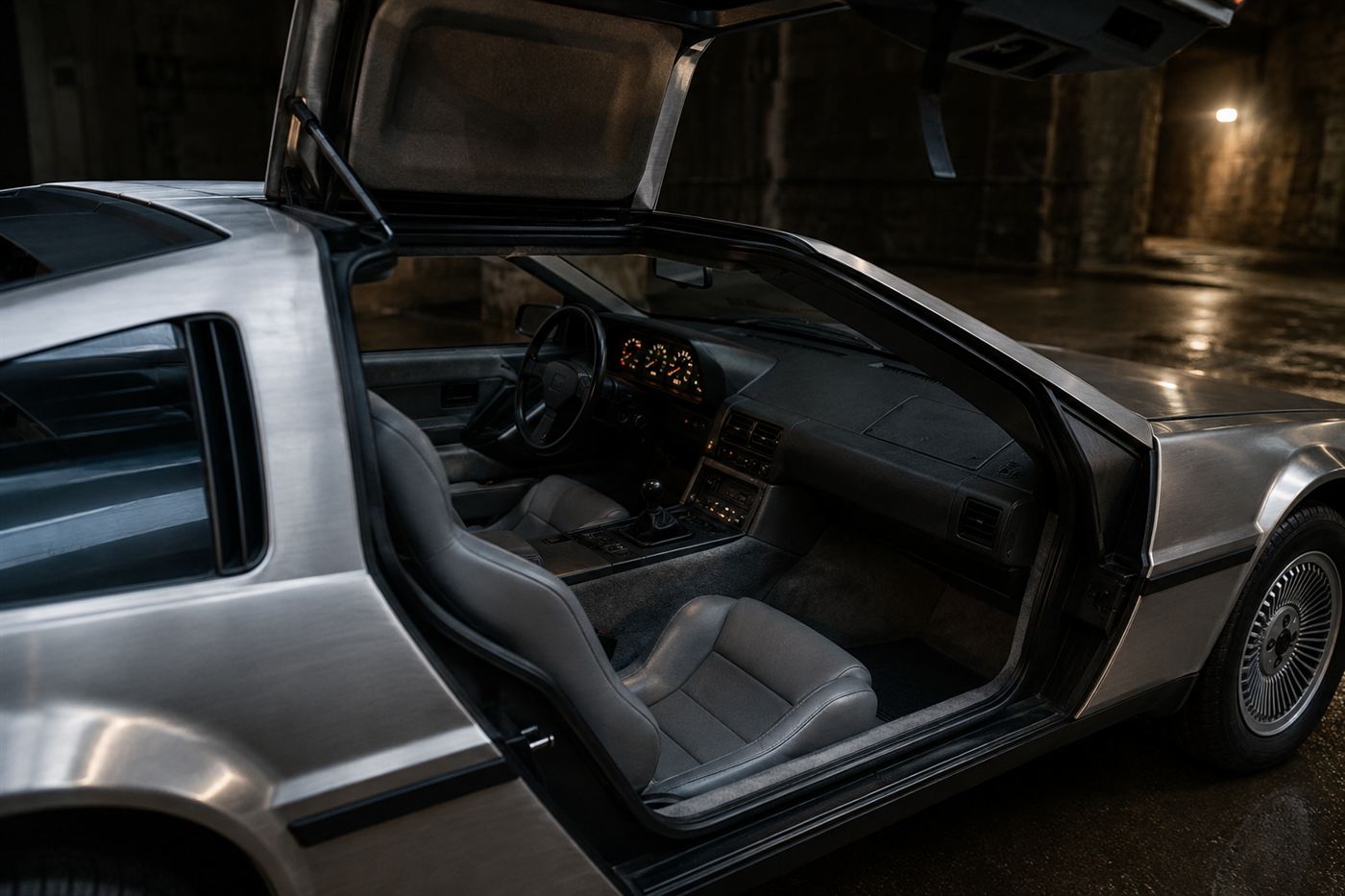
The result was the DeLorean DMC-12, and it looked spectacular. It had a body of bare brushed stainless steel that never needed painting, gullwing doors that opened upward like wings, and lines drawn by one of the most celebrated designers in the world. When it appeared in 1981, it promised to be the car of the future.
The short version is that the future did not cooperate. The car underneath the gorgeous skin was a disappointment, the company was a financial disaster, and within about a year it had all fallen apart in spectacular fashion, only for the story to take a twist no one could have scripted.
A dream car with problems under the skin
The trouble was that the car was far better at looking fast than being fast. Its engine, a modest V6 shared with ordinary sedans, sat in the back and left the heavy, striking car feeling sluggish, and reviewers were blunt about the gap between the promise and the drive.
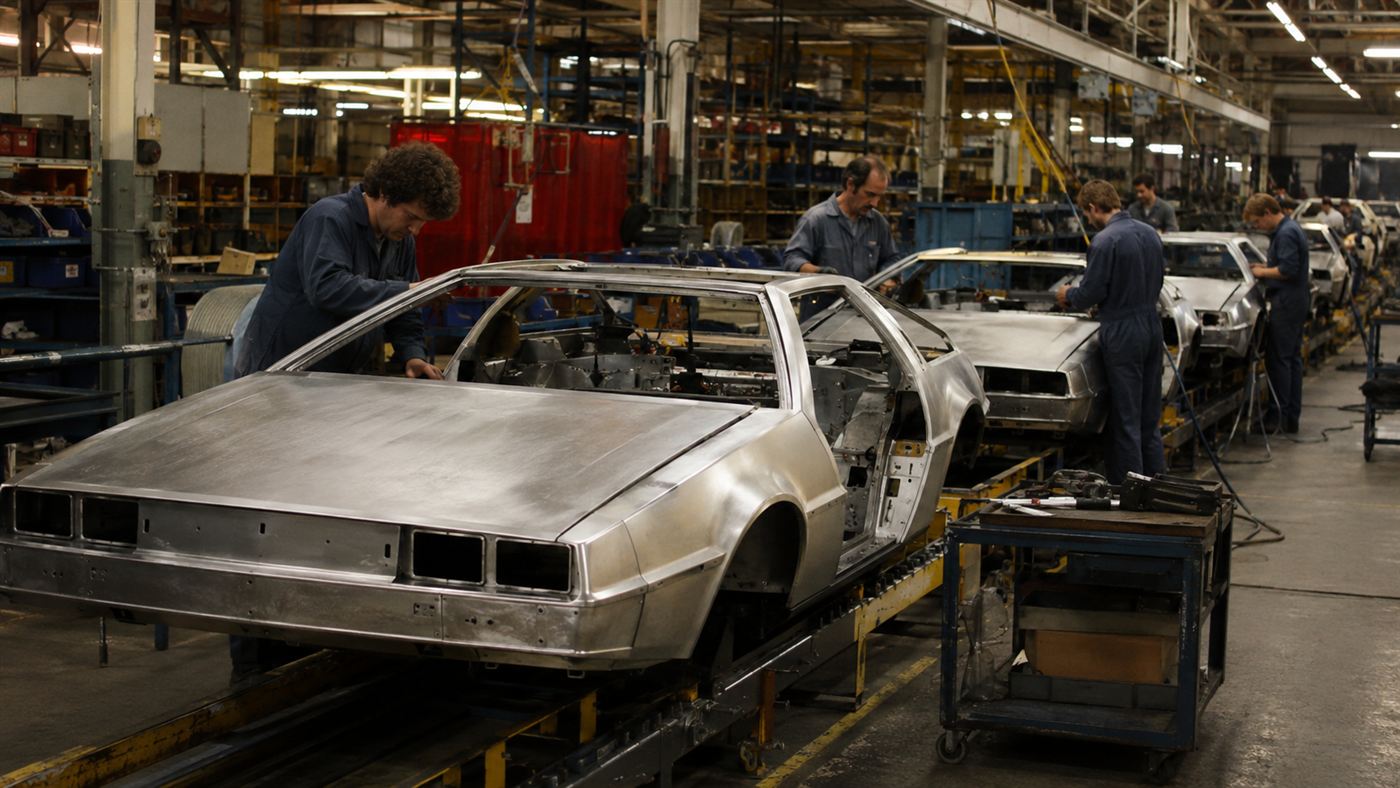
It was also expensive and plagued by quality problems, many of them born in a brand-new factory staffed by an inexperienced workforce. That factory sat in Dunmurry, in Northern Ireland, where the British government had poured in huge sums to create jobs during the Troubles, betting public money on DeLorean's dream.
Why the DeLorean company collapsed
Timing finished what the flaws had started. The car arrived just as a sharp recession hit its target market, and a pricey, imperfect sports car was suddenly a very hard sell. Cars piled up unsold, cash ran out, and by early 1982 the company was sliding into bankruptcy with debts it could not cover.
Then came the scene that sealed the legend. Desperate for money to save his company, John DeLorean was caught in an FBI sting operation, filmed appearing to agree to a multimillion-dollar cocaine deal. He was arrested and charged with drug trafficking, and the newspapers had their villain.
The trial that ended in acquittal
The courtroom story did not go the way the headlines expected. At his 1984 trial, his lawyers argued that he had been entrapped, lured into the deal by government agents who had dangled it in front of a drowning man. The jury agreed, and he was acquitted of the drug charges.
But an acquittal could not raise the dead. The company had already gone under, the Northern Ireland factory had closed, thousands of jobs were gone, and the public money was lost. John DeLorean walked free, yet the enterprise that carried his name was finished, and it looked as if the car would be remembered, if at all, only as a punchline.
Did a movie really save the DeLorean?
Then Hollywood intervened. In 1985 a film called Back to the Future turned the DeLorean into a time machine, and its stainless steel wedge, doors flung open and dashboard glowing, roared across cinema screens worldwide. Almost overnight the failed car became one of the most recognizable vehicles on Earth.
It is important to be clear about what the film did and did not do. Back to the Future came out years after the company had died, so it saved no jobs and made him no fortune. What it saved was the car's reputation, transforming a commercial flop into a pop-culture treasure that fans now restore, cherish and line up to photograph.
The honest catch
The neat redemption story needs a few asterisks. The acquittal rested on entrapment, which is not the same as a clean record; DeLorean faced other accusations over how company and government money had been handled, and the fuller portrait of him is far more complicated than either hero or victim. He was a brilliant, reckless, slippery figure, not a simple martyr.
And the car itself was, honestly, not very good. Its fame is cultural, not mechanical, earned on a film set rather than a race track. That may be the strangest part of the whole tale: a slow, flawed, financially doomed machine outlived its far better rivals not because of what it was, but because of a story we told about it. The DeLorean survived by becoming a legend, which is a kind of time travel all its own.
A gorgeous, doomed car that its own maker could not save was rescued from oblivion by a movie about time travel, decades after the factory went dark. Would the DeLorean be remembered at all today if a film crew had picked a different car? Tell us what you think in the comments.
Related reading: the Tucker 48, another visionary car crushed before it could take off. See also the GM EV1, the electric car that was leased, loved and then destroyed, and the early electric cars that once outsold gasoline.