The Danakil Depression in Ethiopia is one of the hottest, lowest places on Earth, where neon acid pools bubble beside a lava lake and people still walk in to cut salt
If you wanted to film an alien planet without leaving Earth, you would go to the Danakil Depression. In this scorched pocket of northern Ethiopia, the ground glows in highlighter yellows and greens, a lake of molten rock churns in the dark, and the air can top 50 degrees Celsius. And people have lived and worked here for centuries.
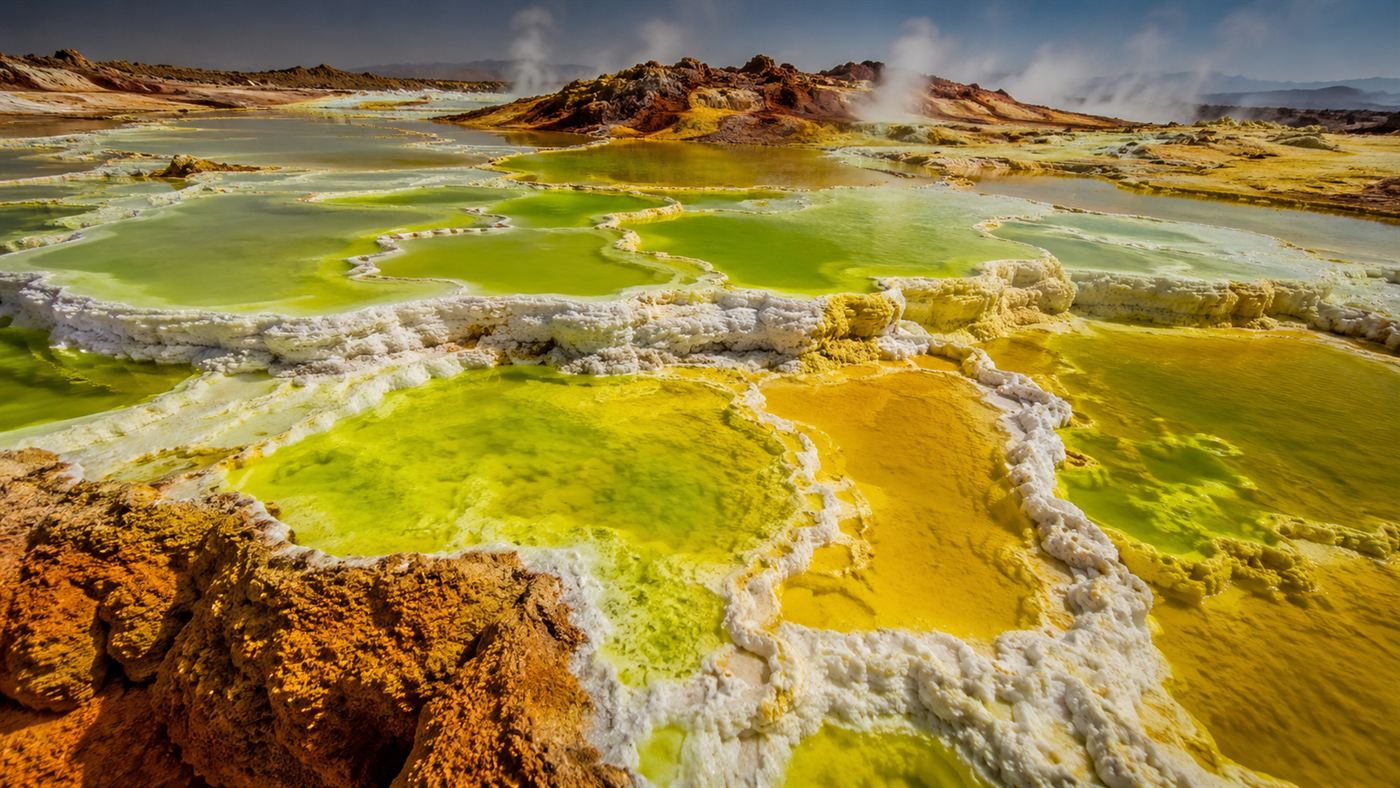
The acid springs of Dallol glow in unearthly colors, the strangest sight in the Danakil Depression. Illustration: Watts & Wild.
The Danakil Depression lies in the Afar region of northern Ethiopia, and by almost every measure it is a place of extremes. As CNBC has reported, it is one of the hottest and harshest places on the planet, sitting between 120 and 155 meters below sea level with average temperatures around 34 degrees Celsius and summer highs soaring past 50. It is hot, low, and almost rainless, and it is also, improbably, beautiful in a way that stops you cold.
The short version: The Danakil Depression in Ethiopia is one of the hottest and lowest places on Earth, formed where three tectonic plates pull apart. It holds the neon acid springs of Dallol, the permanent Erta Ale lava lake, and vast salt flats that the Afar people have mined by hand for centuries, hauling the salt out by camel caravan.
A landscape torn open by the planet itself
The reason the Danakil is so strange is written in the ground beneath it. This is one of the few places on Earth where three tectonic plates meet and slowly rip apart, stretching and thinning the crust until volcanic heat pushes up close to the surface. The land has sunk far below sea level and is still sinking, and geologists see it as a rift in the act of becoming a future ocean, tens of millions of years from now.
That slow tearing is what powers everything visible here: the volcanoes, the boiling springs, the salt left by seas that flooded in and evaporated away. Standing in the Danakil is standing on a wound in the planet, one that leaks fire and acid and heat, and the effect is less like a landscape than like a chemistry set left running for a hundred thousand years.
The neon acid pools of Dallol
The signature sight is Dallol, a hydrothermal field that looks flatly impossible. Superheated, mineral-loaded water rises through the salt and paints the ground in surreal color, brilliant yellows and greens and oranges from sulfur, iron, and other dissolved minerals, ringed by delicate white and rust-colored crusts. The pools steam and hiss, some of them close to the acidity of battery acid.
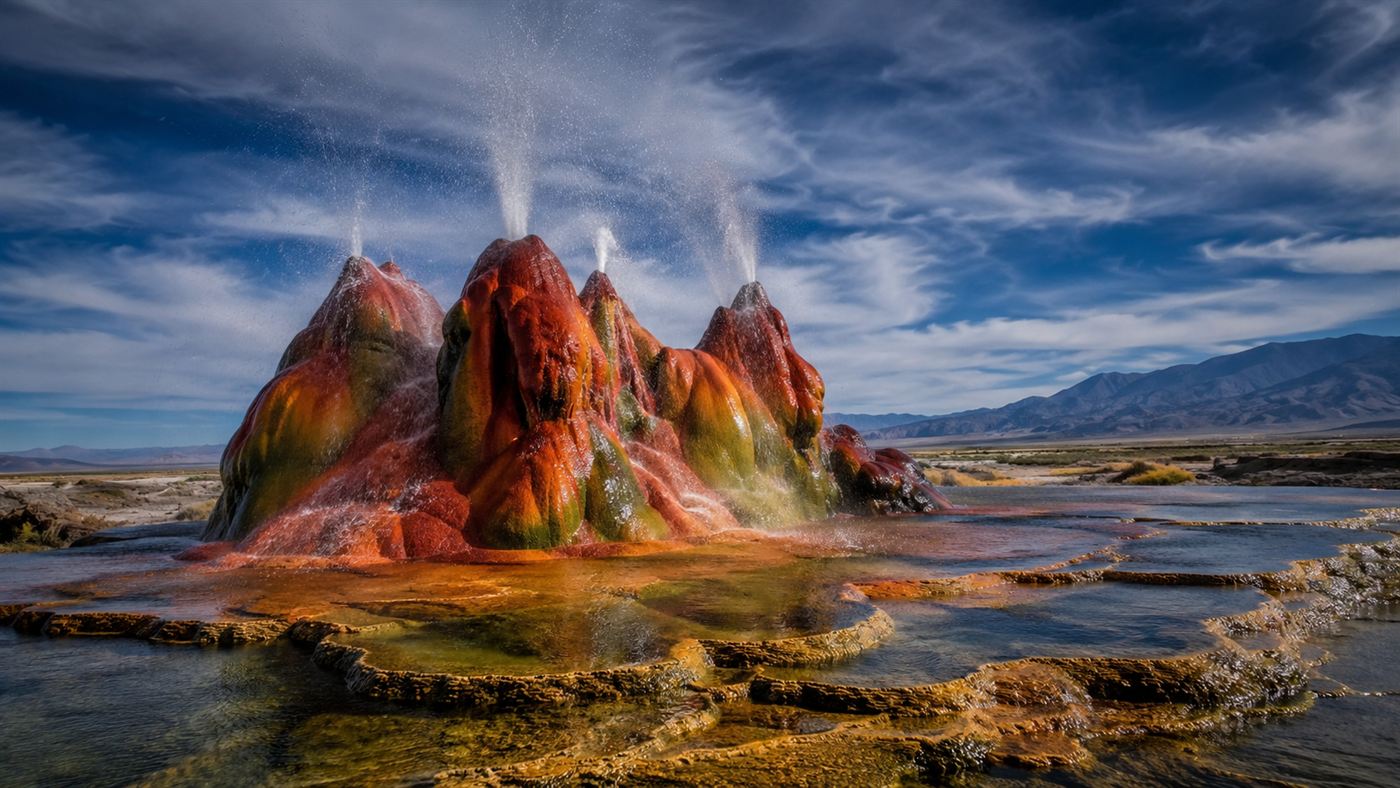
It is gorgeous and it is lethal. The same chemistry that makes Dallol glow like a coral reef would burn skin and lungs, and the crusts that look like solid ground can be a thin shell over scalding brine. It is one of those rare places on the planet that is genuinely, chemically hostile to the humans who come to marvel at it, a cousin to the eerie wonders of a botched geyser in the Nevada desert.
A lake of fire that never goes out
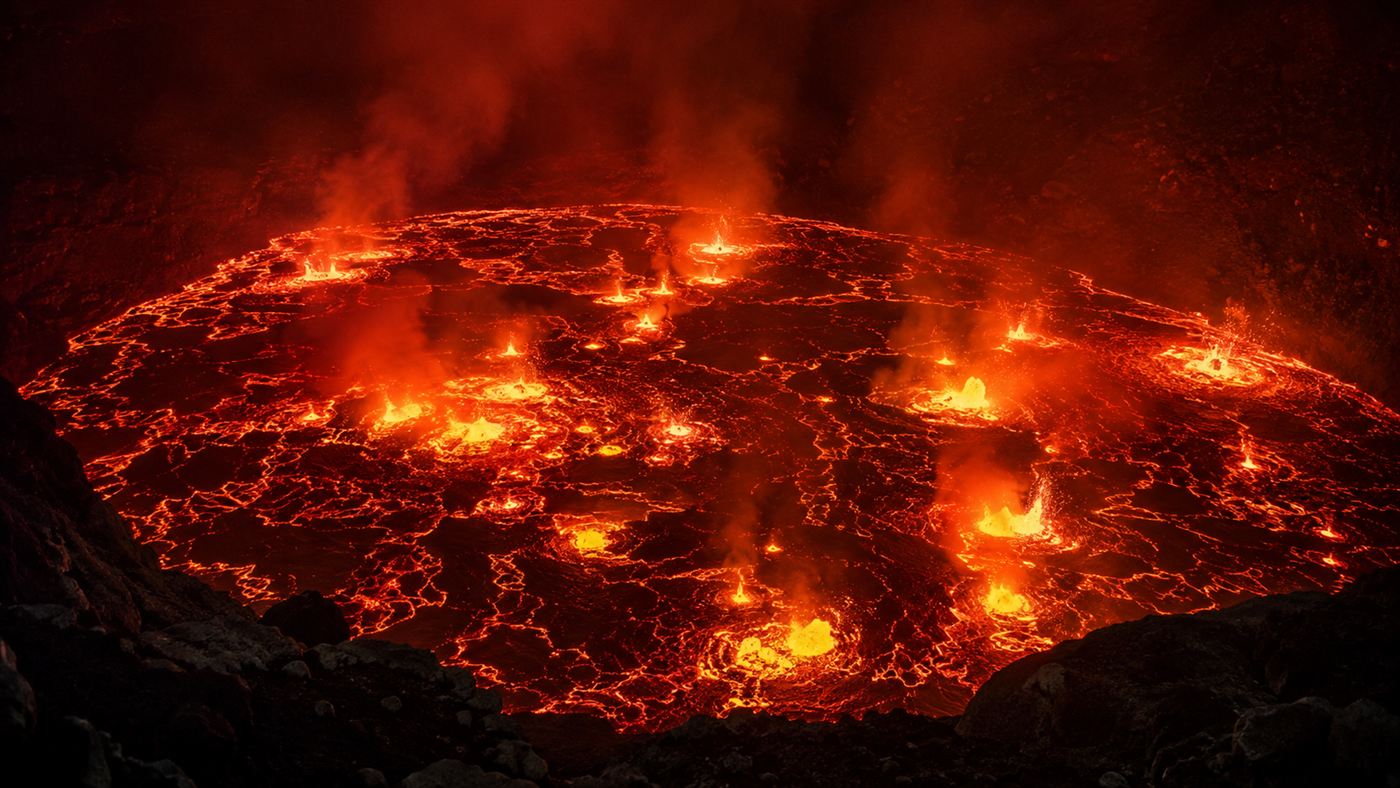
Not far from the acid fields stands Erta Ale, a low volcano cradling something almost no other place on Earth can offer: a permanent lava lake. Most molten rock cools and crusts over, but here a pool of glowing, churning lava has stayed open and alive for decades, hissing and spitting in its crater like a window straight down into the planet's furnace.
To see the Erta Ale lava lake you camp on a live volcano and walk up in the cool of the night, and the reward is the sight of raw molten rock, black crust splitting to reveal the orange glow beneath. There are only a handful of such lakes anywhere, and this one, out in the middle of one of the emptiest, harshest deserts on Earth, feels like the beating heart of the whole strange region.
Why does anyone live in the Danakil Depression?
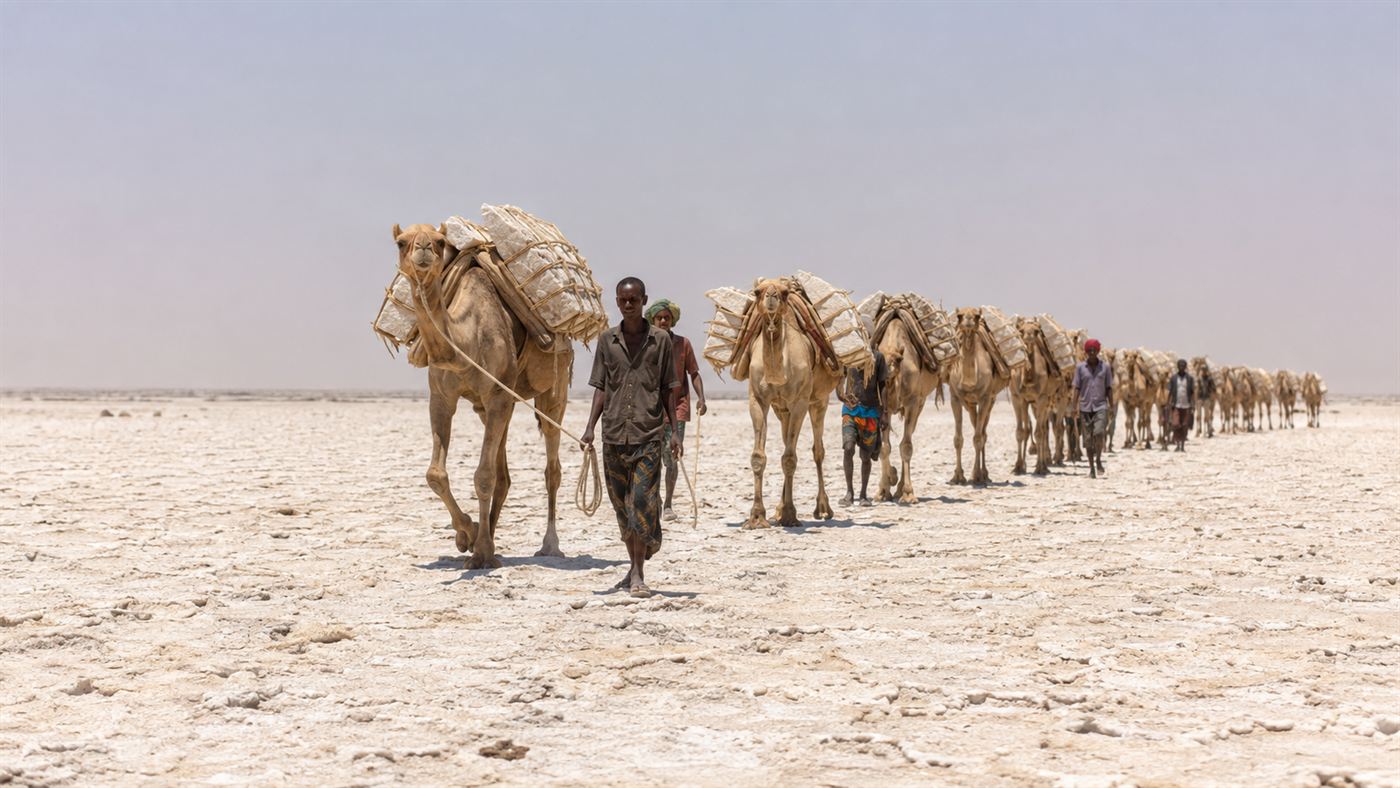
For all its hostility, the Danakil is not empty. It is home to the Afar, a people who have wrested a living from this furnace for centuries, and their trade is the very thing that makes the landscape so harsh: salt. Where ancient seas dried up, they left vast flats of it, and generations of Afar salt miners have gone out onto the blinding white plains to cut it by hand.
The work is brutally hard. Miners lever up and chop the salt into rough slabs weighing several kilograms each, then load well over a hundred kilograms onto every camel and lead long caravans across the shimmering heat toward the highland markets. It is one of Ethiopia's oldest living traditions, a centuries-old supply chain running on muscle, camels, and salt, carried on in temperatures that would send most visitors to the hospital.
Life in a place life should not exist
The Danakil is also a laboratory for one of science's biggest questions: where does life stop? The scalding, acidic pools of Dallol are home to extremophiles, microbes that thrive in conditions that would kill almost anything else, and researchers study them intensely, because a place this hot, salty, and acidic is one of the best stand-ins we have for early Earth and for Mars. If something can live here, the thinking goes, something might live there.
But the Danakil has drawn a line even for the toughest life. A 2019 study found that certain Dallol pools are so extreme, boiling hot and hyper-acidic and drenched in salt all at once, that not even microbes survive in them. That is a genuinely important finding: it marks a real edge of life on our planet, a place so harsh that biology simply gives up, which is its own kind of awe.
The honest catch
It is worth resisting the urge to treat the Danakil purely as a spectacle. Calling it alien or the most hostile place on Earth is a tourist's framing, and it glosses over the fact that the Afar have made this their home for a very long time, and that the salt trade so beautifully photographed is grueling, dangerous, poorly paid work now being squeezed by trucks and roads. The wonder belongs to people who live with the hardship, not just to those who fly in to see it.
The dangers are real too, and not only the heat and acid. This is a remote borderland that has seen genuine insecurity, and visitors have been caught up in violence there in the past, so the region is not the easy adventure a glossy photo suggests. None of that makes the Danakil less astonishing. It is one of the strangest surfaces our planet offers, a place where the Earth is tearing itself open in slow motion, painting the ground in impossible colors, and daring life, and people, to make a go of it anyway.
Neon acid springs, a permanent lake of fire, and salt caravans crossing one of the hottest places people live, all in one torn-open corner of Ethiopia. Would you brave the heat and the acid to stand at the edge of a live lava lake, or is the Danakil a wonder best admired from a safe distance? Tell us what you think in the comments.
Related reading: The Door to Hell, a fiery gas crater that has burned in the Turkmenistan desert for half a century.
More from Watts & Wild
More in Curiosities →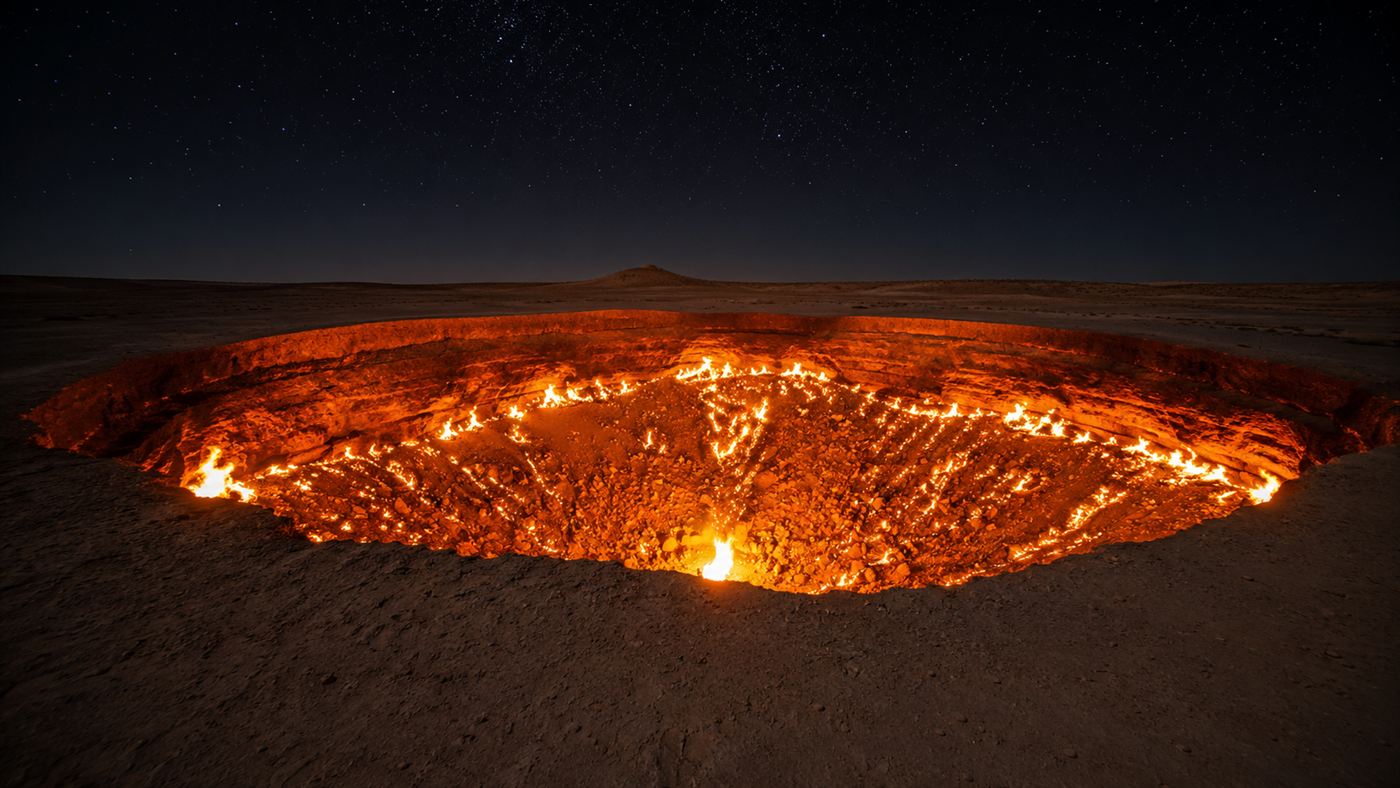

Maria covers heavy industry, mega-builds, and the strangest places where the planet shows what it is made of, for Watts & Wild.