Fly Geyser looks like one of America's most surreal natural wonders, but this rainbow-colored Nevada spring is really an accident, a well someone drilled, botched, and walked away from a century ago
Out in the high desert north of Reno stands one of the strangest sights in America: a cluster of glowing red and green mineral cones spitting scalding water into the sagebrush. Most people who see a photo of Fly Geyser assume nature spent millennia sculpting it. It has actually been growing since a drilling crew made a mistake and left.
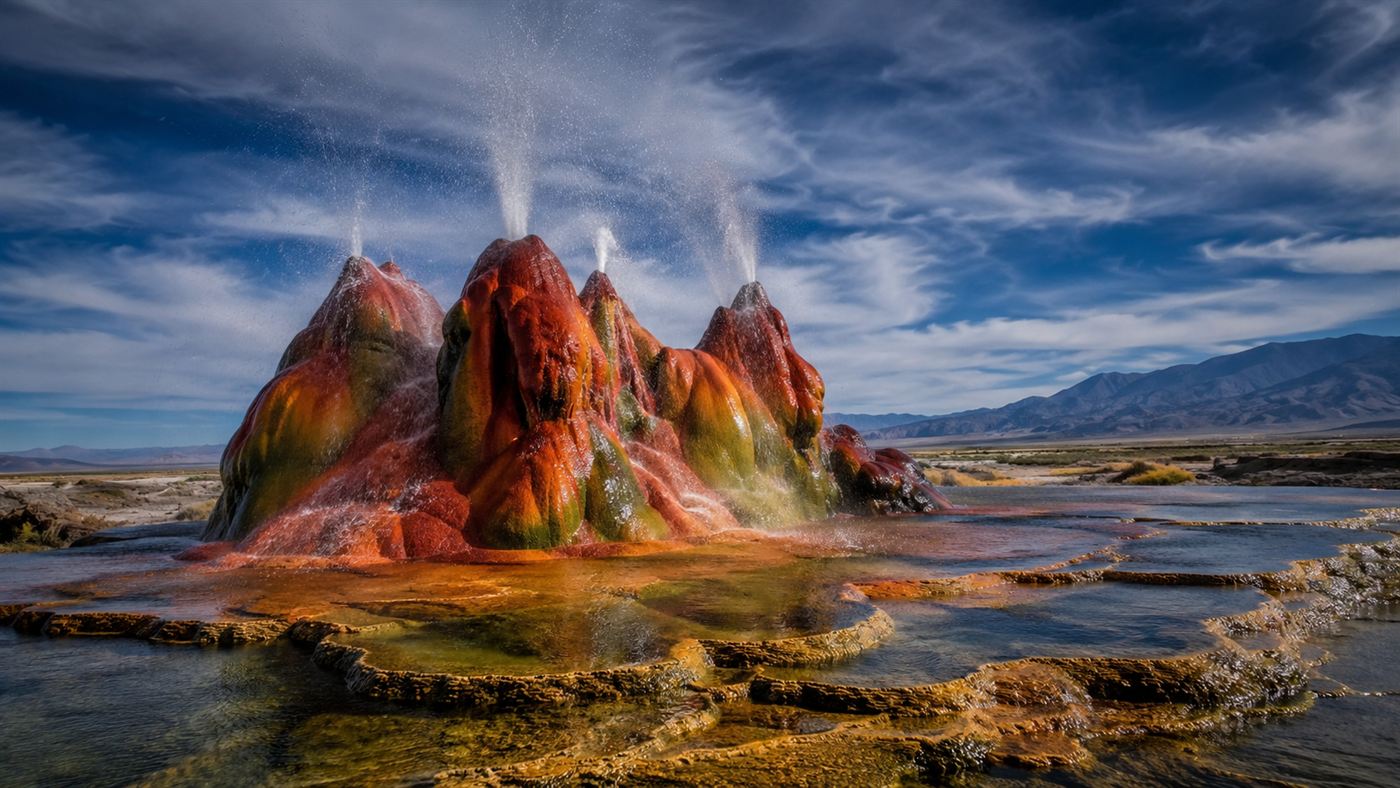
Fly Geyser's cones glow red and green in the Nevada desert, and none of it is natural. Illustration: Watts & Wild.
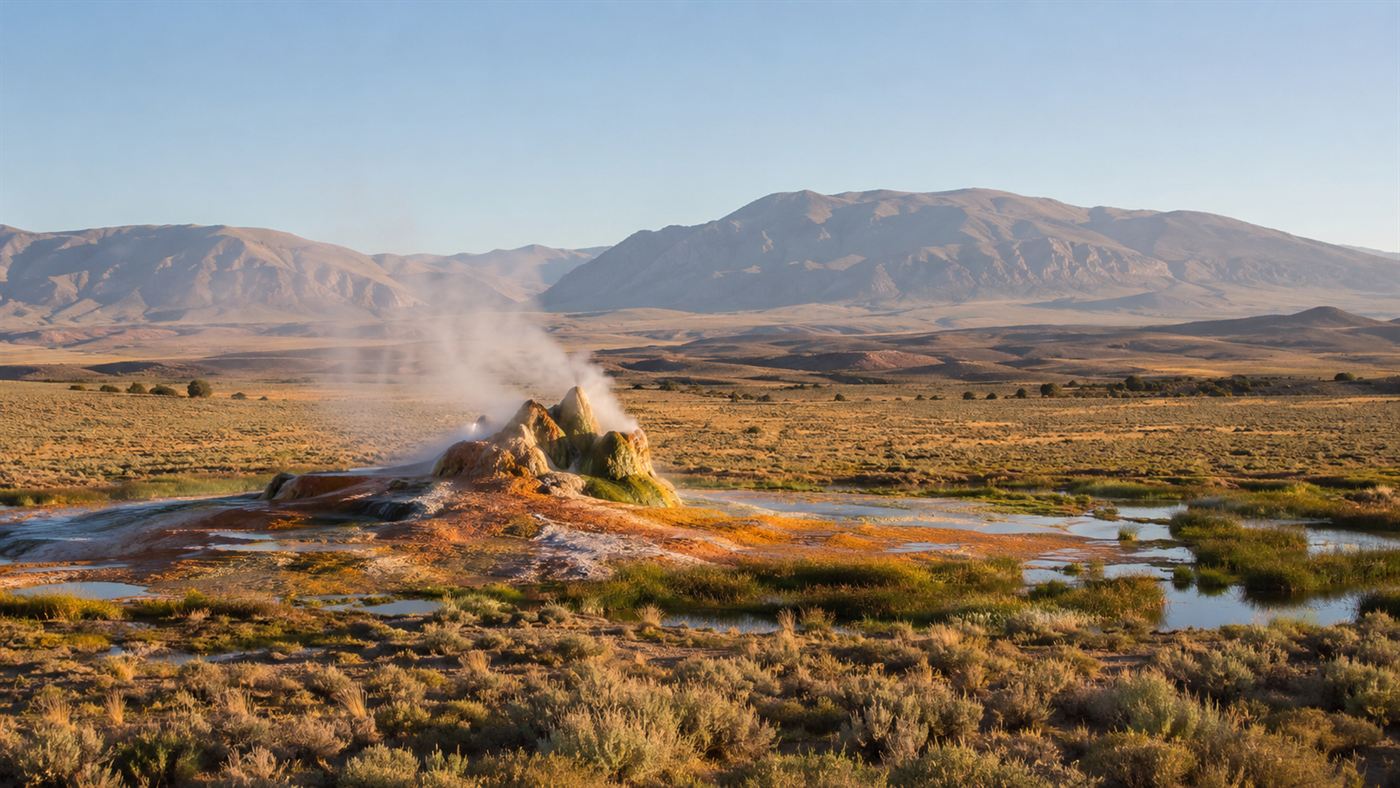
Fly Geyser sits on private land called Fly Ranch in Washoe County, Nevada, about 20 miles north of the tiny town of Gerlach and just west of the Black Rock Desert. It is small, only a few feet tall at the tips of its cones, but the colors make it look like something from another planet. And the truth of how it got there is even stranger than the thing itself.
As the documented history explains, the story began in 1916 when a well was drilled here in search of irrigation water. That first well tapped into the geothermal heat under the desert, but it was the second attempt, decades later, that created the wonder we know. Around 1964 a geothermal company drilled another well nearby, reportedly capped it, and the seal failed. Pressurized hot water found its way to the surface and simply never stopped.
The short version: Fly Geyser is a man-made accident in the Nevada desert. A geothermal well drilled around 1964 was left leaking, and scalding mineral water has been escaping ever since. As it cools, it deposits calcium carbonate and silica, slowly building the colorful cones, while heat-loving algae paint them red and green.
How a botched well built a rainbow
The mechanism is beautifully simple. The water rising from the failed geothermal well is loaded with dissolved minerals, and it is hot, sometimes over 200 degrees Fahrenheit. When it reaches the open air and cools, those minerals can no longer stay dissolved, so they precipitate out and harden onto whatever is there, layer after layer, year after year.
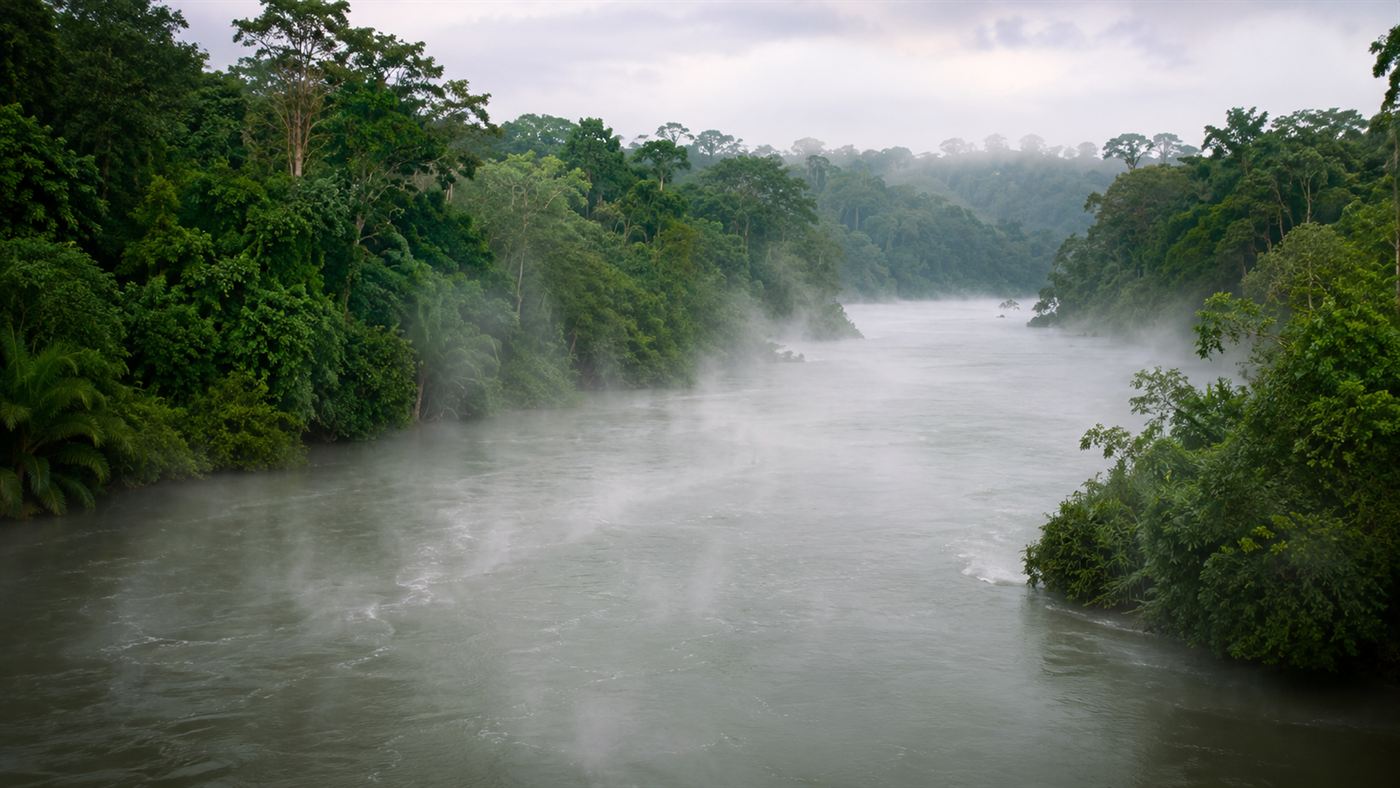
Given enough time, that slow drip of stone builds structures. At Fly Geyser it has raised a small family of cones, the tallest around five feet high, perched on a broader mound that reaches perhaps 25 to 30 feet across, all of it draped in stepped, terraced pools where the water spills down. Nobody designed any of it. The shape is simply what happens when mineral-rich water is left to run wild for sixty years, the same accidental artistry that created a boiling river deep in the Amazon.
What is Fly Geyser actually made of?
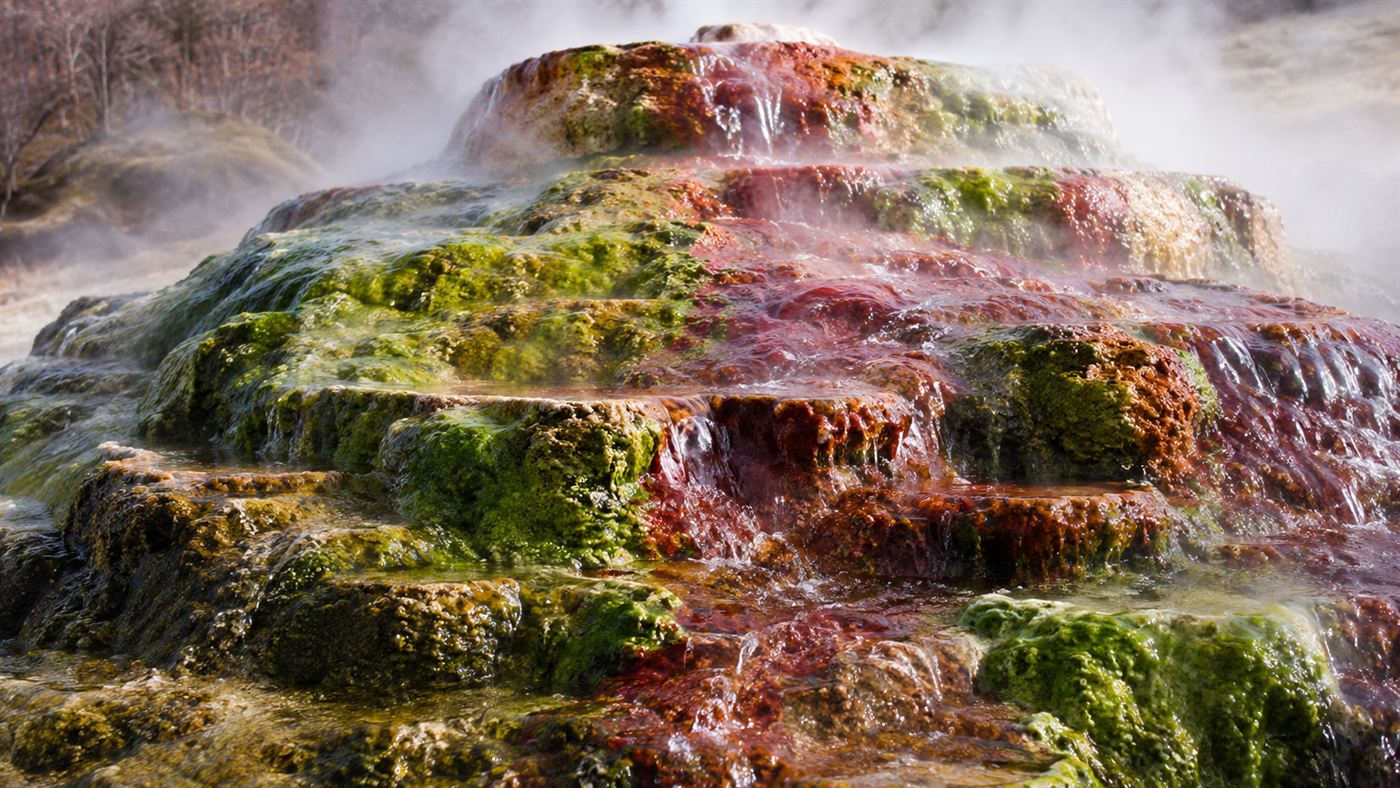
The rock itself is travertine, the same porous mineral that builds cave formations and hot-spring terraces around the world, made mostly of calcium carbonate with silica mixed in. It is the geological equivalent of limescale in a kettle, just on a scenic, decades-long scale. Because the water is always flowing, the geyser is technically still growing, adding fresh stone at the surface even now.
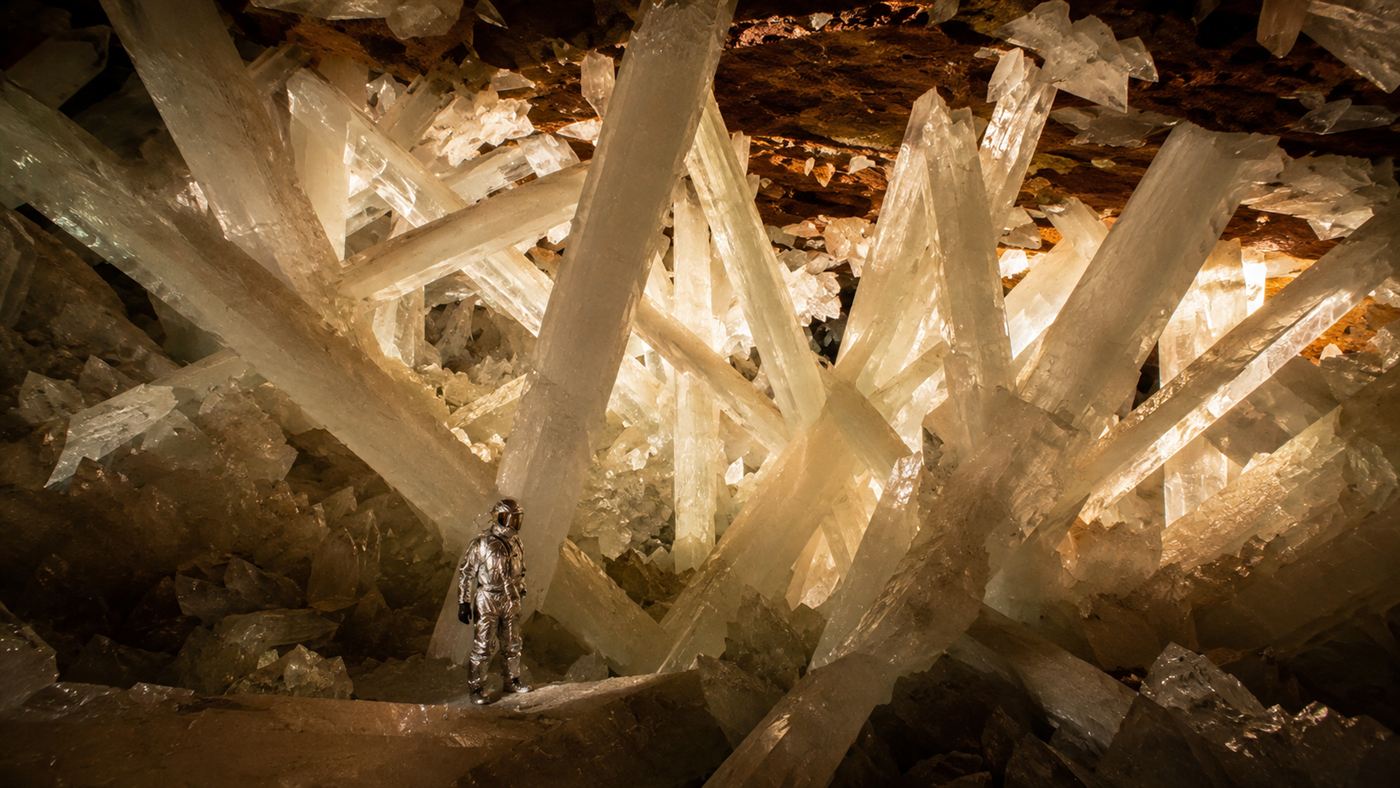
That constant wetness is also why it is alive with color. The travertine on its own would be a dull tan, but the warm, damp surfaces are a paradise for thermophilic algae, microbes that thrive in hot, moist conditions. They coat the mounds in brilliant greens and reds, and it is those living films, not the rock, that give Fly Geyser its unearthly, painted look. This blurring of the line between mineral and life echoes the crystal wonders of Mexico's Cave of the Crystals.
Why almost no one got to see it
For most of its life, Fly Geyser was one of America's great hidden sights. It sat on a working private ranch behind a locked gate in an extremely remote corner of the Nevada desert, so the closest most people ever got was squinting at it from the road or through a fence. That inaccessibility became part of its mystique, a secret marvel you could photograph but never quite reach.
The pictures still leaked out, of course, and the geyser became a bucket-list obsession for travelers and photographers who mostly had no legal way to walk up to it. For decades it existed in that strange limbo, world-famous and almost entirely off-limits, a postcard from a place hardly anyone was allowed to stand.
Hidden for decades, now guarded by Burning Man
That changed in 2016. As the Burning Man Project announced, the organization behind the famous desert festival purchased the 3,800-acre Fly Ranch, geyser included, for about $6.5 million. The festival is held on the nearby Black Rock playa, and buying the ranch put one of the region's natural landmarks into the hands of a nonprofit rather than a private landowner.
Access is still deliberately careful. Rather than throwing the gates open, the stewards allow small, guided three-hour nature walks out to the geyser from spring through fall, run in partnership with the local Friends of Black Rock-High Rock group. It is a compromise between letting people finally witness the thing and protecting a fragile, still-growing formation from being loved to death, the way the Burning Man community tries to tread lightly on the desert it gathers in.
The honest catch
It feels a little deflating to admit, but Fly Geyser is not a pristine wonder of nature so much as a very pretty industrial leak. The heat and minerals are genuinely the desert's, but the fountain only exists because someone drilled a hole and failed to seal it, and in a stricter sense it is an uncontrolled discharge that was simply never repaired. The original 1916 well is still out there too, along with other smaller accidental geysers, quiet reminders that this is a landscape people have been poking holes in for a long time.
None of that makes it less worth caring about. If anything, it is a gentler cousin of the harm humans usually do when we tap the earth for water and heat, a mistake that happened to turn beautiful instead of toxic. Fly Geyser is a reminder that the line between a wonder and a wound can be thin, and that sometimes, by pure luck, we drill into the ground and get a rainbow instead of a ruin.
A leaking well nobody bothered to fix has spent sixty years building one of the most beautiful sights in the American West. Does knowing that Fly Geyser is a man-made accident make it more fascinating to you, or a little less magical? Tell us what you think in the comments.
Related reading: The waterfall in New York with a flame that never goes out, fed by gas leaking from the rock.
More from Watts & Wild
More in Curiosities →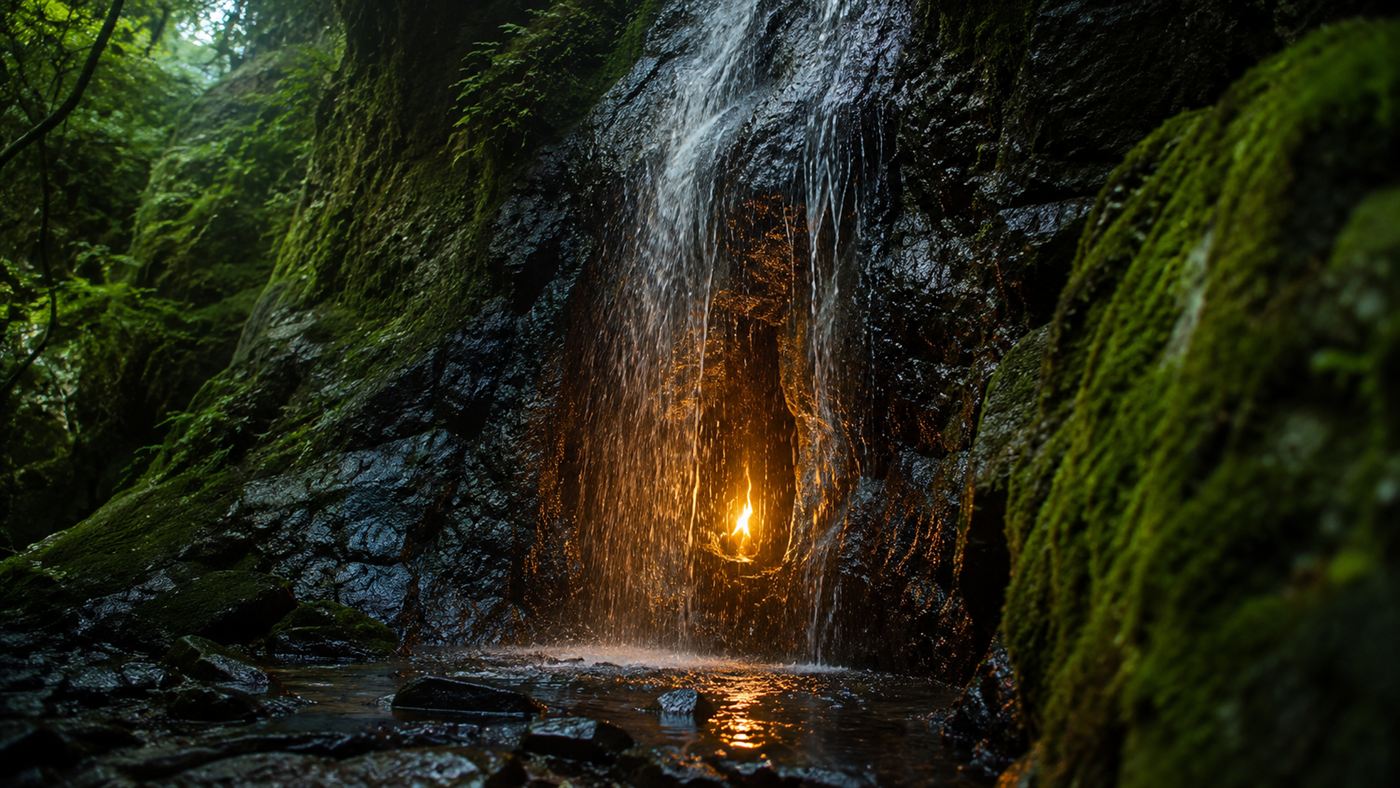

Maria covers heavy industry, mega-builds, and the natural world where energy and engineering meet the strange and beautiful, for Watts & Wild.