Damascus steel made swords of legendary sharpness, then the recipe vanished around 1750, and centuries later scientists found carbon nanotubes hidden inside the blades
For a thousand years, smiths in the Islamic world forged Damascus steel into swords of fabled sharpness, patterned with watery swirls no one could copy. Then, around 1750, the technique was lost. Centuries later, electron microscopes found something astonishing inside the old blades: carbon nanotubes.
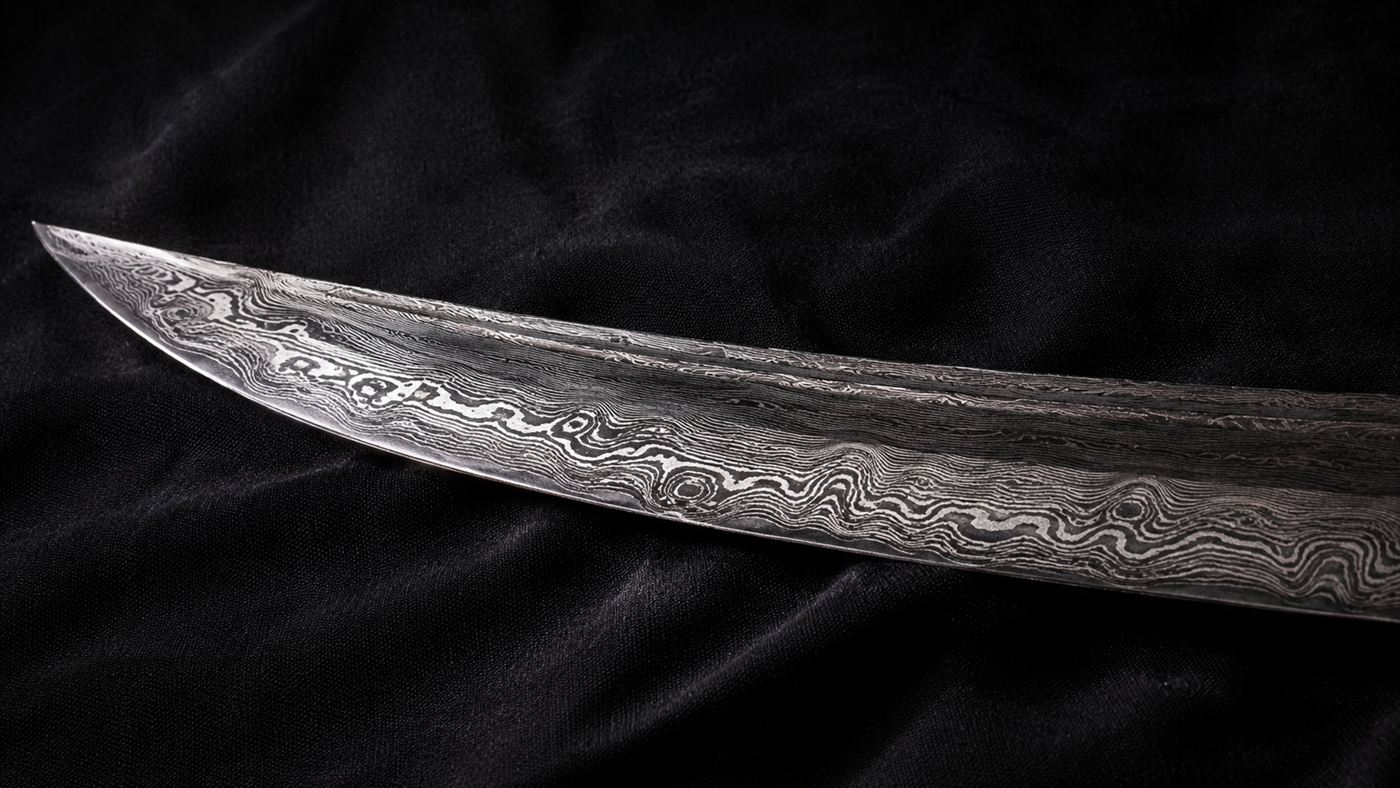
A Damascus steel blade, marked by the flowing watered pattern that made it famous. Illustration: Watts & Wild.
Damascus steel is the most famous metal in the history of war. For centuries, blades made from it were the most coveted weapons in the world, carried by warriors and emperors and wrapped in stories: a sword that could slice through a falling silk scarf, hold an edge that ordinary steel could not, and bend almost double without breaking. Across the surface of each blade ran a unique, flowing pattern of light and dark bands, like wind on water frozen into metal, and no two were quite alike.
And then the knowledge to make it disappeared. As historians of metallurgy record, the technique for forging true Damascus steel was lost to smiths around 1750, and for a long time no one could reproduce it, no matter how hard they tried. What had been the pinnacle of the swordsmith's art became a riddle, and the riddle has only deepened with what modern science has since found inside the blades.
What is Damascus steel? Damascus steel is a legendary patterned steel used for swords across the Islamic world until about 1750, prized for its sharpness, toughness and watery surface markings. Made from Indian wootz steel, its exact forging method was lost, and modern study has even found carbon nanotubes inside old blades.
Swords wrapped in flowing water
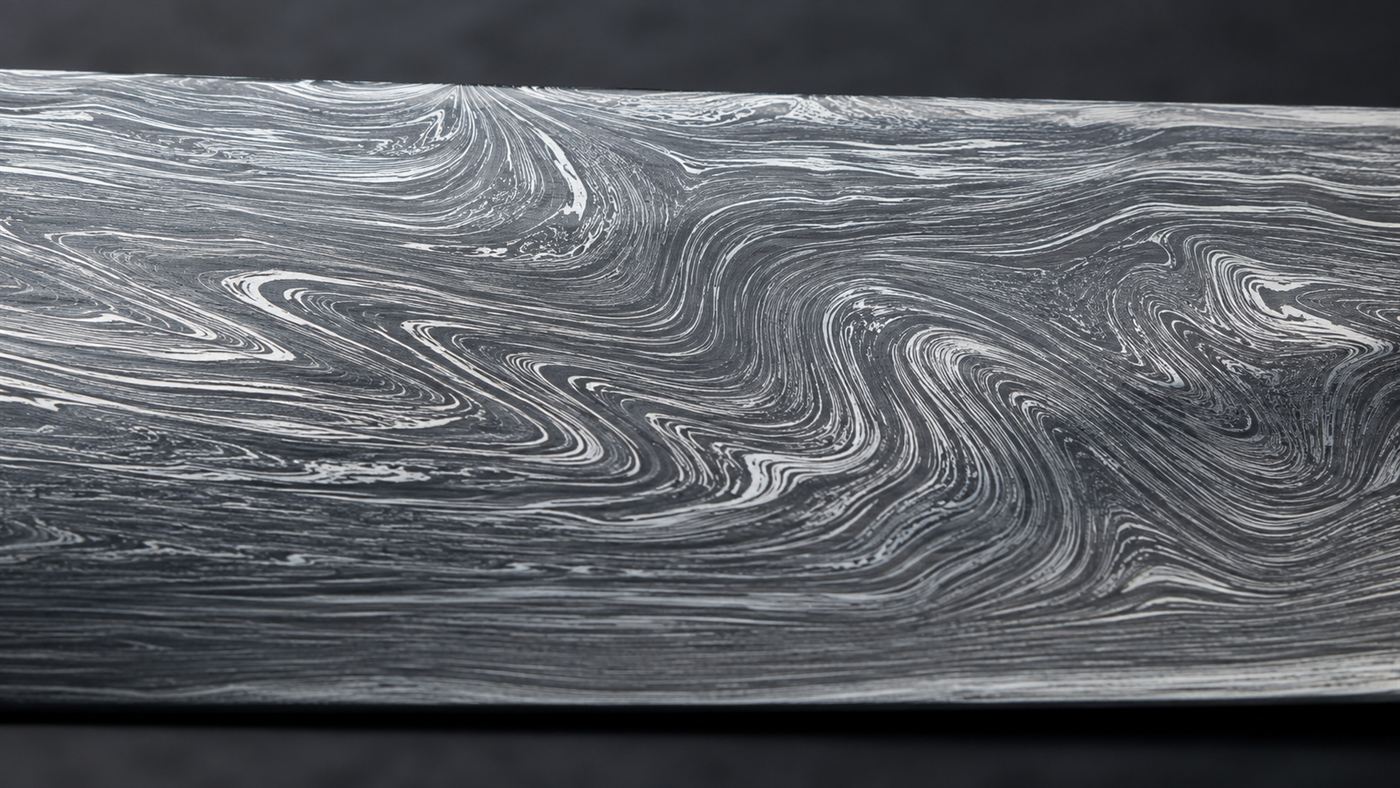
The thing that set a true Damascus steel blade apart, before you ever tested its edge, was its face. The surface carried a distinctive watered or damask pattern of swirling light and dark lines, produced by the steel's own internal structure rather than any decoration applied on top. To medieval eyes it looked almost magical, and it became the unmistakable signature of a superior weapon, copied and faked endlessly because it could not easily be matched.
Beneath the beauty was genuine performance. These blades really were unusually hard and sharp while also being tough rather than brittle, a combination that is difficult to achieve in steel even now, and that made them prized far beyond the lands where they were forged.
The secret was Indian steel
The raw material behind Damascus steel did not come from Damascus at all. It came from India and Sri Lanka, in the form of small cakes of a high-carbon crucible steel called wootz, which were traded westwards along caravan routes to Persia and Syria. There, skilled smiths worked the wootz into blades, and the prized watery pattern emerged from bands of iron carbide locked into the metal during that careful forging.
So the famous swords were really a collaboration across half a continent: Indian steelmakers producing an extraordinary raw material, and Middle Eastern smiths who knew exactly how to forge it without destroying the delicate internal structure that gave the blades both their pattern and their strength.
How the Damascus steel recipe vanished
Why did such a valuable craft simply die? Several things seem to have gone wrong at once. The trade that carried Indian wootz to the Middle Eastern smiths broke down through the eighteenth and nineteenth centuries, cutting off the special raw material. The ores used to make that wootz are thought to have contained tiny traces of certain elements, possibly vanadium and tungsten, that were quietly essential to the magic, and those particular ore sources appear to have been depleted.
On top of that, the knowledge was guarded and unwritten. A smith's method lived in his hands and his workshop, taught by long apprenticeship and rarely set down on paper, and what was written assumed things only a trained smith would know. So when the wootz ran out and the last masters of true Damascus steel retired or died, around the middle of the eighteenth century, there was no manual to fall back on. The craft did not fade slowly; it fell off a cliff.
Nanotubes in a centuries-old sabre
The strangest twist came in 2006. A team of German researchers led by Marianne Reibold and Peter Paufler at the University of Dresden examined a fragment of a seventeenth-century Damascus steel sabre under a high-powered electron microscope, and reported finding, woven into the metal, carbon nanotubes and tiny wires of iron carbide. Nanotubes are among the icons of modern nanotechnology, structures we think of as a twenty-first-century invention, and here they apparently were, grown by accident inside a sword three hundred years old.
The likely explanation is that the trace elements in the ore, combined with the particular cycles of heating and forging the smiths used, acted as catalysts that grew these structures inside the steel over many firings. If so, the old swordsmiths were practising a kind of nanotechnology centuries before anyone had the words for it, tuning their blades at a scale they could never have seen, simply by following a recipe that worked.
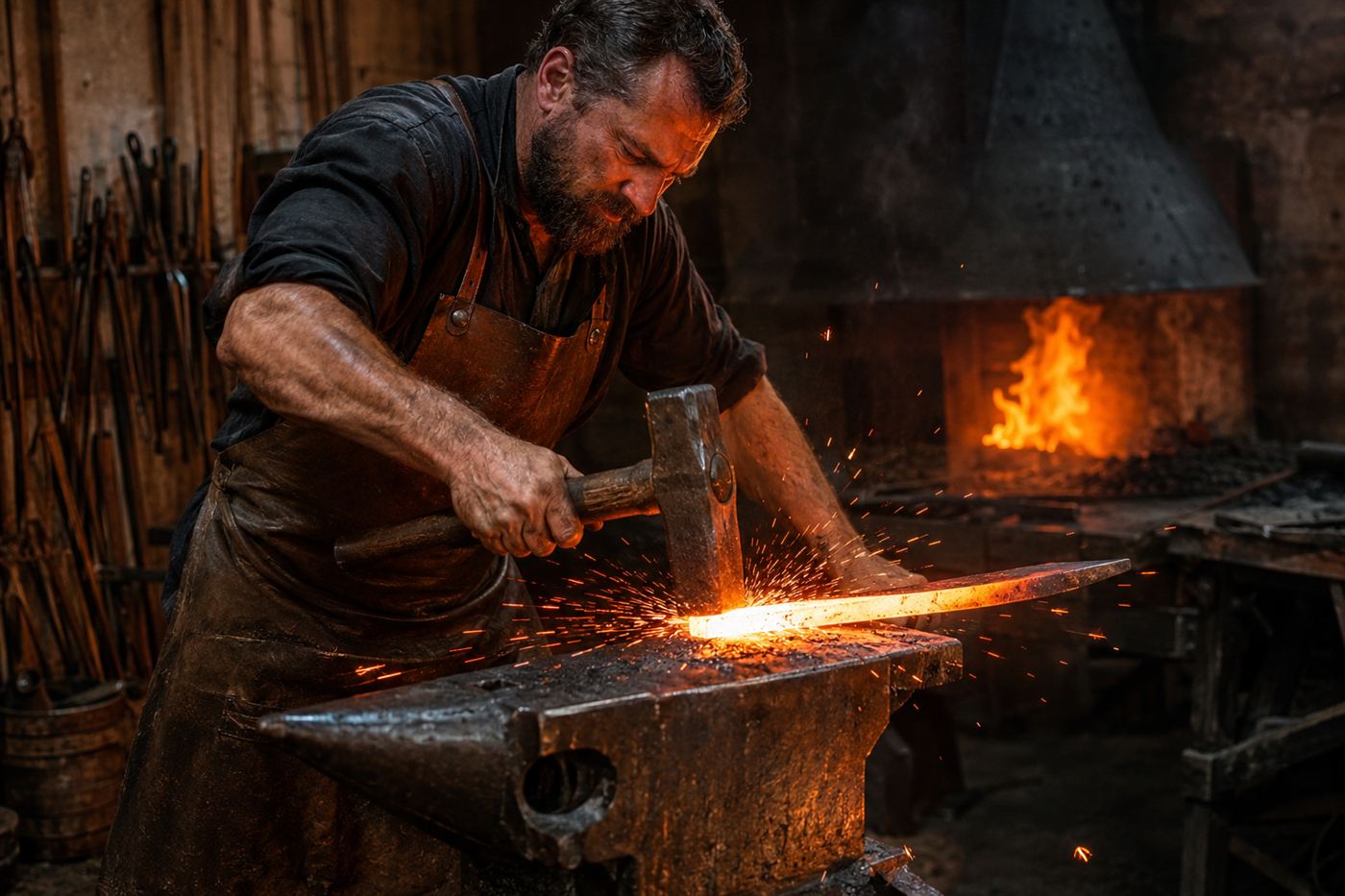
Relearning the lost art
The story does have a hopeful turn. Over recent decades, metallurgists and bladesmiths working together, notably the scientist John Verhoeven and the bladesmith Alfred Pendray, painstakingly reverse-engineered crucible Damascus steel. By paying close attention to carbon content, to the slow forging cycles, and to the crucial trace of elements like vanadium, they produced modern blades that reproduce the testable features of the originals: the high carbon, the banded carbide structure, and the genuine watered pattern brought out by light etching. The recipe, in other words, has been largely recovered.
The honest catch
A few cautions are in order. The headline-grabbing nanotube discovery is genuinely contested; later reanalysis, including by the Dresden group itself, softened the claim, and some metallurgists doubt that nanotubes are a real, characteristic feature of wootz at all rather than an occasional curiosity. And the wilder legends, of Damascus steel blades cutting through gun barrels or splitting hairs floating in the air, are the usual romantic exaggeration that gathers around famous weapons.
It is also no longer quite right to call the steel simply "lost", now that skilled smiths can make convincing crucible Damascus again, though whether their blades are truly identical to the medieval originals, down to the last microscopic detail, remains uncertain. What survives every caveat is the core marvel: for a thousand years, craftsmen with no microscopes and no theory of metallurgy made a steel so good the modern world struggled for two centuries to understand it, and they did it, it seems, by quietly engineering matter at the scale of atoms.
A steel so good it took the modern world two centuries to catch up, made by smiths who were doing nanotechnology without knowing it. Which lost craft would you most want to see brought back? Tell us in the comments.
Related reading: Greek fire, another lost recipe its makers guarded all the way into oblivion.