In 1944 a storage tank of super-cold liquefied gas in Cleveland cracked open, flooded the sewers with invisible vapor, and blew a whole neighborhood off the map in minutes
On an ordinary afternoon in October 1944, a giant tank on Cleveland's east side quietly split open. What poured out was not a flame or a bang but a cold, invisible fog that crept along the gutters and slid down into the sewers. When it finally found a spark, roughly a square mile of the city went up at once.
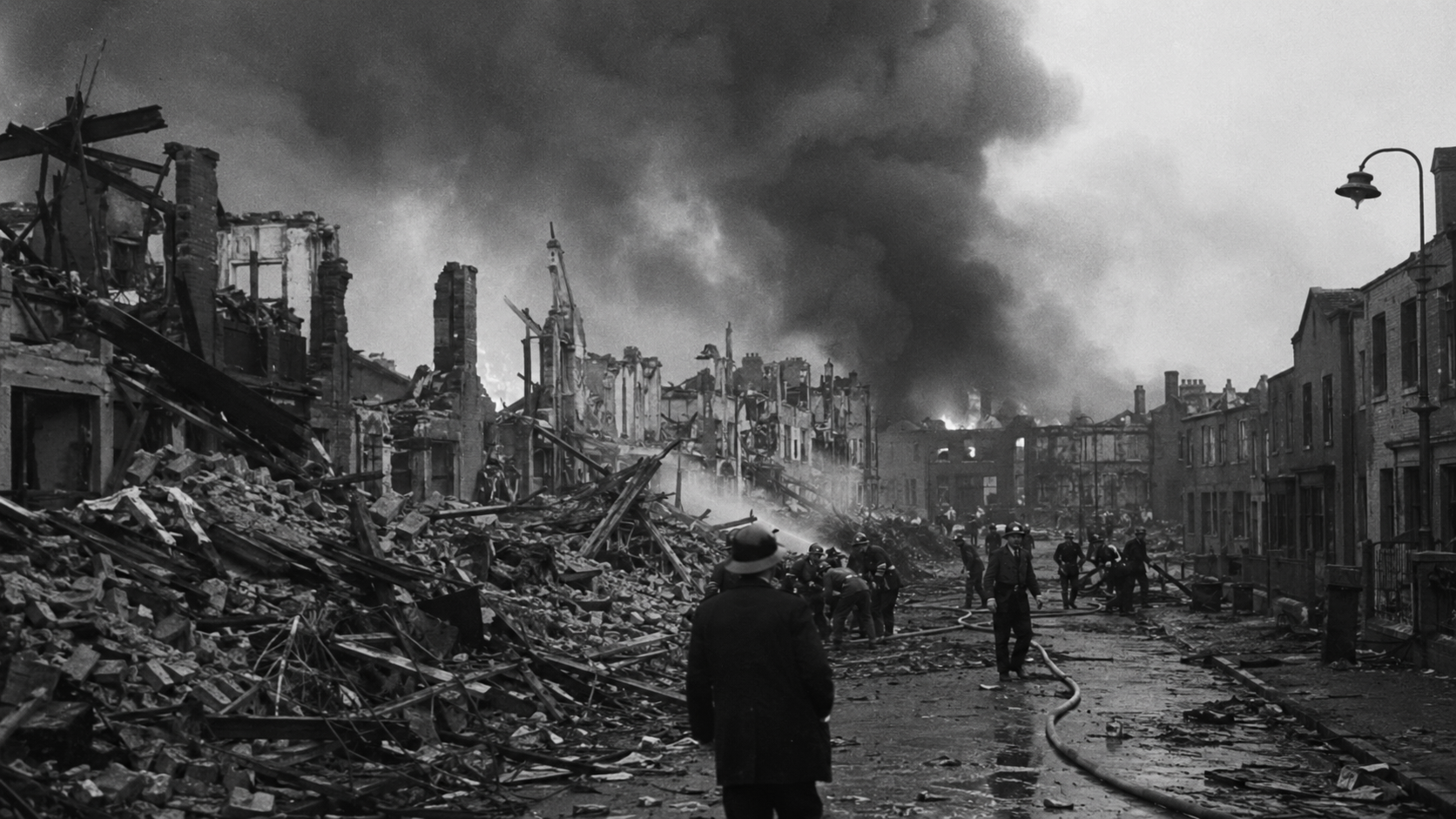
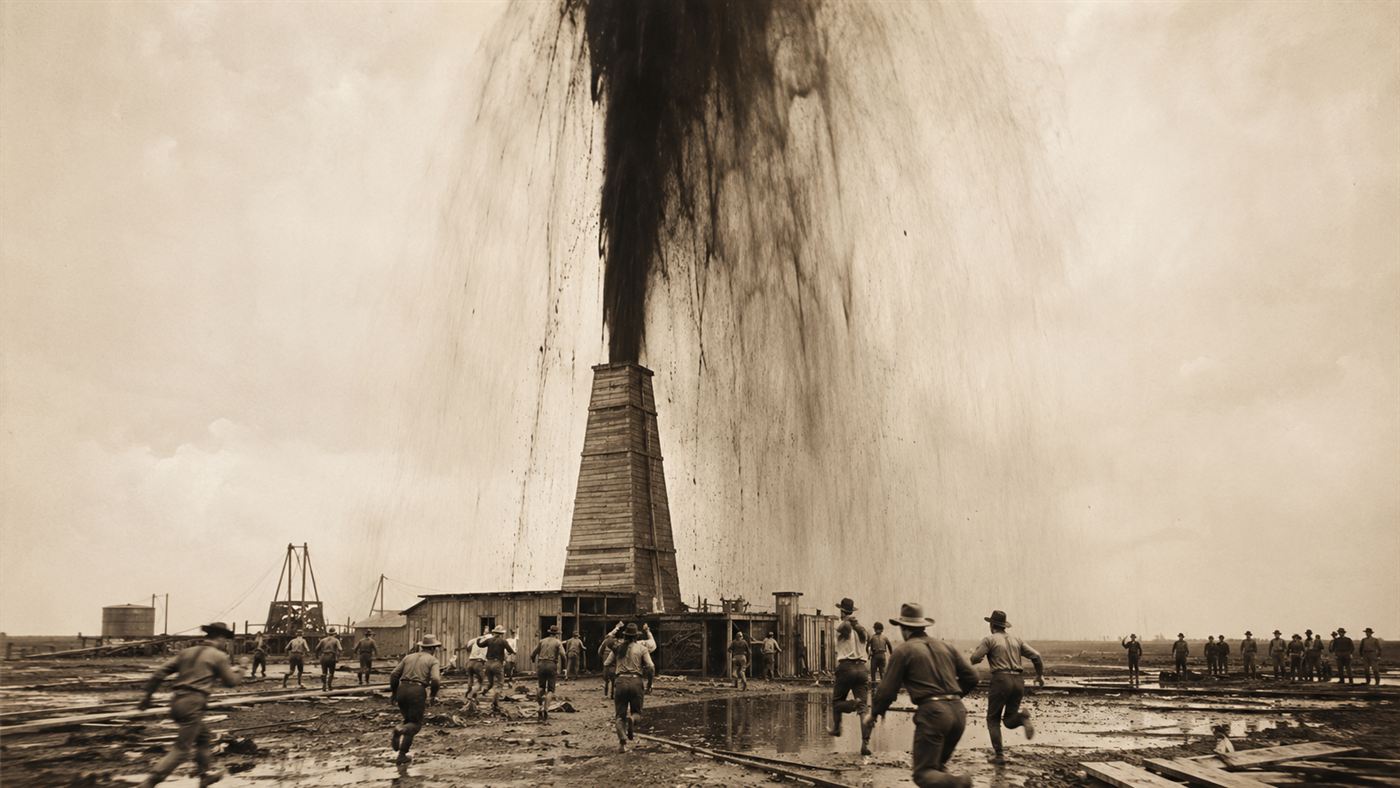
A working-class neighborhood erased in an afternoon. Illustration: Watts & Wild.
The date was October 20, 1944, and the place was the East Ohio Gas Company plant on Cleveland's crowded east side. The company had built something genuinely cutting-edge for the time: tanks that chilled natural gas until it turned to liquid, shrinking it hundreds of times over so a huge winter reserve could be squeezed into a small yard. It was clever, modern, and about to go catastrophically wrong.
What happened next became the Cleveland LNG explosion, and for a generation it was the reason America almost gave up on the idea of liquefied gas entirely. The technology was sound. The problem was the steel, the war, and a street grid that turned out to be a perfect fuse.
The short version: a new storage tank failed and dumped its super-cold contents into the open. The liquid flashed into an enormous vapor cloud, poured downhill into the sewer system, and detonated block by block. Around 130 people died, and the Cleveland LNG explosion set the whole industry back roughly twenty years.
Freezing gas to store a winter's worth
The idea behind the plant was smart. Natural gas takes up an enormous amount of space, so storing a lot of it for the cold months is hard. Chill it to around minus 260 degrees Fahrenheit, though, and it becomes liquefied natural gas, occupying about one six-hundredth of the volume. Suddenly a city's winter cushion fits in a handful of tanks. That is the promise the Cleveland LNG explosion would turn into a warning.
East Ohio Gas had run smaller tanks safely for years, and in 1944 it added a larger fourth one to keep up with wartime demand. On paper it was a triumph of engineering. The catch was hiding in the metal the tank was made of, and nobody understood the danger until it was far too late.
Why the wartime steel was the real culprit
Storing liquid this cold demands special steel, because ordinary steel turns brittle and cracks at low temperatures. The right recipe uses a good amount of nickel to keep the metal tough. But it was 1944, nickel was a critical war material, and supplies were rationed for the military.
So the new tank was built with a leaner, low-nickel steel. Chilled to hundreds of degrees below zero and stressed by its own contents, that metal slowly lost its toughness until it simply let go. When the tank cracked, thousands of gallons of liquefied natural gas spilled out and instantly began boiling back into an invisible gas hundreds of times larger.

The sewers turned into a bomb
Here is the detail that made it a massacre rather than a fire. The escaping vapor cloud was heavier than air, so it did not drift up and away. It sank, rolling along the streets and pouring through every drain and manhole into Cleveland's sewer network, filling miles of underground pipe with an explosive mix.
When it ignited, the whole system went off like a fuse line running under the neighborhood. Manhole covers shot into the sky, pavements heaved, and flames burst up out of drains and basements streets away from the plant. Homes were wrecked from underneath before anyone inside understood what was happening. In minutes the Cleveland LNG explosion had spread far beyond the plant fence.
How bad was the Cleveland LNG explosion?
The toll was staggering for a single afternoon. Around 130 people were killed and about a square mile of the east side was flattened or burned, leaving thousands homeless. The fire was so fierce that many of the dead were never identified, and whole families simply vanished from the record.
A second tank failed a short time after the first, feeding the inferno just as rescuers were arriving. For the people who lived there, the disaster came from every direction at once: from the sky, from the street, and from the drains beneath their own kitchens.
The honest catch
It is easy to file this away as proof that liquefied natural gas is simply too dangerous, and that is the wrong lesson. The fuel did exactly what the laws of physics say it should. The failure was not the idea of LNG but a chain of very human choices: a rationed metal, a tank sited right against homes, and no dike to catch a spill.
Every safety rule that followed the Cleveland LNG explosion answers one of those failures directly. Modern plants use tough nickel steel, sit far from where people live, and stand inside massive walled basins built to hold an entire tank's worth of liquid if the worst happens. The technology that scared a nation in 1944 now moves a large share of the world's gas with a strong safety record.

What the disaster left behind
The immediate legacy was fear. New LNG plants in the United States essentially stopped for about two decades while the industry rethought everything. When it came back, it did so with far tougher rules on materials, on where tanks could stand, and on the walls that surround them.
In that sense the neighborhood did not die for nothing. The strict engineering that keeps a modern liquefied-gas terminal from ever repeating this was written, in large part, in the ashes of one Cleveland afternoon. It is a hard example of how an industry sometimes only learns after it has already paid the worst possible price.
A single brittle tank turned an ordinary street into a mile-wide fire fed from the sewers below. Would you live next door to a fuel terminal if you were told the safety rules were written after a disaster exactly like this one? Tell us what you think in the comments.
Related reading: the Texas school explosion that made the whole country add a smell to natural gas. See also the fertilizer ship blast that became the deadliest industrial accident in American history, and the killer smog that finally forced America to clean its air.