To win the race for the world's tallest building, the architect of the Chrysler Building hid a 185-foot spire inside its crown and raised it in 90 minutes to ambush his rival
In 1929, two former partners were racing to build the tallest tower on Earth, each spying on the other's height. The man behind the Chrysler Building won with a trick worthy of a magician: a giant steel spire, built in secret inside the roof, and sprung on the world in a single afternoon.
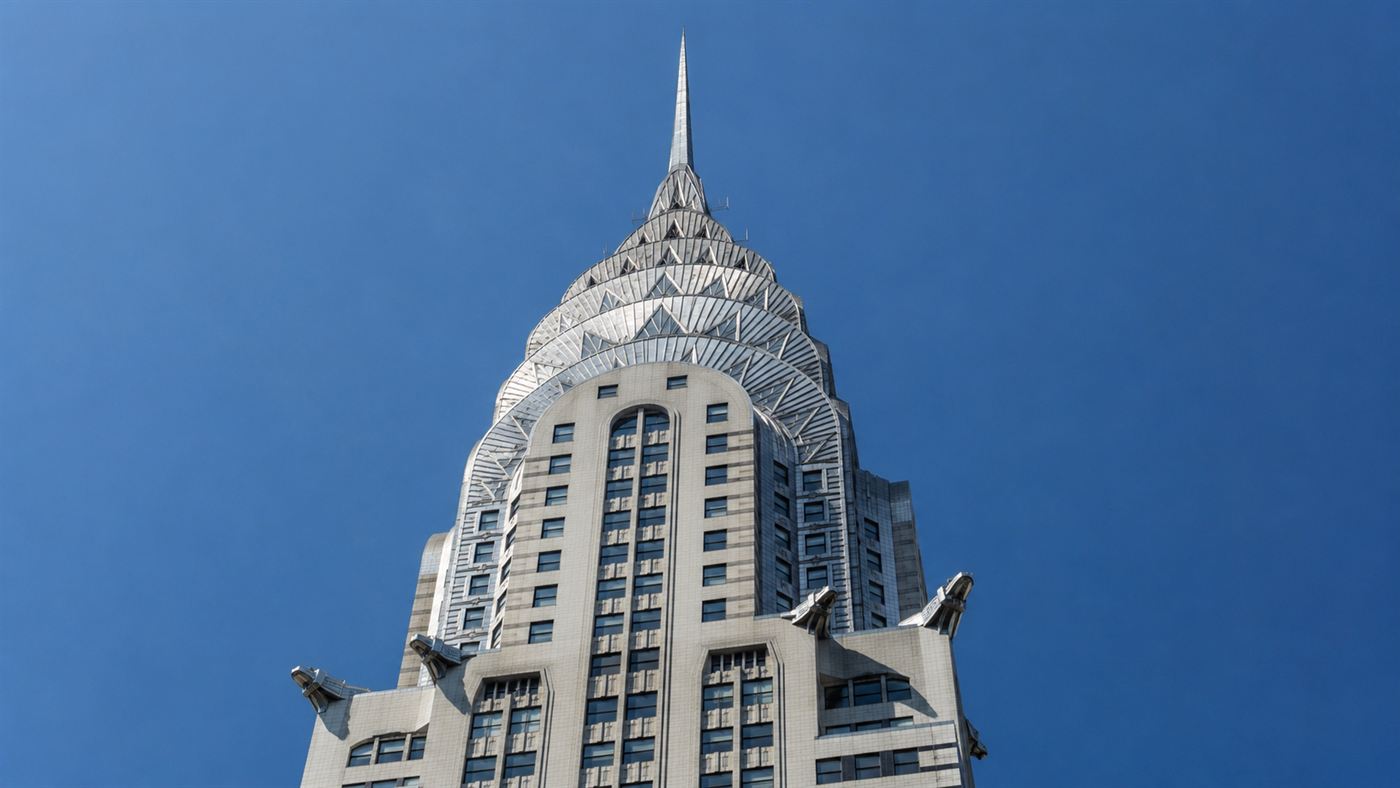
The shining crown of the Chrysler Building hides a secret: the spire that crowns it was assembled out of sight and raised in 90 minutes. Illustration: Watts & Wild.
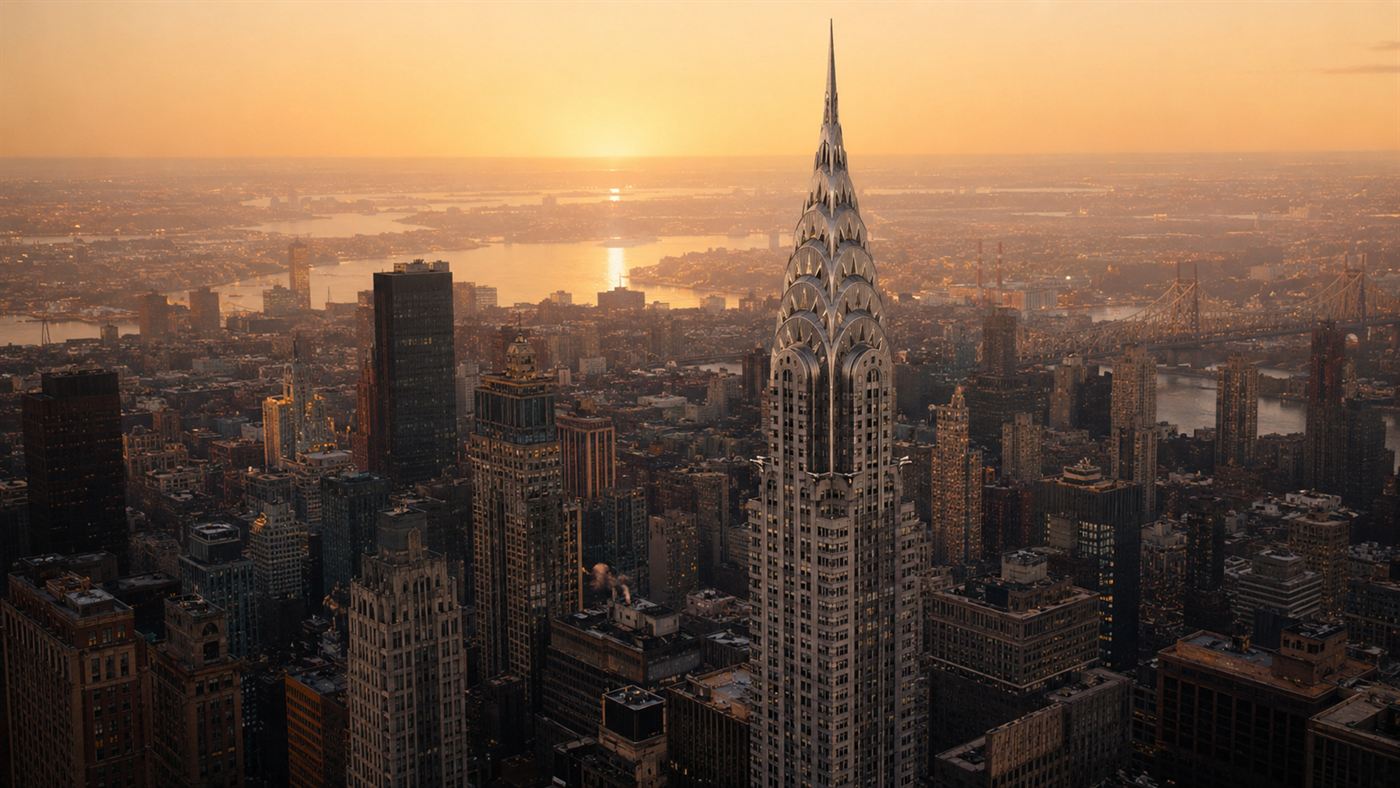
The Chrysler Building is loved today as the most beautiful skyscraper in New York, a shining Art Deco crown of stainless steel that still stops people on the sidewalk. But in 1929 it was the weapon in a vicious contest, and the elegant spike on top was less a flourish than a sucker punch. It was the move that, for a brief and glorious moment, made this the tallest building anyone had ever raised.
The story has everything: two rivals who had once been friends, a secret weapon hidden in plain sight, a stock-market crash days away, and an architect who won the race only to be ruined by the man who hired him. It is the tale of how the world's tallest building was decided not by who built highest, but by who lied best about it.
Architect William Van Alen secretly built a 185-foot stainless-steel spire inside the Chrysler Building's crown and, on October 23, 1929, raised it through the top in about 90 minutes. That lifted the tower to 1,046 feet, making it the world's tallest building and the first structure ever to pass 1,000 feet.
Two partners turned rivals
The drama began with a broken friendship. The architect of the Chrysler Building was William Van Alen, a daring designer nicknamed the Doctor of Altitude for his love of height. He had once run a successful firm with another architect, H. Craig Severance, until the partnership soured into open rivalry, and now, by sheer bad luck, the two found themselves designing competing skyscrapers at the same moment.
Severance was working on 40 Wall Street downtown, and William Van Alen on the Chrysler tower uptown, with car magnate Walter Chrysler footing the bill and hungry for glory. Both men wanted the same prize, the title of world's tallest building, and each watched the other's plans obsessively, revising their own heights upward whenever the rival crept ahead. It became a public spectacle, a tortoise race run in steel girders.
The secret spire of the Chrysler Building
Severance thought he had won. He pushed 40 Wall Street to around 927 feet, a touch taller than the Chrysler's announced height, and assumed the matter was settled. What he did not know was that William Van Alen had a card up his sleeve, quite literally hidden inside the building.
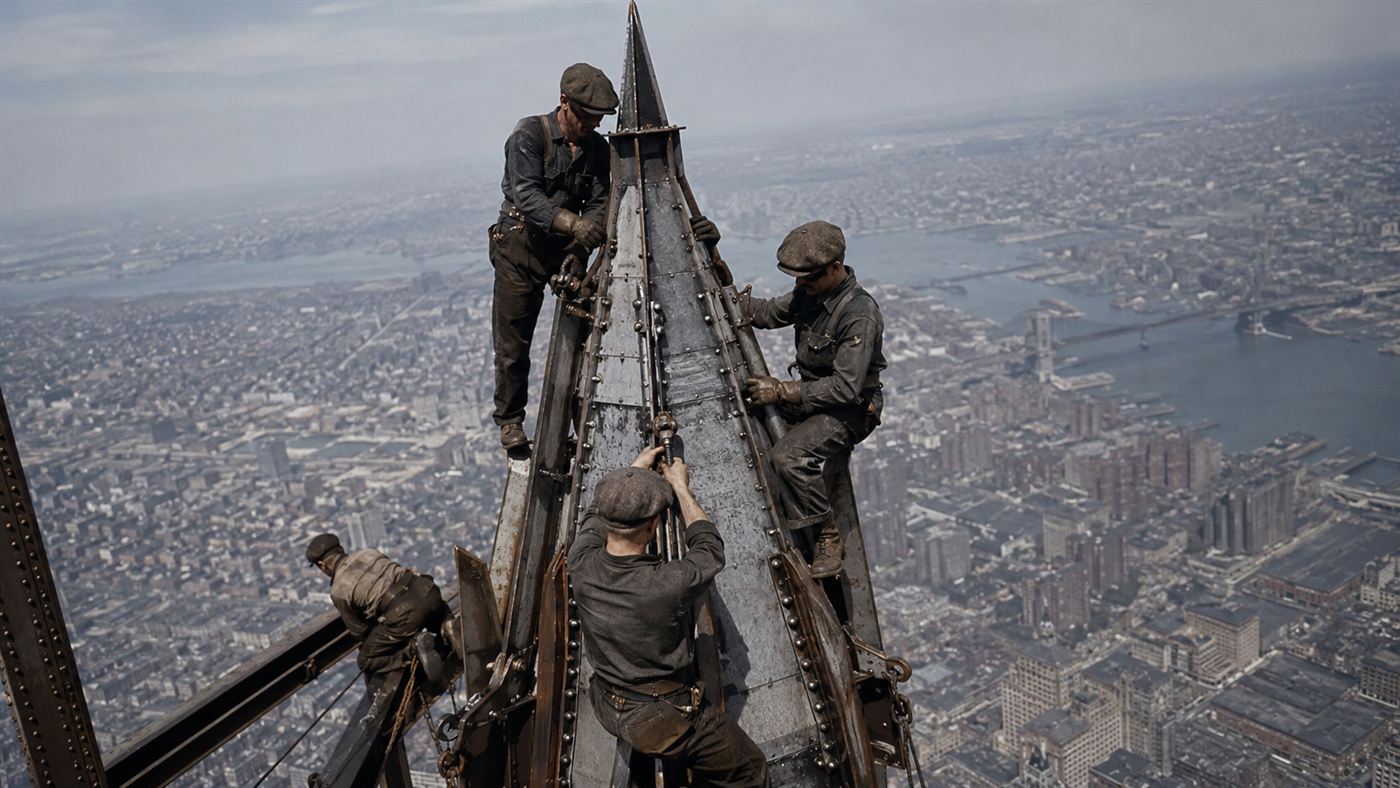
Out of sight, in the fire shaft near the top of the Chrysler Building, workers had been quietly riveting together a slender spire of stainless steel in sections, a needle about 185 feet long. On October 23, 1929, with Walter Chrysler watching, the pieces were hoisted up through the crown and bolted into place in roughly 90 minutes, like a sword drawn from a scabbard. In an afternoon, as The Archive recounts, the tower leapt to 1,046 feet, instantly taller than 40 Wall Street and even the Eiffel Tower, becoming the first thing humans had ever built to break 1,000 feet.
A crown like nothing before it
What makes the win endure is that the weapon was also a masterpiece. The crown of the Chrysler Building is pure Art Deco swagger: seven shining arches stacked one inside the next, each pierced with triangular windows that catch the light like sunbursts, all clad in a then-new stainless steel that, as the art historians at Smarthistory note, has barely tarnished in almost a century. It looks like the radiator grille of a car turned into a cathedral, which is no accident.
Lower down, the building wears Walter Chrysler's brand proudly. There are Art Deco gargoyles shaped like the hood ornaments and radiator caps of Chrysler automobiles, and giant eagle heads jutting from the corners where the photographer Margaret Bourke-White once perched to shoot the city below. Even stripped of its record, the tower would be famous for its looks alone, which is exactly why people forgive the stunt that built its reputation.
How long did the Chrysler Building stay the tallest?
The triumph was breathtaking and brief. The Chrysler Building officially opened in May 1930 wearing the crown of world's tallest building, but the same ambition that drove the spire race was already at work a few blocks away. The Empire State Building, rising fast, topped out at 1,250 feet and snatched the title in April 1931, barely eleven months later, as the Skyscraper Museum documents.
So the record that justified the whole secret-spire gamble lasted less than a year. Yet the loss did almost nothing to dent the tower's fame, because by then the Chrysler Building had become something a mere height record could never make it: the single most beloved silhouette on the New York skyline, a status it has never surrendered.
The architect who won and lost
The cruelest twist was saved for the man who pulled it off. After the building was finished, Walter Chrysler accused William Van Alen of having taken kickbacks from contractors and refused to pay his fee. Van Alen, astonishingly, had never signed a formal contract, and had to sue to be paid the roughly six percent of construction cost he was owed.
He won the case, but the accusation clung to him like soot. Commissions dried up, his reputation never recovered, and the architect who had just built the most dazzling tower in America faded into near-total obscurity, ending his career teaching and sculpting rather than designing skylines. The Chrysler Building made William Van Alen immortal and broke him at the same time, and most of the millions who admire his crown today have never heard his name.
The honest catch
The legend is wonderful, and mostly true, but it deserves a little daylight. The exact length of the spire gets reported differently from telling to telling, and the precise heights shifted as both teams fudged and re-announced their numbers, so the tidy duel was messier than the story suggests. The "secret weapon" was real, but it was also a publicity stunt as much as an engineering feat, designed to win headlines as well as altitude.
And the bribery accusation that ruined William Van Alen was never actually proven; it reads, with a century of hindsight, a great deal like Walter Chrysler inventing a reason not to pay. None of which spoils the core of it. A brilliant, prickly architect really did hide a spire inside a skyscraper and spring it on his rival to claim the sky, and the gorgeous, slightly absurd Art Deco Chrysler Building that resulted is still up there, still winning, long after the race that built it was forgotten.
An architect hid a spire inside a skyscraper to steal the title of tallest on Earth, then lost his career to the man who hired him. Was Van Alen's secret spire a stroke of genius or just a stunt, and does the result deserve its fame? Tell us in the comments.
Related reading: The Eiffel Tower was meant to be torn down after 20 years, and only an antenna saved it. See also the Singer Building, once the tallest in the world and later the tallest ever demolished.