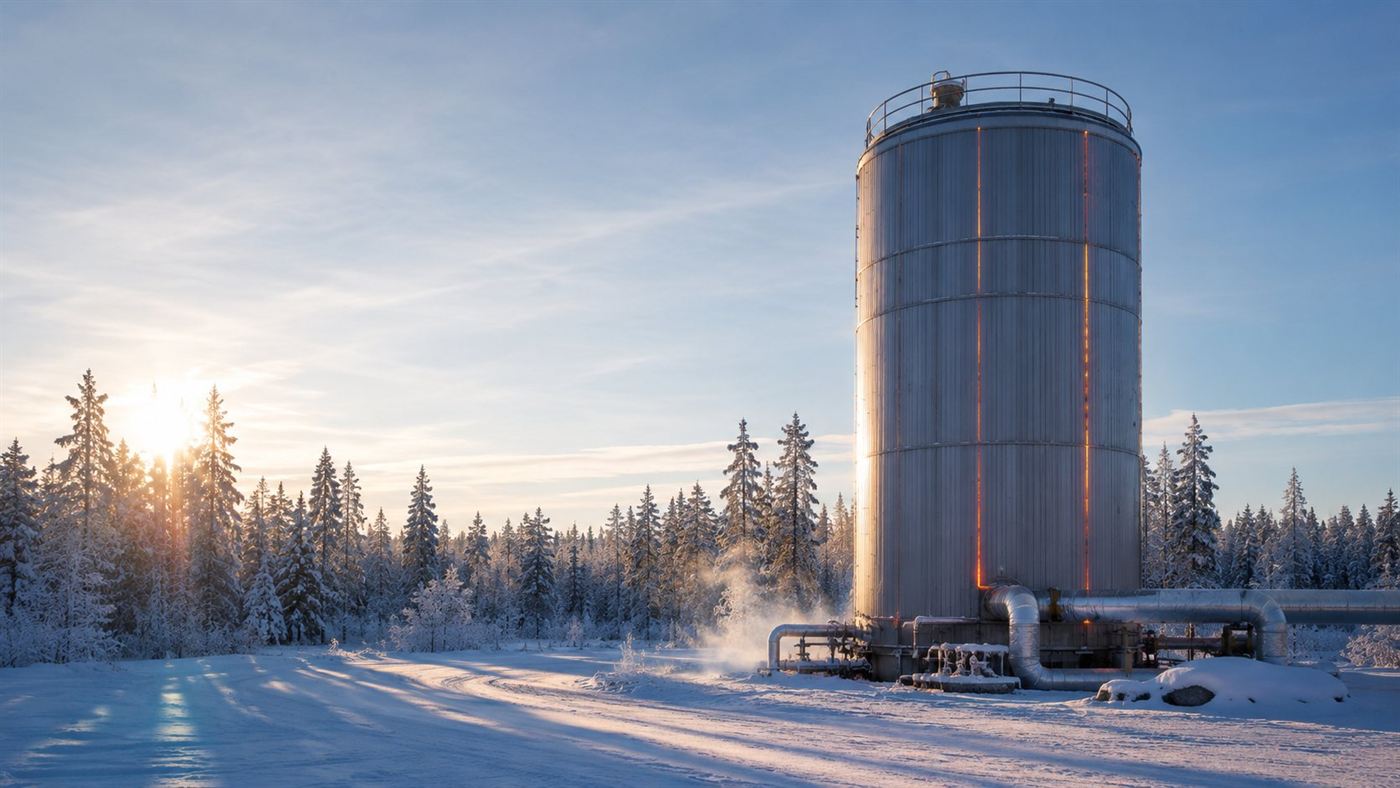
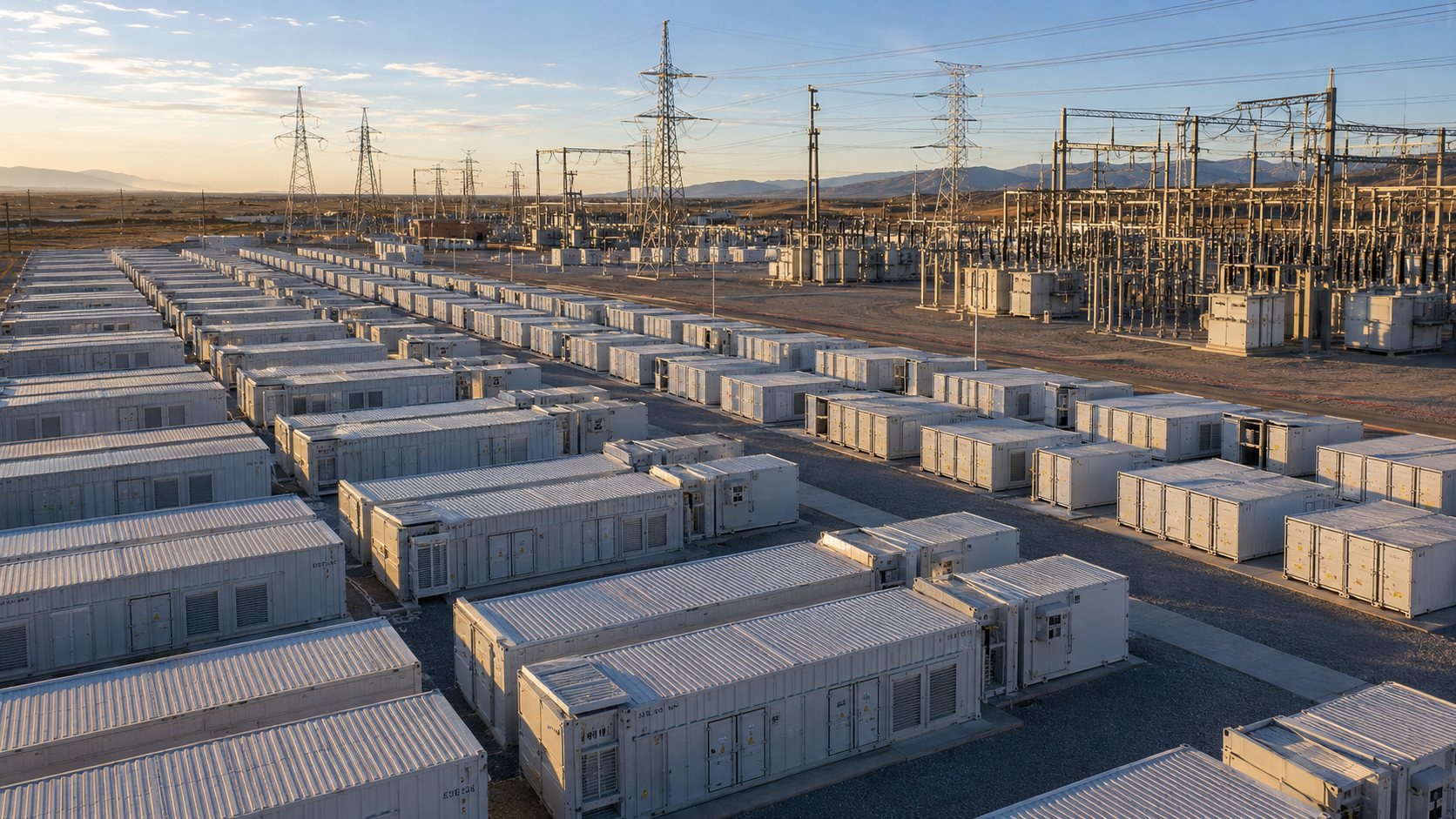
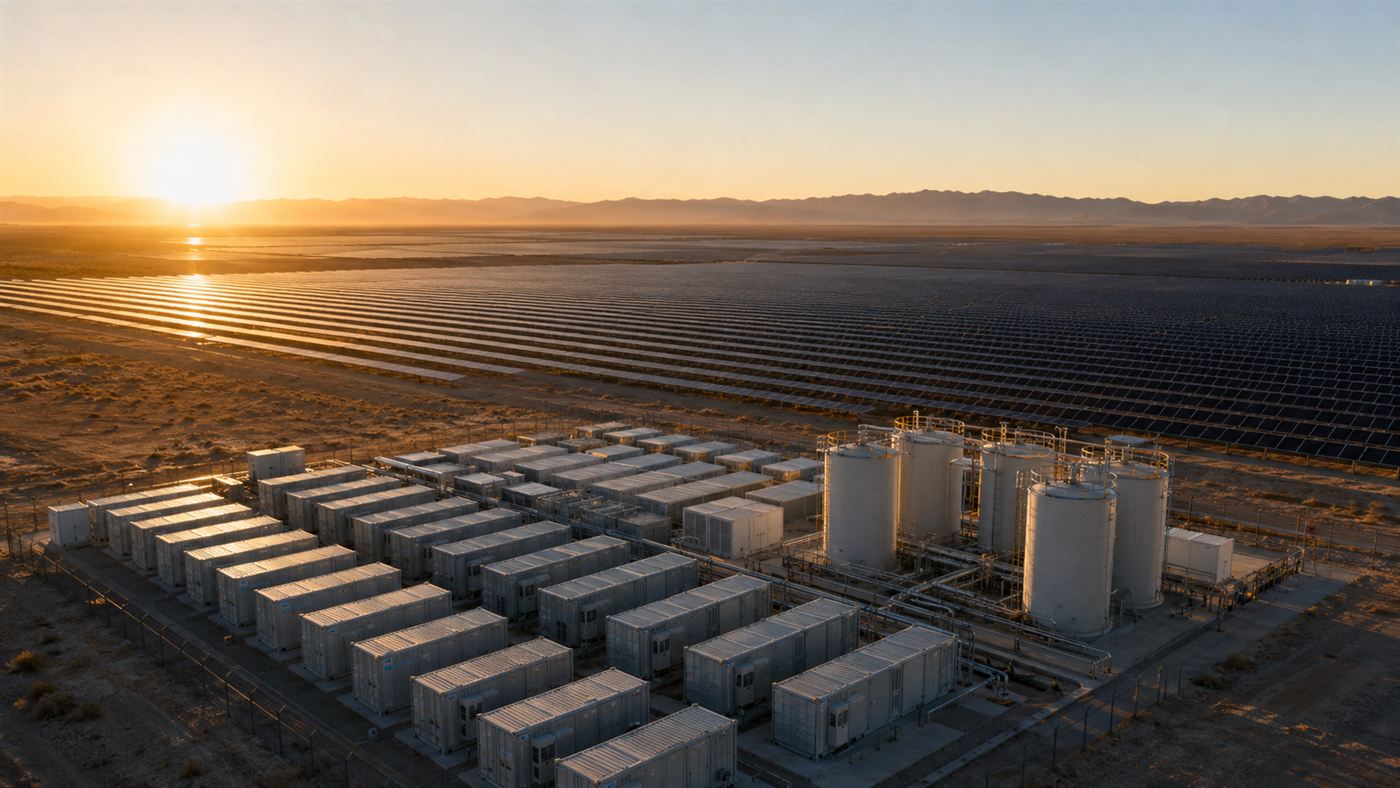
China built the world's first commercial gravity battery, a 148-metre tower that stores electricity by stacking 35-tonne blocks made from coal ash and old wind turbine blades, and is now building eight more
A gravity battery sounds like something from a cartoon, but a real one has been quietly feeding China's grid outside Shanghai since the end of 2023. Instead of chemicals, it stores power by hauling 35-tonne blocks up a 148-metre tower, then letting them fall to make electricity when the sun goes down.
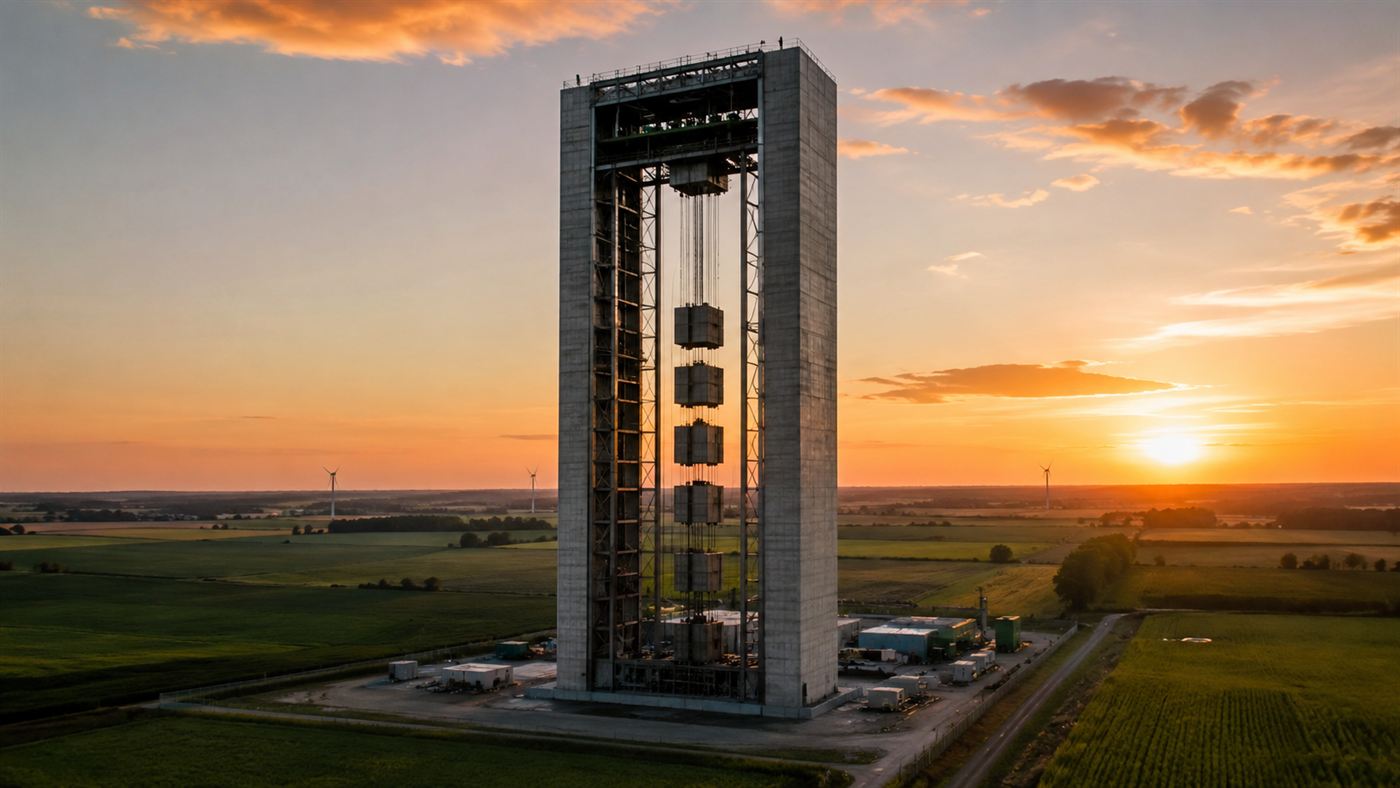
The Rudong tower stores energy not in chemistry but in the height of heavy blocks. Illustration: Watts & Wild.
Picture an old grandfather clock. You wind it by lifting a weight, and as that weight slowly drops, it drives the hands for hours. Now picture that idea blown up to the size of a 40-storey building, sitting in the flat farmland of Rudong, in China's Jiangsu province, two hours up the coast from Shanghai. That is, in essence, what the world's first commercial gravity battery is, and it works on physics so old it predates electricity itself.
The tower was connected to the grid at the end of 2023 and brought into full service with the State Grid Corporation of China. As pv magazine reported when the system connected, the EVx plant is rated at 25 megawatts and stores 100 megawatt-hours, enough to run at full power for four hours. It was built by the American company Energy Vault together with the Chinese partners China Tianying and Atlas Renewable, and it is the first machine of its kind anywhere to do this job as a real, paid-for piece of grid infrastructure.
What a gravity battery actually is
Every power grid that leans on sun and wind has the same headache. The electricity arrives when the weather feels like it, not when people flick on the kettle, so you need somewhere to park energy for later. The world mostly does this with lithium batteries, which store power as chemistry. A gravity battery throws the chemistry out and stores power as height instead.
The principle is identical to pumped hydro, the giant water-and-dam systems that have quietly done most of the world's energy storage for a century. Pumped hydro lifts water uphill when power is cheap and lets it run back down through turbines when power is needed. Energy Vault's twist is to swap the water for solid blocks, which means you no longer need a mountain and a reservoir. You just need a tall tower and something heavy to lift.
How the Rudong tower works
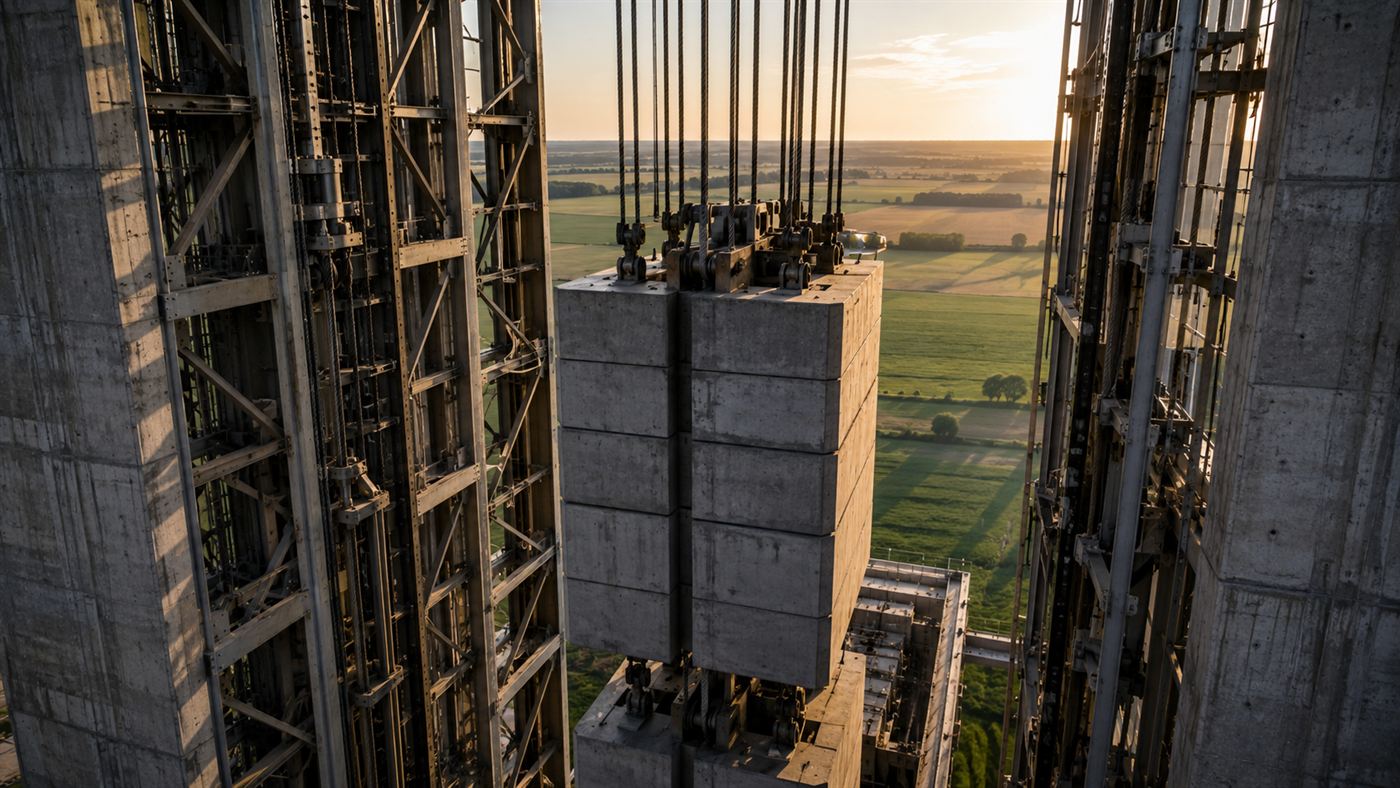
Inside the 148-metre structure sits a system of mechanical arms, motors and cables, and a stack of composite blocks each weighing about 35 tonnes. When wind turbines and solar farms nearby are making more electricity than the grid can use, that surplus power runs the motors, which haul the blocks up to the top of the tower. The energy does not vanish. It is now stored in those raised weights, the way a wound spring holds the energy you put into it.
When evening comes and demand climbs, the process runs in reverse. The blocks are lowered in a slow, controlled descent, and as they fall their weight spins generators that pour electricity back into the grid. According to Energy Vault's own description of the EVx system, the round-trip efficiency comes in at about 83 percent, meaning most of the energy you put in comes back out, a figure that holds its own against many battery technologies.
The blocks are built from waste
Here is the part that turns a clever physics demo into something genuinely useful. The heavy blocks do not have to be made from anything special or expensive. Energy Vault says they can be cast from low-cost local material, including the very soil dug out of the construction site, which keeps a huge mass cheap to make.
Better still, the blocks can swallow waste that is otherwise a headache to get rid of. The company lists coal ash from power stations, tailings left over from mining, and the fibreglass from decommissioned wind turbine blades, which are notoriously hard to recycle and usually end up buried in landfill. A gravity tower can lock all of that into its weights, turning yesterday's industrial rubbish into the thing that stores tomorrow's clean power. It is a neat closing of a loop that most storage technologies cannot offer.
Why China is building eight more
One demonstration tower is interesting. What makes Rudong matter is what came next. China's National Energy Administration picked the project as an official energy-storage pilot in early 2024, and the rollout has moved fast since. China Tianying and Atlas Renewable now have nine EVx systems underway across China, in different sizes from a 17-megawatt plant to a 50-megawatt one, adding up to a planned 3.7 gigawatt-hours of gravity storage.
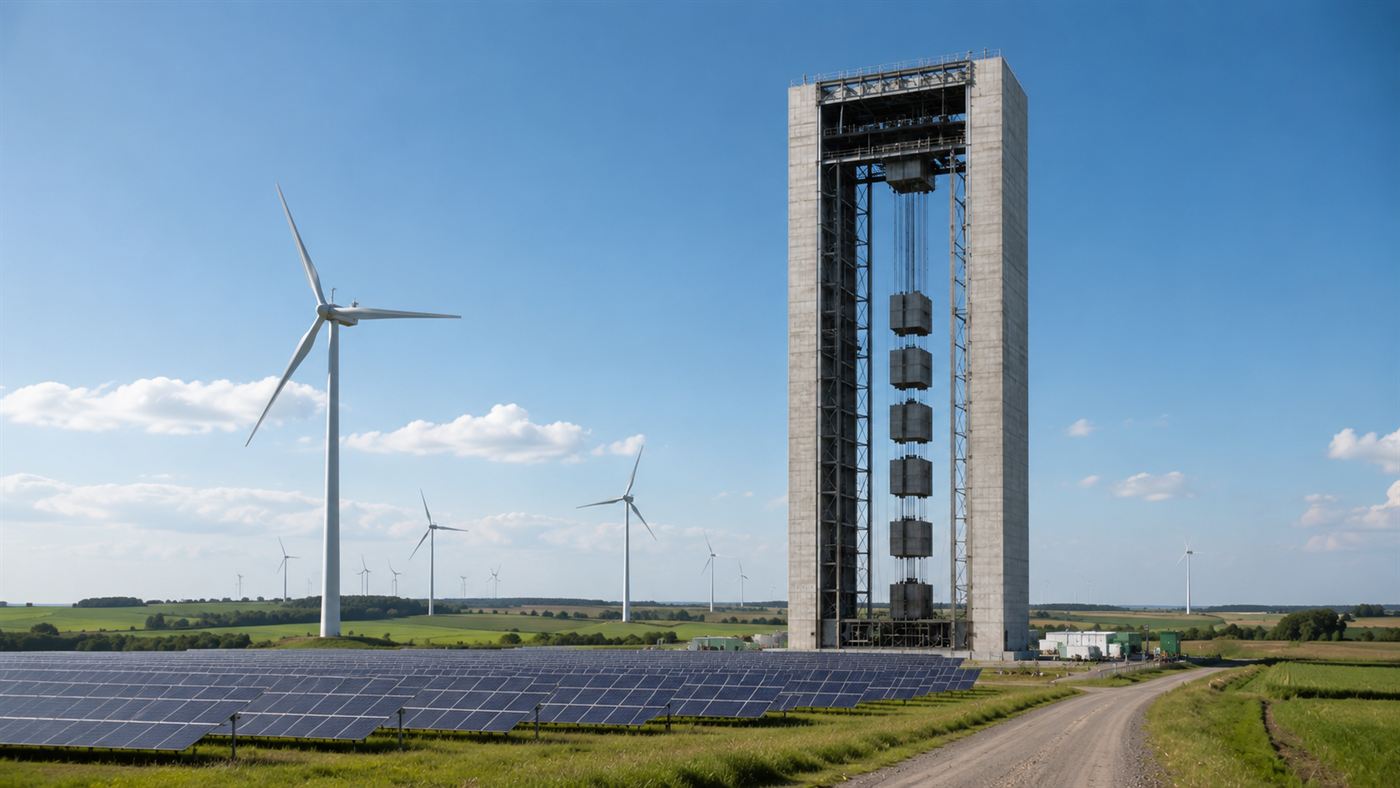
That scale-up is the real signal. China is the country installing more wind and solar than the rest of the world combined, and all of that weather-dependent power needs long-duration storage to be worth anything after dark. Betting on nine gravity towers at once is a sign that at least one major grid thinks stacking blocks is a serious answer, not a gimmick, for holding energy over many hours rather than minutes.
The honest catch
For all its charm, a gravity battery is not about to push lithium off the grid, and it is worth being clear why. Lifting weights is a low-density way to store energy. To hold a serious amount you need an enormous mass moved through a real height, which is why the answer is a 148-metre tower rather than a tidy box in a yard. That makes these systems big, civil-engineering-heavy projects, better suited to open land than crowded cities.
There are open questions too about how the mechanical parts, the cables, motors and moving arms, hold up over decades of constant lifting, since this is still a young technology with only one commercial tower to learn from. The promise is real, but it is a promise about a specific job: storing large amounts of energy for hours at a time, cheaply and without anything that can catch fire or wear out its chemistry. Whether the moving machinery proves as durable as a still tank of lithium is the thing the next eight towers will test.
Why a tower of falling weights matters
The race to run the world on renewable energy is really a race to store it, and there is no single winner yet. Lithium covers the short, fast bursts. Pumped hydro covers the giant, slow ones where the geography allows. A gravity battery is trying to claim the awkward middle, the long evening hours when the sun has gone but the demand has not, using nothing more exotic than weight and height.
There is something satisfying about a clean-energy breakthrough that turns out to rest on the oldest trick in the book, the same force that makes an apple fall. A tower outside Shanghai, lifting blocks of yesterday's waste and letting them drop to keep the lights on, is proof that the future of the grid will not all be exotic chemistry. Sometimes it is just gravity, patiently doing its work.
A 148-metre tower that stores clean power by stacking blocks of coal ash and old turbine blades, then dropping them to keep the grid running, has just proved itself and is being copied eight times over. Would you trust a tower of falling weights to back up your grid, or does lithium still feel like the safer bet? Tell us what you think in the comments.
Related reading: Finland switched on the world's largest sand battery, a 100 MWh store holding 2,000 tonnes of soapstone that cuts a town's heating emissions by nearly 70 percent.