For 17.6 miles across the open mouth of Chesapeake Bay, a highway carries cars over the water and then plunges twice into tunnels beneath it so that Navy ships can sail overhead
Drive south from Virginia's Eastern Shore and the land simply runs out, replaced by a thin ribbon of road stretching to the horizon over open sea. The Chesapeake Bay Bridge-Tunnel is one of the strangest crossings on earth, a highway that keeps disappearing underwater, and when it opened in 1964 the world called it a wonder.
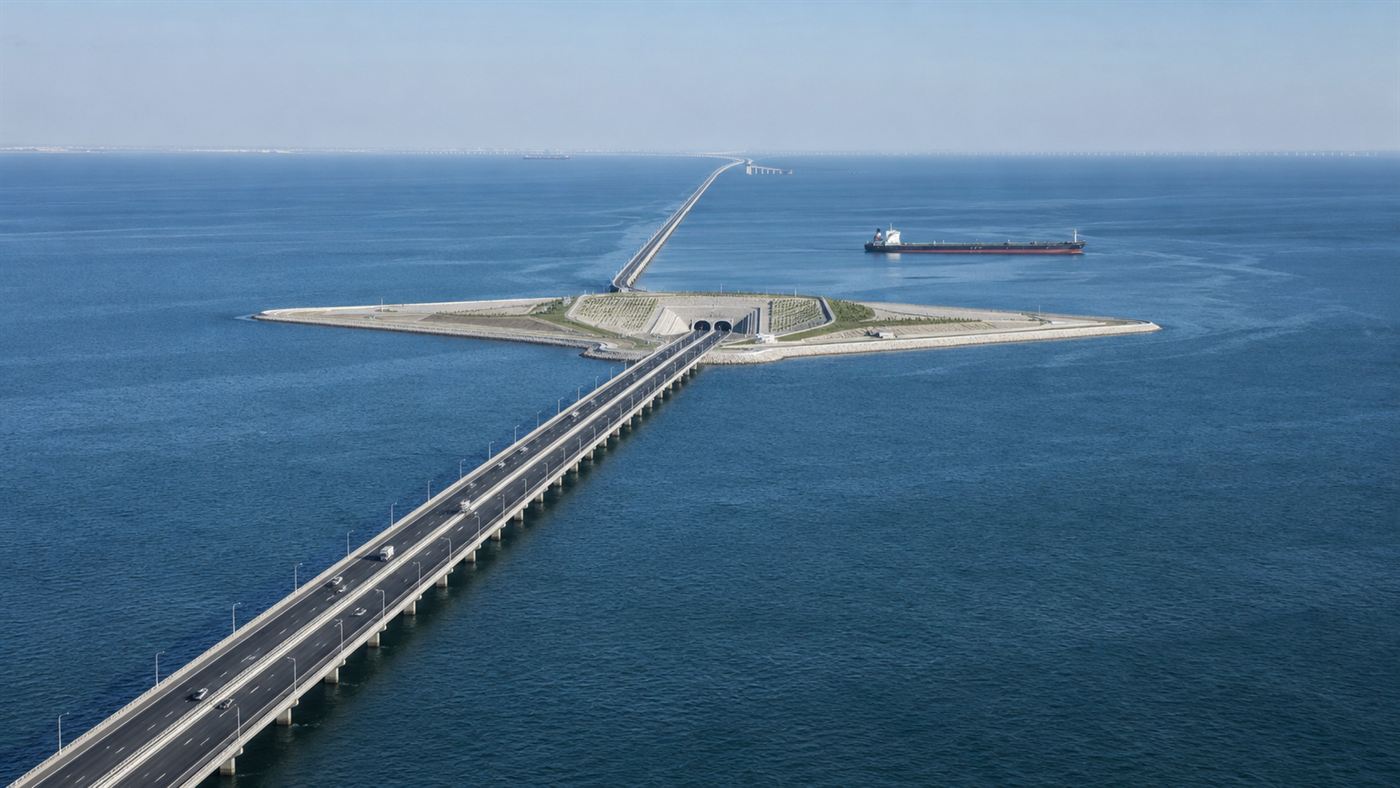
The Chesapeake Bay Bridge-Tunnel carries traffic 17.6 miles over open water, dipping under the shipping channels. Illustration: Watts & Wild.
The Chesapeake Bay Bridge-Tunnel spans the wide mouth of Chesapeake Bay, connecting Virginia Beach and the busy Hampton Roads region to the rural Eastern Shore of the Delmarva Peninsula. As the crossing's record shows, it runs 17.6 miles from shore to shore, carrying US Route 13 and cutting about 95 miles off the alternative drive around the top of the bay. Most of that distance is low bridge skimming just above the waves. Twice, though, the road does something no ordinary bridge does: it dives.
The short version: The Chesapeake Bay Bridge-Tunnel, opened April 15, 1964, crosses 17.6 miles of open water at the mouth of Chesapeake Bay. To keep the shipping channels clear for Navy and cargo ships, the roadway drops into two mile-long tunnels beneath the seabed, connected by four man-made islands. It was hailed as one of the seven engineering wonders of the modern world.
Why does a bridge go underwater?
The reason is national defense as much as engineering. The mouth of the bay is the gateway to Naval Station Norfolk, the largest naval base in the world, and to the commercial port of Hampton Roads. A solid bridge all the way across would have loomed over the deep shipping channels, and the US Navy flatly objected, worried that a bridge span dropped by accident or sabotage could bottle its warships inside the bay and cut them off from the Atlantic.
So the engineers gave the ships a clear road of their own. At the two main channels, Thimble Shoal and Chesapeake Channel, the highway ramps down onto a man-made island and burrows into a tunnel roughly a mile long beneath the seabed, then climbs back up onto another island on the far side. Ships glide over the top while cars stream through the dark underneath. It is a solution that turns a bridge into an underwater tunnel exactly where it needs to, an elegance shared by big tunnel megaprojects like Boston's Big Dig.
The Chesapeake Bay Bridge-Tunnel and the man who willed it
A crossing this audacious needed a champion, and it had one. As the operating district recounts, Lucius J. Kellam Jr., an Eastern Shore businessman, chaired the commission behind the project for 39 years, and the facility was formally renamed in his honor in 1987. He pushed the idea through the years of doubt, and the way it got paid for was almost as bold as the design.
No tax money built it. The entire crossing was financed by $200 million in toll revenue bonds, a bet that enough drivers would pay to cross that the tolls alone would cover the enormous cost. It was a private gamble on a public marvel, and it paid off, with more than 140 million vehicles having made the crossing by 2021. Today the toll runs around $16 to $21 for a car, still funding a structure that a state highway budget might never have dared to attempt.
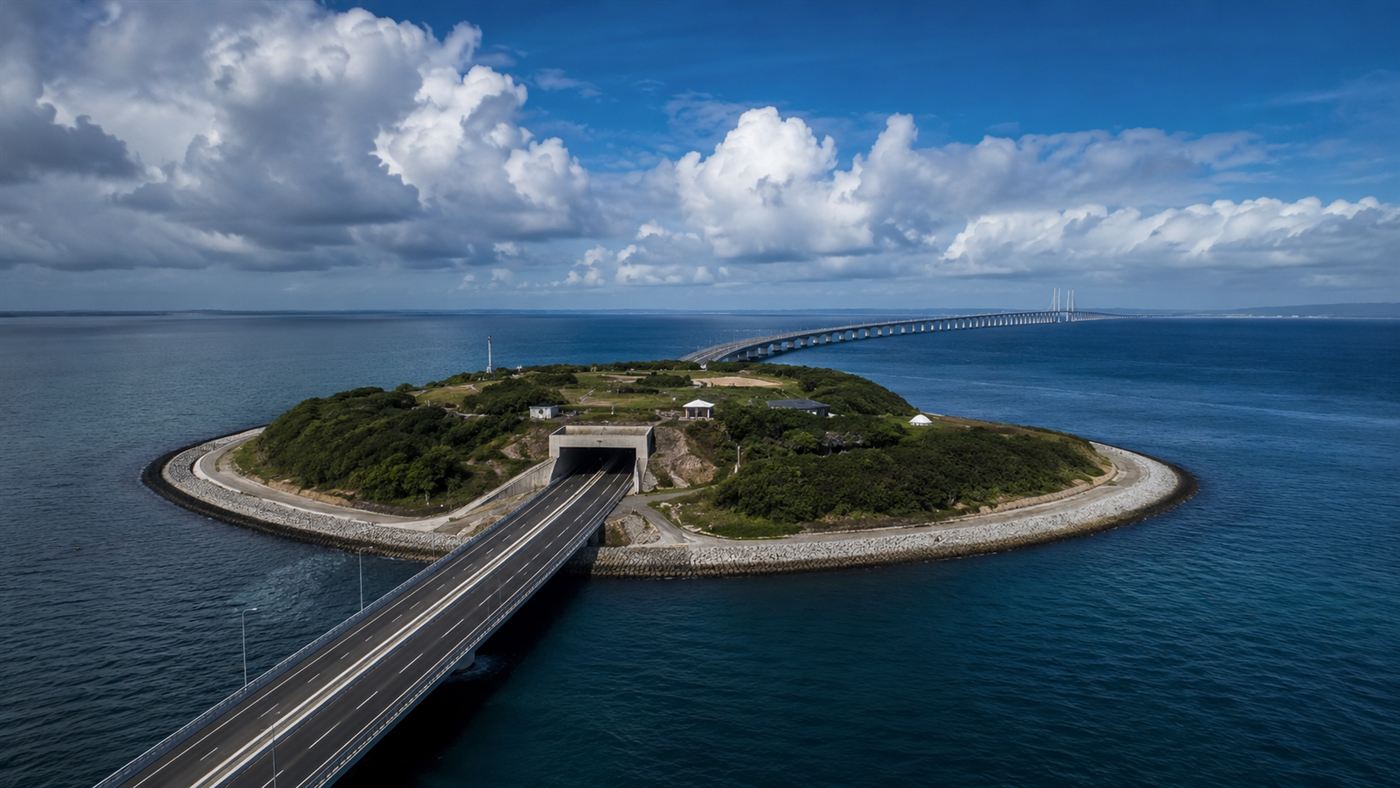
One of the seven wonders of the modern world
When it opened, the crossing was not just useful, it was celebrated. In 1965 it was named one of the seven engineering wonders of the modern world, sitting alongside the era's greatest dams and structures. The achievement was less any single record than the sheer nerve of the concept: building 17.6 miles of highway across open, storm-swept sea, and solving the ship problem not by going higher but by going lower.
What makes it a genuine engineering marvel is how many hard problems it answers at once. It keeps the Navy's channels open, shrugs off the winter ice that would batter a taller bridge, and threads a working highway through one of the busiest maritime crossings in the country. Standing on one of its islands, watching a container ship slide over the very tunnel your car just drove through, the strangeness of it never quite wears off.
Crossing it can still be frightening
For all its elegance, the bridge-tunnel is not a relaxing drive, and it is honest to say so. It sits low and exposed far out in open water, so when storms roll in it becomes genuinely dangerous, and the district restricts or closes it to high-profile vehicles and sometimes all traffic when winds climb past 40 miles per hour. Trucks have been blown into the guardrails, and there have been fatal wrecks and vehicles going over the side into the bay.
It is also showing its age and its limits. The original two-lane sections were doubled by a parallel bridge span in 1999, but the tunnels remain single bores, and traffic still funnels down to one lane each way through them. A second Thimble Shoal tunnel is under construction to ease that pinch, with another planned for the Chesapeake Channel years down the line, multibillion-dollar projects to keep a 1960s wonder working for a much busier age. For nervous drivers heading out from Virginia Beach, none of that changes the simple fact that they are about to drive under the sea.
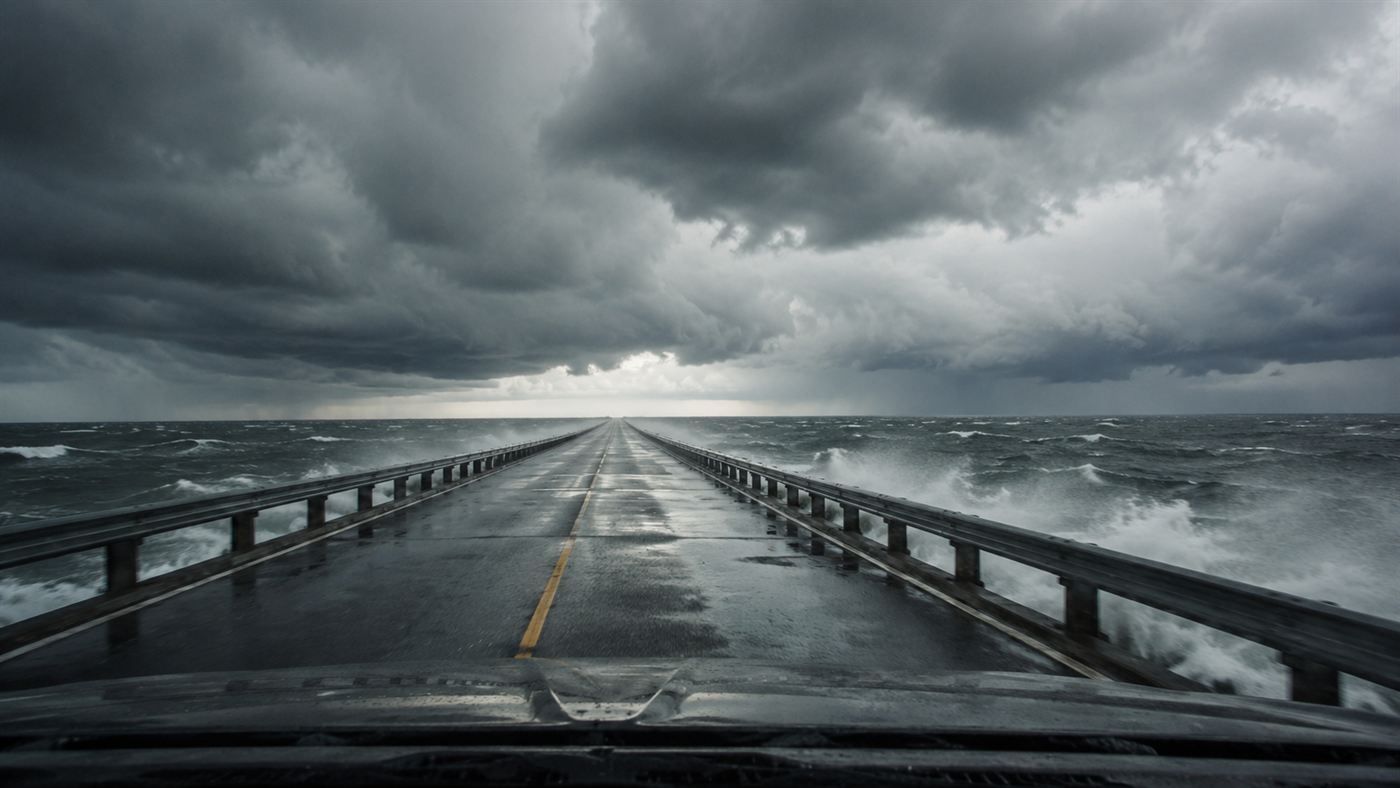
The honest catch
It is easy to file the Chesapeake Bay Bridge-Tunnel under pure triumph, and mostly it deserves that. But a marvel from 1964 is also a machine that has to be maintained, expanded, and defended against a changing world, and that bill never stops arriving. The new tunnels will cost billions, the tolls that fund everything keep climbing, and the same rising, stormier seas that threaten every coastal structure are bearing down on a road that already floods and closes in bad weather.
None of that diminishes what it is. The crossing solved an impossible-sounding problem with a genuinely brilliant idea, and it has carried people safely over and under the bay for more than sixty years. It stands as proof that the best engineering is not always about building the biggest thing, but about being clever enough to get out of the sea's way, and the ship's, while still getting people home.
A highway that ducks under the sea twice so warships can pass over the top has carried people across the mouth of Chesapeake Bay for six decades. Would you happily drive 17.6 miles out over open water and through a tunnel under the seabed, or does the very idea make your palms sweat? Tell us what you think in the comments.
Related reading: Boston buried its worst highway underground in the most expensive megaproject in US history.
More from Watts & Wild
More in Industry & Mega-Builds →

Maria covers heavy industry, mega-builds, dams, tunnels, and the record-breaking engineering reshaping the world for Watts & Wild.