A high-school teacher turned geologist said a flood bigger than every river on Earth carved eastern Washington, and colleagues mocked J Harlen Bretz for forty years before the Channeled Scablands proved him right
In 1923 a young geologist looked at the scarred, stripped rock of eastern Washington and reached a conclusion his whole field found outrageous: it had been carved almost overnight by an unimaginable flood. They called him a crank for four decades. The Channeled Scablands proved he was right.
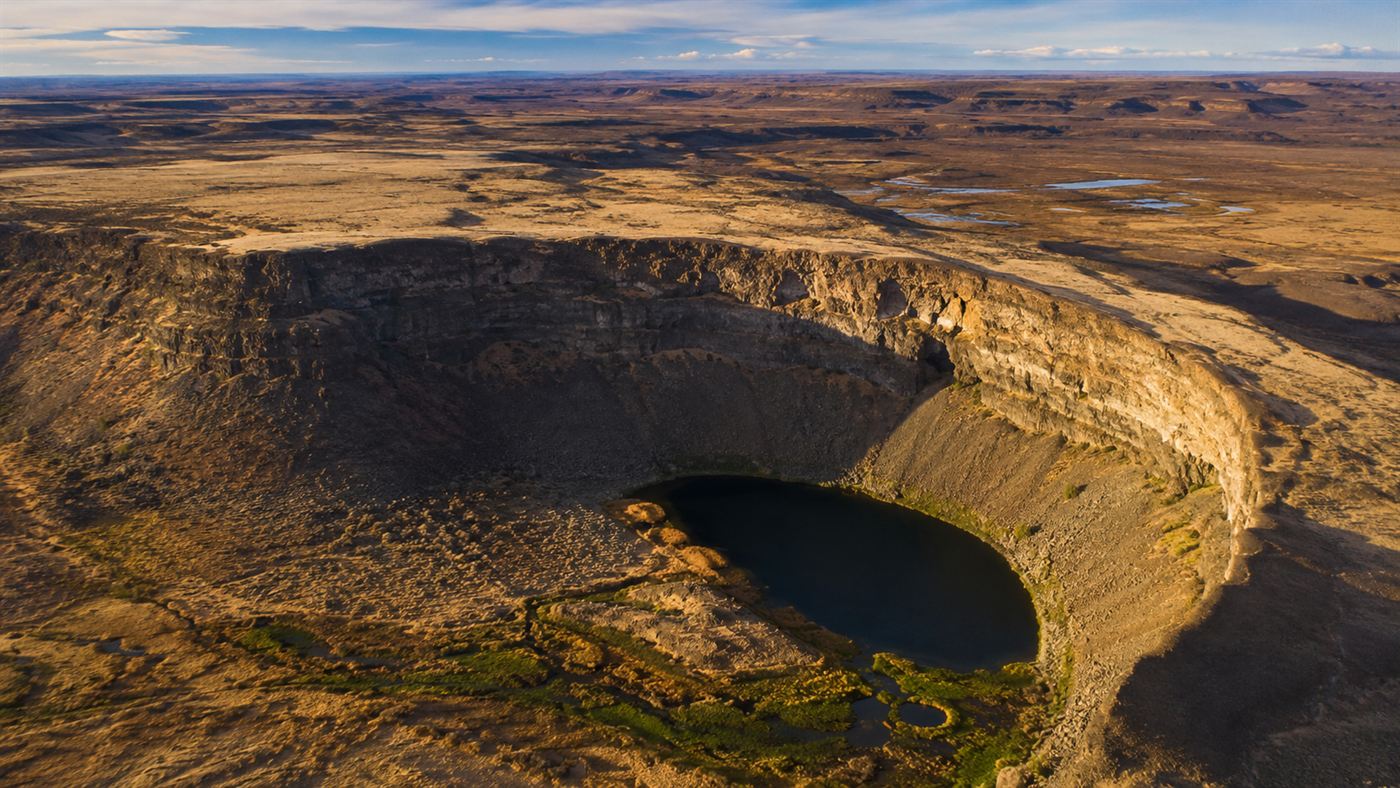
Dry Falls in the Channeled Scablands was once a waterfall far larger than Niagara, now bone dry. Illustration: Watts & Wild.
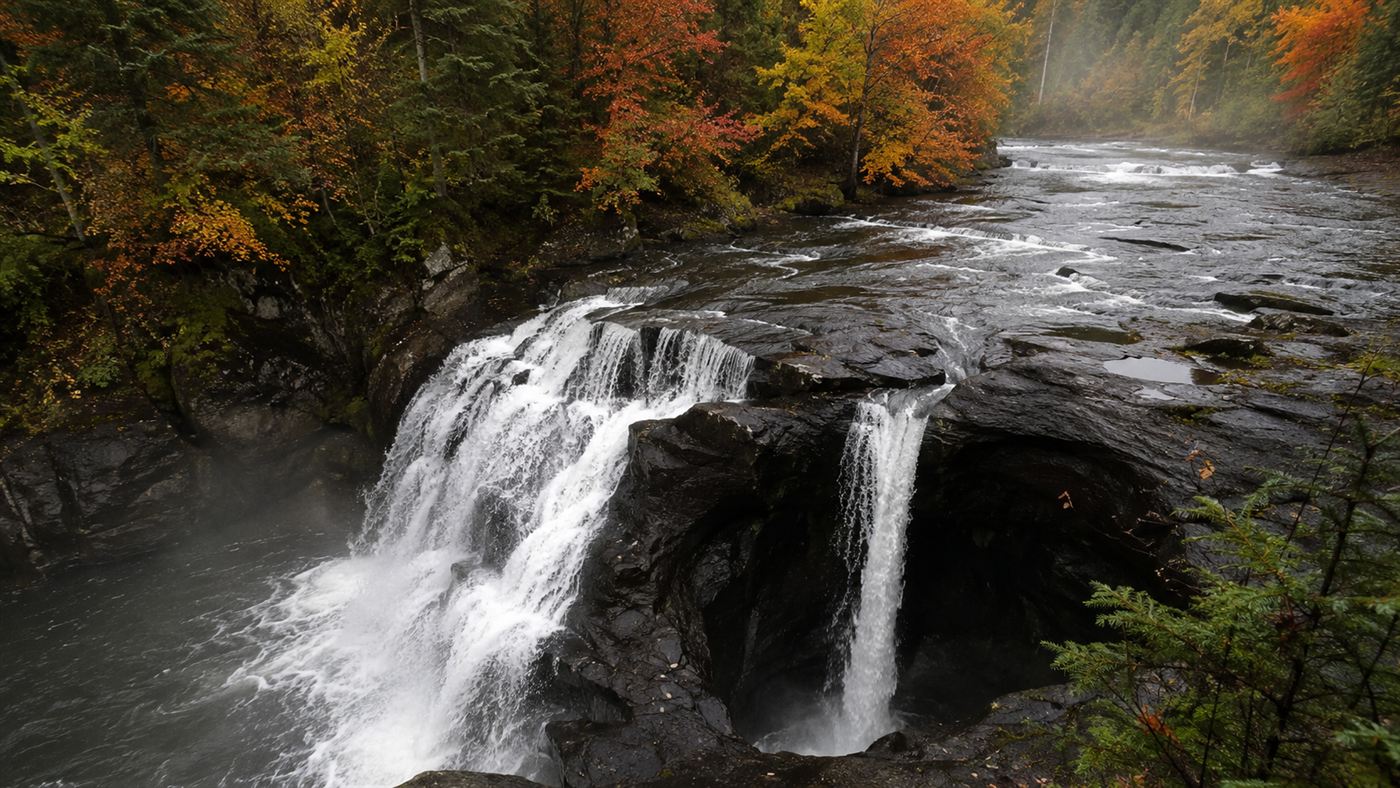
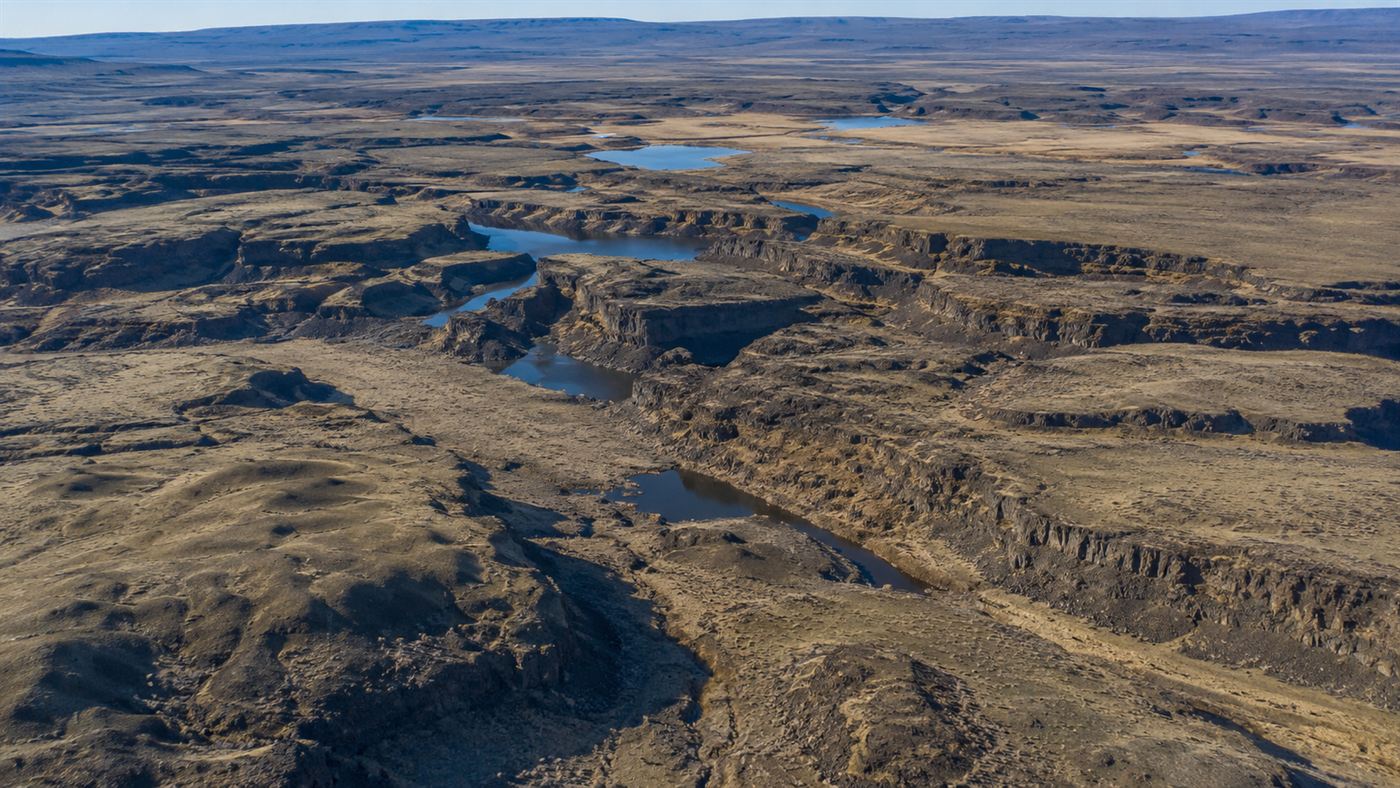
Across a big stretch of eastern Washington the soil simply stops, peeled away to leave a maze of bare rock channels, dry waterfalls and canyons scoured into black basalt. Geologists call this strange country the Channeled Scablands, and for a long time no one could explain how it formed. The land looked violent, as if something had torn across it in a hurry, and that was exactly the problem.
In 1923 a geologist named J Harlen Bretz, a former high-school biology teacher, said out loud what the rock seemed to be screaming. As records of his work show, Bretz argued the whole landscape had been gouged by a sudden, catastrophic flood of almost unbelievable size, not by the slow work of ordinary rivers over millions of years. It was the right answer, and it nearly ended his career.
The short version: the Channeled Scablands were carved by the Missoula Floods, gigantic Ice Age floods unleashed when an ice dam holding back a huge glacial lake repeatedly failed. J Harlen Bretz proposed a catastrophic flood in 1923 and was mocked for decades because the idea clashed with geological dogma, until the evidence became overwhelming and he was finally proven right.
What created the Channeled Scablands?
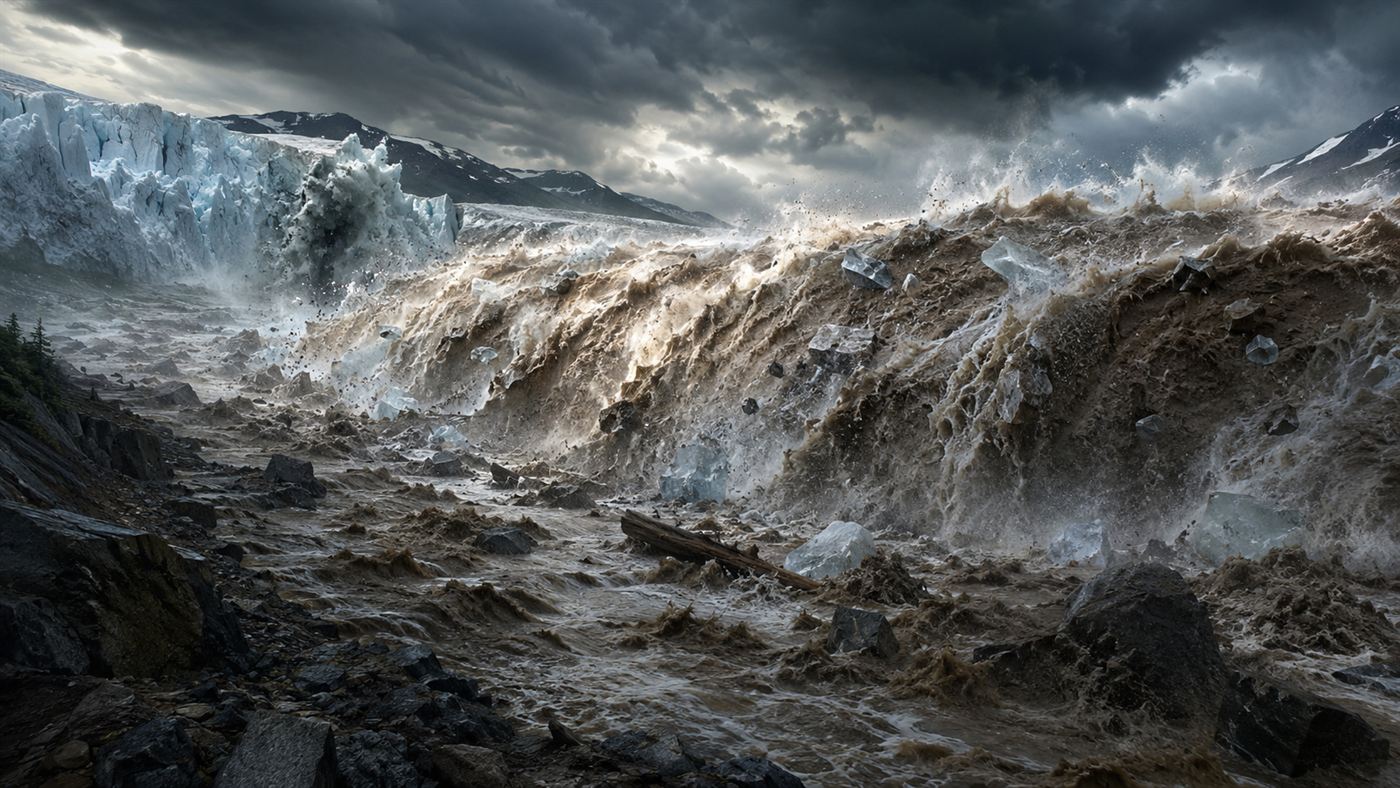
The engine was ice and water on a scale that is hard to picture. During the last Ice Age, a lobe of the great Cordilleran Ice Sheet pushed south and dammed a river in what is now Montana, backing up a body of water called glacial Lake Missoula that held some 500 cubic miles of water and stood 2,000 feet deep. It was an inland sea held in place by nothing but a wall of ice.
Ice dams are not reliable. When this one failed, the lake emptied in a matter of days in a flood whose flow has been estimated at roughly ten times that of every river on Earth combined. The water tore across eastern Washington, ripping away soil and cutting channels straight into bedrock. The most staggering part is that this did not happen once. The lake refilled and burst again and again, perhaps as many as 100 times, each surge one of the largest Ice Age floods the planet has known.
Dry Falls, a waterfall with no water
The single most jaw-dropping relic the floods left behind is Dry Falls. Today it is a horseshoe cliff of dark rock in the middle of the desert, silent and empty. At the height of the floods it was a waterfall more than 3 miles wide and around 400 feet tall, several times the width of Niagara, with a volume of water pouring over it that no modern river comes close to matching.
Stand at Dry Falls now and the scale is almost impossible to reconcile with the dry sagebrush around you. That is the strange gift of the Scablands: the flood was so brief and so enormous that it left a fossil of itself in the rock, a waterfall frozen at full roar with the water switched off. For Bretz, features like this were proof hiding in plain sight.
Why was J Harlen Bretz ridiculed?
Bretz ran headlong into a wall of belief. The reigning principle in geology was uniformitarianism, the idea that the Earth is shaped only by slow, steady processes we can still watch today, like erosion and sedimentation. A single overnight flood that reshaped a region sounded uncomfortably close to the biblical Great Flood, exactly the kind of catastrophe the science had spent a century trying to leave behind.
At an infamous 1927 meeting in Washington, D.C., a room of senior geologists lined up to tear the theory apart. Bretz had a second, fatal-seeming weakness too: he could not say where such a colossal volume of water had come from. Without a source, his flood looked like magic, and his critics pounced. He would spend years defending his fieldwork against people who had never walked the ground he was describing.
The proof that ended the argument
The missing piece came from another geologist, Joseph Pardee, who had been studying glacial Lake Missoula for years. In 1940 Pardee presented evidence of giant current ripples on the old lake bed, ripples the size of hills, which could only have formed if the lake had drained catastrophically rather than gently. There, at last, was Bretz's water source and the mechanism to release it.
From there the case only grew stronger, and by the 1950s and 1960s most geologists had come around. The final convincing came from above, when 1970s satellite images laid the whole flood-scarred landscape out in a single view no one could argue with. In 1979 the Geological Society of America gave Bretz its highest honor, the Penrose Medal. He was 96 years old, and he had outlived nearly everyone who once called him a fool.
The honest catch
The story is often told as a lone genius crushed by small-minded rivals, and that is too neat. Bretz was gloriously right that catastrophic floods carved the Scablands, but he was wrong at first about the details, insisting for a while on a single great flood when the truth was dozens of them. It was the combined work of Bretz, Pardee and later researchers, not one man's vision alone, that assembled the real picture.
The deeper lesson is not that the establishment is always wrong, but that good science eventually follows the evidence even when the evidence is inconvenient. The geologists who resisted were not villains, they were defending a hard-won principle against what looked like a step backward. What made the difference in the end was not stubbornness or charisma but ripples in an old lake bed and pictures from space. The Missoula Floods won the argument because the ground itself testified.
An entire landscape turned out to be the fossil of a flood so big that the experts refused to believe it for two generations. When the evidence in front of you contradicts everything the experts agree on, how long should you keep arguing? Tell us what you think in the comments.
Related reading: how Ignaz Semmelweis was ridiculed for a discovery that turned out to save lives, and how a brand-new island rose from the sea and let scientists watch geology happen in real time.