The Centennial Light has glowed in a California fire station since 1901, outliving by a century the millions of bulbs an industry secretly agreed to build so they would burn out fast
In a firehouse in Livermore, California, a small pear-shaped lightbulb has been burning, almost without pause, since 1901. The Centennial Light has outlasted two world wars, the men who hung it, and every modern bulb ever screwed in beside it. Its stubborn glow hides an uncomfortable question: why does nothing else last that long?
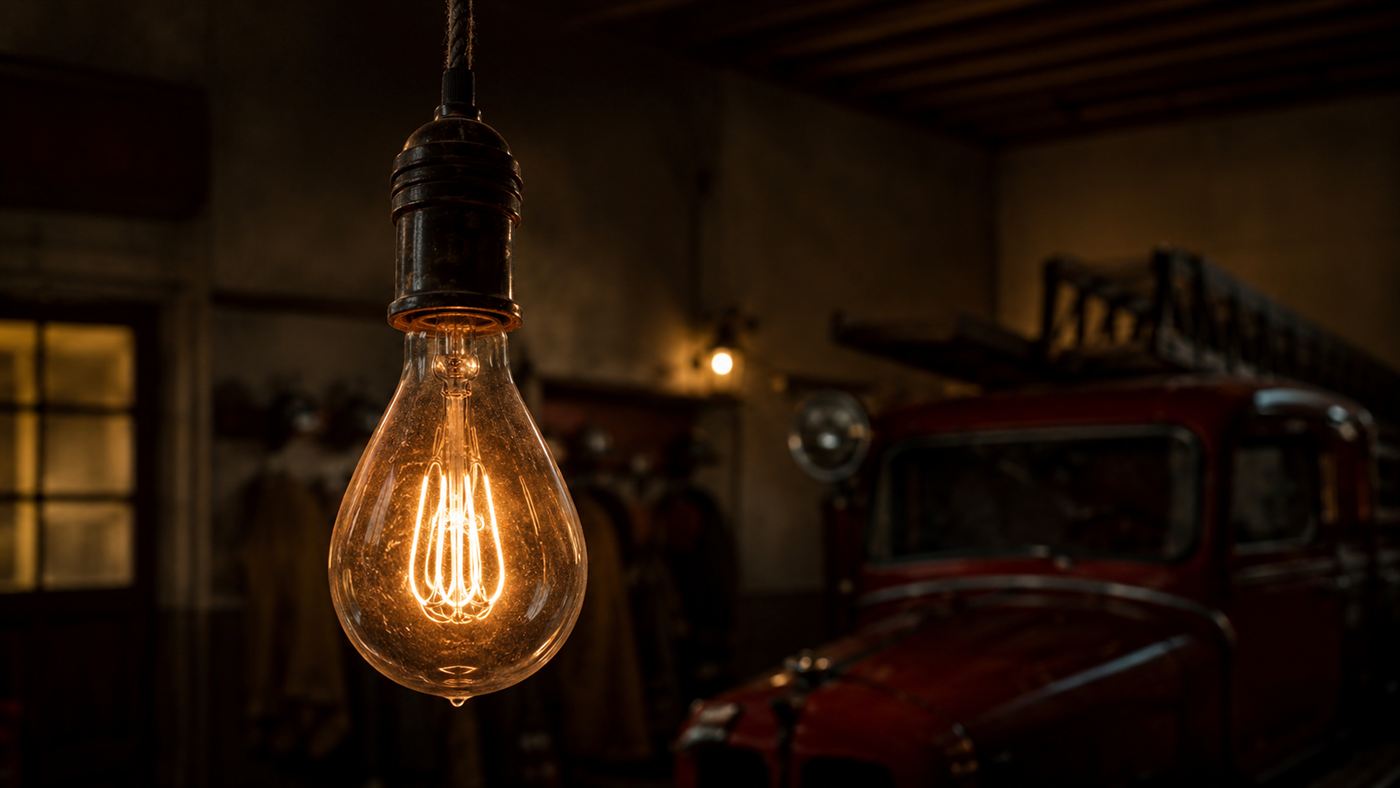
The Centennial Light has hung in a Livermore fire station and burned since 1901. Illustration: Watts & Wild.
The Centennial Light hangs from a cord in the ceiling of Fire Station 6 in Livermore, a small hand-blown bulb glowing a dim, steady orange. As documented by Guinness World Records, it has been recognized as the longest-lasting lightbulb on earth, burning almost continuously since it was donated to the local fire department in 1901. It is now well past 120 years old, and it is still on.
People come from around the world to see it, and since 2005 it has had its own webcam so anyone can check that it is still lit. It should not be possible. A modern bulb is lucky to last a year. This one has run for more than a century, and the reason it can, while nothing you buy does, is a genuine scandal.
The short version: The Centennial Light has burned in a Livermore, California fire station since 1901, the longest-lasting bulb ever recorded. It survives because it is a thick-filament, low-power bulb that is almost never switched off. Its longevity is a living rebuke to the Phoebus cartel, which from 1924 deliberately shortened bulb life to sell more of them.
Why the Centennial Light survived
Part of the answer is simply how the bulb was built. It was made by the Shelby Electric Company in Ohio in the late 1890s, an era when bulbs used a thick, hand-shaped carbon filament many times chunkier than the delicate coils in later lamps. A fatter filament runs cooler and erodes more slowly, and this one has proven almost impervious to the slow burning-away that kills ordinary bulbs.
The other secret is that it is rarely turned off. Most of the wear on a lightbulb happens in the thermal shock of switching on, when the cold filament suddenly heats, so a bulb left glowing steadily can far outlast one flicked on and off every day. The Centennial Light runs at a gentle four watts or so, barely brighter than a nightlight, and stays lit around the clock. Low power, thick filament, and no switching: those are the conditions under which a bulb can, in principle, last forever.
The cartel that made bulbs die
Which raises the obvious question: if a bulb from 1901 can burn for over a century, why can't we buy one? The answer is one of the most notorious business schemes of the twentieth century. As IEEE Spectrum has detailed, in 1924 the world's leading bulb manufacturers formed a secret group known as the Phoebus cartel, and together they agreed to do something remarkable: make their product worse on purpose.
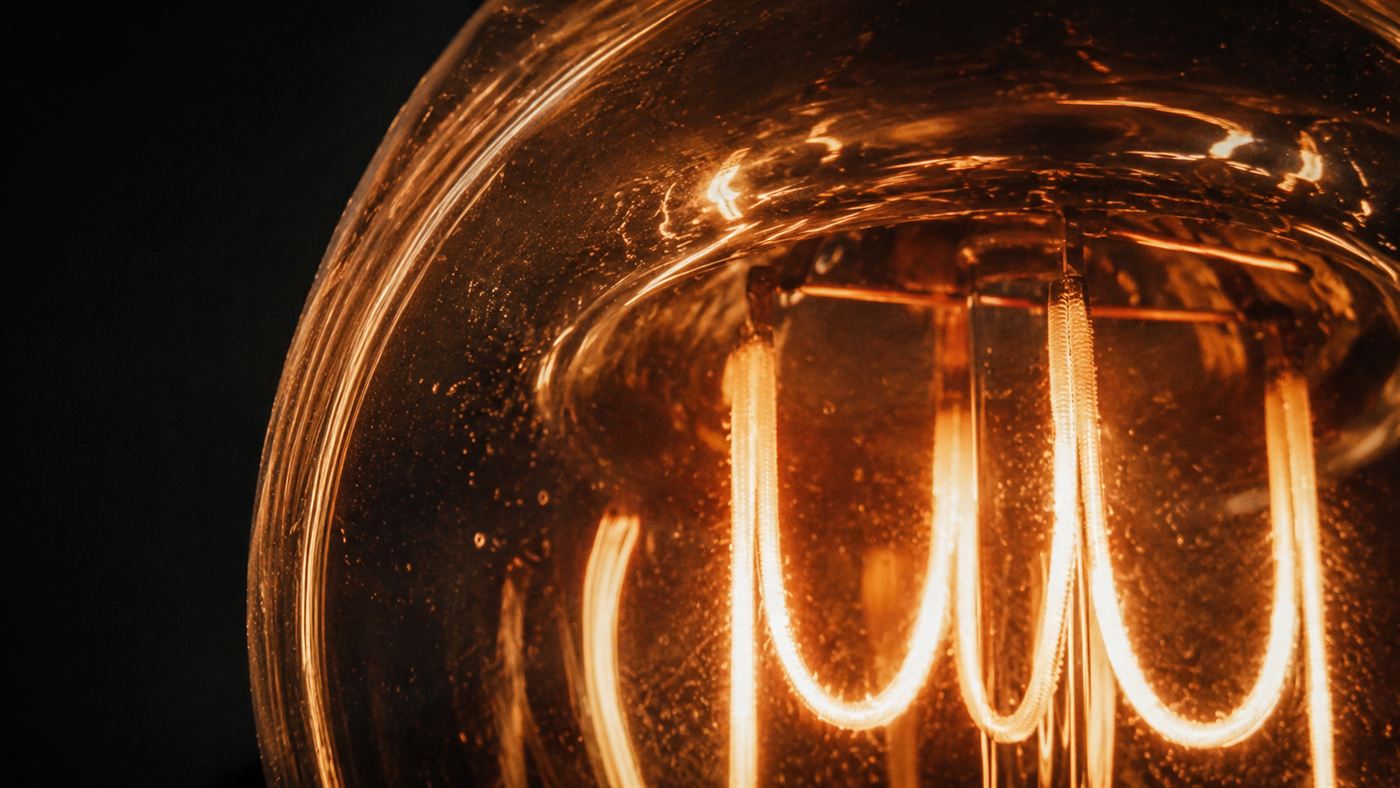
The companies, including Osram, Philips, and firms tied to General Electric, set a common standard capping the life of an incandescent bulb at around 1,000 hours, down from the 1,500 to 2,000 or more that many bulbs had reached. They enforced it ruthlessly, testing each other's bulbs and fining any member whose lamps lasted too long. A longer-lasting bulb, from their point of view, was a defective product, because it meant a customer who would not come back to buy another. The Phoebus cartel ran until 1939, and its fingerprints are still on the lights over your head.
What is planned obsolescence?
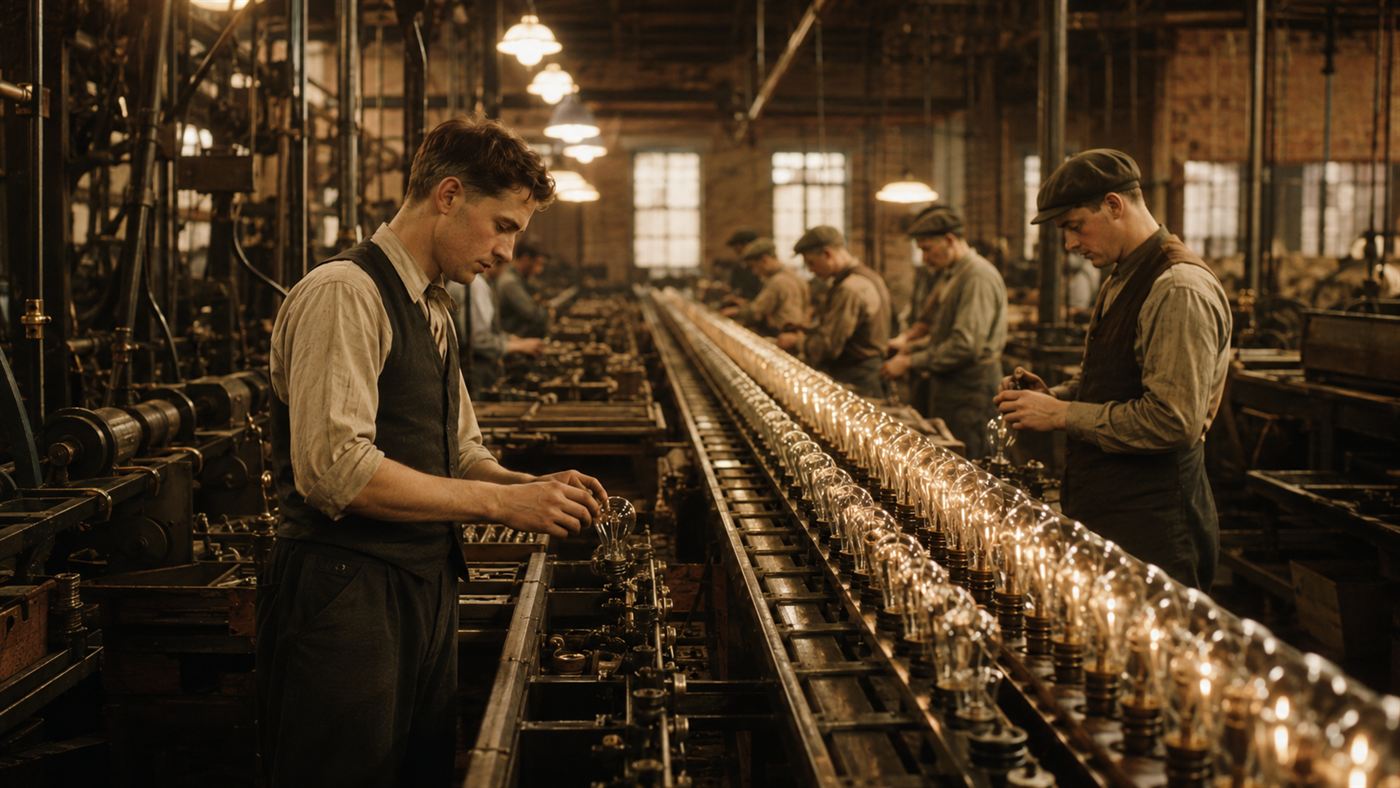
The Phoebus scheme is the textbook birth of an idea that now shapes almost everything we own: planned obsolescence, the deliberate designing of products to fail or feel outdated so that we keep buying replacements. The light bulb was the perfect test case, a simple, universal product whose lifespan could be dialed down by tweaking a filament, and the cartel showed that an entire industry could quietly agree to sell people less than they were capable of making.
Once you know the pattern, you see it everywhere, from phones that slow down to appliances that seem to fail the month the warranty ends. The Centennial Light matters because it is physical, undeniable proof that things could be built to last, hanging right there in a firehouse for anyone to see. It is a hundred-year-old argument, still glowing, about how much of what we throw away was engineered to be thrown away, an echo of the same throwaway culture behind the earliest days of the electric bulb.
A firehouse legend in Livermore
Over the decades the bulb has become a beloved local celebrity in Livermore California, cared for by generations of firefighters who treat it as a mascot as much as a light. It has survived a handful of moves between stations, each one handled with the nervous care of transporting a holy relic, and it threw itself a 100th birthday party in 2001, complete with a band and hundreds of guests.
Its fame has had genuinely funny moments. In 2013 the bulb suddenly went dark, and for a few hours the world's press prepared its obituary, only for technicians to discover that the century-old bulb was fine, it was the modern power supply keeping it lit that had failed. The bulb outlived the machine sent to babysit it. Someone replaced the equipment, and the Centennial Light flickered back on, as if mildly annoyed at the interruption.
The honest catch
As satisfying as the villain story is, honesty requires shading it. The Centennial Light is not proof that every old bulb was immortal, because it is a survivor, and survivors are always exceptional. Millions of its brothers from the same era burned out and were forgotten long ago, and this one endures thanks to a rare mix of a thick filament, a feeble four watts, and the luck of almost never being switched off. Ask it to light a room at full brightness and cycle on and off daily, and it would not have lasted.
The cartel's 1,000-hour rule was not purely evil, either. There is a real engineering trade-off in a bulb: push a filament to last longer and it tends to glow dimmer and waste more energy as heat, so a shorter-lived, brighter, more efficient bulb is a defensible choice, not only a greedy one. But the fines, the secrecy, and the coordinated suppression of longer-lasting lamps were real, and the cartel chose profit over the customer with its eyes open. The bulb in Livermore is not a perfect indictment. It is something better: a small, stubborn glow that keeps the question honest.
A single bulb has burned for over a century while an entire industry quietly agreed to make its own products die young. Would you pay more for a bulb, a phone, or an appliance built to last for decades, or has cheap and disposable simply won? Tell us what you think in the comments.
Related reading: The Englishman who lit a working lightbulb before Edison and barely got the credit.
More from Watts & Wild
More in Electric →


Maria covers heavy industry, mega-builds, and the history of the machines and gadgets that quietly run our lives, for Watts & Wild.