A bumblebee just solved a puzzle scientists built for big-brained animals, with no training at all
A bumblebee has a brain smaller than a grain of rice. In 2026 a team of scientists set one a puzzle they had designed to test the cleverness of chimpanzees, and the bee did something no one had trained it to do. It improvised a solution on the spot, and in doing so it quietly dented one of our oldest assumptions about what a tiny brain can and cannot manage.
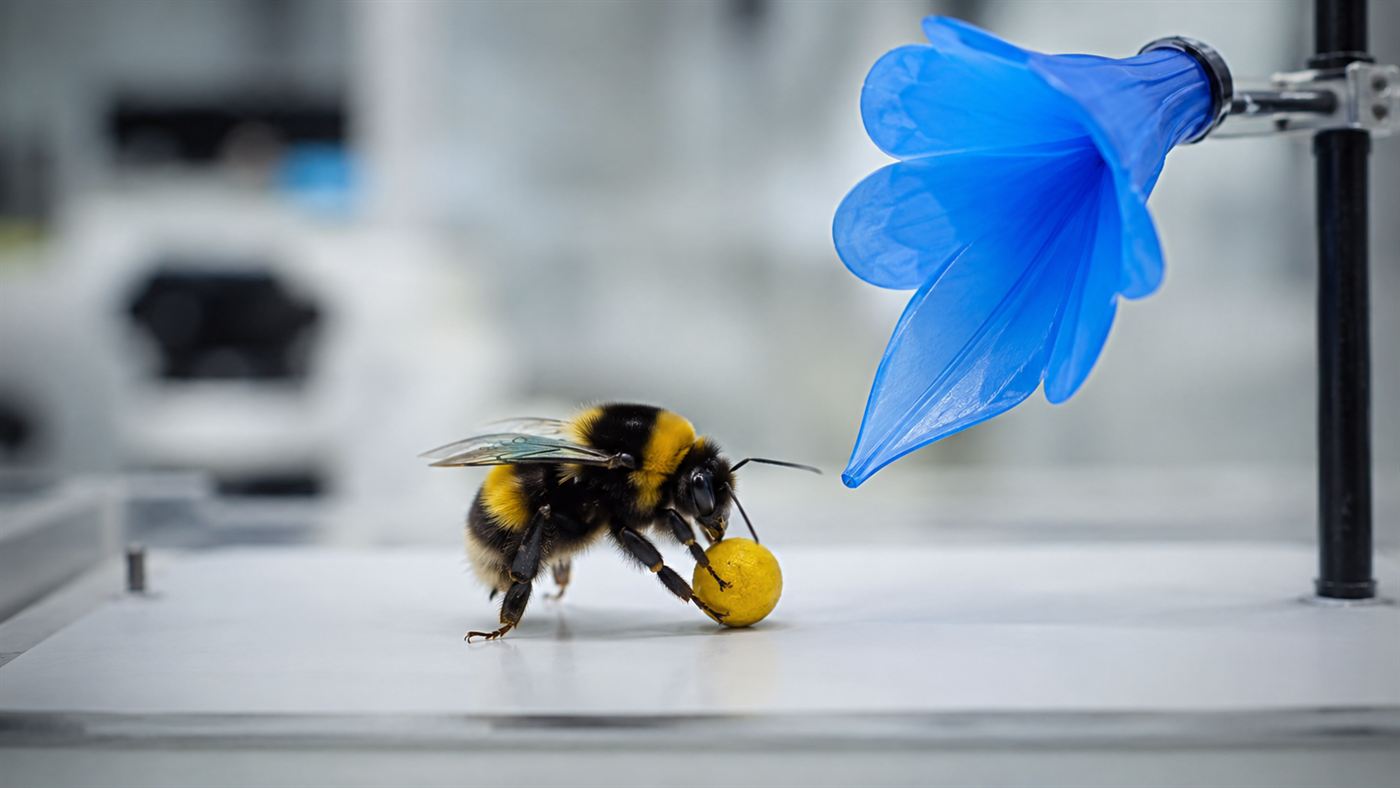
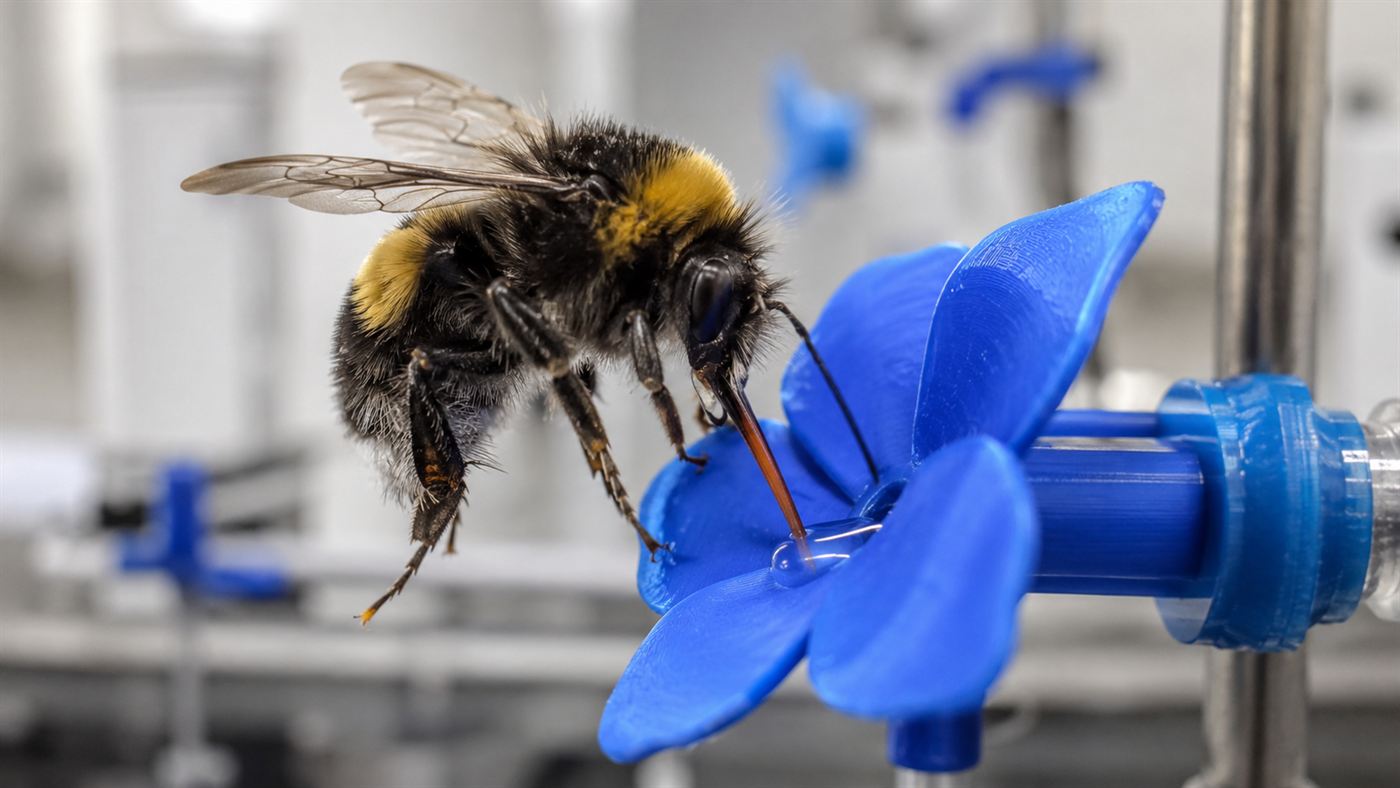
A bumblebee nudges a ball into place to reach a blue flower it cannot otherwise touch. Illustration: Watts & Wild.
The short version is this. In a study published in the journal Science on June 4, 2026, bumblebees spontaneously rolled a ball into position to reach a flower they could not otherwise get to, then climbed the ball to claim a hidden sugar reward. No one taught them the trick. They worked it out for themselves, on the first try.
Researchers at the University of Oulu in Finland, led by Akshaye Bhambore and Olli Loukola, built a setup that would sound almost cruel in its cunning. They fixed a fake blue flower, the kind the bees had learned held food, just out of reach above the floor. Nearby sat a small movable ball. The bees had earlier learned two separate facts, that the blue flower was worth visiting and that the ball could be pushed around, but they had never been shown how to put those two facts together.
And yet many of them did. A bee would approach the unreachable flower, turn to the ball, roll it underneath, and use it as a step to climb up to the reward. It is the sort of two-step improvisation we usually reserve stories about for apes and crows.
Why this bumblebee result stunned the researchers
Scientists have a name for the classic version of this test. In the 1920s the psychologist Wolfgang Kohler watched chimpanzees stack boxes to reach bananas hung from the ceiling, and that image, an animal assembling a new solution rather than stumbling into it by chance, became a benchmark for real insight. Loukola called the new study "essentially an insect version of the classic box-and-banana problem."
What makes it startling is the word spontaneous. The bees did not grind their way to the answer through hundreds of random attempts, the slow trial-and-error that even simple animals can manage. They appeared to combine what they already knew into a fresh plan and act on it. As Bhambore put it, this was a "completely novel object-manipulation task" that the insects solved "without being trained to do so, or without any trial and error." For a creature this small, that is the surprising part.
How a brain smaller than a grain of rice pulls this off
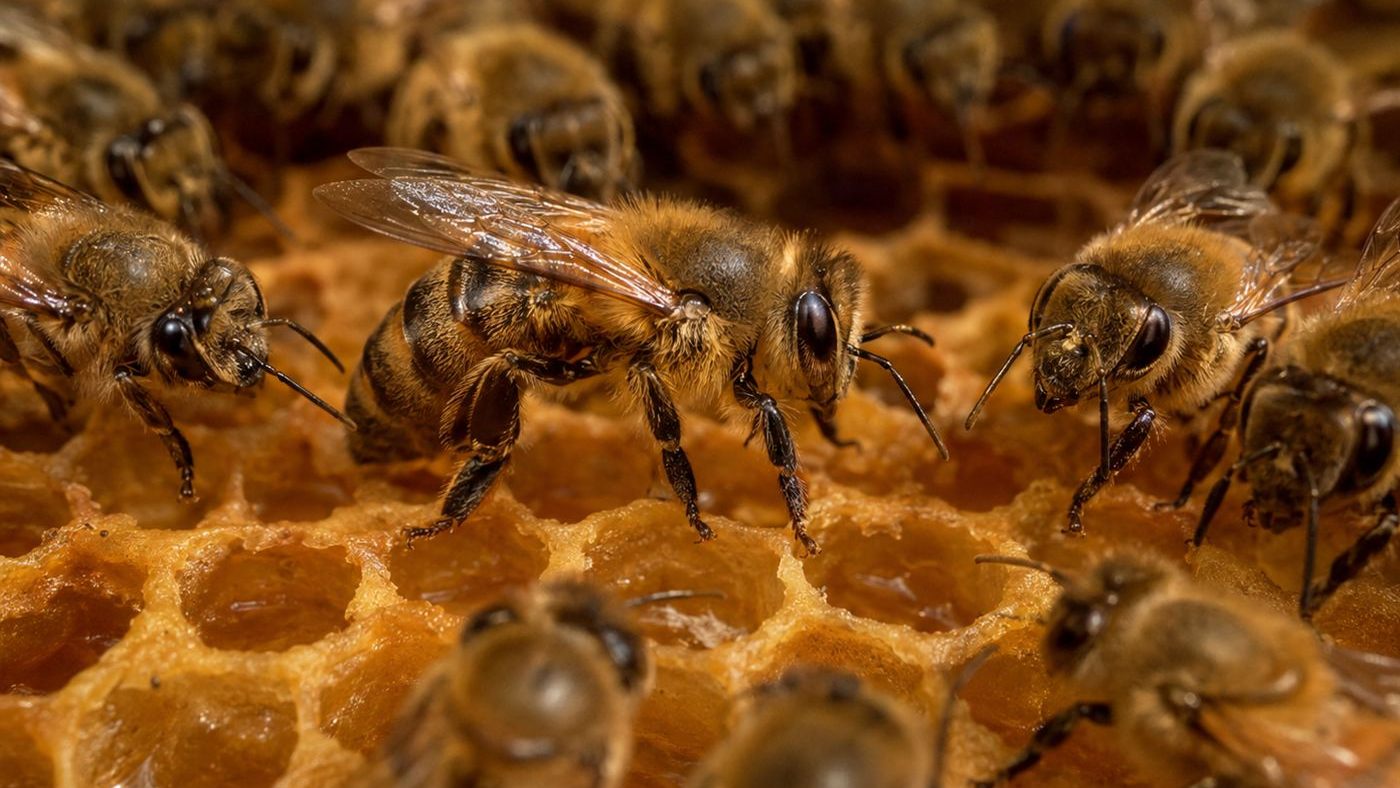
A bee's brain holds roughly a million neurons, against the eighty-six billion packed into a human head. By any simple count of parts, it should not be able to do this. Yet the last decade of research has slowly overturned the idea that intelligence scales neatly with brain size. Bees have already been shown to count, to recognise human faces, to learn by watching other bees, and even to appear to play by rolling little balls around for no obvious payoff at all.
The lesson biologists keep drawing is that a small brain is not a simple one. Millions of years of evolution have compressed a remarkable amount of flexible behaviour into that speck of tissue, tuned by the hard demands of finding scattered flowers in a changing world. "Miniature brains can generate flexible solutions to novel problems in ways we are only beginning to understand," Loukola said, and this experiment is one more crack in the old wall between clever vertebrates and everything else. The humble insect keeps refusing to stay in the box we built for it.
Does this mean bees are as smart as chimps?
This is where excitement has to slow down and meet the evidence honestly. It is tempting to read the headline and conclude that a bee thinks like a chimpanzee, or like a child. The researchers went out of their way to shut that door. They stressed that they are not claiming these creatures think the way we do, and certainly not that they possess anything like human awareness or feeling.
What the study shows is narrower and, in a way, stranger. It is that flexible, improvised problem solving does not require a big brain, that the machinery for it can be built at a scale we barely imagined. A bee solving a puzzle is not proof of a bee's inner life. It is proof that cleverness in nature comes in far more shapes and sizes than we assumed.
The honest catch
The result is genuinely exciting, and it deserves the attention it is getting. But it comes with the ordinary caution that good science demands. This was a controlled laboratory task with a single species, the buff-tailed bumblebee, and "many" of the bees is not all of them, so we should be careful not to sand off the messy parts to make a neater story. What one clever species can do in a lab is a clue, not a full map of insect minds.
There is also a gentler catch worth sitting with. If a mind this small can be this resourceful, then the fields, hedgerows and gardens around us are thick with intelligences we have long dismissed. The same little pollinators we are pushing to the edge with pesticides and lost habitat turn out to be quiet problem solvers. The more we look, the less alone our own cleverness appears, and the more reason we have to take the smallest lives around us seriously.
Sources: CNN on the study, Scientific American, and ScienceDaily.
A creature we usually notice only when it bumps against a window turns out to be quietly inventive. Does a bee cracking a puzzle change how you think about the insects in your own garden? Tell us what you think in the comments.
Related reading: the astonishing dance language bees use to map the world to each other. See also the brainless slime mould that solves mazes, and Alex the parrot, who seemed to understand the words he spoke.