Alex the parrot learned over 100 words, counted to six, sorted colors and shapes, and may be the only animal ever to ask a question about itself
For thirty years a grey parrot named Alex worked alongside a scientist who refused to believe that "bird brain" was an insult. By the time he died, Alex the parrot had quietly demolished the idea that thinking belongs only to mammals.
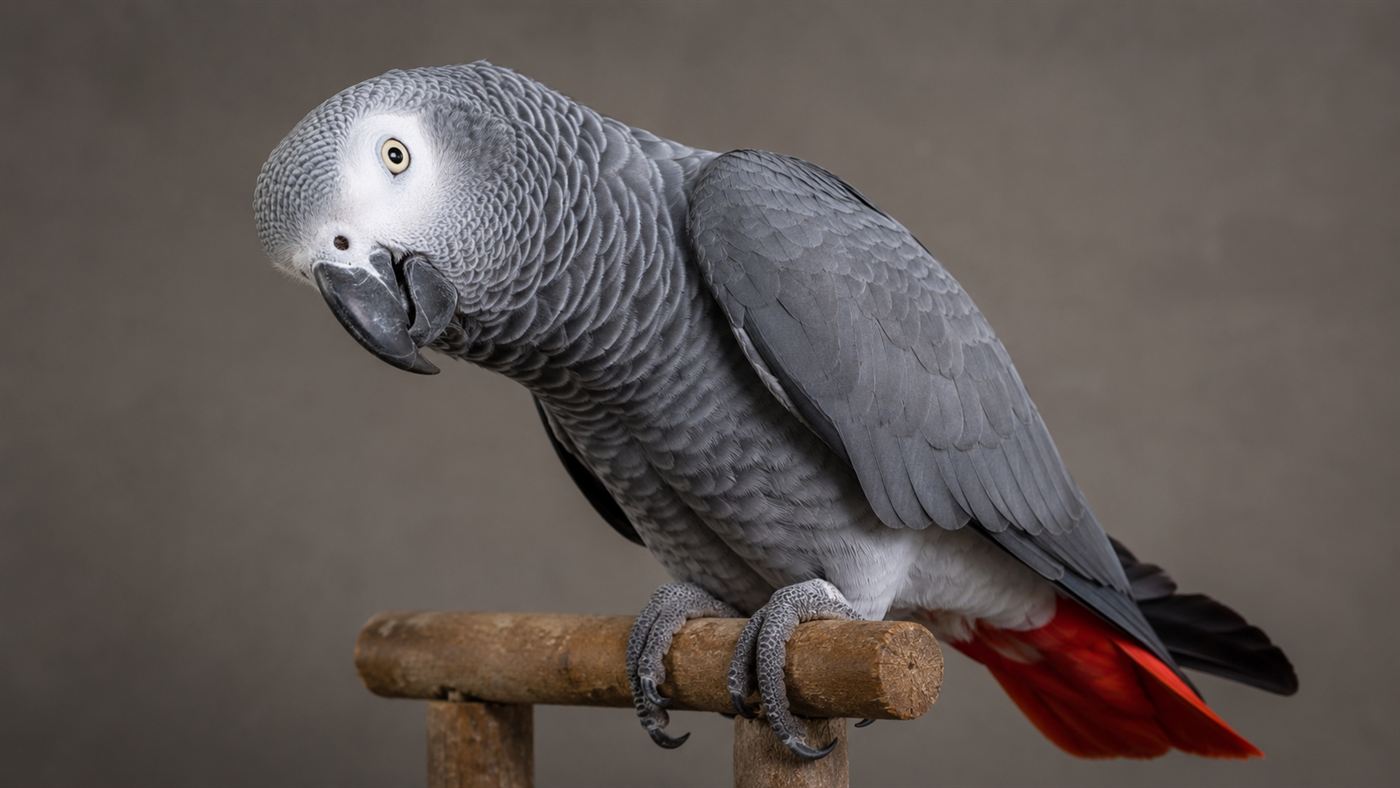
Alex the parrot spent his life proving that a brain the size of a walnut could do far more than anyone thought. Illustration: Watts & Wild.
Alex the parrot was an ordinary African Grey parrot bought from a pet shop in 1977, and he became one of the most important animals in the history of science. Over three decades he learned to label objects, name colors and shapes, count, and answer questions out loud, performing on some tests at the level of a young child. He turned the old assumption about bird intelligence, that parrots were mindless mimics, into something close to an embarrassment.
The work was not really about teaching a parrot tricks. It was about a fundamental question in animal cognition: whether a creature so far from us on the family tree, with a brain built completely differently from ours, could genuinely think. Alex the parrot spent his life answering that question, and the answer kept surprising people.
Alex the parrot learned more than 100 words and could identify about 50 objects, seven colors and five shapes, count quantities up to six, grasp a zero-like concept, and understand same and different. On many tasks his abilities were compared to those of chimpanzees and dolphins.
The scientist who bet on a bird
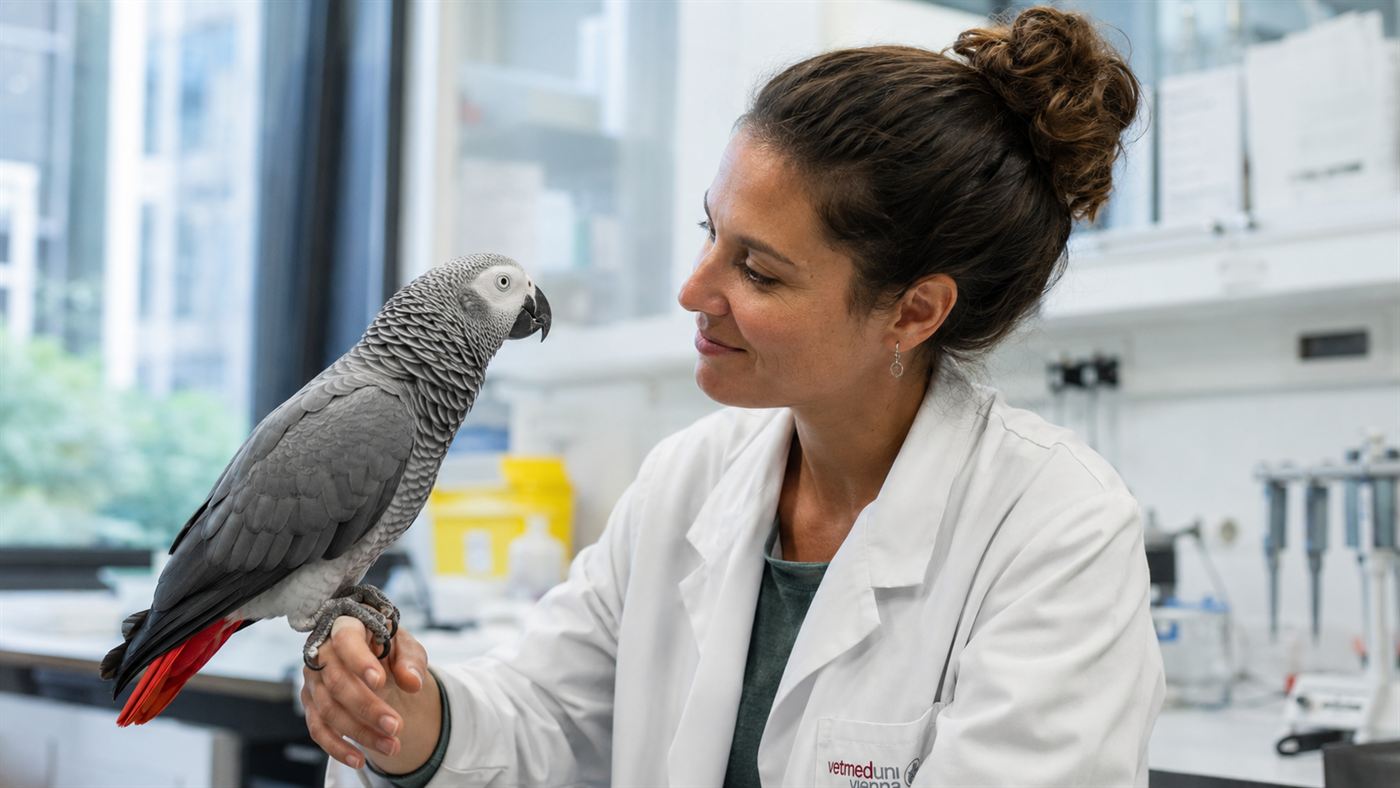
Alex's whole life was bound to one researcher, Irene Pepperberg, who bought him in 1977 and began a study that would last until his death. At the time, the very idea was close to scientific heresy. Serious researchers studied animal cognition in apes and dolphins, not parrots, and the prevailing view of bird intelligence was that a bird repeating words was just an audio recorder with feathers, understanding nothing.
Irene Pepperberg thought otherwise, and she designed careful experiments to find out. To teach Alex, she used a "model/rival" method, in which two humans demonstrate a question and answer while the parrot watches, turning learning into a social game. Crucially, she built her protocols to guard against the famous "Clever Hans" trap, where an animal simply reads subtle cues from its handler, so that Alex's correct answers could not be dismissed as mind-reading.
What Alex the parrot could actually do
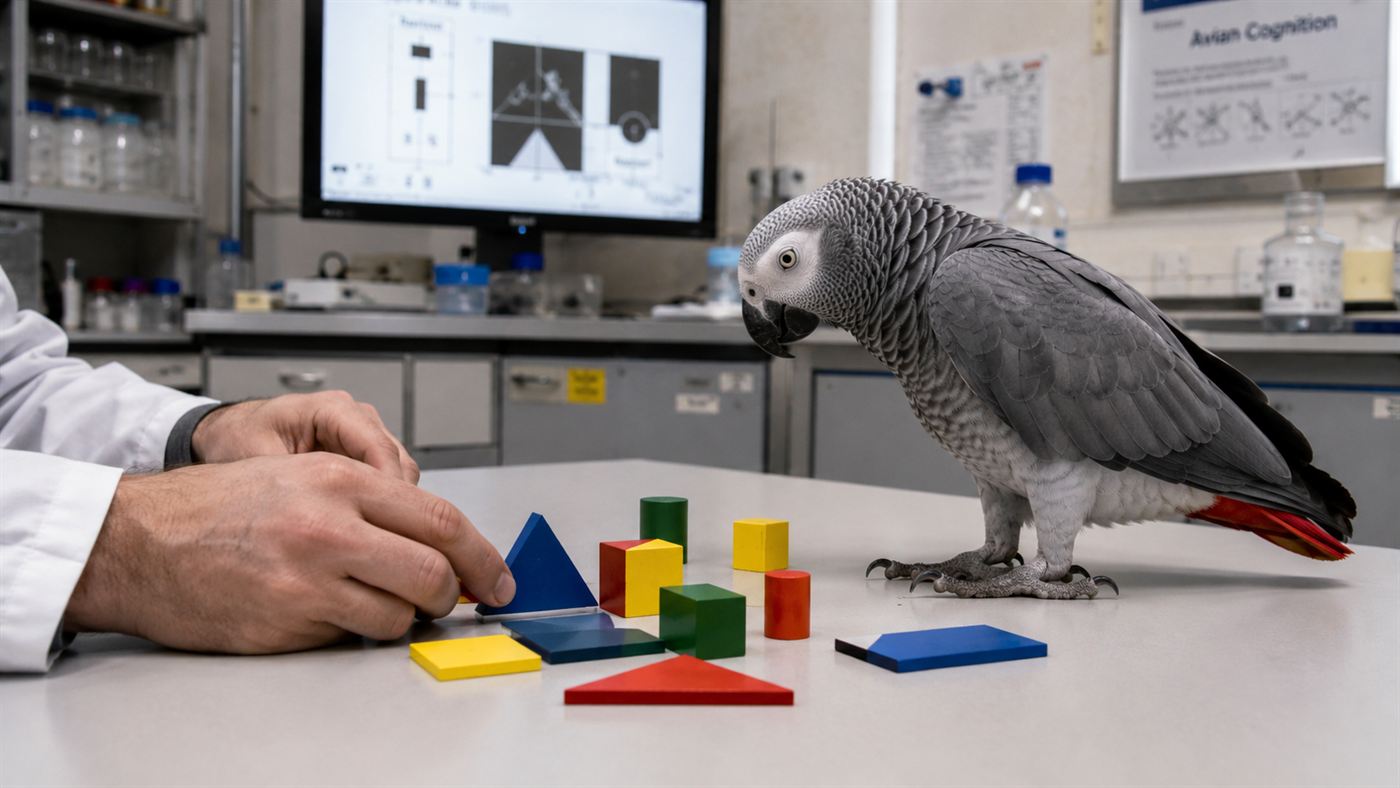
The results were remarkable. Alex the parrot learned to identify around 50 different objects, seven colors, and five shapes, and to say what they were when asked. He could look at a tray of items and answer how many there were, counting up to six, and he grasped something like the concept of zero, telling researchers "none" when nothing fit the question.
More impressively, he handled abstract ideas. Shown two objects, he could say whether they were the same or different, and in what way, by color, shape, or material, which means he was sorting the world into categories rather than just memorising labels. On a range of these tasks his bird intelligence was rated comparable to that of great apes and dolphins, with language skills likened to a two-year-old child and problem-solving closer to a five-year-old.
The question that made him famous
The single most quoted moment in Alex's career was a question he asked, not answered. While looking at himself in a mirror, Alex the parrot is said to have asked what color he was, and on learning the answer, "grey," to have effectively learned the word for his own colour. It is often described as the only known case of a non-human animal asking an existential question about itself.
Whether or not that single anecdote means everything people want it to mean, the broader pattern was just as striking. Alex showed clear signs of will and mood: he got bored, refused to cooperate, demanded to be taken "back" to his cage, and ordered specific foods. He behaved less like a test subject and more like an opinionated colleague, which is exactly what made his contribution to animal cognition so hard to wave away, a genuine landmark in the study of animal cognition.
You be good, I love you
On 6 September 2007, Alex the parrot was found dead in his cage, at just 31 years old, young for a Grey parrot that might have lived to 50. A necropsy found no clear cause beyond a sudden cardiac event. His death made headlines around the world, an unusual honour for a bird.
What gave the story its emotional charge were his last words. Every night when Irene Pepperberg left the lab, Alex would say the same thing, and on his final evening he said it again: "You be good. I love you. See you tomorrow." Whatever those words did or did not mean to him, they were the perfect, devastating end to a thirty-year conversation between a scientist and a Grey parrot that changed how we think about other minds.
The honest catch
The temptation is to turn Alex into a feathered person, and the science asks us to slow down. There is real debate about whether Alex the parrot truly understood words and concepts or whether his answers reflected extremely sophisticated association and conditioning. Irene Pepperberg herself was careful, generally avoiding the word "language" and describing what Alex did in more cautious terms than the headlines did. The famous "what color am I?" moment, however charming, rests on interpretation more than proof.
There is also the simple problem of one bird. Alex was a single, intensively trained individual, and you cannot build a whole science on one animal, however gifted. Yet even with all those caveats, the core achievement stands. Rigorous, repeatable tests showed a Grey parrot doing things mainstream science had insisted birds could not do, and that forced a real rethink of animal cognition. The bird intelligence in that walnut-sized brain, it turns out, was badly underestimated, and Alex the parrot is the reason we take bird intelligence seriously at all.
A parrot spent thirty years quietly proving that a tiny brain can think, and said "I love you" on his last night. Do you believe Alex truly understood his words, or do we just want him to? Tell us in the comments.
Related reading: A Scottish woman can smell Parkinson's disease on people years before doctors can diagnose it.