The first practical solar cell was born in 1954, and it was far too expensive for anyone to use
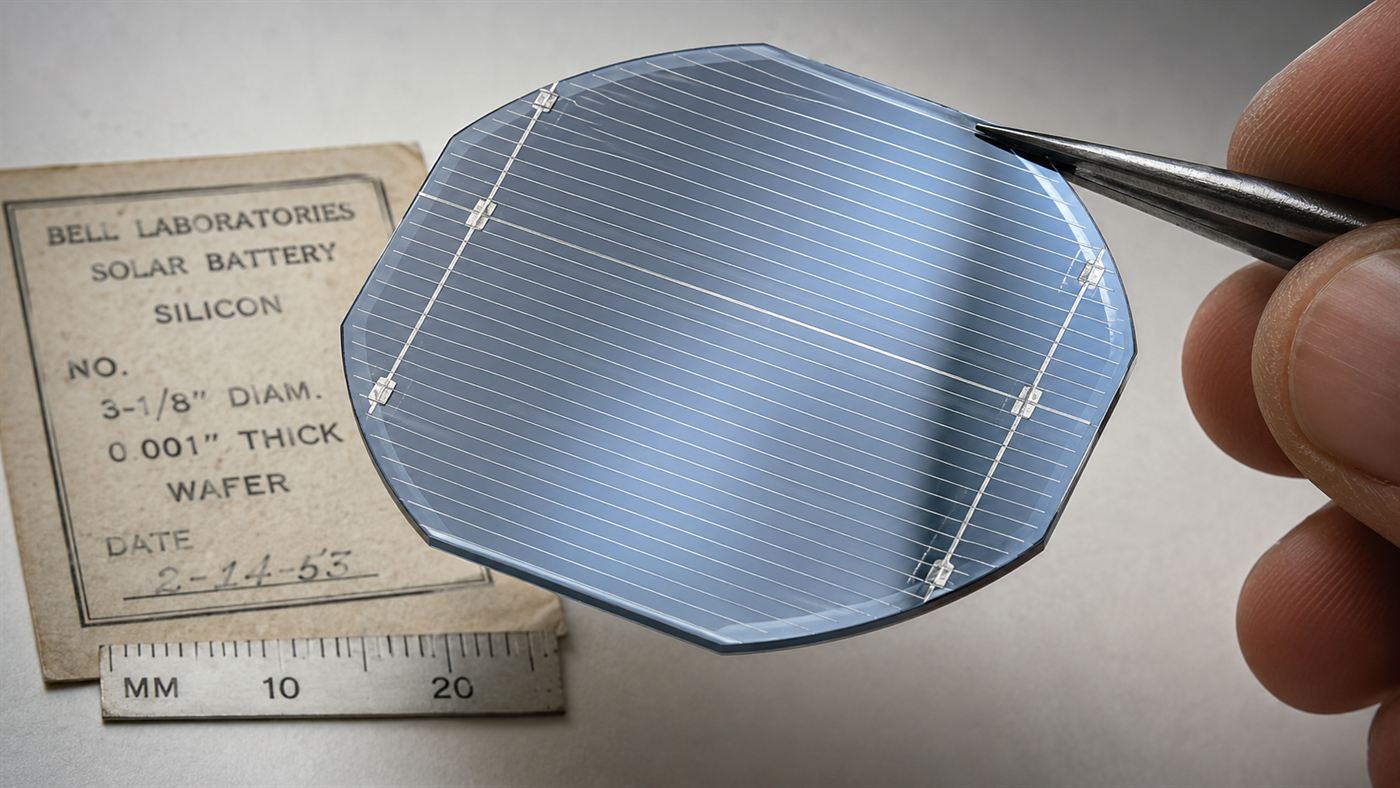
On a spring day in 1954, three researchers at Bell Labs unveiled the first practical solar cell that could turn sunlight into useful power. Built from silicon, this first practical solar cell promised limitless free energy from the sun, and then sat almost unused for a generation because it cost a small fortune.
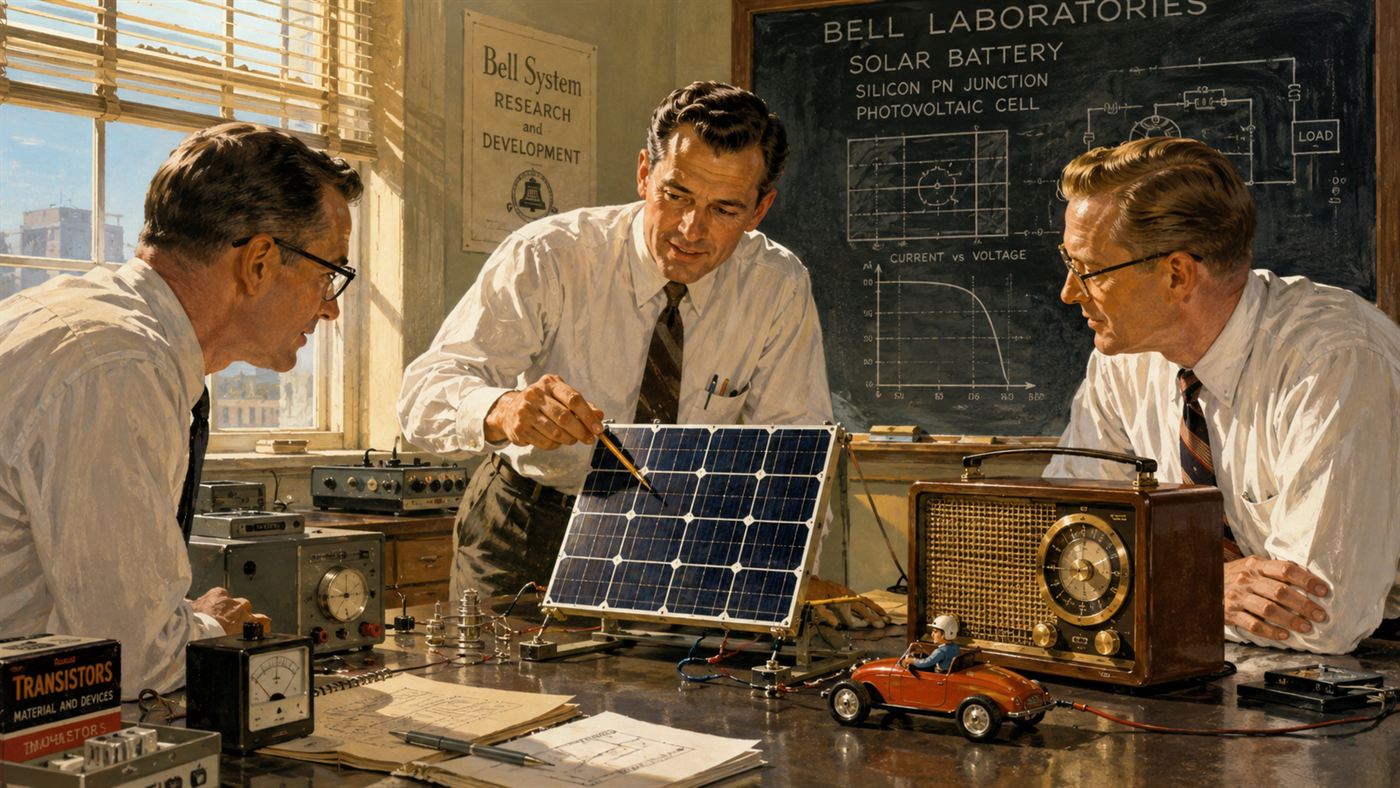
In 1954 a small silicon panel turned sunlight into usable electricity for the first time. Illustration: Watts & Wild.
The age of solar power did not begin on a sun-baked rooftop or a desert plain.
It began on a workbench in New Jersey, with a toy and a strip of grey wafer no bigger than a playing card.
Who invented the first practical solar cell? The first practical solar cell was built at Bell Labs and announced in 1954 by Daryl Chapin, Calvin Fuller and Gerald Pearson. Made from silicon, it was the first cell efficient enough to turn sunlight into a useful amount of electricity.
The first practical solar cell turns sunlight into electricity
Bell Labs revealed the silicon solar cell in April 1954, the first device that could power everyday equipment from light alone.
Earlier light-sensitive cells, made from selenium, converted well under one percent of the sunlight that hit them.
The new silicon version reached around six percent, a leap that finally made the idea practical.
To prove it, the team used a panel of cells to run a small toy and a radio transmitter on nothing but sunshine.
For the first time, a clean trickle of electricity was flowing straight out of daylight.
A discovery half by accident
The breakthrough was not really the goal anyone had set out to reach.
Bell Labs was deep in work on silicon for electronics, the same research that was giving the world the transistor.
While treating silicon with tiny amounts of other elements, the team noticed how strongly it produced current in light.
That photovoltaic response turned out to dwarf anything selenium could manage.
A telephone company chasing better electronics had stumbled into a way to run equipment on the sun.
The promise of limitless sun
The announcement landed with real excitement.
Newspapers of the day wondered aloud whether this was the start of drawing limitless energy straight from the sun.
The dream was obvious, roofs and remote outposts quietly powered by daylight, with no fuel and no smoke.
For a company that ran phone lines into far-flung places, cells that needed only sunshine were especially tempting.
For a moment it looked as though the solar future might arrive within a few short years.
Too expensive to use
Then the price tag brought everyone back to earth.
Those first cells were staggeringly costly, with a single watt of capacity priced far beyond any ordinary use.
Generating a household's electricity this way would have cost a fortune that no family could justify.
So the miracle of 1954 had almost no market on the ground, however clever it was.
The technology that was supposed to change everything spent its early years looking like an expensive curiosity.
Saved by space
The rescue came from above the atmosphere.
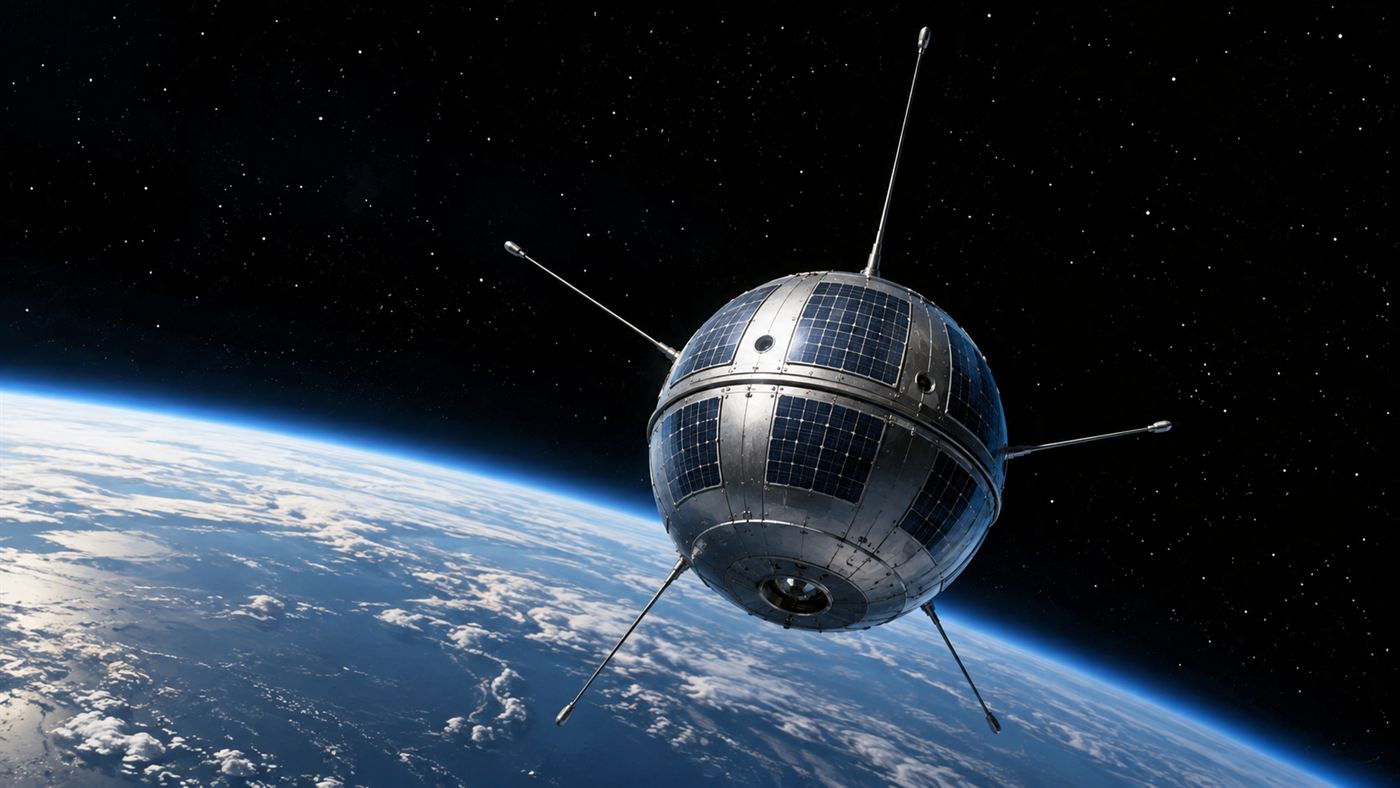
In 1958 the tiny Vanguard 1 satellite carried solar cells into orbit, where they quietly kept its radio alive.
In space there was no power socket, no fuel truck, and money was almost no object.
Solar cells were suddenly the obvious answer, and they have powered spacecraft ever since.
The invention that was too dear for Earth found its first real job orbiting it.
The honest catch
It is worth being honest about how long the rest took.
Cheap, rooftop solar did not follow quickly, and the cells stayed costly for decades after that first demonstration.
It took oil shocks, patient research and eventually vast factories, much of it in China, to drive the price down to a tiny fraction of the original.
The breathless 1954 talk of limitless energy was wildly premature, by roughly half a century.
Yet the core promise was real, and the cheap panels on roofs today are direct descendants of that grey wafer on a workbench.
The first solar cell is a reminder that a world-changing invention can arrive decades before the world is ready to pay for it.
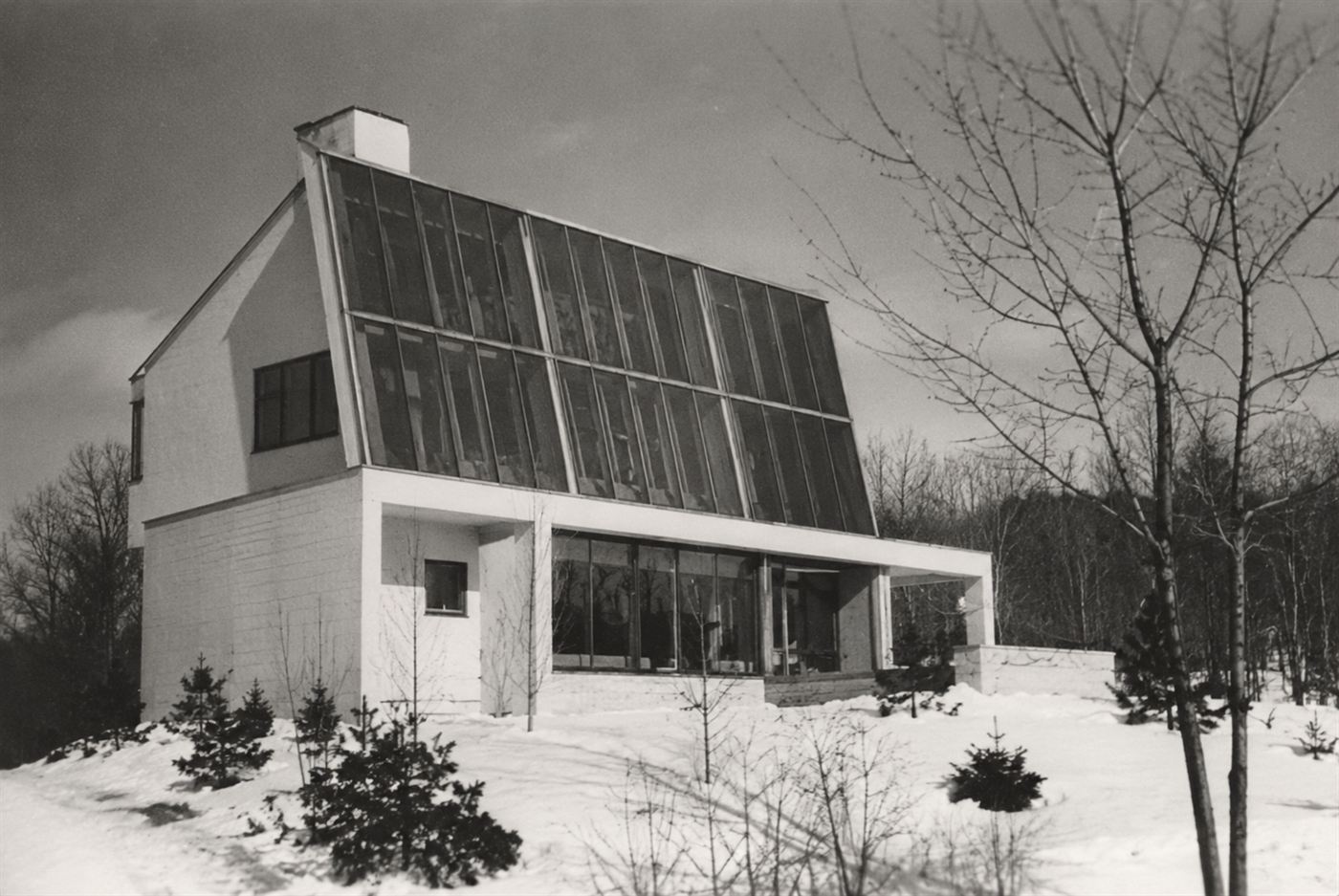
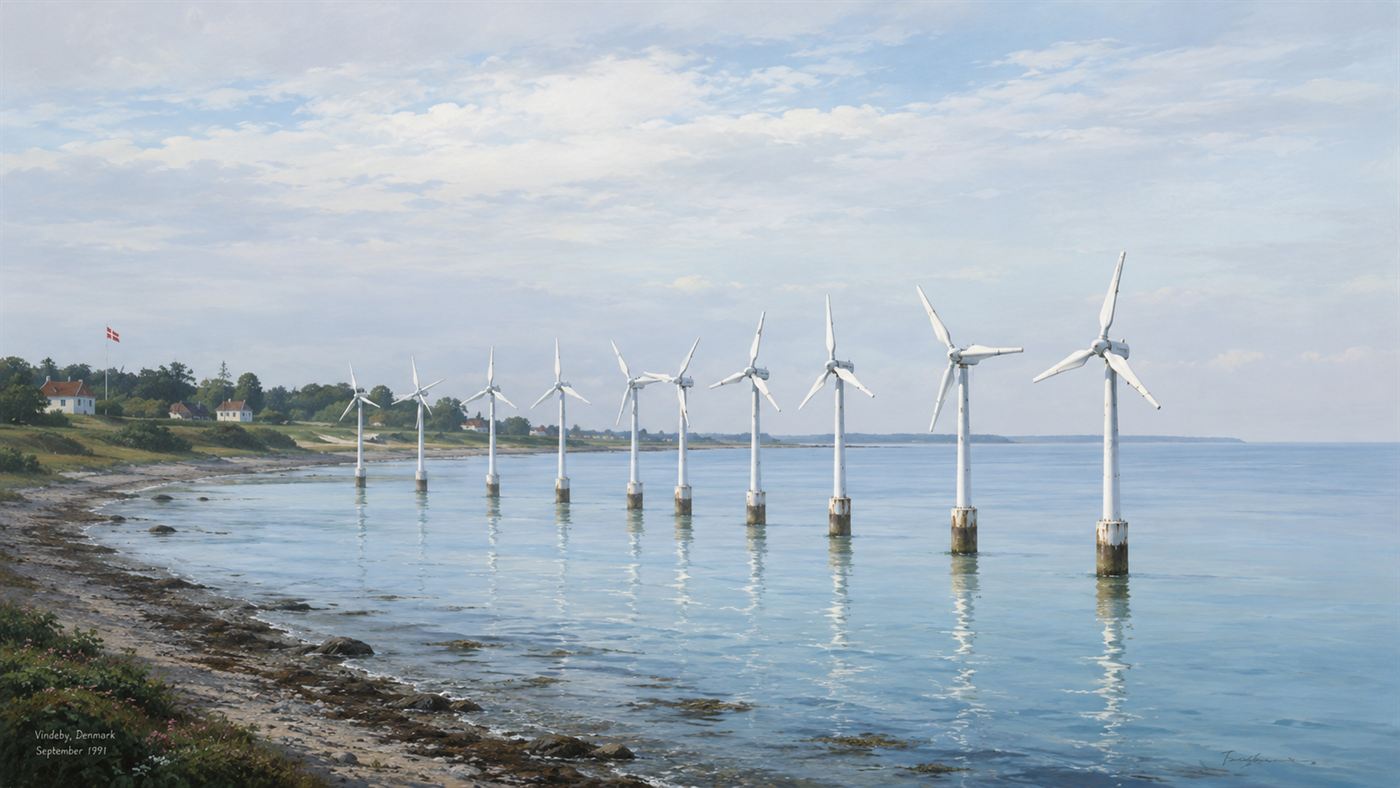
It belongs with the other quiet beginnings and stubborn pioneers of clean power, from the scientist who tried to heat homes with the sun to the tiny first offshore wind farm that seemed laughably small.
If the cheap solar panels of today started as a device almost no one could afford, what expensive, impractical invention sitting in a lab right now might quietly run the world fifty years from now? Tell us in the comments.