Three coded messages have promised a buried fortune in Virginia for more than a century, and only one of them has ever been cracked, using of all things the Declaration of Independence
A mysterious stranger, a locked box of numbers, and a fortune in gold buried somewhere in the Virginia hills. It is the kind of story that sounds made up, and it might well be. But one of the three codes really does decode into a treasure list, which is exactly why people have never stopped digging, and never stopped arguing.
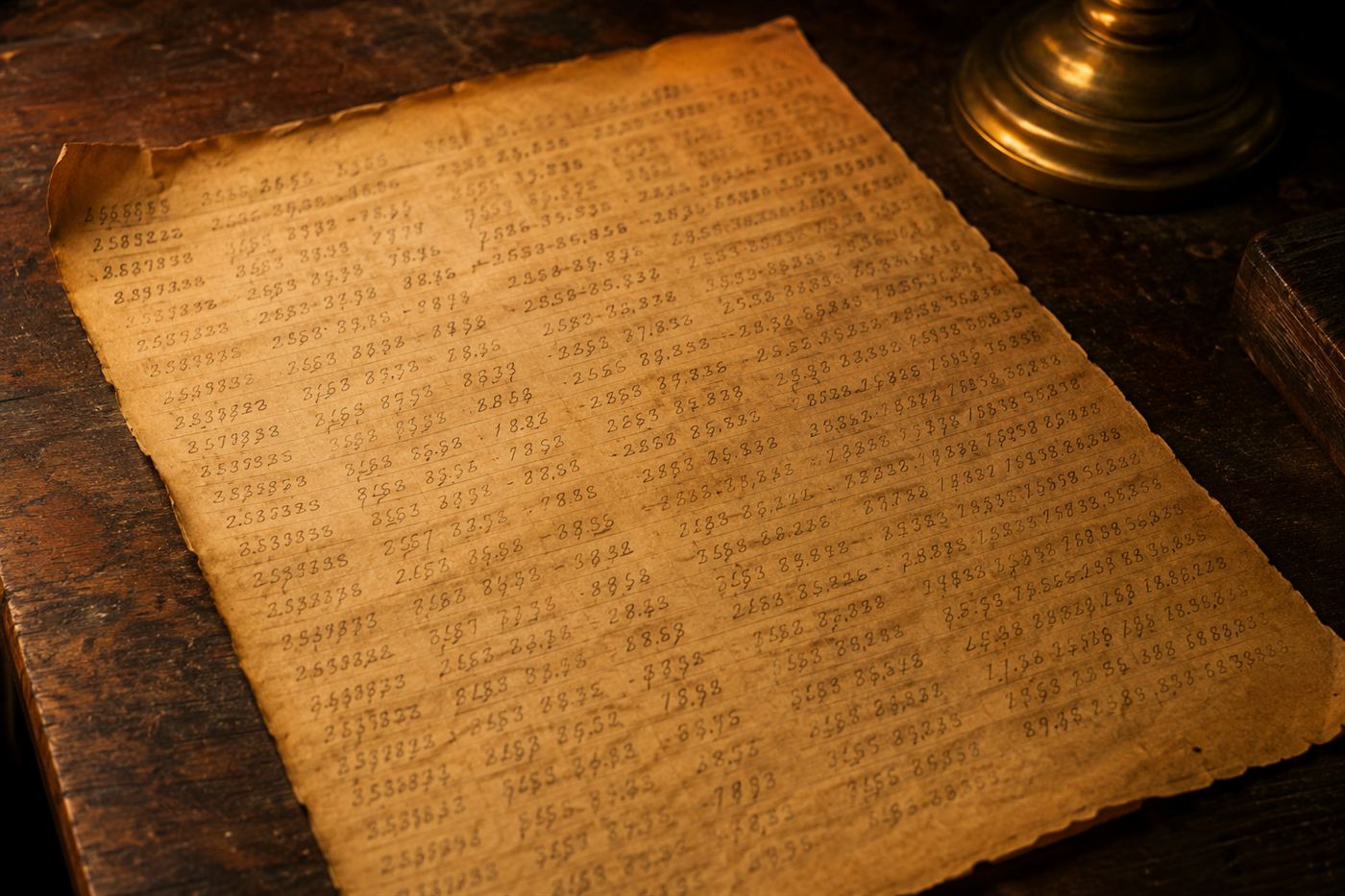
Each cipher is a long list of numbers, meaningless without the right key. Illustration: Watts & Wild.
According to the tale, in the 1820s a man named Thomas Beale led a party of adventurers who struck gold and silver somewhere in the American West. They carried the haul back east and buried it in a secret vault in Bedford County, Virginia. Beale then wrote out the details as three coded messages, left them in a locked box with a trusted innkeeper, and rode off, promising to send the key later.
He never came back. The innkeeper kept the box for decades and eventually opened it, finding three sheets covered in nothing but long strings of numbers. The key never arrived, and the meaning of the numbers stayed locked away, until a stranger finally broke one of them and published the whole story in an 1885 pamphlet.
The short version is that the Beale ciphers still have us stuck where that pamphlet left us. One cipher has been read, and it describes a genuinely staggering buried treasure, but the two that actually matter, the where and the who, have resisted every code-breaker who has ever tried them.
A key hidden in a founding document
The cipher that was cracked, the second of the three, turned out to use a beautifully simple trick. It is a book cipher, which means each number in the message points to a word in a chosen text, and you take the first letter of that word. The text Beale supposedly used was one every American could find: the Declaration of Independence.
Number the words of the Declaration of Independence in order, match each number in the book cipher to its word, read off the first letters, and a message appears. That decoded message lists the treasure in almost greedy detail, thousands of pounds of gold and silver plus a fortune in jewels, enough to set the hunt on fire and keep it burning ever since.
Why the Beale ciphers still obsess people
Here is the maddening part. The solved cipher only describes what is buried; it does not say where. The first message is supposed to give the location of the vault and the third the names of the heirs, and both remain complete mysteries. Whatever texts were used as their keys, no one has ever identified them.
That combination, one cipher tantalizingly readable and two locked tight, is precisely what makes the Beale ciphers so addictive. The success of the middle one whispers that the others must be real too, that the answer is out there in some ordinary book, waiting for the right person to try the right pages. Generations of treasure hunters have dug across Bedford County chasing that whisper.
The treasure hunters who dug for nothing
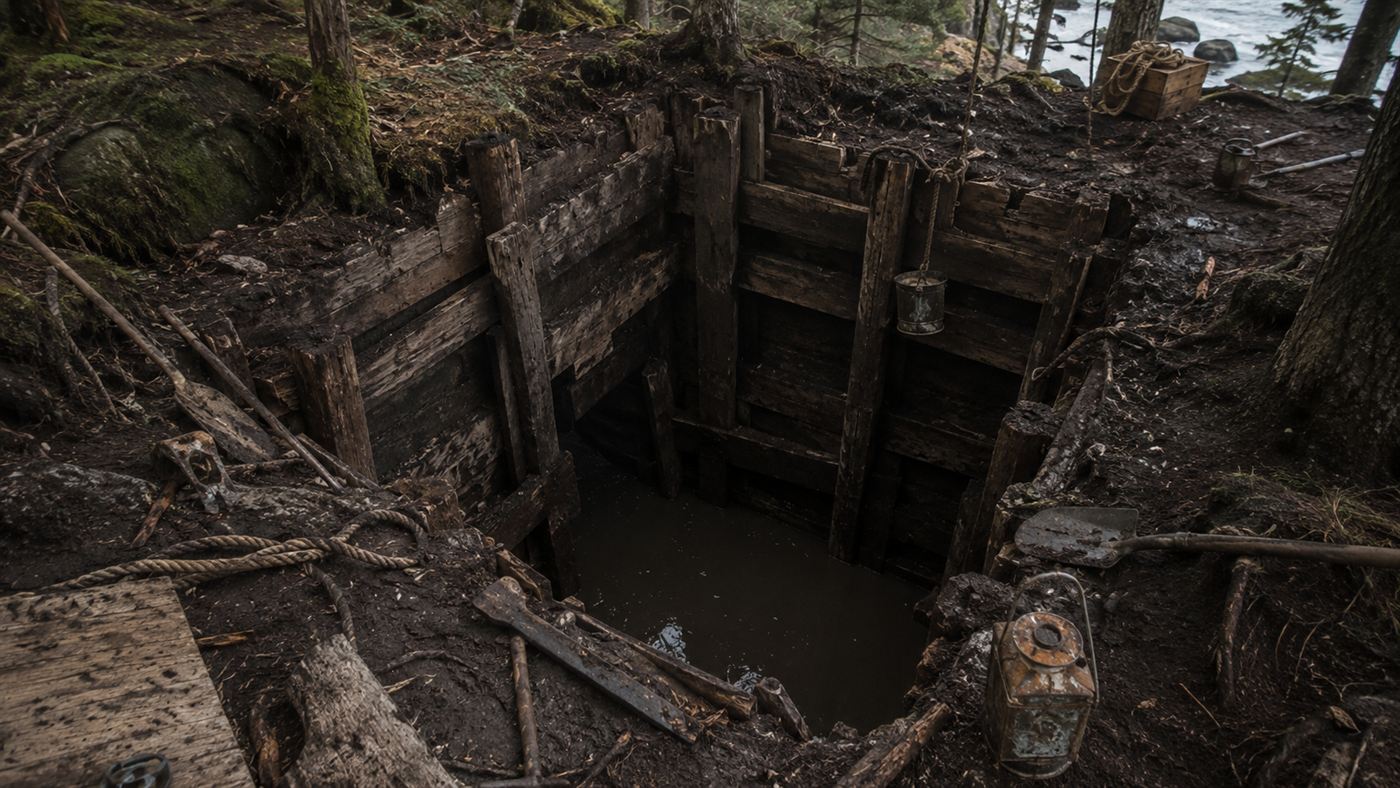
For well over a century, believers have descended on the quiet farmland of Bedford County with shovels, metal detectors and endless theories. They have tested other founding texts, famous novels and the Bible as possible keys, run the numbers through computers, and torn up patches of Virginia countryside in search of the buried treasure.
Nothing has ever been found. No gold, no silver, no jewels, not even a convincing trace of the vault the first cipher is supposed to describe. After a hundred and forty years of effort by amateurs and professional cryptanalysts alike, the Beale ciphers and their treasure remain exactly as buried, and as hypothetical, as the day the pamphlet appeared.
Are the ciphers just a hoax?
This is where most experts now land, and their case is strong. The pamphlet's story contains details that do not quite line up with history, the vanished Thomas Beale cannot be reliably traced, and the whole framing, a mysterious benefactor, a lost key, a fortune just out of reach, is exactly how you would design a tale to sell pamphlets.
More tellingly, when analysts study the two unsolved Beale ciphers as pure strings of numbers, they find statistical patterns that do not look like real encrypted English at all, more like numbers strung together to appear meaningful. To many code-breakers, that suggests the unsolved messages were never messages, just convincing-looking gibberish wrapped around the one genuine cipher.

The honest catch
And yet the hoax verdict, however likely, is not quite a proof. No one has ever shown for certain who wrote the pamphlet or demonstrated beyond argument that the ciphers are empty, and that thin uncertainty is enough to keep the dream flickering. The one cipher that truly decodes is a stubborn, awkward fact that a pure hoax has to explain away.
So the Beale ciphers sit in a strange middle ground, almost certainly a clever nineteenth-century invention, yet not conclusively debunked, with just enough real cryptography inside to feel possible. That, in the end, is the perfect recipe for an obsession: a puzzle that is probably nothing, wearing just enough truth to make walking away feel like giving up on a fortune.
One decoded page describes a mountain of gold, two undecoded pages guard where it lies, and after 140 years nobody can say for sure whether any of it was ever real. Would you spend a weekend chasing the Beale treasure, knowing it is probably a beautifully built lie? Tell us what you think in the comments.
Related reading: the Arizona mine legend that has cost searchers their lives. See also the Oak Island money pit that has swallowed fortunes for two centuries, and the Voynich manuscript, a book no one can read.