A fish imported to clean American fish farms escaped, took over entire rivers, learned to hurl itself into passing boats, and is now held back from the Great Lakes only by a wall of electricity
Boaters on some American rivers now wear helmets and body armour, not for rapids or rocks but for flying fish. A species brought in decades ago to do a simple cleaning job has multiplied into the millions, and it fights back against a passing motorboat by launching its heavy body straight into the air. Keeping it out of the Great Lakes has become a national emergency.
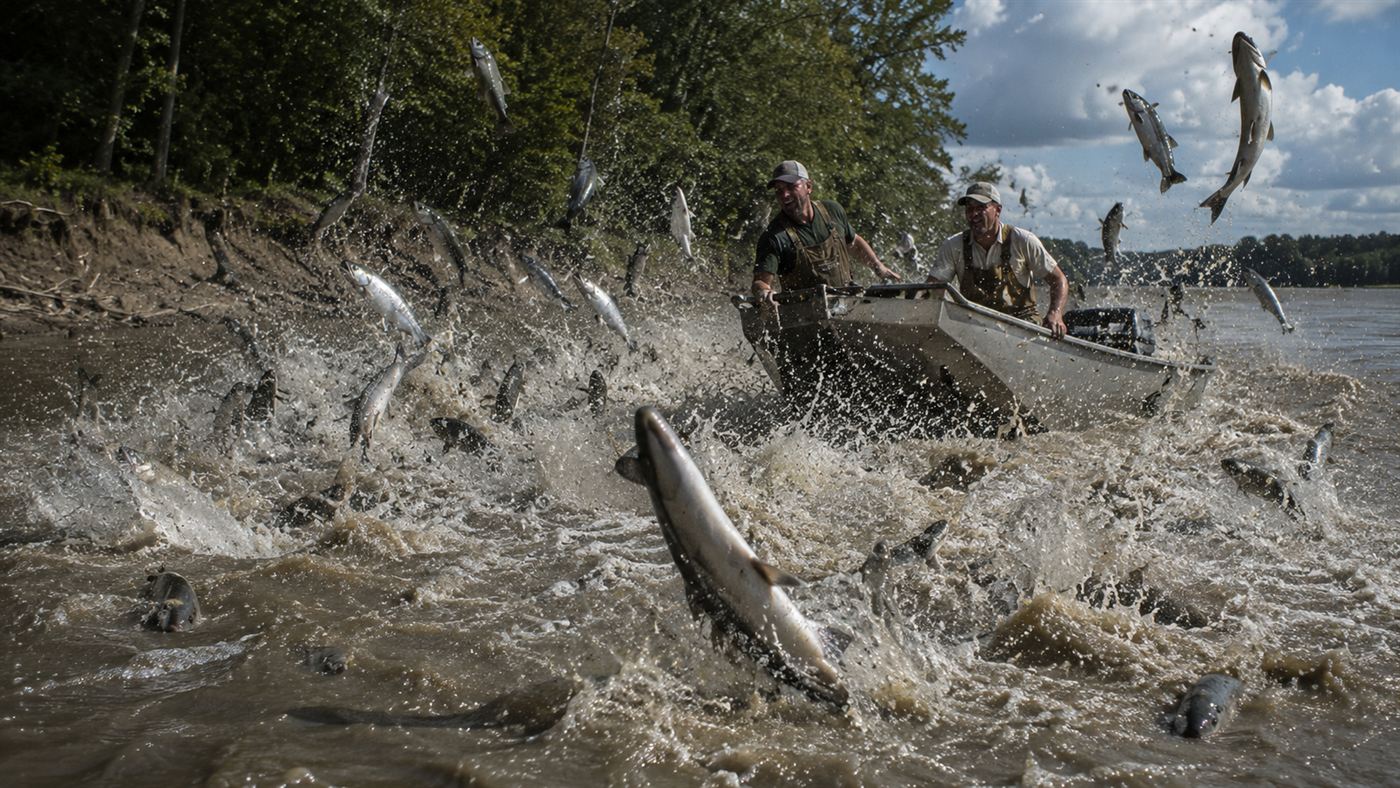
Startled silver carp erupt from the water around a passing boat. Illustration: Watts & Wild.
It is one of the strangest ecological disasters in America, and it started with a good intention. In the 1970s, several kinds of fish native to Asia were brought to the southern United States to keep fish farms and water treatment ponds clean by eating algae and weeds. For a while, they did exactly that.
Then the floods came. The fish, known collectively as Asian carp, slipped out of their ponds into the wild rivers, and there they found a paradise with no natural predators and endless food. What followed was an explosion that has reshaped some of the biggest river systems in the country and now threatens the largest freshwater lakes on Earth.
The short version: a helpful cleaning fish escaped, bred out of control, and became a plague. Asian carp now dominate long stretches of the Mississippi River, injure people by leaping into boats, and are pressing toward the Great Lakes, where only an electric barrier stands in their way.
Fish that fly out of the water
The most alarming of the group is the silver carp, and its signature trick has to be seen to be believed. When a motorboat passes, the vibration and noise send the fish into a panic, and they rocket out of the water, sometimes eight or ten feet into the air, in a chaotic silver hail.
A grown silver carp can weigh over 20 pounds, and being hit in the face by one at speed is no joke. Boaters have suffered broken noses, black eyes, concussions and worse, and there are whole stretches of river where people now travel with shields, nets and helmets. A quiet fishing trip can turn into being pelted by living cannonballs.
How did Asian carp get to America?
The story is a textbook case of a fix that became a catastrophe. Fish farmers and water treatment plants in states like Arkansas imported these fast-growing filter feeders because they were brilliant at cleaning green, choked water. The plan worked so well that the fish were soon widespread in the aquaculture ponds of the South.
Then the great river floods of the 1980s and 1990s overtopped those ponds and washed the fish into the Mississippi River basin. Once loose, the Asian carp spread upstream at an astonishing pace, moving into the Missouri, the Illinois and dozens of connected waterways with nothing to stop them.
The takeover of the rivers
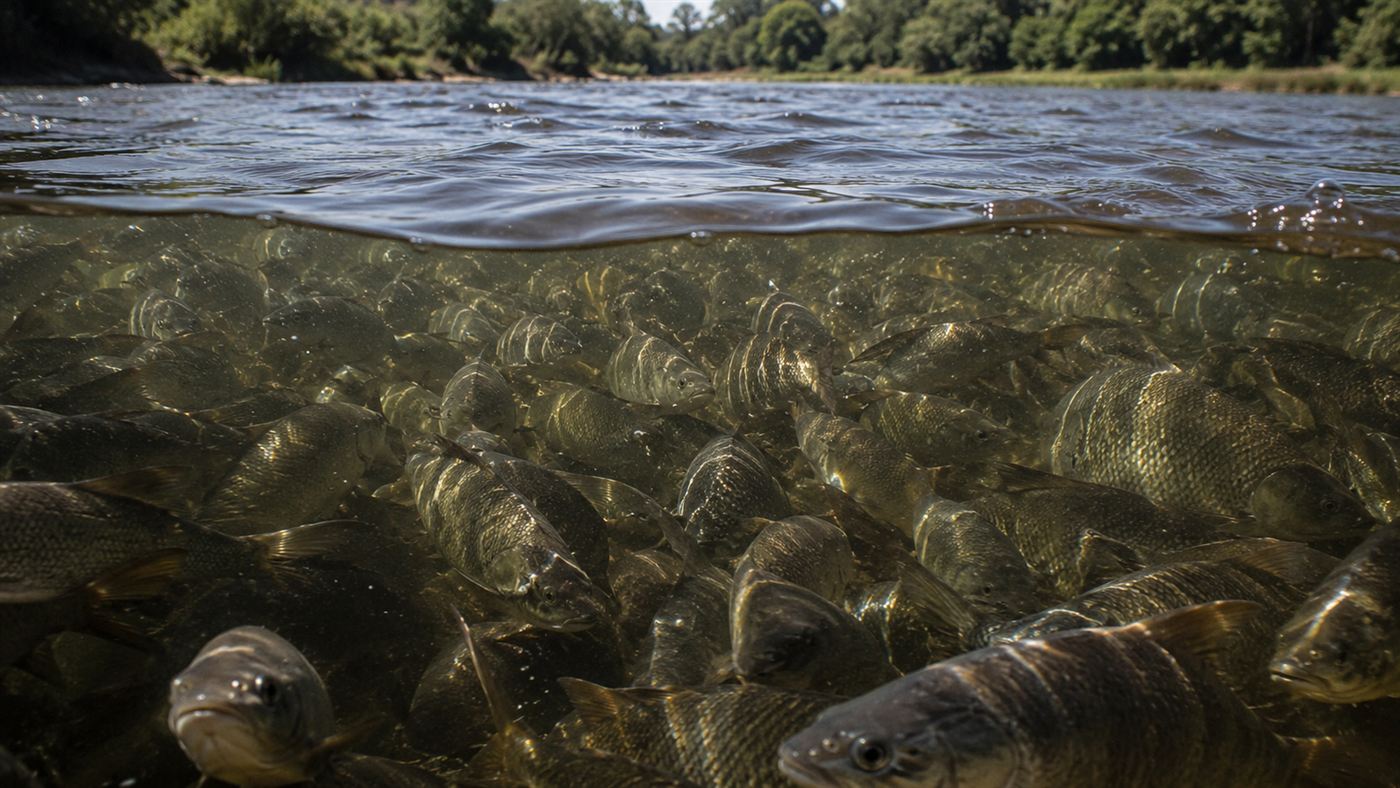
What makes these fish so destructive is their appetite. They are relentless filter feeders that strain vast amounts of plankton from the water, the tiny food at the base of the whole aquatic food web. By hoovering it up, they starve the native fish that depend on the same supply. This is where Asian carp do their deepest damage.
In the worst-hit parts of the Illinois River, the invaders now make up the overwhelming majority of the fish by weight, crowding out species that have lived there for millennia. A river that once teemed with a rich variety of native life can become, in effect, a carp factory, and reversing that is close to impossible.
An electric wall to save the Great Lakes
The nightmare scenario is the carp reaching the lakes, whose fishery is worth billions of dollars and supports a way of life for millions of people. The danger is a man-made canal near Chicago that connects the Mississippi system directly to Lake Michigan, handing the fish a doorway they were never meant to have.
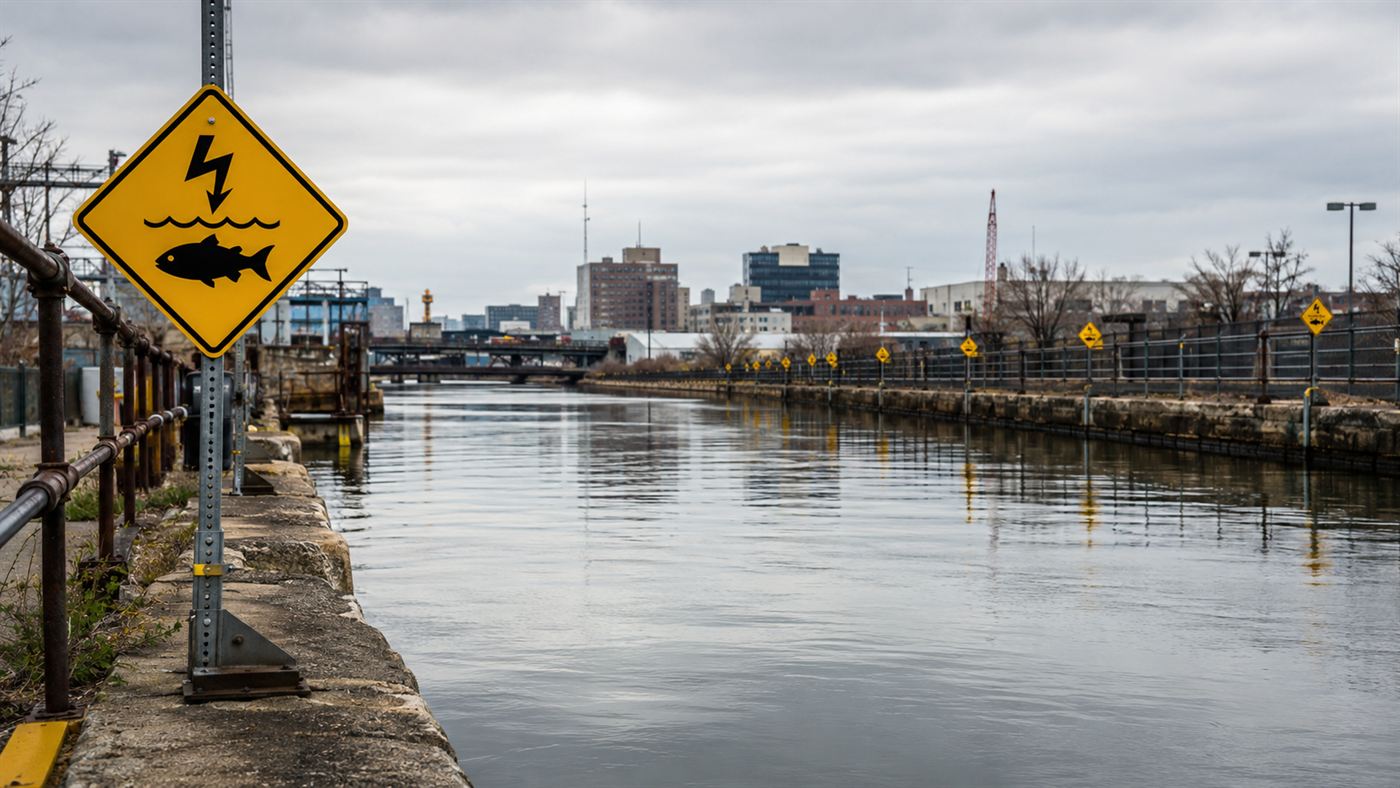
To block that door, engineers built an electric barrier across the canal, running current through the water to turn approaching fish back before they can slip through. It is a strange, invisible fortress wall made of electricity, and further defences using bubbles, sound and pumped currents are being added to keep the lakes safe.
The honest catch
It is worth being precise, because the popular story flattens a lot of detail. Asian carp is really a loose label for several different species, and they do not all behave the same way. Only the silver carp is famous for leaping, and the term itself has been criticised as misleading, which is why officials increasingly say invasive carp instead.
The defences are also not airtight. Traces of carp DNA have been detected beyond the electric barrier, and scientists still argue about how close the fish really are to establishing in the lakes. The threat is genuine and serious, but it is a slow-moving siege with real uncertainty, not the single dramatic breakthrough the headlines sometimes suggest.
Can you beat a fish by eating it?
One of the more creative counterattacks is on the dinner plate. The flesh is mild and perfectly good to eat, so there has been a push to turn a pest into a product, even rebranding it with the friendlier name copi to tempt American diners who turn their noses up at the word carp.
Meanwhile, along the worst-hit rivers, communities hold rowdy fishing tournaments where people scoop leaping carp out of the air with nets, part sport and part pest control. It is unlikely that anyone can eat their way out of an invasion this size, but turning the enemy into supper is at least a very human way to fight back.
A fish brought in to do good escaped, conquered America's rivers, and now hurls itself at anyone who dares to boat past. Would you rather we spent billions holding the line with shocking canals and bubble walls, or leaned into eating the invaders off our own dinner plates? Tell us what you think in the comments.
Related reading: the air-breathing snakehead fish that can wriggle across dry land. See also the giant pythons devouring the Everglades, and the runaway vine that swallowed the American South.