Scientists made aged muscle stem cells young again, and found the reason we slow down may protect us
Why do older bodies heal so slowly? A 2026 study went looking for the cause and found something unexpected. The sluggishness of old muscle is not simply the machinery wearing out. It looks more like a brake, not a broken part, one the body seems to apply on purpose, and when scientists released it the old cells sprang back to life.
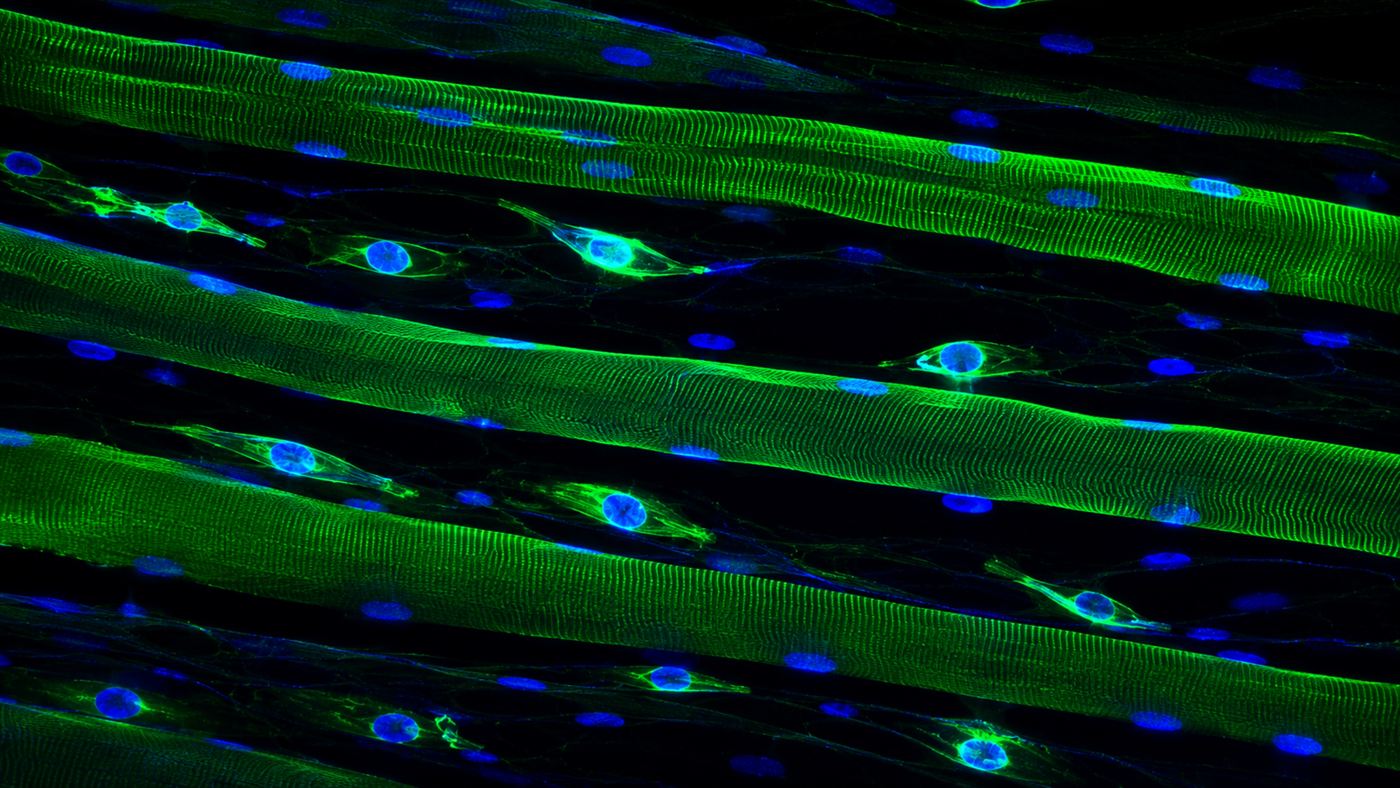
The tiny repair crews of our muscles, seen under the microscope, slow with the years for a reason. Illustration: Watts & Wild.
The short version is this. In a study published in the journal Science in 2026, researchers at UCLA reported that aged muscle stem cells build up high levels of a protein called NDRG1, which acts as a brake on their ability to activate and mend damaged tissue. When the team switched that brake off in old mice, the cells behaved young again. But there was a price, and it is the price that makes the story interesting.
Muscle stem cells are the quiet repair crew of the body. They sit dormant beside our muscle fibres and, when we tear or strain something, they wake up, multiply and rebuild. With age this crew grows slow and reluctant, which is part of why an older body knits itself back together so much less briskly than a young one.
The obvious assumption was that these old cells were simply worn out. The new work says that assumption is wrong, or at least incomplete.
What the muscle stem cells were actually doing
The team, led by the UCLA postdoctoral scientists Jengmin Kang and Daniel Benjamin, found that NDRG1 was not a sign of damage but a deliberate throttle. In old cells the protein sat about three and a half times higher than in young ones, and it worked by suppressing a growth pathway called mTOR, the switch that normally tells a cell to spring into action. More brake, less spring.
To test whether the brake was really the cause, they let mice grow old, to roughly the equivalent of a seventy-five year old person, and then blocked NDRG1. The effect was immediate. The aged cells reactivated quickly and rebuilt injured muscle almost as fast as young tissue would, young again, at least for a while. On its own, that reads like an anti-aging dream.
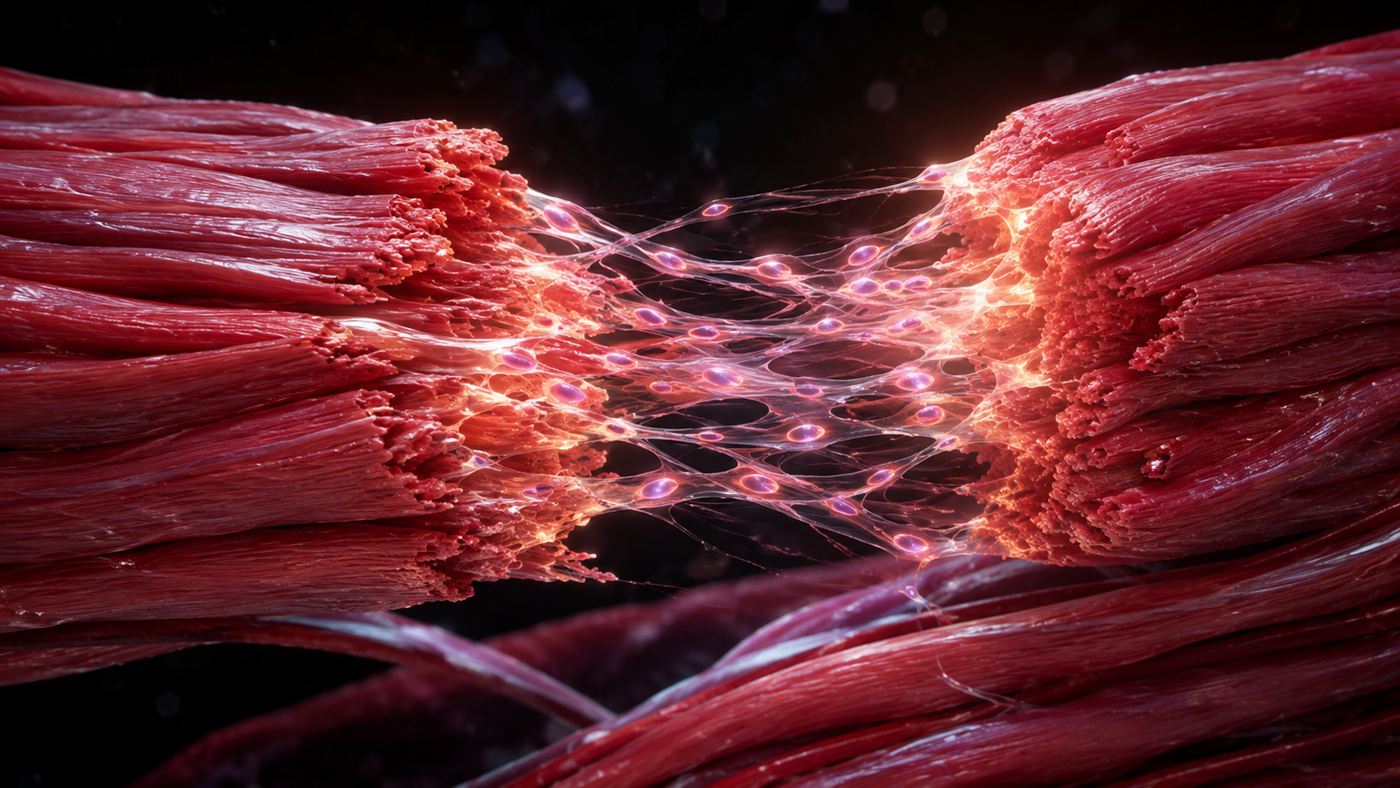
So why would the body slow its own healing?
Here is the twist that lifts this above a simple good-news headline. When the researchers followed the mice over time, the reactivated cells did not last. Fewer of them survived, and after repeated injuries their ability to keep rebuilding faltered. The brake, it turned out, had been keeping the cells alive in the harsh chemistry of old tissue. Slow them down and they endure; speed them up and they burn out.
In other words, the aging muscle was not failing so much as playing a longer game. It was a sprint traded for a marathon, sacrificing quick healing to preserve a small, durable reserve of cells for the years ahead. The body may know something we do not, and the thing we read as decline may be a careful hedge against running out.
Why this changes how we think about getting old
For a long time the story of aging has been told as pure breakdown, a slow accumulation of damage and failure. This result suggests a subtler picture, in which some of the changes we curse are actually adaptations, protective settings the body dials up to survive. What looks like decline can be a strategy, and that shift in framing matters as much as the molecule itself.
It also reframes the dream of reversing aging. If the brake exists for a reason, then simply ripping it out could do harm, trading a few years of brisk healing for a faster exhaustion of the cells we depend on. The realistic prize is not a switch that makes us young, but a dial, a way to borrow a little speed when a body badly needs to heal without spending its whole reserve at once.
The honest catch
This is genuinely exciting work from a serious group, but the cautions are large and worth stating plainly. It was done in mice, and mice are not people; a great many findings that dazzle in a mouse never survive the leap to human biology. The trade-off it uncovered is a warning label attached to the very result that makes headlines, and that honesty is a strength of the study rather than a weakness.
So the right way to hold this is as insight, not therapy. It deepens our understanding of why we heal slowly with the years, and it quietly rebukes the fantasy of a clean reset. If it leads anywhere useful, it will be through patient work that respects the trade-off rather than bulldozing it. The old repair crew can be woken. The harder wisdom is knowing that the body slowed it down for a reason.
Sources: Phys.org on the study, UCLA Health, and ScienceDaily.
It turns out the body may slow its own healing on purpose, to make its repair crew last. Would you release the brake for faster healing now, knowing it might cost you later, or trust the body's slow, careful hedge? Tell us what you think in the comments.
Related reading: the naked mole-rat, which barely ages and almost never gets cancer. See also the jellyfish that can wind its own life cycle back to the beginning, and the axolotl, which can regrow whole limbs.