A tower rising from a giant glass canopy turned warm air into electricity for seven years, until a storm toppled it
It is one of the simplest power-station ideas ever drawn, sunshine, a greenhouse and a chimney. The solar updraft tower made real electricity from nothing but rising warm air, and yet a full-sized one has never been built.
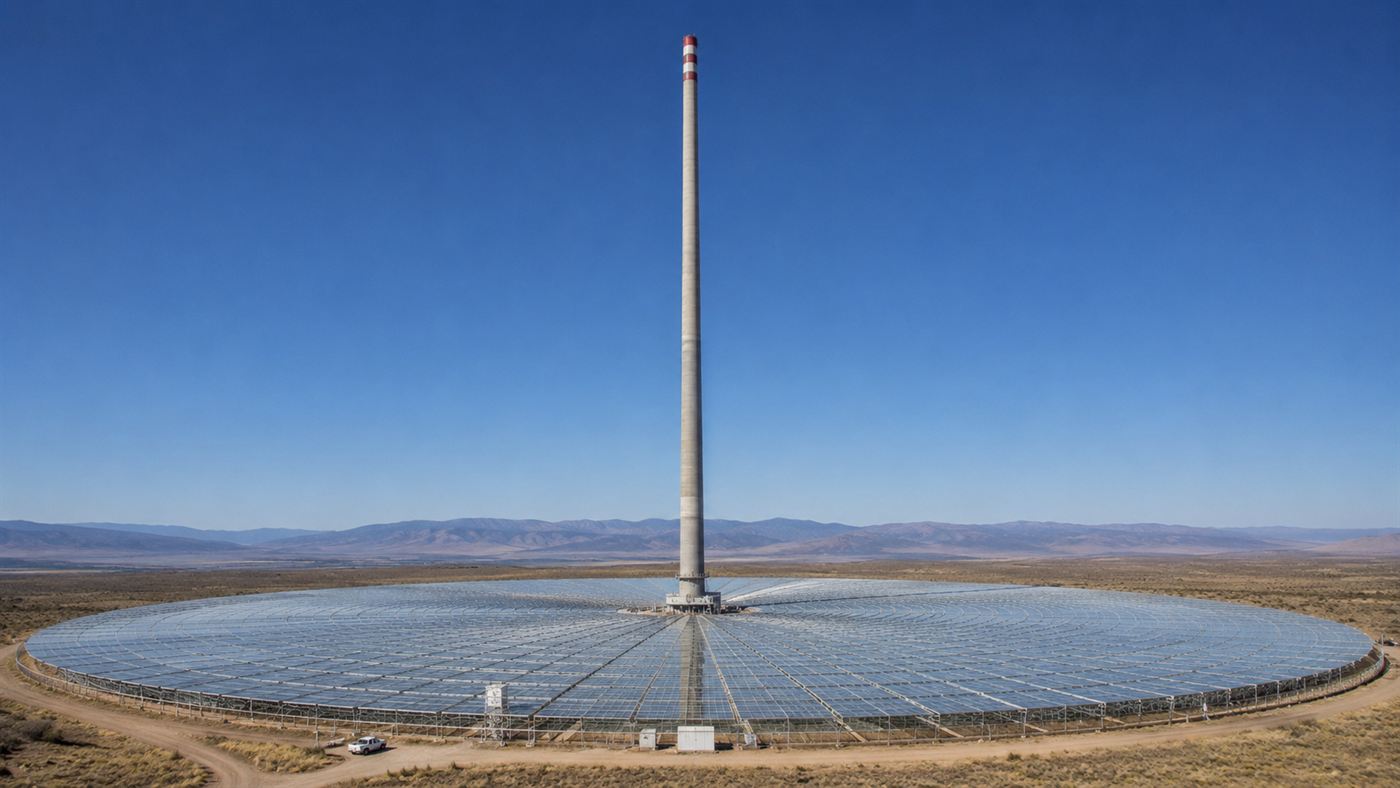
A solar updraft tower: a chimney rising from a huge circular glass collector. Illustration: Watts & Wild.
Most power stations are loud, hot and hungry for fuel.
This one would run in near silence on sunshine alone, and its working parts could almost be explained to a child.
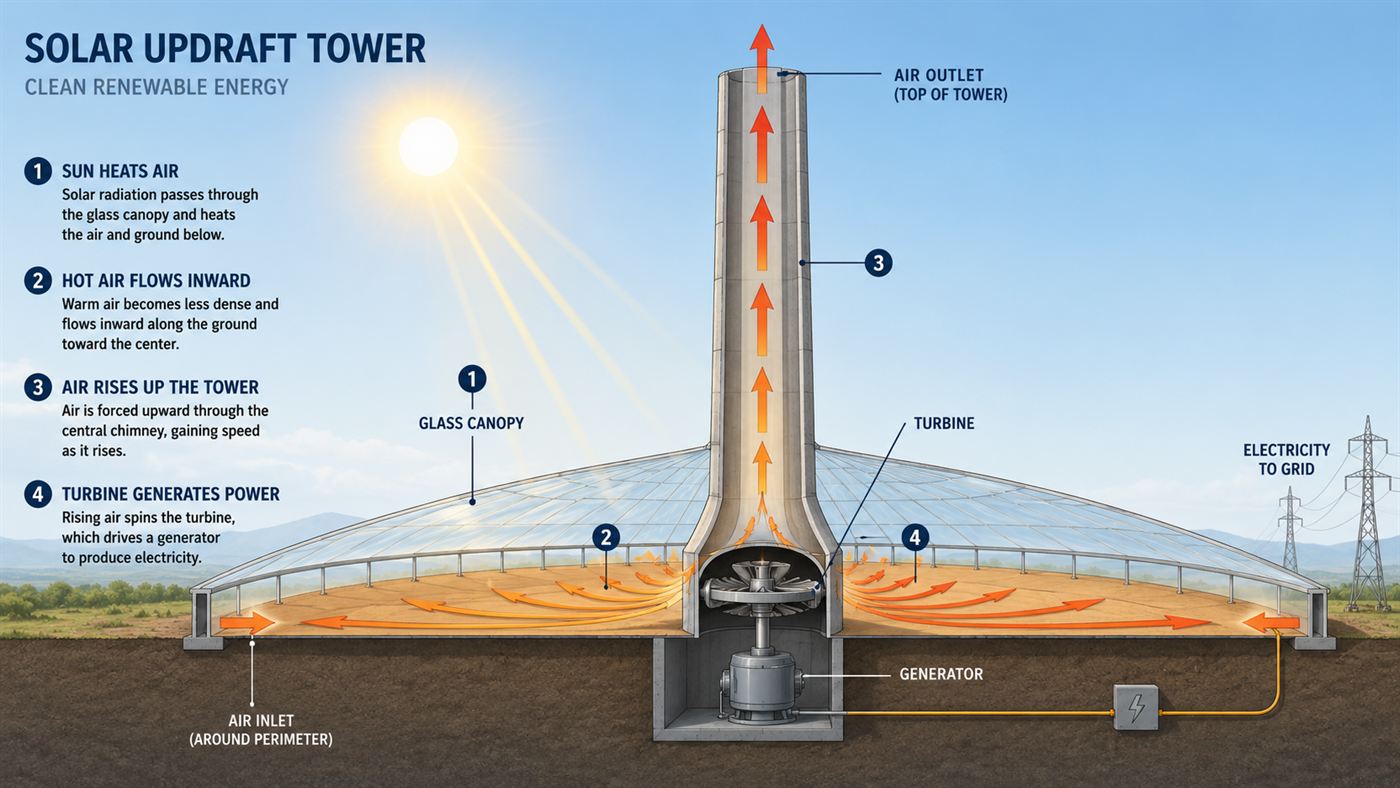
How does a solar updraft tower work? A solar updraft tower uses a huge circular greenhouse to heat air with the sun. The warm air is funnelled into a tall central tower, and as it rushes upward it spins turbines at the base, generating electricity with no fuel and no water.
How a solar updraft tower makes electricity
The idea is the humble greenhouse turned into a power plant.
A vast circular canopy of glass or clear plastic sits just above the ground, letting sunlight warm the air trapped beneath it.
That hot air has nowhere to go but inward and upward, into a tall chimney standing at the centre.
As the rising column of air races up the tower it drives turbines through the natural chimney effect, turning heat into electricity.
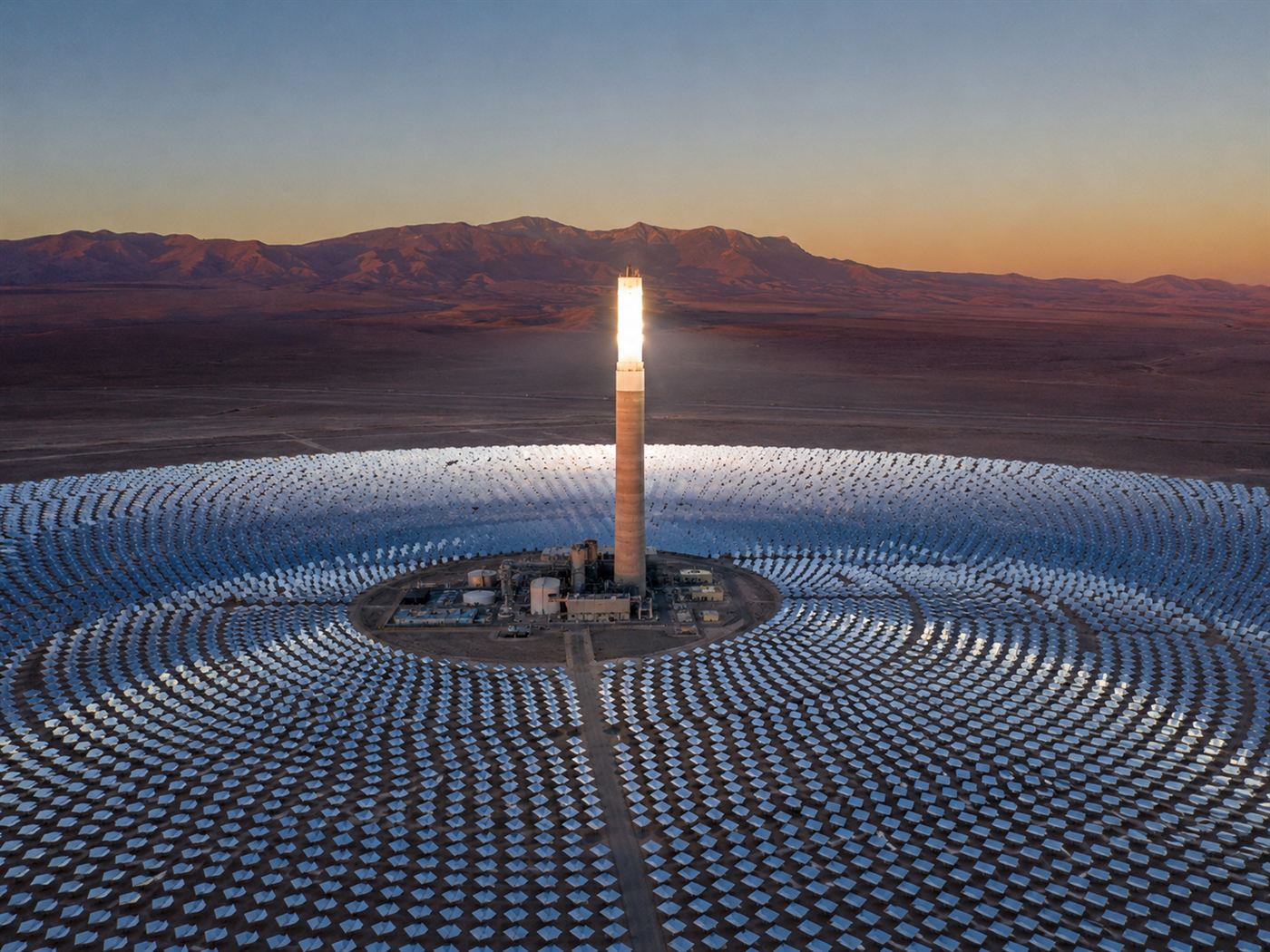
It is worth saying clearly that this is not the kind of solar tower ringed by mirrors, since here it is moving air, not concentrated light, that does the work.
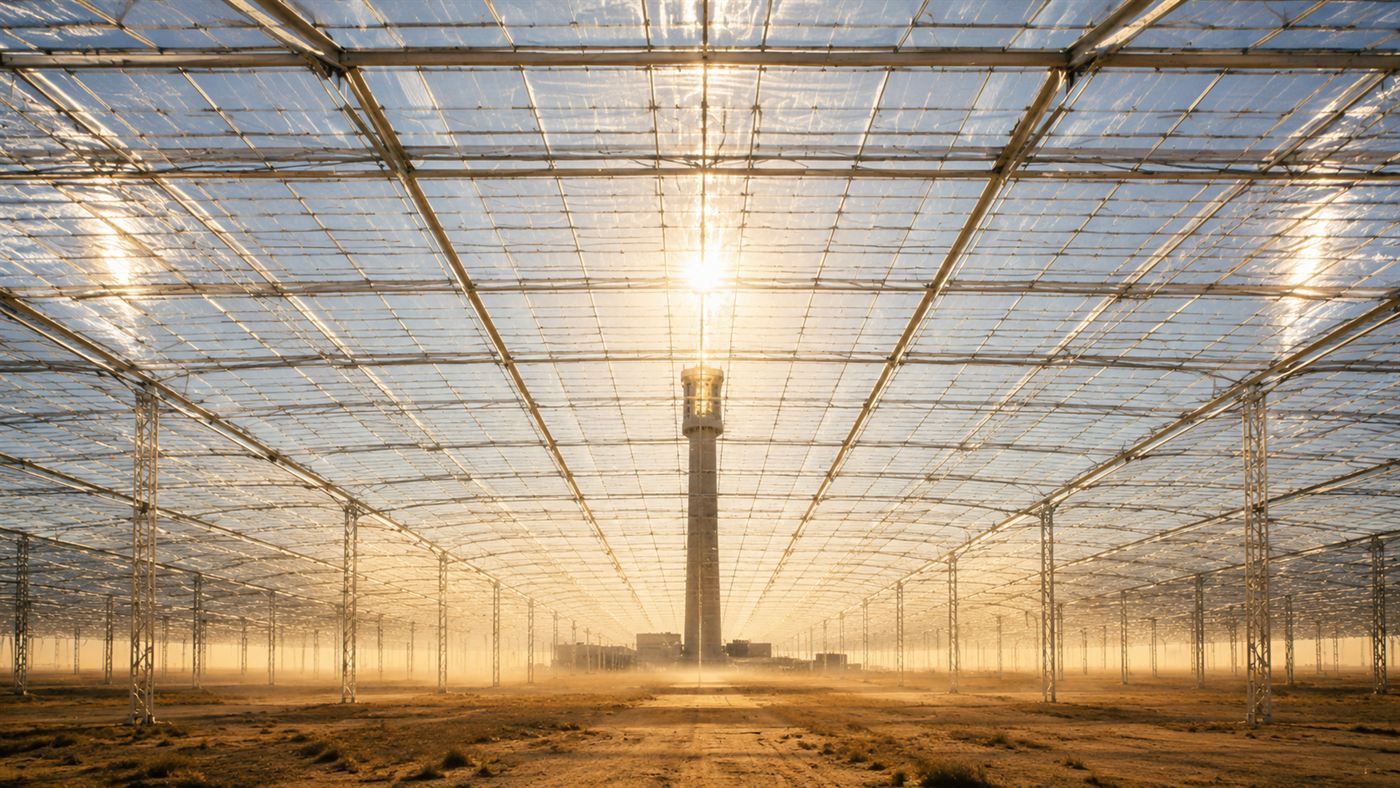
The tower at Manzanares
The concept was actually built and run, once, at full prototype scale.
In 1982 the German engineer Jorg Schlaich erected a solar updraft tower on a plain at Manzanares in Spain.
Its chimney rose about 195 metres, surrounded by a collector roughly 244 metres across, and it could peak at around 50 kilowatts.
For about seven years it ran largely on its own, switching itself on with the morning sun and proving that the whole strange idea actually worked.
It was small, but it was real, and it generated power day after day from little more than warm air.
Simple, robust and patient
What made the design appealing was how forgiving it was.
It worked even on hazy days, since it used all the sun's warmth rather than needing sharp, direct beams.
By storing heat in the ground or in tanks of water under the canopy, such a plant could even keep running into the evening.
There was almost nothing to break in the collector, and the land under the glass could double as a greenhouse for crops.
For sunny, dry, empty country, it looked like an elegant way to make steady power.
Why none was ever built big
The catch is brutal arithmetic of scale.
To produce serious power, a commercial version would need a tower perhaps 750 to 1,000 metres tall and a collector several kilometres wide.
That means a colossal amount of concrete, glass and land for a plant whose efficiency is famously low, only about one percent.
Grand versions have been announced for decades, in Australia, Namibia and elsewhere, yet not one has ever been finished.
The Manzanares prototype itself came to a sad end in 1989, when its rusted support cables gave way and a storm toppled the tower.
The honest catch
So the solar updraft tower sits in a strange limbo, proven yet unbuilt.
Nobody doubts that it works, because Manzanares quietly demonstrated it for years.
But the sheer size and cost needed to make it pay have defeated every serious attempt to scale it up.
Cheap solar panels, which simply turn light straight into electricity on any rooftop, have stolen most of its thunder.
Still, the dream of a tower that breathes sunshine into power keeps resurfacing, because the idea is just too elegant to abandon.
The solar updraft tower is a reminder that an idea can be completely sound and still never quite find its moment.
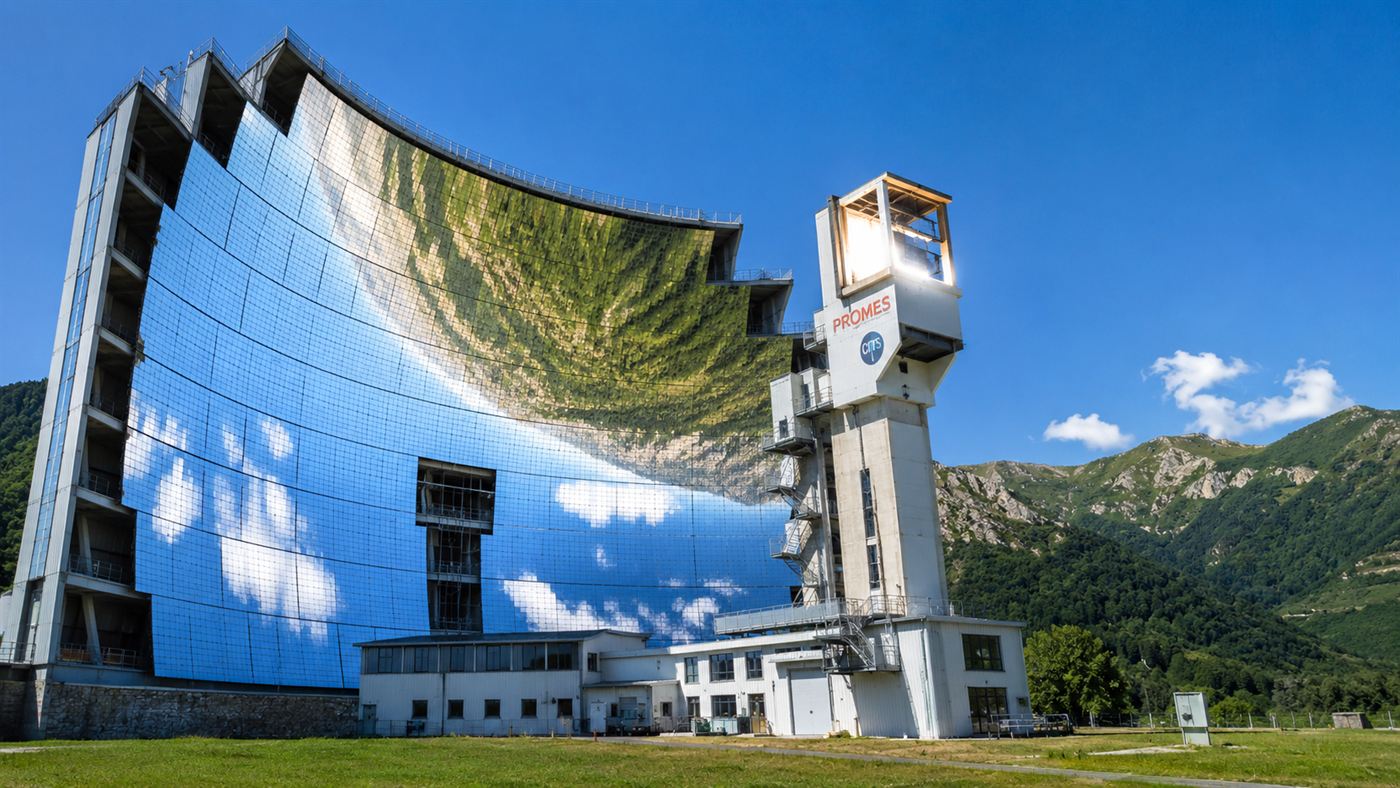
It stands with the other ways we have tried to wring power from the sun, from the wall of mirrors that melts metal with sunlight to the mirrored solar tower that runs through the night.
If a tower of warm air can make electricity but is too big to build cheaply, would you still want to see a kilometre-high one rise in a desert, or has the humble solar panel already won? Tell us in the comments.