Everyone assumed offshore oil rigs were marine dead zones, then a biologist dived under them and found some of the richest fish habitats on the planet
For most of us, an offshore oil platform is a symbol of everything wrong with the sea: noise, leaks, and rusting steel where wild things used to be. Then a stubborn California biologist named Milton Love kept diving under them, year after year, and came back with a finding nobody wanted to hear. Beneath the rigs, the water was not dead at all. It was teeming.
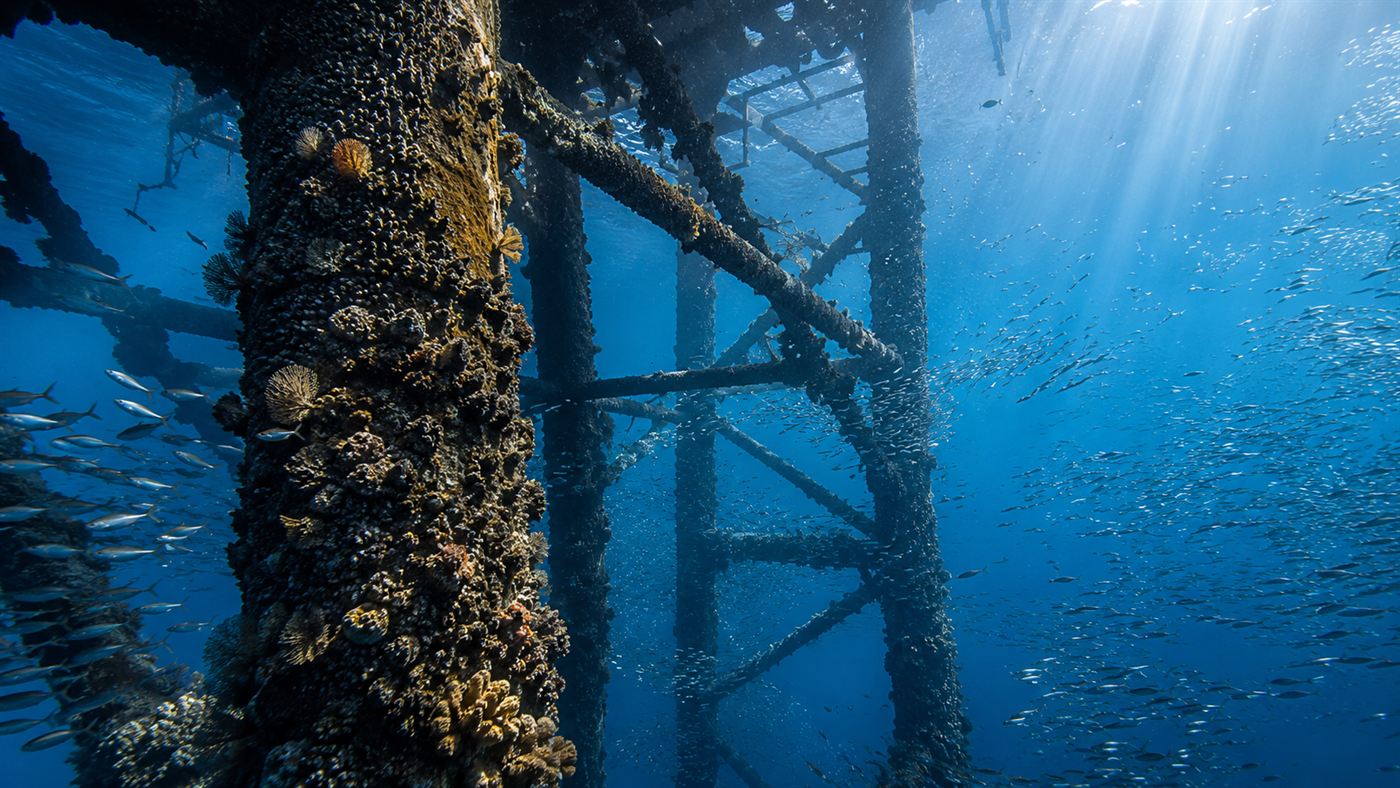
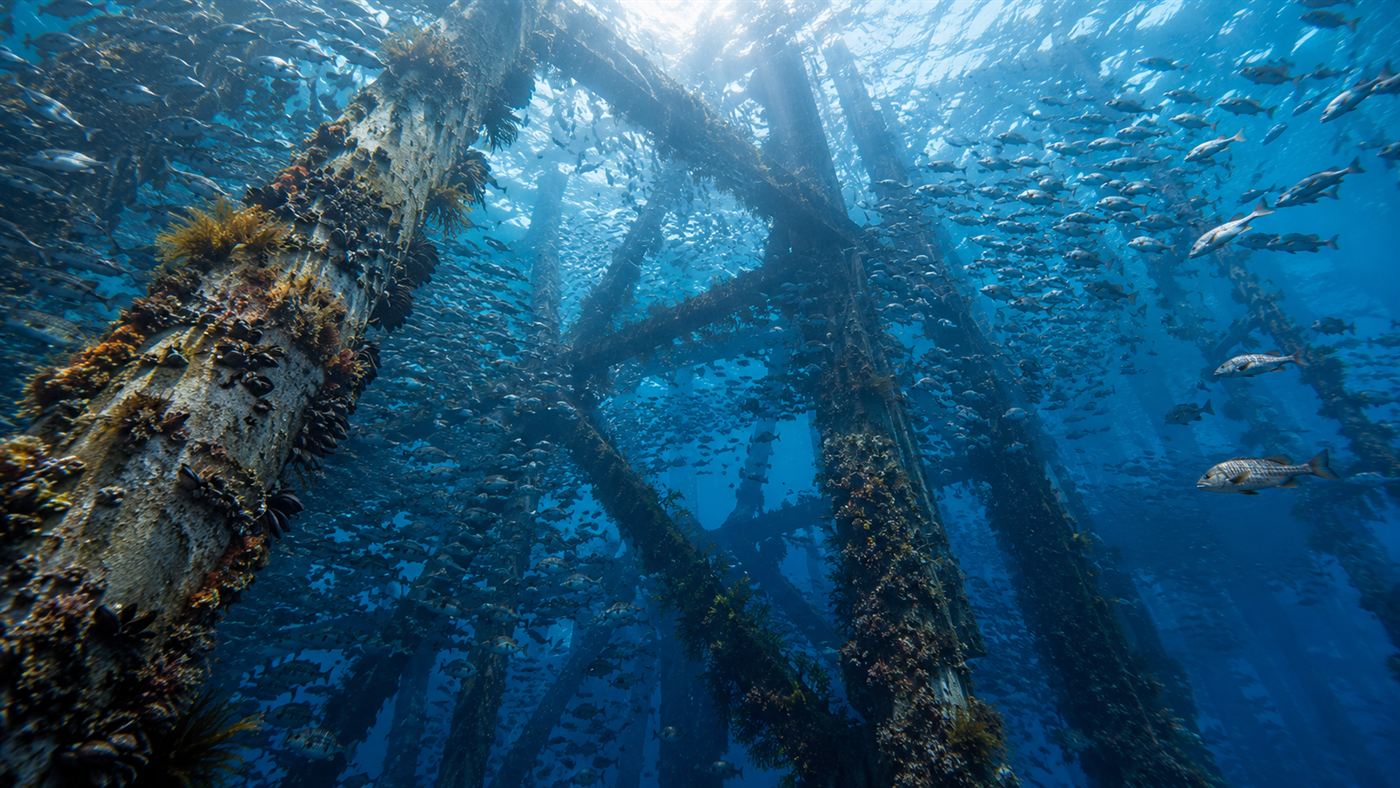
Below the waterline, an oil platform's legs become a vertical reef alive with fish. Illustration: Watts & Wild.
It is one of the strangest twists in modern conservation. The same offshore oil rigs that environmentalists have spent decades fighting have turned out, in at least one corner of the world, to be among the most productive patches of ocean ever measured. The discovery has split the green movement against itself and turned a simple question, what to do with a worn-out platform, into a genuine dilemma.
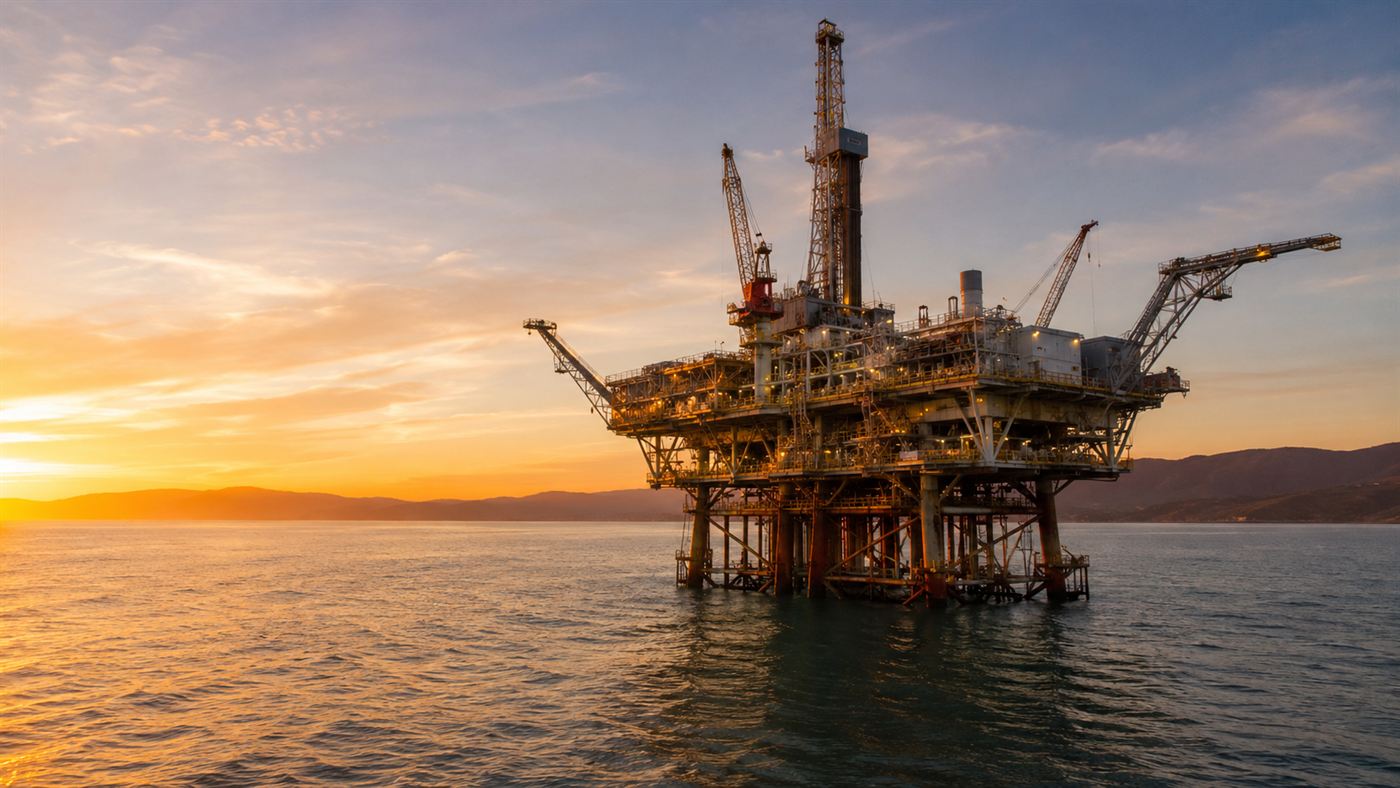
The story centres on the channel off Santa Barbara, California, where a scatter of ageing platforms still stands in the swell. For years the assumption was simple: oil rigs are industrial scars, and the kindest thing to do when they stop pumping is to rip them out and let the seabed heal. Then the people who actually went underwater started telling a different story.
What Milton Love found under the oil rigs
Milton Love, a marine biologist at the University of California, Santa Barbara, has spent much of his career in a small submersible, cruising slowly down the legs of these platforms and counting what he sees. What he found is hard to square with the dead-zone image. The steel jackets that hold a rig up run all the way from the surface to the bottom, and over the years they get coated in a thick crust of mussels, scallops, anemones, and coral.
That crust is the base of a food web, and around it gather astonishing numbers of fish. The submerged frame works like a tall, dense artificial reef standing in open water, offering shelter from the surface to the seabed in a way a flat patch of sand never could. Young rockfish, a group that has been hammered by overfishing, shelter among the beams in their thousands, using the rigs as nurseries before they move on.
The numbers that changed the argument
For a long time this was a nice story without hard figures behind it. That changed in 2014, when Love and his colleagues published a study that put real numbers on the marine life clinging to these structures. As Scientific American reported on the work, California's oil platforms ranked among the most productive fish habitats on the planet, out-producing many natural reefs by a wide margin.
Measured by how much fish each patch of seafloor produces, the platforms came out around 27 times more productive than the natural rocky reefs nearby, and ahead of famous places like coral reefs and Chesapeake Bay. The full results, published in the journal PNAS, made the platforms off California one of the best-documented examples of oil rigs as accidental fish habitat anywhere. One platform, named Eureka, came out as productive as almost any marine spot ever studied.
Why a dying rig can become an artificial reef
This is where the idea called Rigs to Reefs comes in, and where the fight really starts. When a platform stops producing, the law has long pushed for complete removal: cut it off at the seabed and haul the whole thing away. But that rips out the reef along with the rig, killing the very community of marine life that took thirty years to grow.
The alternative is to leave the lower part of the structure standing on the bottom as a permanent artificial reef, removing only the top so it does not threaten ships. The Gulf of Mexico has done exactly this with hundreds of old oil rigs, and the state of California passed a law in 2010 opening the door to the same approach. Done this way, a retired oil platform stops being a liability and becomes a deliberate piece of habitat, a fish habitat with a second life.
The honest catch
None of this means oil rigs are secretly good for the sea, and it is worth being careful here. A platform that becomes a reef is making the best of damage already done, not undoing it. Part of the reason the fish thrive is simply that you cannot drag a trawl net through a maze of steel, so the platforms act as accidental no-fishing zones, and some of that fish habitat richness is really just the absence of fishing.
There is a harder objection too. Leaving a structure behind saves the oil company a fortune in removal costs, so critics fear Rigs to Reefs can become a tidy way to dodge a clean-up bill, leaving steel and old contamination on the seabed forever. Plenty of scientists still argue that full removal and a restored natural bottom is the honest ending. The research does not settle that argument, it just makes clear that tearing a rig out is no longer the obvious environmental win it once seemed.
Why a rusting platform is worth the fight
What makes this story stick is how completely it inverts the usual script. We expect oil platforms to be where nature loses, and instead a few of them have quietly become some of the busiest addresses in the ocean. It is a reminder that ecosystems do not read our headlines, and that life will colonise almost any hard surface we leave in the water long enough.
It also leaves us with a genuinely awkward choice rather than an easy slogan. Milton Love spent a career proving that these particular oil platforms are alive, and now the people who care most about the sea have to decide whether saving that life is worth keeping a piece of the oil industry bolted to the seabed. Sometimes the right answer for the wild is not the one that looks clean from the shore.
The rigs we built to pull oil out of the sea have quietly turned into some of the richest reefs in it, and now we have to decide whether to tear them down or leave them be. Would you keep an old oil platform standing if it meant saving the reef beneath it? Tell us in the comments.
Related reading: Engineers are rebuilding lost oyster reefs to break storm waves before they reach the shore.