A quiet plant breeder from Iowa is said to have saved a billion lives, and almost no one knows his name
In the 1960s the world was braced for mass starvation. Experts predicted that hundreds of millions would die as populations outran the food supply, and there seemed to be no way out. Then a stubborn agronomist named Norman Borlaug, working in dusty fields far from any spotlight, quietly grew the way out, one shorter, heavier stalk of wheat at a time.
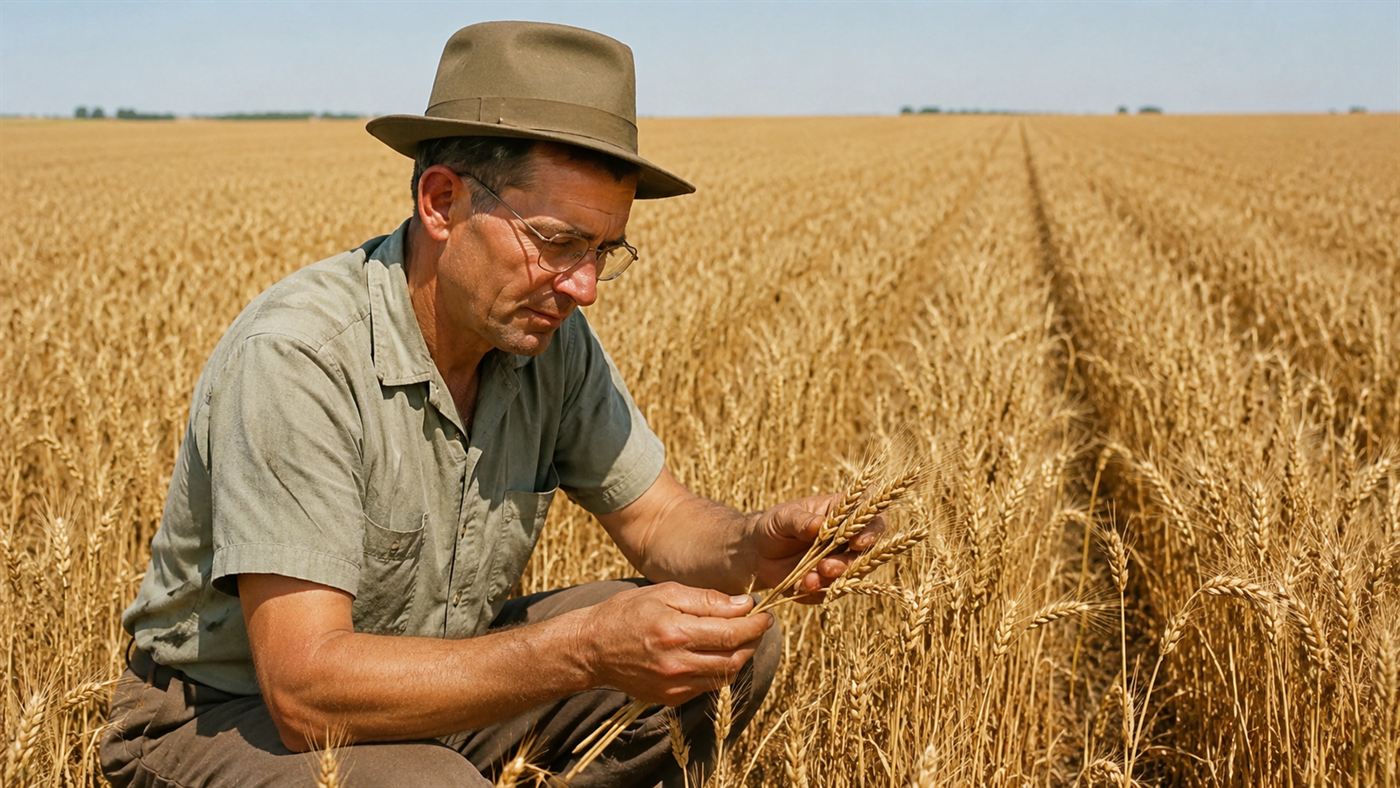
An agronomist in the wheat, where the Green Revolution was actually won. Illustration: Watts & Wild.
The claim sounds impossible the first time you hear it: that one man's work saved a billion human lives. But it is the sober estimate historians attach to Norman Borlaug, an American plant scientist who spent his career kneeling in wheat fields rather than standing on stages. He grew up on an Iowa farm during the Depression, knew hunger up close, and never lost the sense that food was the most political thing on Earth.
What he did was not a single flash of genius but years of grinding, unglamorous work. And it landed at the exact moment humanity seemed to be losing a race it could not afford to lose. The population was exploding, the harvests were not keeping up, and famine was being spoken of as simple arithmetic.
How Norman Borlaug beat the famine
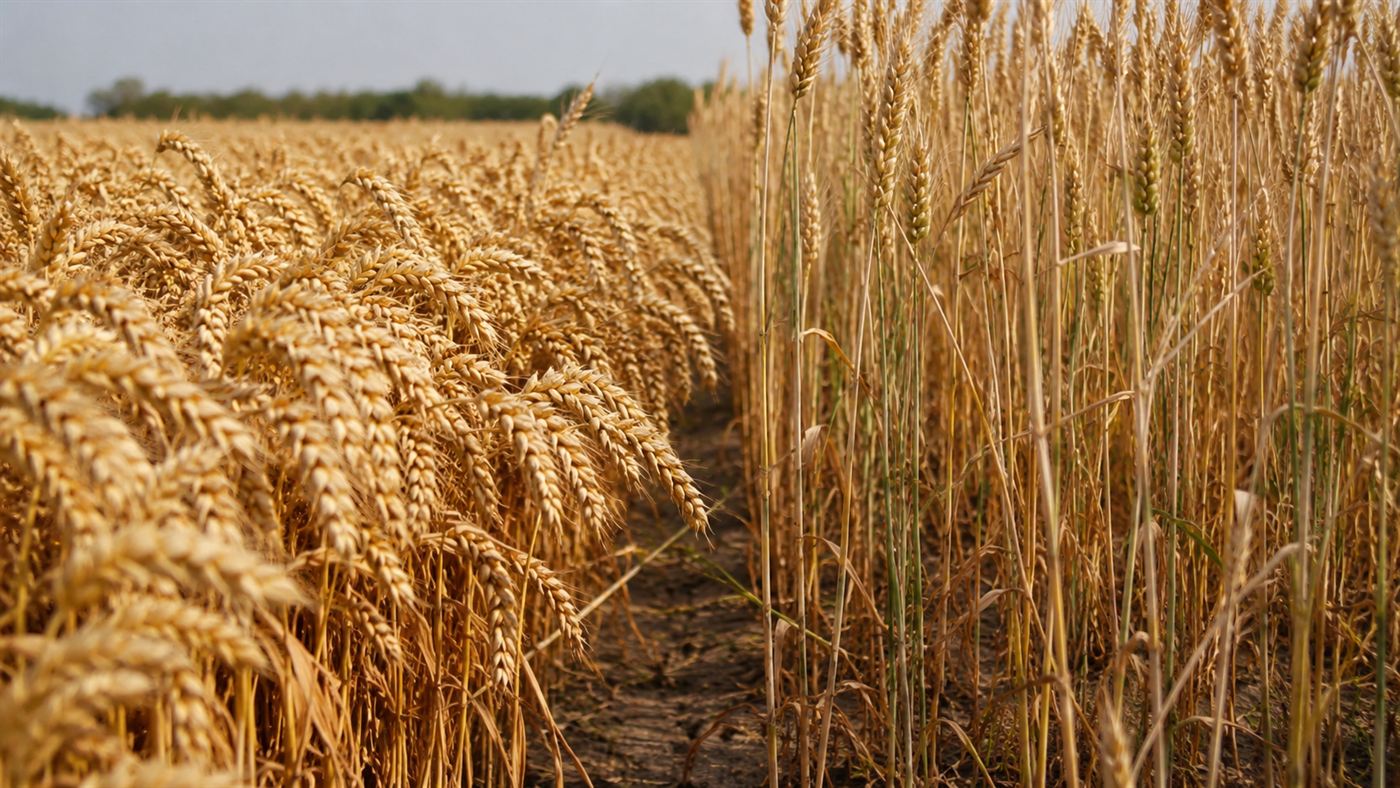
Borlaug's breakthrough was a plant most people would walk straight past. Working in Mexico from the 1940s, he crossed thousands of wheat varieties by hand, hunting for two things at once: resistance to the rust disease that rotted crops in the field, and the ability to carry far more grain. The problem was that when he bred wheat to grow heavier heads, the tall stalks simply toppled over under the weight and rotted on the ground.
The fix was to make the wheat short. By breeding in genes for a stubby, powerful stem, he created a dwarf wheat that could hold a huge head of grain without falling. The same patch of soil, the same sun and water, suddenly yielded far more food. To speed things up he ran two growing seasons a year in different parts of Mexico, a trick that also, by accident, produced wheat that would grow almost anywhere.
The gamble in India and Pakistan
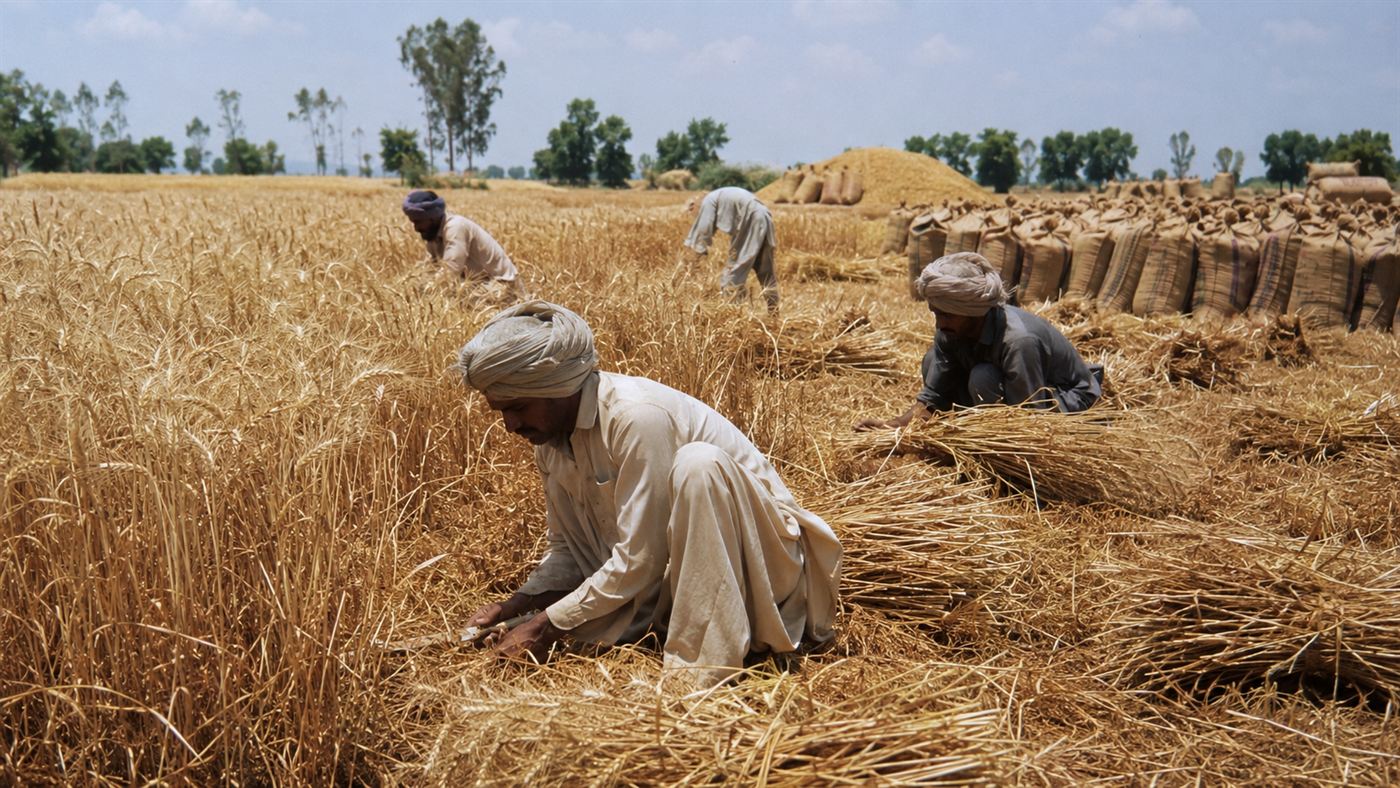
By 1956 his wheat had made Mexico self-sufficient in grain. But the real test came in the 1960s, when India and Pakistan stood on the edge of catastrophic famine. Borlaug pushed to ship his seed there, fighting bureaucracies, war on the border, and skeptics who insisted the new wheat would never take to foreign soil. He was, by all accounts, exhausting to argue with, and he was right.
The results were staggering. Between 1965 and 1970, wheat harvests across India and Pakistan nearly doubled, and countries that had been importing grain to survive began feeding themselves. It was the start of what the world would call the Green Revolution, and in 1970 Borlaug was given the Nobel Peace Prize, on the reasoning that there is no peace without bread.
Why almost no one knows his name
Here is the strange part. A man whose work arguably outweighs that of any general or president of his century is a stranger to most people. Borlaug did not want fame, worked in the poorest fields far from cameras, and dealt in something as humble as wheat. Saving lives slowly and quietly, it turns out, is a terrible way to become famous.
He knew it too, and he did not much care. Into his nineties he was still in the field, still pushing new crops toward Africa, still arguing that the fight against hunger is never actually won, only postponed. He measured his life not in headlines but in harvests, and by that measure almost no one has ever done more.
The honest catch
The billion-lives figure deserves a note of caution, and so does the Green Revolution itself. The number is an estimate, impossible to pin down exactly, and Borlaug's methods came with a heavy bill. His high-yield wheat leaned on lots of fertilizer, irrigation, and chemicals, it pushed farmers toward vast single-crop fields, and its benefits often flowed to larger landowners first. The environmental costs were real and are still being paid.
Borlaug never pretended otherwise. He argued that his wheat had bought humanity time, not a happy ending, and that the time had to be spent wisely on slowing population growth and farming better. Whatever the exact number, the shape of the story holds: a soft-spoken man with a plant walked into the path of a predicted apocalypse and turned it aside. It is worth knowing his name.
A farm boy from Iowa may have saved more human lives than anyone in history, and he did it by making wheat a little shorter. Should we teach children the name of the man who fed a billion people the way we teach them the names of kings and generals? Tell us what you think in the comments.
Related reading: The doctor who drank a beaker of bacteria to prove the world wrong about ulcers.
More from Watts & Wild
More in Science & Tech →



Bruno writes about energy history, industrial disasters, and the people who shaped the technologies we take for granted. He is based in Brazil.