America's first big wind farm became a death trap for golden eagles, and one biologist spent years counting the bodies
The hills east of San Francisco were supposed to be a postcard for clean energy: thousands of whirling turbines on golden slopes, making power without smoke. Then a biologist named Shawn Smallwood started walking those slopes and writing down what he found under the blades. The numbers were so bad that the place became a warning the whole wind industry had to answer for.
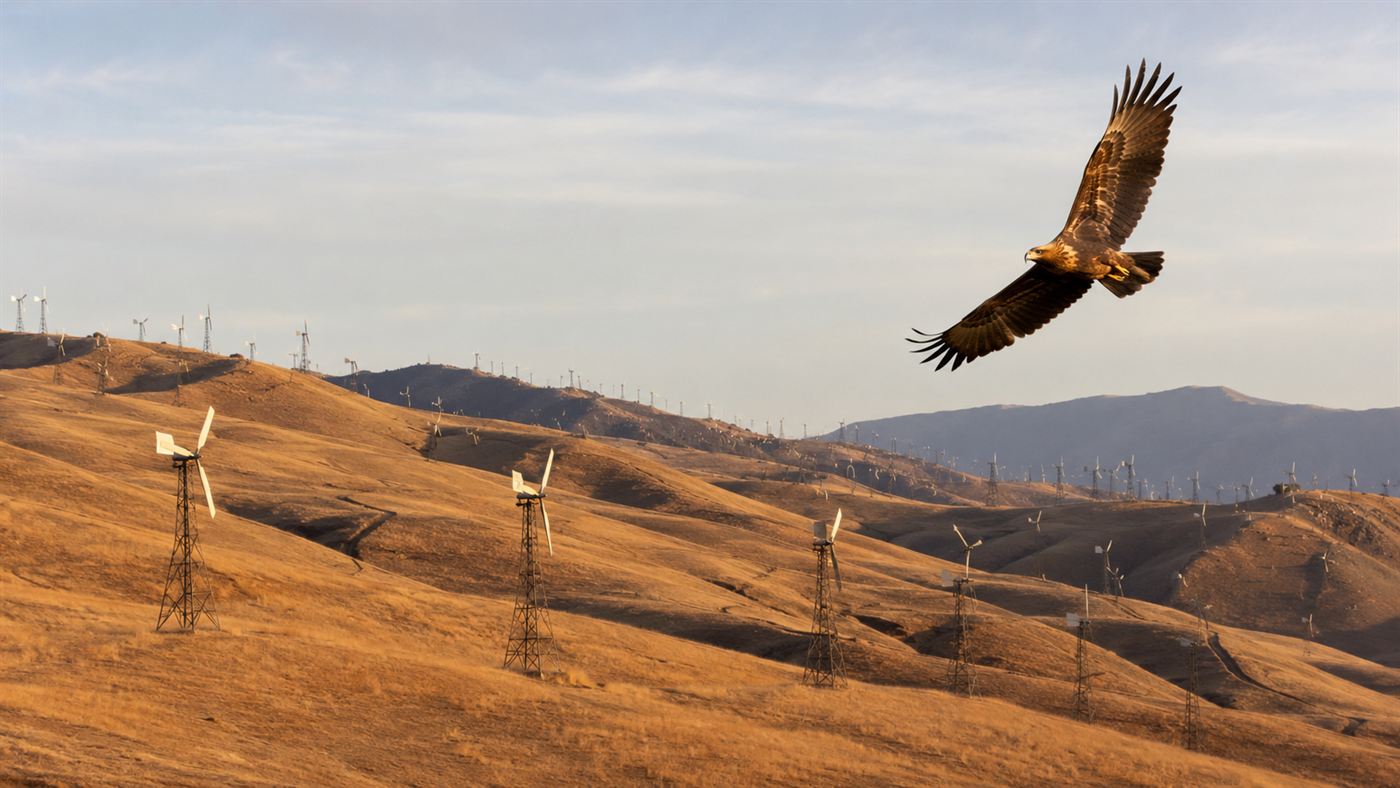
Altamont Pass, a forest of small old turbines on a raptor highway. Illustration: Watts & Wild.
The story of the Altamont Pass eagles is uncomfortable because it pits two good things against each other. Wind power is exactly what a warming planet needs. Golden eagles are protected by federal law and have been for a century. At Altamont, the cleanest energy in California was quietly grinding through one of the most majestic birds in North America, and for years almost nobody outside the field was talking about it.
Altamont Pass is one of the oldest large wind farms on Earth, built in the windy gap east of the Bay Area after the energy shocks of the 1970s. At its peak it bristled with around 5,000 small turbines. They made real electricity. They also stood directly across a corridor that hawks, falcons, and eagles have used to hunt and travel for far longer than there has been a grid to feed.
Why the Altamont Pass eagles kept dying
The cruelty was in the details of the design. These were not the serene giants you picture today. They were small, densely packed machines on open lattice towers, and their blades spun fast and low, right at the height where a raptor hunts. Worse, the lattice towers made perfect perches, so an eagle would sit beside a spinning blade it could not see, then launch straight into it.
And the birds had every reason to be there. The grass was thick with ground squirrels, an eagle buffet. So the farm had put thousands of fast blades in the exact spot where the best hunting in the region overlapped with a migration highway. It was, without anyone intending it, an almost perfectly designed machine for killing birds of prey.
The biologist who counted the bodies
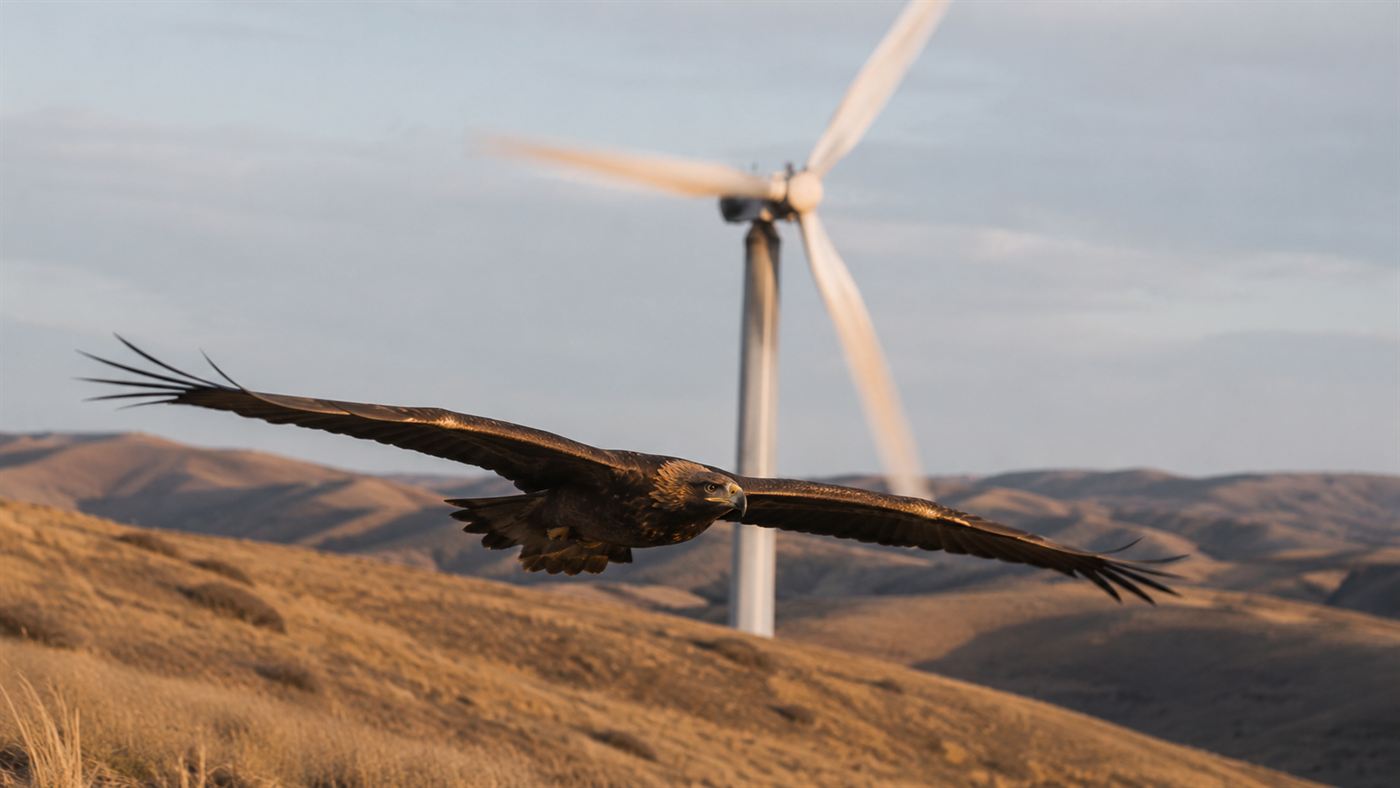
For a long time the deaths were a rumor with no number attached. That changed when Shawn Smallwood and his colleagues did the grim, patient work of walking the rows, season after season, recording every carcass and correcting for the ones scavengers carried off first. The picture they built was brutal.
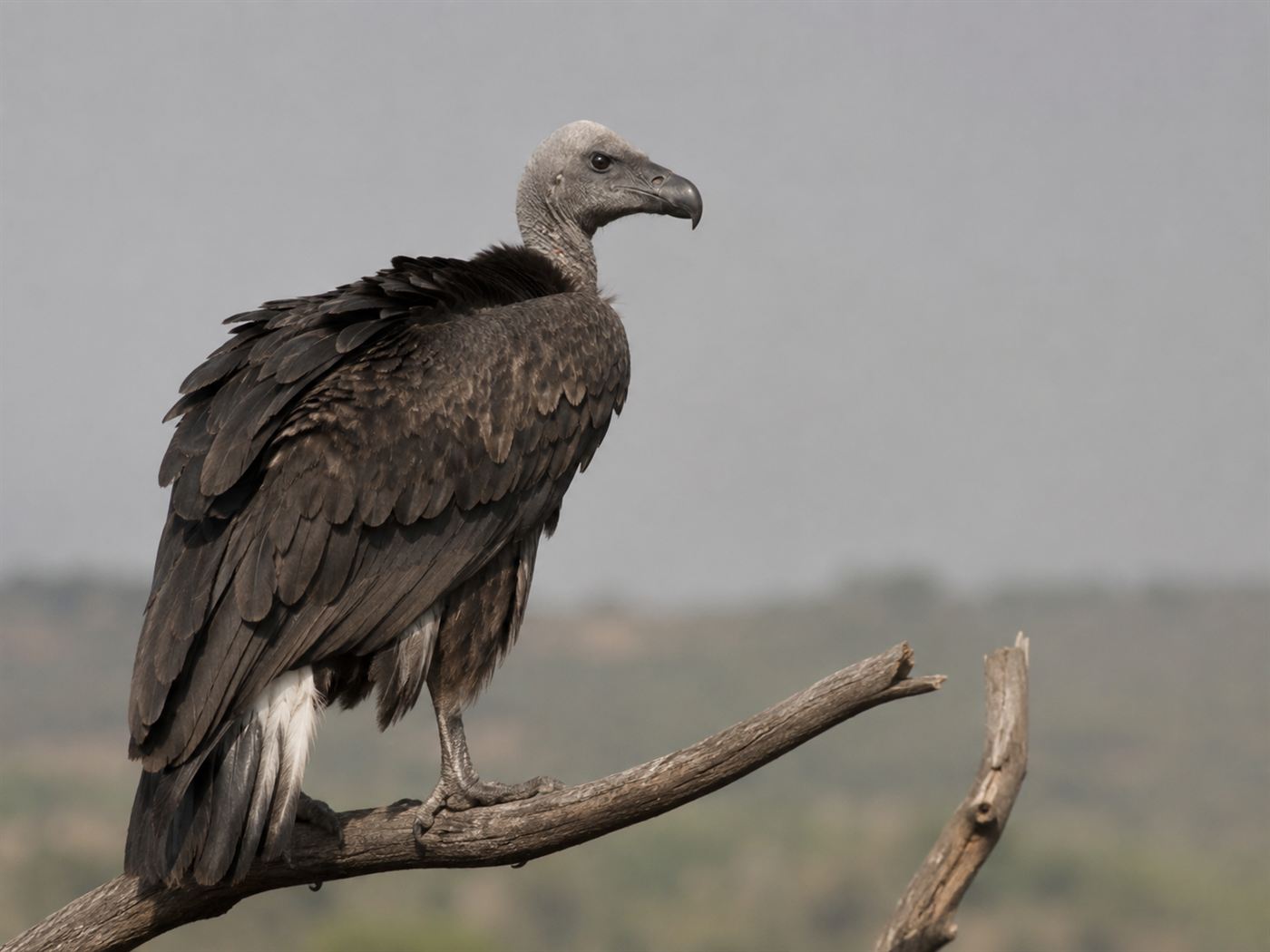
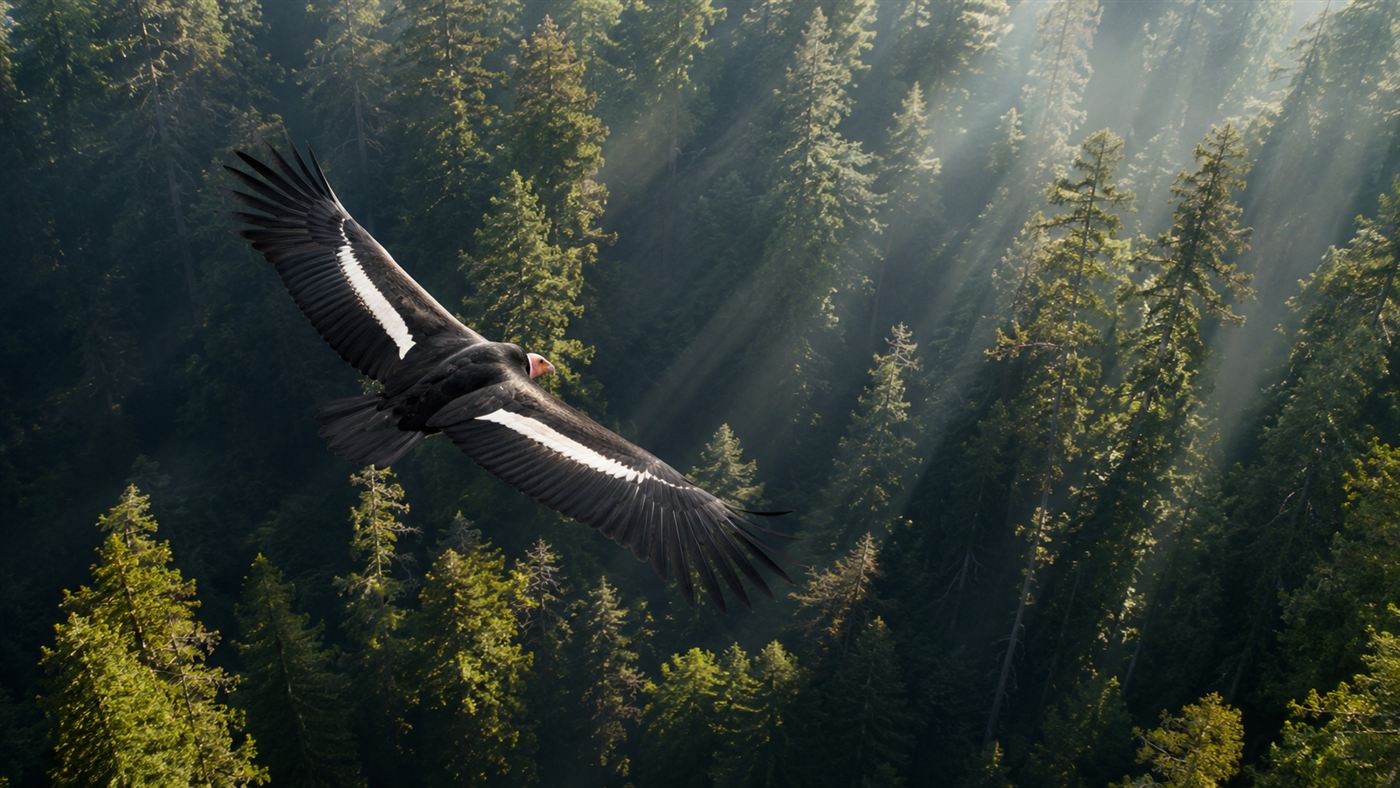
Their studies estimated that Altamont's turbines were killing on the order of several thousand birds a year, including roughly 65 to 70 golden eagles, along with hundreds of hawks and owls. For a bird that breeds slowly and is protected by name in federal law, losing that many every year in one small patch of California was not a rounding error. It was a population wound.
A lawsuit, and a hard question for clean energy
In 2004 conservation groups, led by the Center for Biological Diversity, took the operators to court over the carnage. The case forced a question the green movement did not enjoy hearing out loud: what do you do when the technology meant to save the planet is killing the wildlife you also swore to protect?
There was no clean answer, only trade-offs. Shutting turbines down in the worst seasons helped a little. Painting and monitoring helped a little. But the deepest problem was the hardware itself, thousands of small, old, fast machines that no amount of tinkering could really make safe. The real fix was more radical, and more expensive: tear the whole thing out and start again.
Why tearing it down made it better
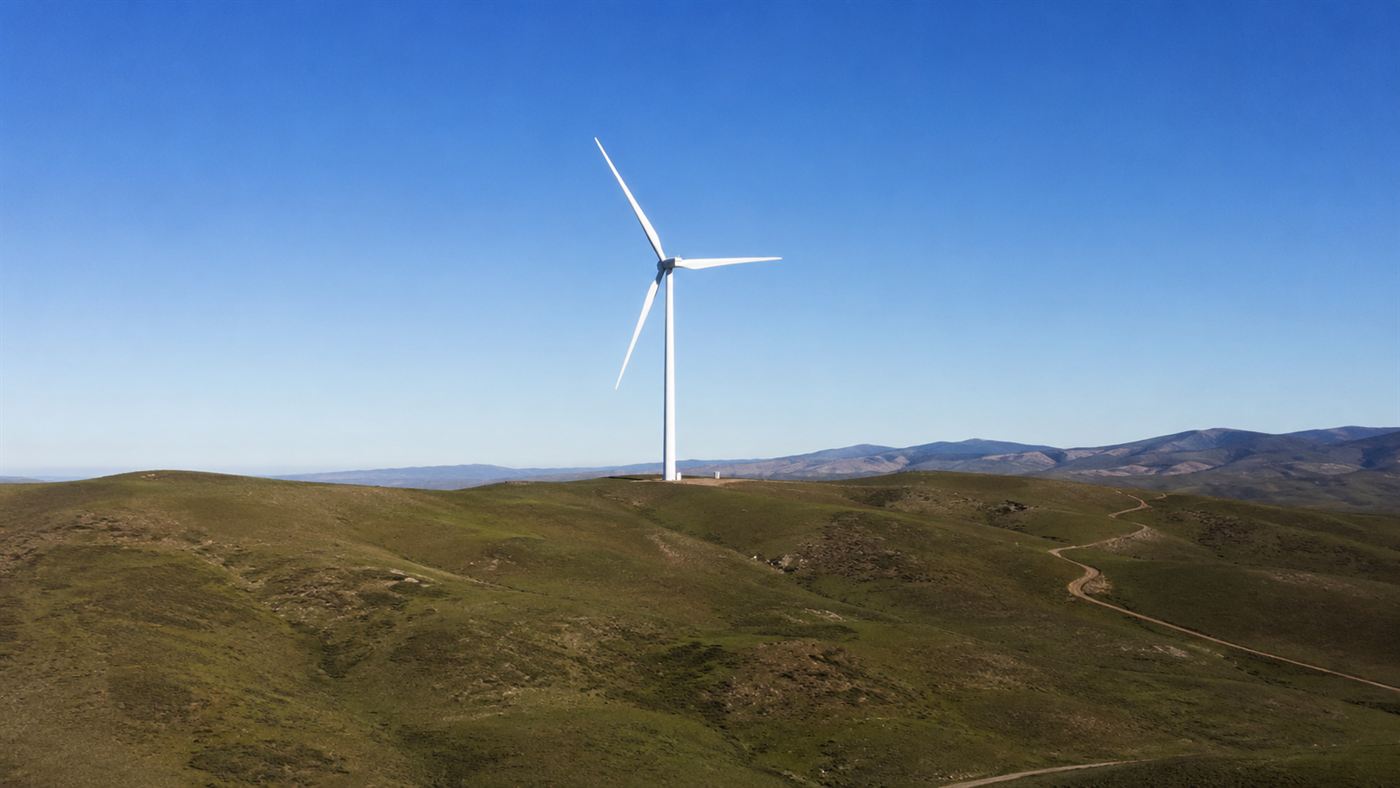
The fix has a dull name, repowering, and a surprising shape. Operators began ripping out the old turbines and replacing as many as thirty small machines with a single modern one. The new towers are far taller, so the blades sweep high above the height where eagles hunt, and although the tips move fast, the long blades turn slowly enough that a bird can actually register them as a barrier rather than empty air.
NextEra, which owns more than half the turbines in the pass, agreed to repower its share, and roughly a thousand of the old machines have already come down. Early figures from the operators suggested raptor deaths at repowered sites could drop by as much as 80 percent, even as the same land produced more electricity than before. Fewer, bigger, taller turbines turned out to be better for the birds and the grid at once.
The honest catch
It would be neat to end with the eagles saved, but the truth is more measured. Countywide tallies have shown more modest gains than the best individual sites, with overall bird deaths down something like 25 to 40 percent depending on the species, not the headline 80. Repowering is slow, costly, and still unfinished, and Altamont remains a hard place to be a hawk.
Still, the lesson stuck, and it is the reason this matters beyond one Californian hillside. Altamont is why modern wind farms are sited with raptor surveys, radar, and seasonal shutdowns built in from the start. The first generation got it wrong in the worst way, and the golden eagles paid for that mistake. The birds dying there are the reason the next wind farm is far less likely to repeat it.
Clean energy and wild eagles ended up on a collision course in one Californian pass, and the only real fix was to tear the wind farm down and build it taller. When green power and rare wildlife clash, which one should give way? Tell us what you think in the comments.
Related reading: The startling fix that cut bird deaths at a wind farm by painting just one blade black.
More from Watts & Wild
More in Energy & the Wild →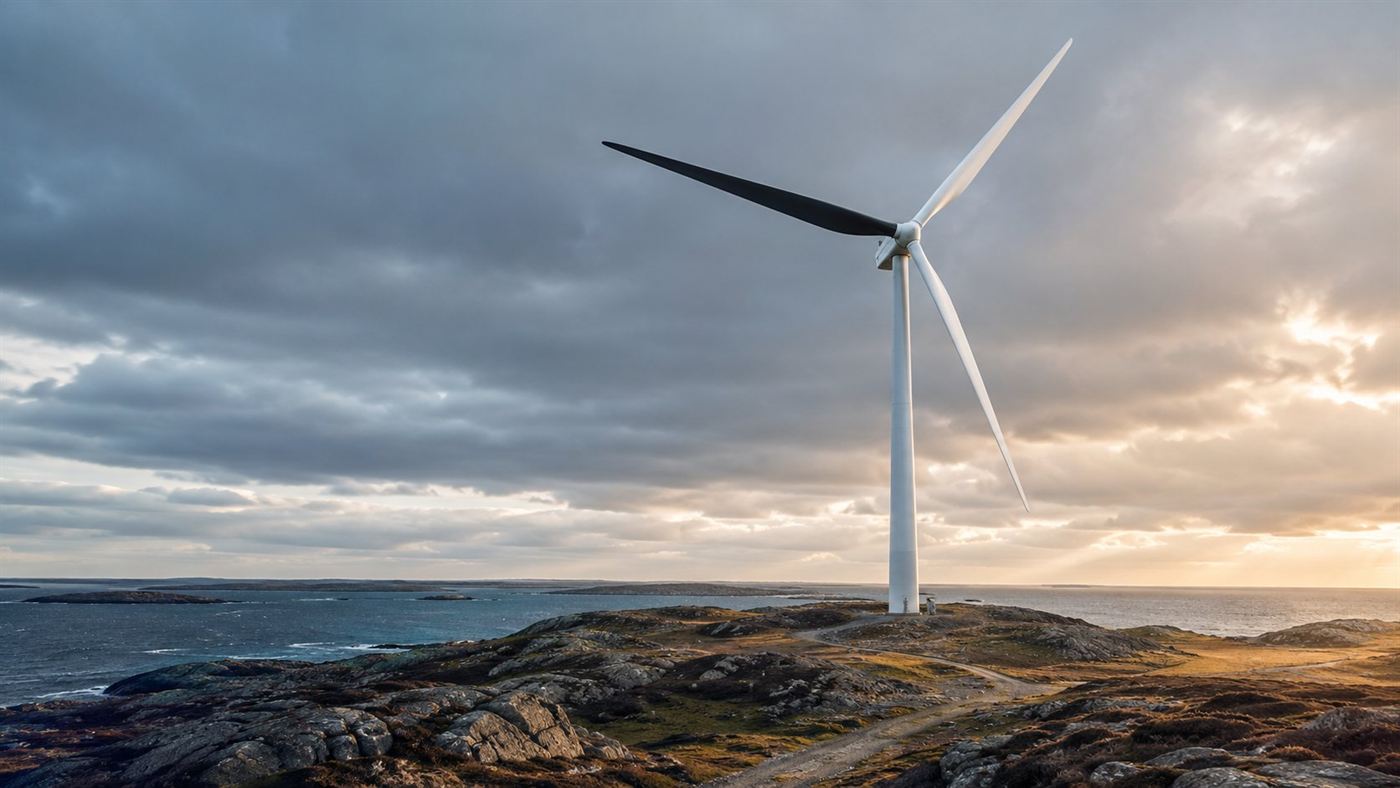


Maria Heloisa Barbosa Borges covers heavy industry, mega-builds, and the places where engineering meets the natural world for Watts & Wild.