Hidden inside a Scottish mountain is a cathedral-sized cavern holding a power station that works like a giant battery, dug out by tunnellers, 36 of whom died
Drive along the shore of Loch Awe in the Scottish Highlands and you would never guess that, deep inside the mountain looming above you, there is a chamber tall enough to stand the Tower of London inside it, humming with machinery. This is Cruachan, the Hollow Mountain, and it has been quietly storing Scotland's electricity for sixty years.
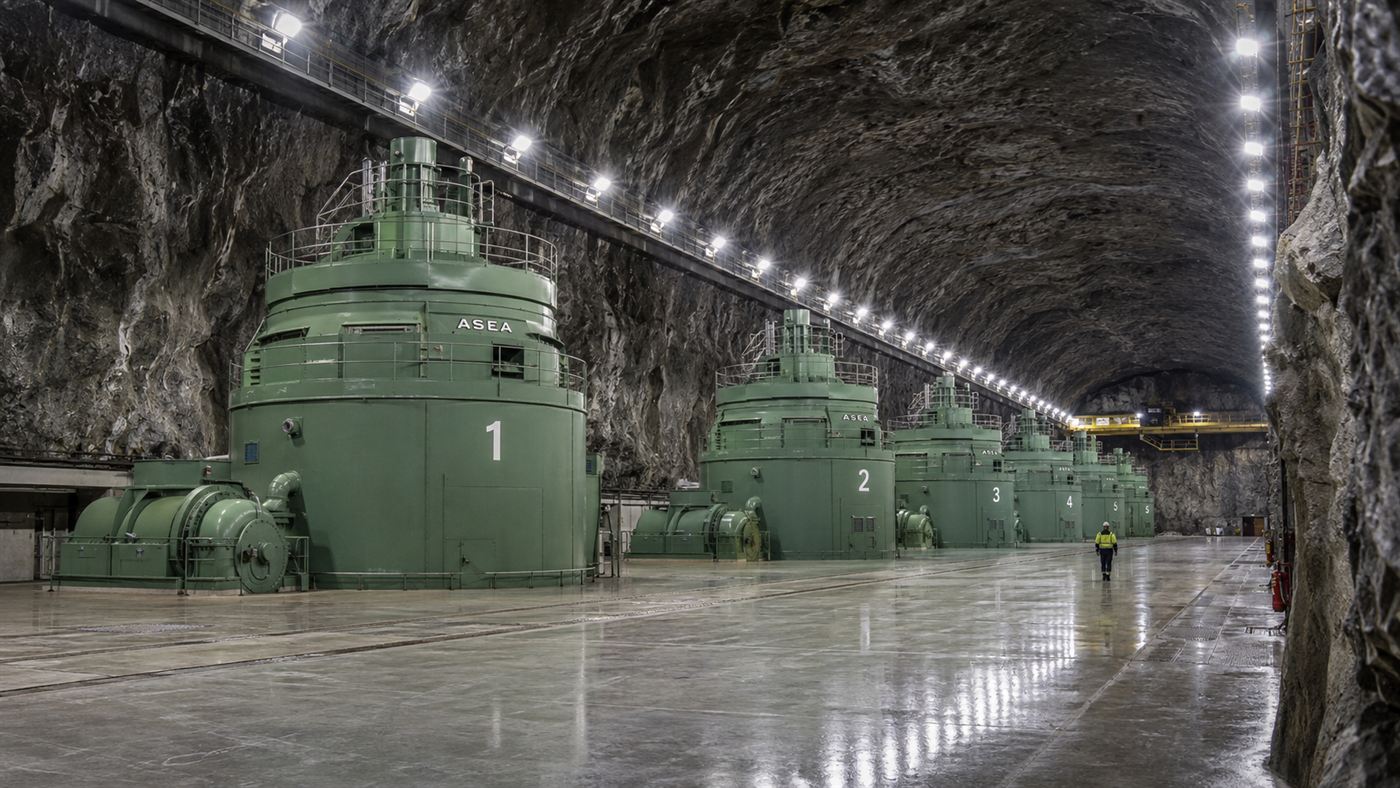
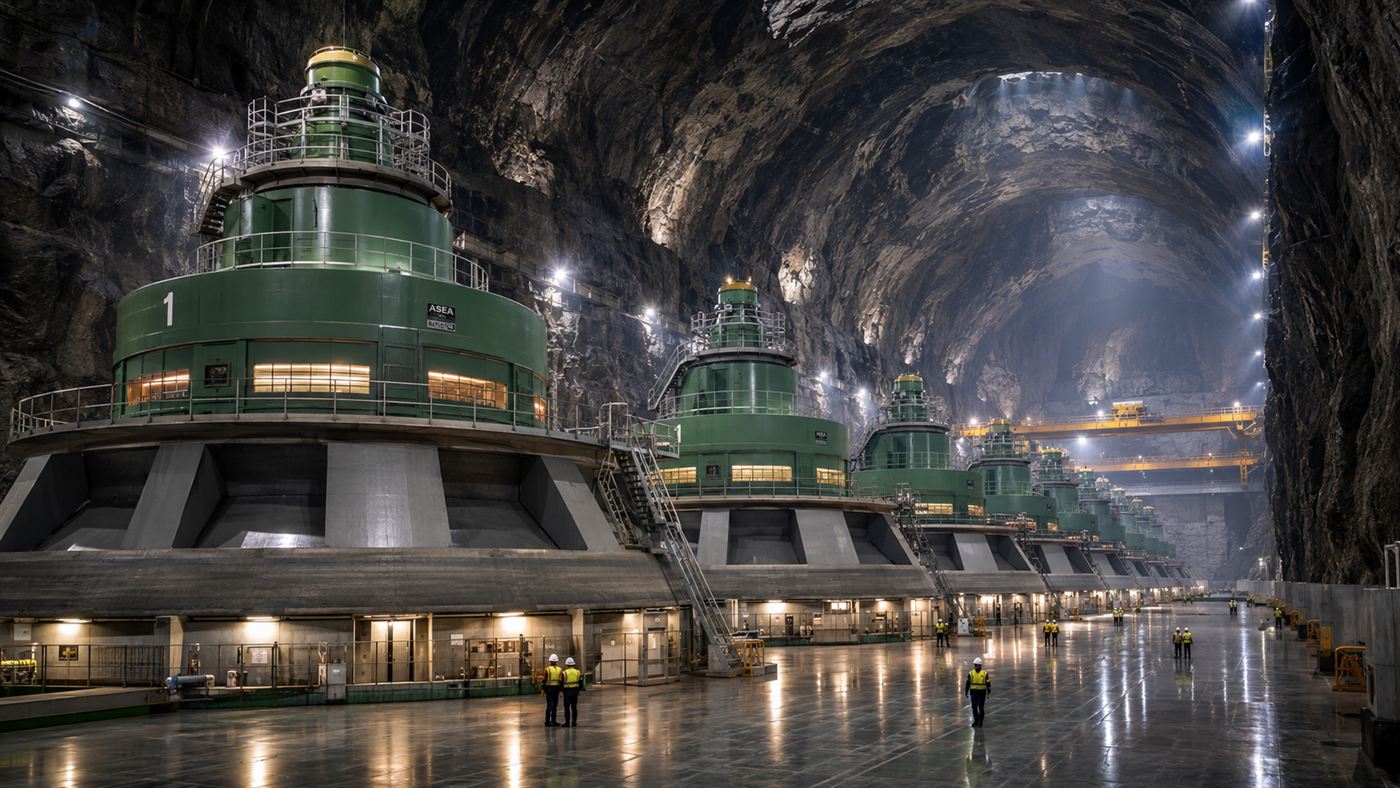
The machine hall sits in a cavern carved 400 metres inside the mountain. Illustration: Watts & Wild.
Cruachan Power Station is one of the most extraordinary and least visible feats of engineering in Britain, because the whole point of it is that you cannot see it. From outside, Ben Cruachan looks like any other Highland peak. Inside, it has been hollowed into a vast industrial cathedral, home to a power station that does something genuinely clever: it stores electricity by moving water up and down a mountain.
It is, in essence, a giant rechargeable battery, built decades before anyone used that phrase.
What is Cruachan Power Station?
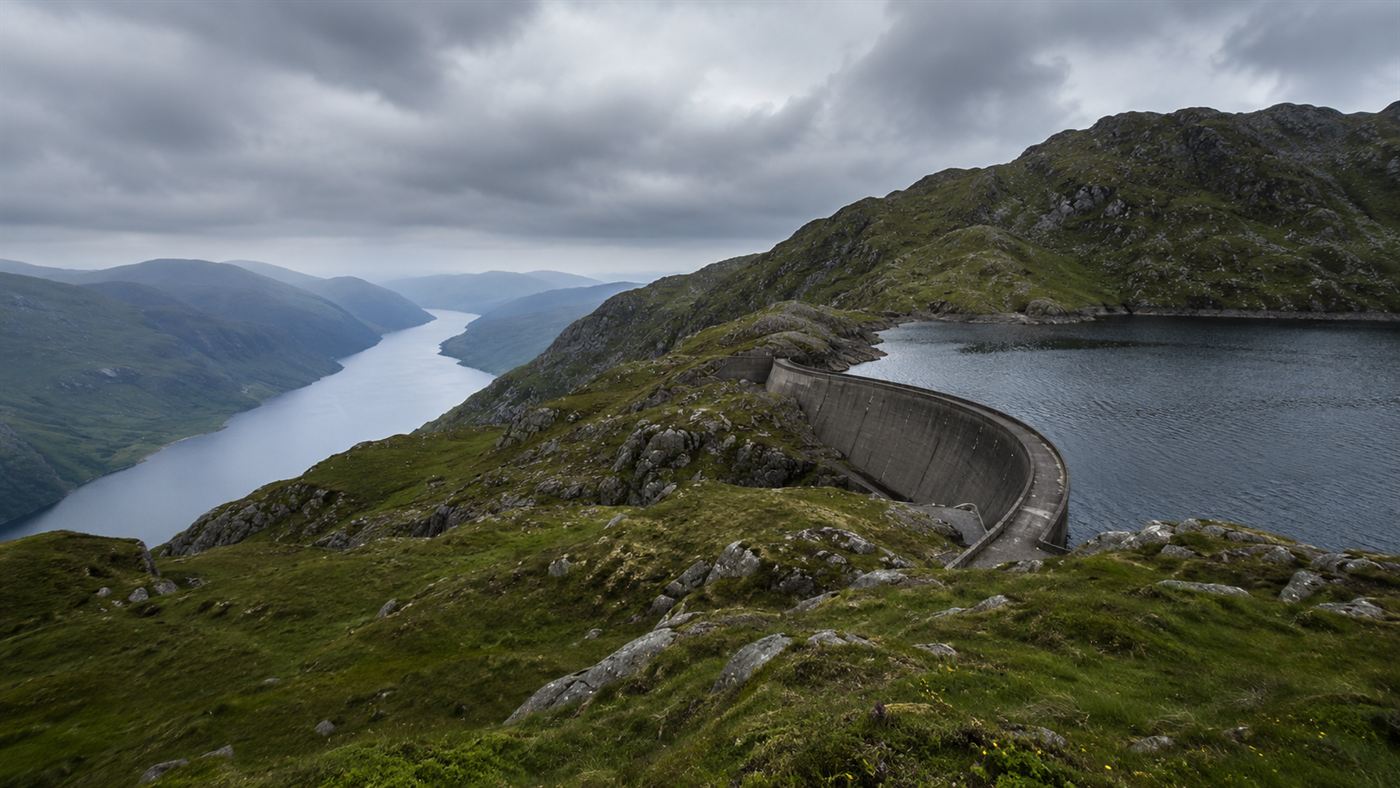
Cruachan is a pumped-storage hydroelectric plant. High up on the mountain sits a reservoir, held back by a dam. Far below, at the foot of the mountain, lies Loch Awe. Between the two, deep inside the rock, sits the machine hall, with a height difference of nearly 400 metres between the upper water and the turbines. That drop is where the power comes from.
Construction began in 1959, and Queen Elizabeth II opened the completed station on 15 October 1965. It was a genuine world first: the first reversible pumped-storage hydro scheme of its size ever built, a template that grid engineers around the world would go on to copy. The cavern that houses its four big turbines is around 91 metres long and 37 metres high, reached by a tunnel more than a kilometre long bored straight into the mountainside.
A power station inside a mountain
Standing in the machine hall is a surreal experience. You are deep inside solid rock, in a brightly lit chamber the size of a cathedral, with green-painted generators the height of houses lined up along the floor and the constant, felt-more-than-heard thrum of water and machinery. Ferns and plants even grow in the cavern, kept alive by the floodlights.
The decision to bury the power station was partly practical and partly about the landscape. Putting the machinery inside the mountain protected it from the brutal Highland weather and kept one of Scotland's most beautiful glens free of an industrial eyesore. The result is a place that feels less like a power plant and more like something out of a Bond film, which is why several have used it as a location.
The Tunnel Tigers who dug it out
None of it would exist without the men who carved it. Cruachan was hacked out of the mountain in the late 1950s and early 1960s by a workforce that swelled to around four thousand at its peak, including a hard core of about 1,300 tunnellers known affectionately as the "Tunnel Tigers." Many were Irish immigrants, part of a legendary generation of labourers who built much of Britain's heavy infrastructure.
Their work was astonishingly hard and dangerous, blasting and drilling through hard rock deep underground. The Tunnel Tigers were so fast they set a world record for hard-rock tunnelling, driving 560 feet in a single week in 1965, but the achievement came at a terrible price: 36 men died building Cruachan and its dam. The Hollow Mountain is a monument to their skill, and a grave marker for their losses.
How a mountain becomes a battery
The real genius of Cruachan is in what it does every single day. Electricity is famously hard to store, and a grid has to match supply to demand second by second. Cruachan solves this with water and gravity. When power is cheap and plentiful, usually overnight, the station runs its turbines backwards as pumps, pushing water from Loch Awe up into the reservoir high on the mountain, charging itself like a battery.
Then, when demand suddenly surges, at the famous "TV pickup" when millions of kettles switch on at the end of a popular programme, Cruachan opens the gates. The stored water rushes back down through the turbines and the station can go from standstill to full power in a couple of minutes. It is one of the fastest ways ever devised to add huge amounts of electricity to the grid on demand, and it does it using nothing more exotic than water falling down a hill.
The honest catch
Pumped storage like Cruachan is brilliant, but it is important to understand what it is and is not. It is not a source of energy; it is a store, and a slightly lossy one, because pumping the water up uses more electricity than you get back when it comes down, with a round trip recovering only around three-quarters of the power you put in. Cruachan does not make energy, it time-shifts it, soaking up surplus and handing it back when it is needed most.
And the vivid "you could fit the Tower of London inside" line, while a fun way to grasp the scale, is the kind of claim that gets repeated more for effect than precision. None of that diminishes the achievement. In an age obsessed with lithium batteries, it is humbling to remember that one of the best grid-scale batteries ever built is a hole full of water inside a Scottish mountain.
Why Cruachan Power Station still matters
Sixty years on, Cruachan is not a museum piece; it is more relevant than ever. As Britain fills its grid with wind and solar, which are clean but maddeningly intermittent, the need to store surplus power for the calm, dark hours has become urgent, and pumped storage is still the cheapest, longest-lasting way to do it at scale. There are now plans to expand the Hollow Mountain further.
That is the quiet triumph of Cruachan. A piece of 1960s engineering, dug by hand at the cost of dozens of lives, turns out to be exactly the kind of giant battery a renewable-powered world desperately needs. The Tunnel Tigers built the future without knowing it, hidden inside a mountain where almost no one would ever see it.
One of the best grid batteries ever built is just a lake of water inside a Scottish mountain, dug by hand at the cost of 36 lives. Is old, proven technology like this a smarter bet for storing renewable power than chasing ever-bigger lithium batteries? Tell us what you think in the comments.
Related reading: In Wales, an even bigger sibling, Dinorwig, hides inside a slate mountain and can leap to full power in just sixteen seconds.