Scientists are now breeding corals by the million and planting them on the reef, in a race against the heat
In 2026, the effort to save the world's reefs took an industrial turn. Instead of only guarding what is left, scientists are now growing baby corals in labs and nurseries and planting them out by the thousand. This is coral restoration at a new scale, and it is a genuinely hopeful sight, a nursery for the ocean's rainforests.
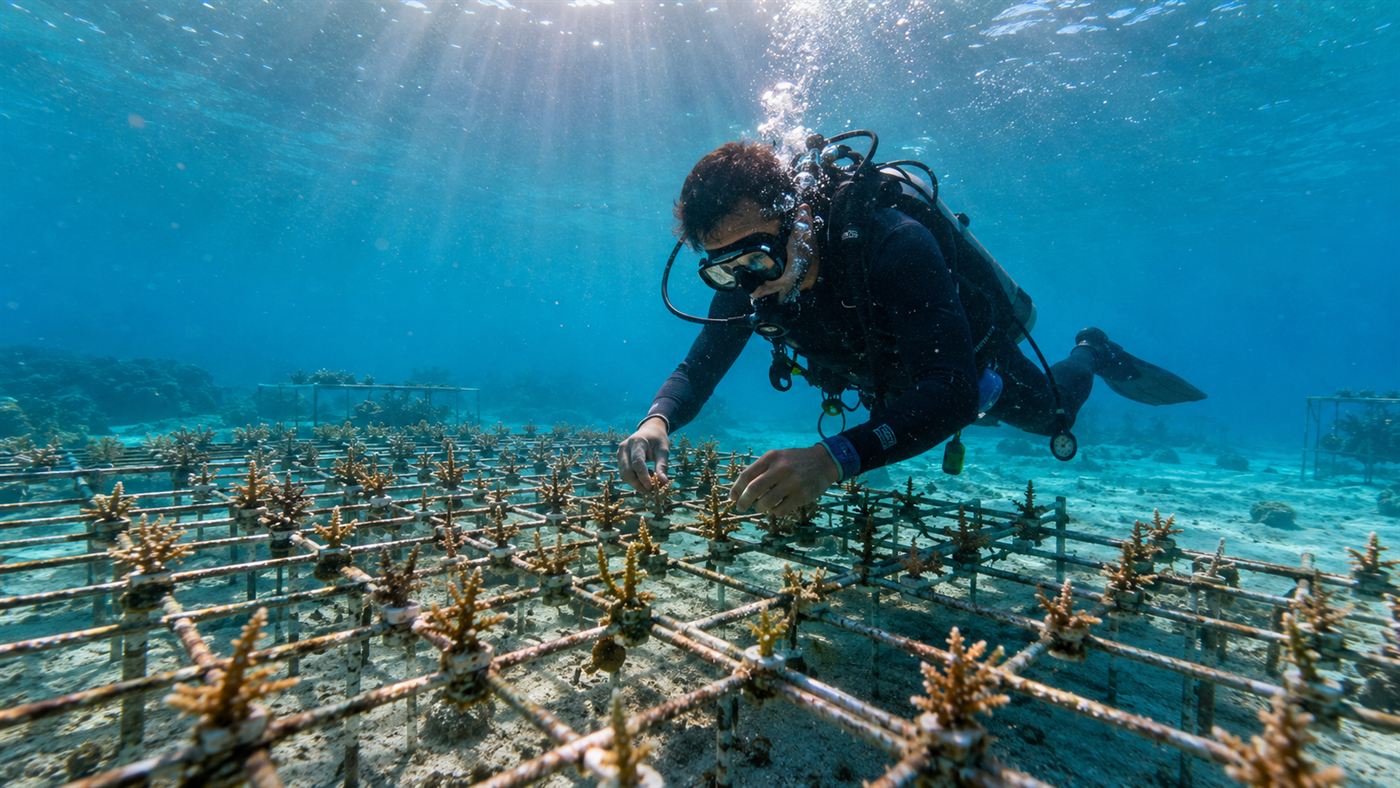
Divers tend young corals on underwater nursery frames before planting them out. Illustration: Watts & Wild.
The scenes from 2026 read like farming as much as science. On the Great Barrier Reef, teams of scientists and rangers, about 130 people in all, gathered an estimated 14.6 million coral eggs during a mass spawning, then reared the larvae and returned the first batches of young, aquaculture-grown corals to the reef itself. It is one of the largest efforts of its kind ever attempted there.
Half a world away, a new land-based breeding laboratory on Praslin Island in the Seychelles recorded its first successful spawning, producing roughly 800,000 embryos from just fourteen parent colonies. Taken together, these are no longer hopeful experiments in a fish tank. They are the beginnings of an assembly line for living reef, raising baby life like seedlings in a greenhouse.
The short version is that reef rescue is scaling up fast, moving from saving individual corals to manufacturing them, and 2026 is the year that shift became impossible to ignore.
How modern coral restoration actually works
Most corals reproduce just once or twice a year, releasing clouds of eggs and sperm on a few synchronised nights tied to the moon and the water temperature. Restoration teams have learned to be there at that exact moment, catching the slick of spawn at the surface and carrying it back to raise the delicate larvae in safety, away from the predators and pollution that kill most of them in the wild.
The young corals are then grown on frames and tiles, in the sea or in tanks, until they are sturdy enough to be cemented onto damaged reef. Millions of eggs gathered in a single moonlit night can become a nursery full of survivors, and each planted colony can in time spawn on its own, seeding the next generation. It is gardening, essentially, on a scale the ocean has never seen from human hands.
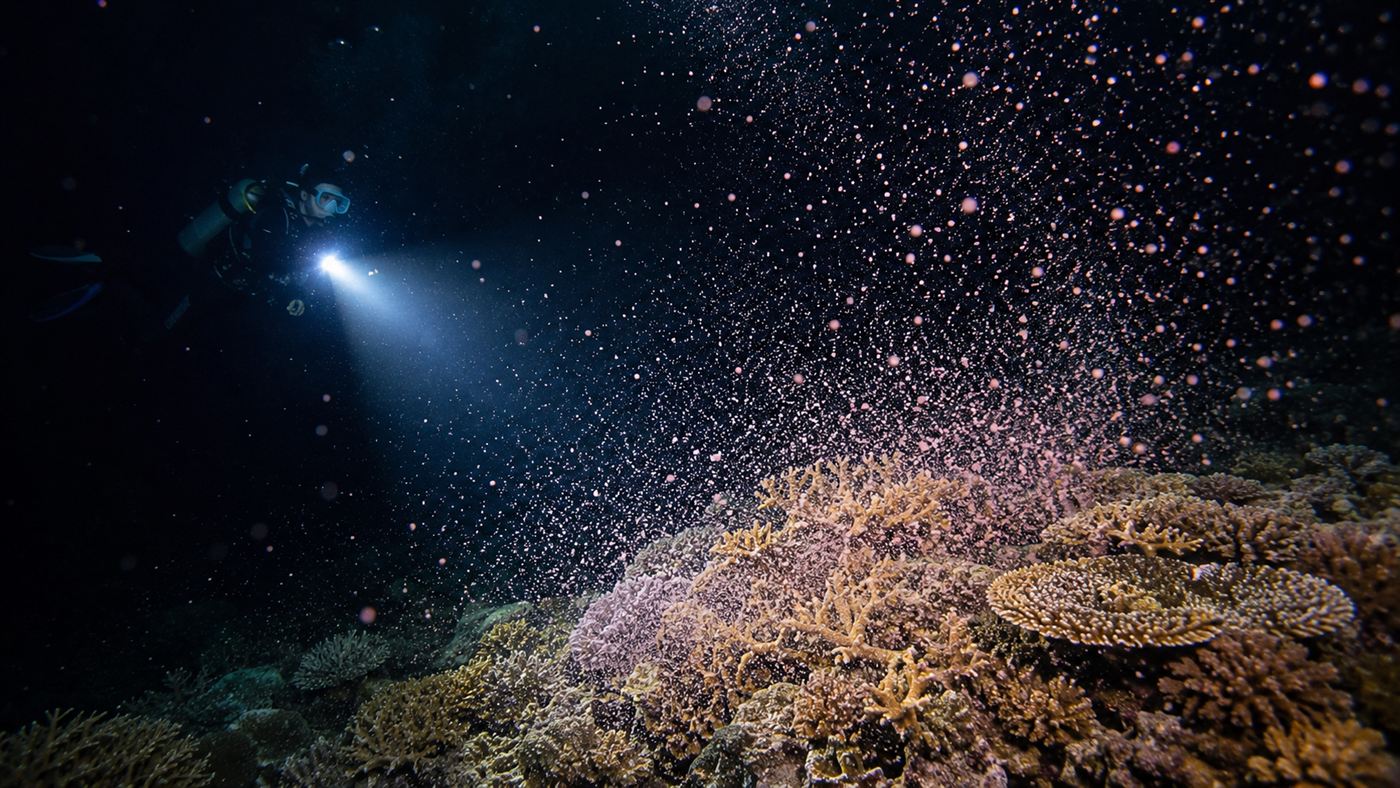
The clever trick of spawning on demand
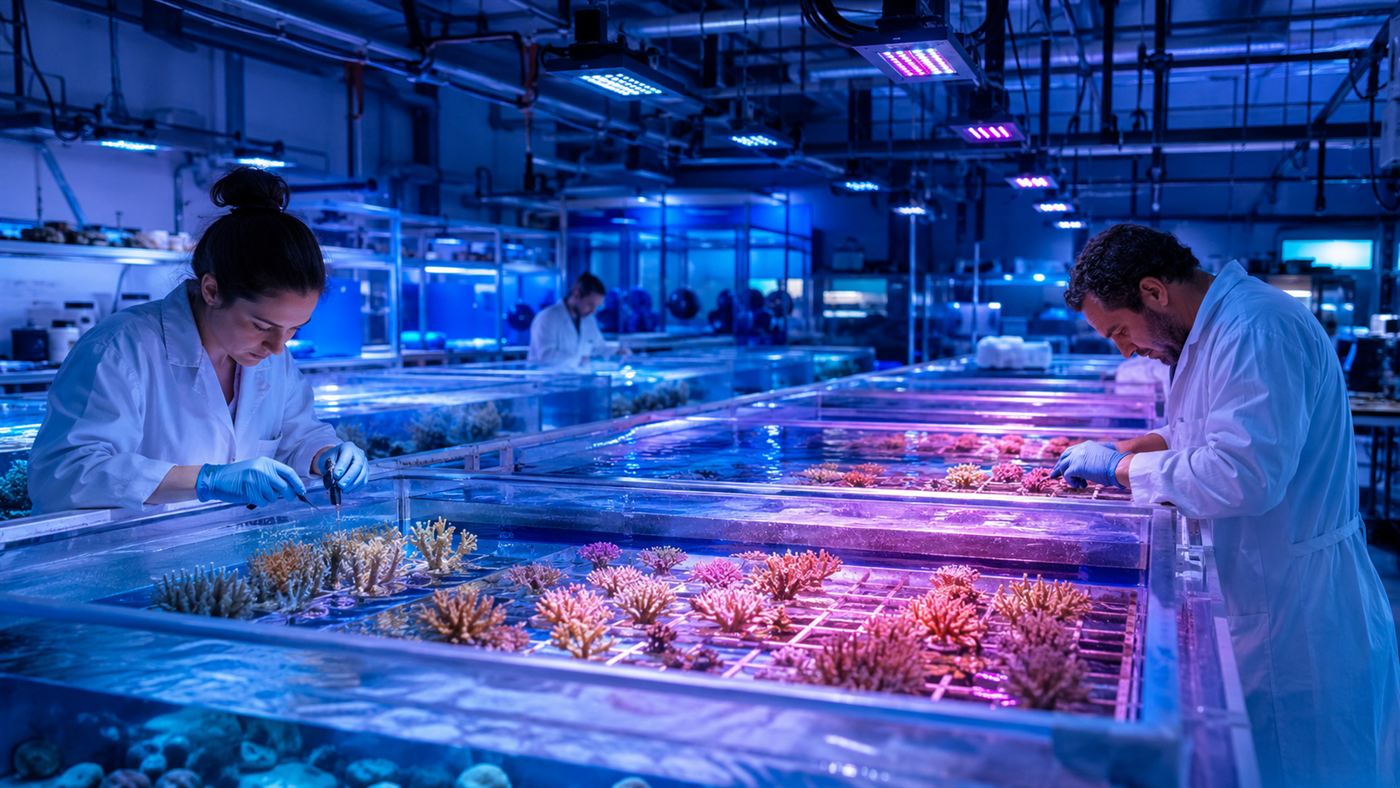
One of the biggest advances behind the 2026 push is deceptively simple: teaching corals to breed out of season. After an eight-year research programme, scientists worked out how to fool corals in aquariums by carefully offsetting light and temperature, coaxing several species to spawn in the southern autumn and winter rather than only on their usual summer nights.
That may sound like a footnote, but it changes everything about supply. Instead of a single frantic window each year to gather material, labs can now produce larvae across many more months, smoothing the work and multiplying how many young corals they can raise. It turns a once-a-year harvest into something closer to a steady crop.
Can planting corals really save a reef?
Here honesty has to enter the story. Even 14.6 million eggs and a humming laboratory are tiny against the size of the problem. The Great Barrier Reef alone stretches over more than 2,000 kilometres, and reefs worldwide cover an area you could never replant by hand in many lifetimes. Restoration, at today's scale, can rescue patches, not oceans.
Worse, the thing killing reefs is not mainly missing corals but heat. As oceans warm, corals suffer bleaching, expelling the tiny algae that feed and colour them, and mass bleaching events are striking more often and harder. You can plant a beautiful new colony and watch a marine heatwave kill it a year later, which is the cruel arithmetic every restoration team knows by heart.
The honest catch
It is tempting to greet these breakthroughs as the moment we learned to rebuild the reefs, and the science really is remarkable and worth celebrating. Restoration keeps rare corals alive, preserves genetic variety, protects tourism and coastlines, and buys precious time for the most threatened places. None of that is small, and the people doing it are heroes of a quiet kind.
But the catch must be said plainly. Planting a garden faster than it can burn is not the same as putting out the fire. These programmes are triage, holding actions to carry corals through until the warming that threatens them is brought under control, and if that heating is not slowed they cannot win. The reef nurseries are a genuine gift, and also a reminder: the surest way to save the reefs is to stop cooking the sea they live in.
Sources: Great Barrier Reef Foundation on reef restoration, Oceanographic, and Time.
We have learned to breed reefs by the million, and we are still losing them to a warming sea. Is it worth pouring effort into replanting corals if we do not also cool the ocean around them? Tell us what you think in the comments.
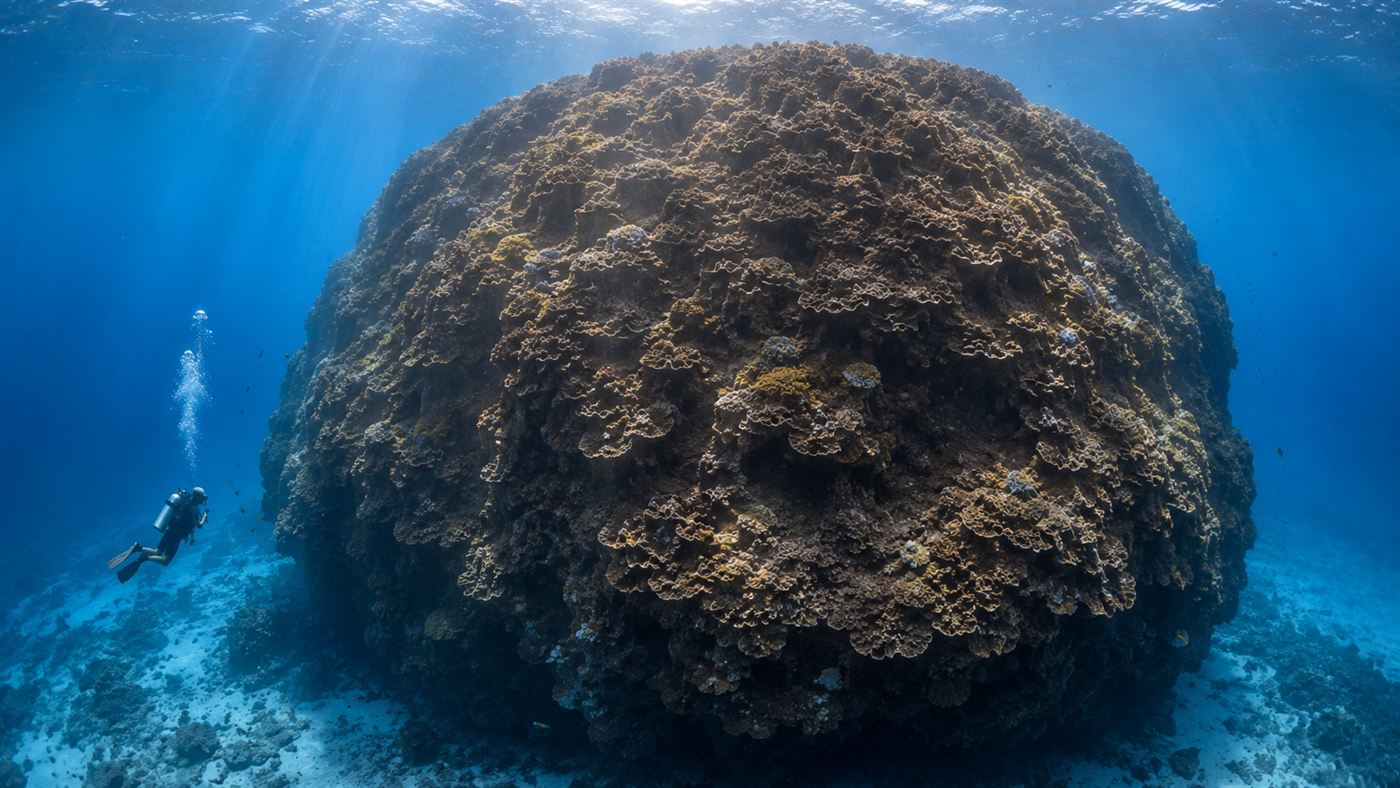
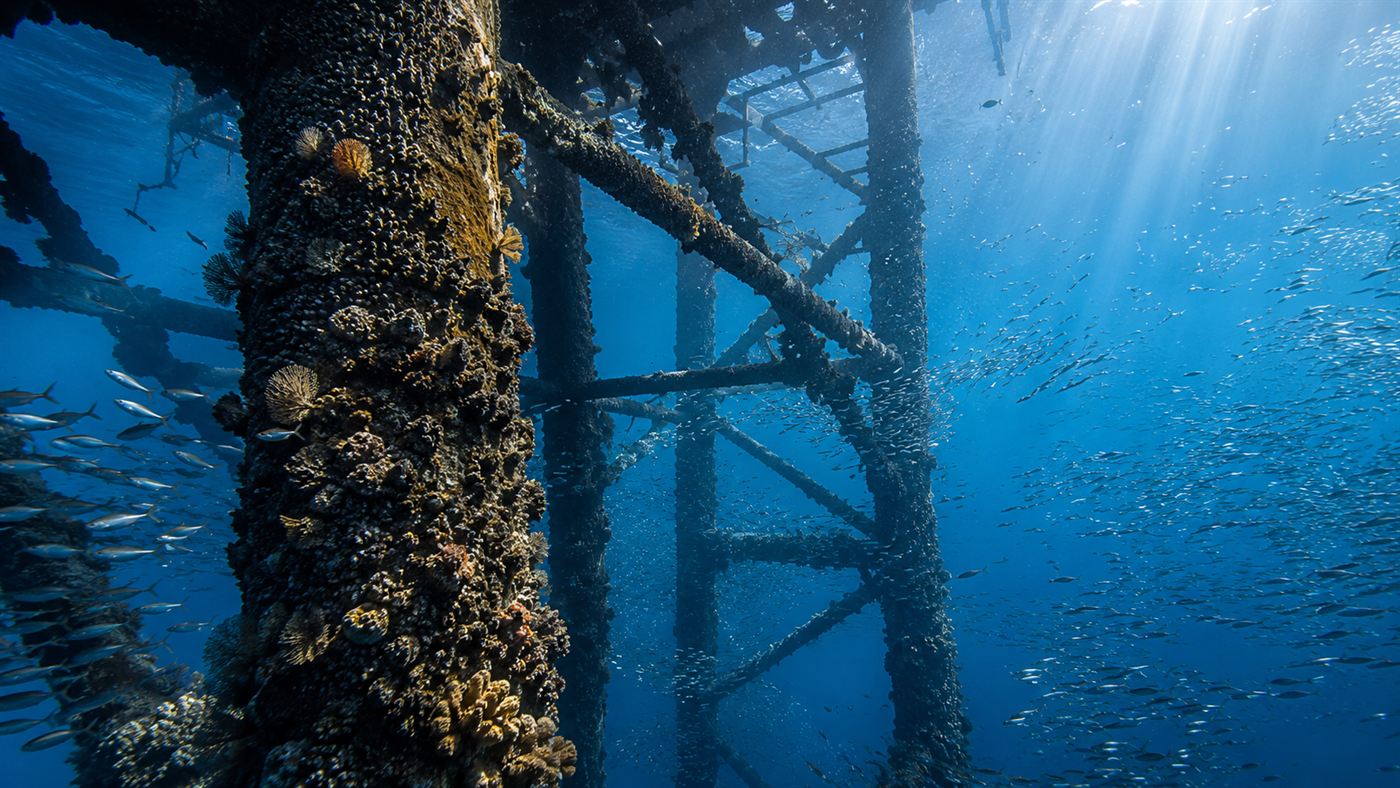
Related reading: the largest single coral on Earth, so big it can be seen from space. See also the oyster reefs being rebuilt to shield coastlines from storms, and the old oil rigs that became thriving artificial reefs.