Shell tried to sink an oil platform in the Atlantic, and a continent of angry drivers stopped it
In the summer of 1995, one of the biggest companies in the world decided to get rid of a worn-out oil structure by dropping it into the deepest part of the ocean. It had the science, the permits and the government on its side. Then ordinary people across Europe stopped buying its petrol, and within weeks the giant simply gave up. The fight over the Brent Spar changed how the world thinks about the sea, and it carried a sting almost no one expected.
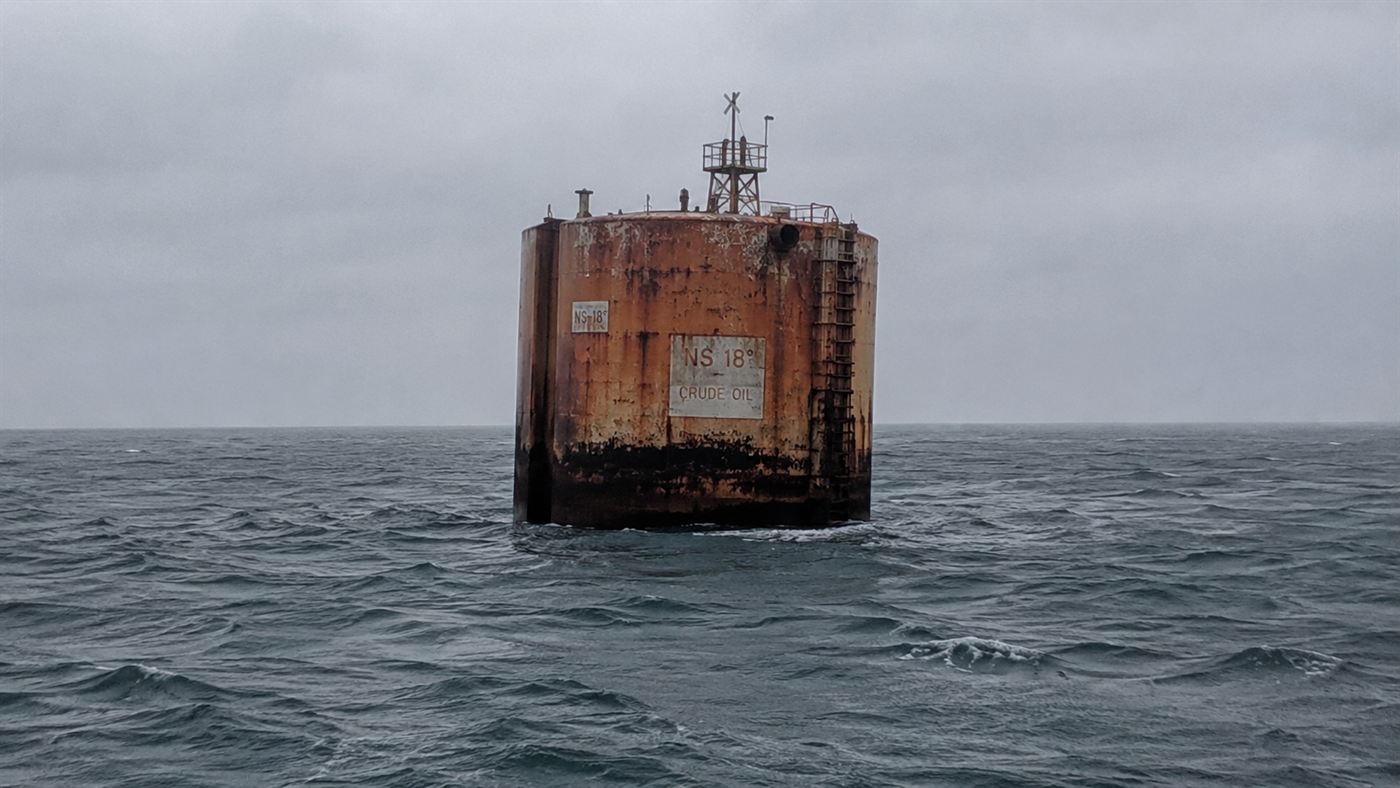
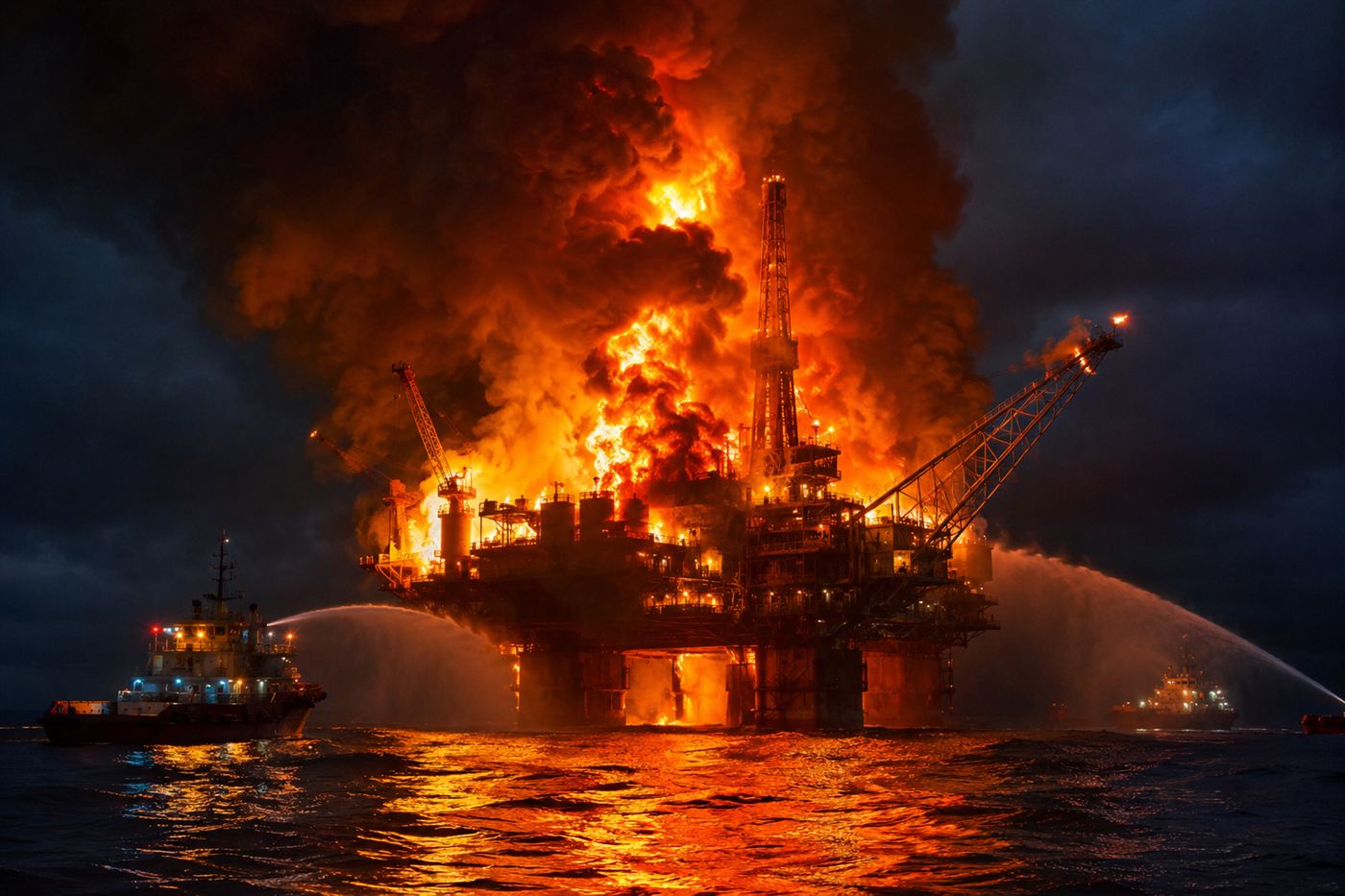
The Brent Spar was a floating steel cylinder taller than a 40-storey building. Illustration: Watts & Wild.
The Brent Spar was a huge floating buoy, a cylinder of steel and ballast more than 130 metres tall, that had spent years storing oil out in the North Sea for Shell. By the mid-1990s it was obsolete, and the question was what to do with such a vast, awkward, contaminated thing. Shell's answer, backed by the British government, was to tow it out into the deep Atlantic and sink it.
On paper, it was a reasonable plan. In the real world, it became one of the most famous environmental battles of the decade, and a lesson that being technically right is not the same as winning.
A giant to get rid of
Shell did not reach its decision casually. The company commissioned studies and concluded that sinking the Spar in very deep water, more than two kilometres down and far from shore, was the safest and least damaging option, what the jargon called the best practicable environmental choice. Dismantling such a contaminated structure on land, the argument went, would be more dangerous for workers and possibly worse for the environment than letting the deep ocean quietly swallow it.
With government approval in hand, Shell prepared to tow the Brent Spar to its grave at the bottom of the sea. To the company, this was a routine, well-reasoned piece of housekeeping. To a great many other people, it sounded like a multinational deciding the ocean was its dustbin.
Greenpeace climbs aboard
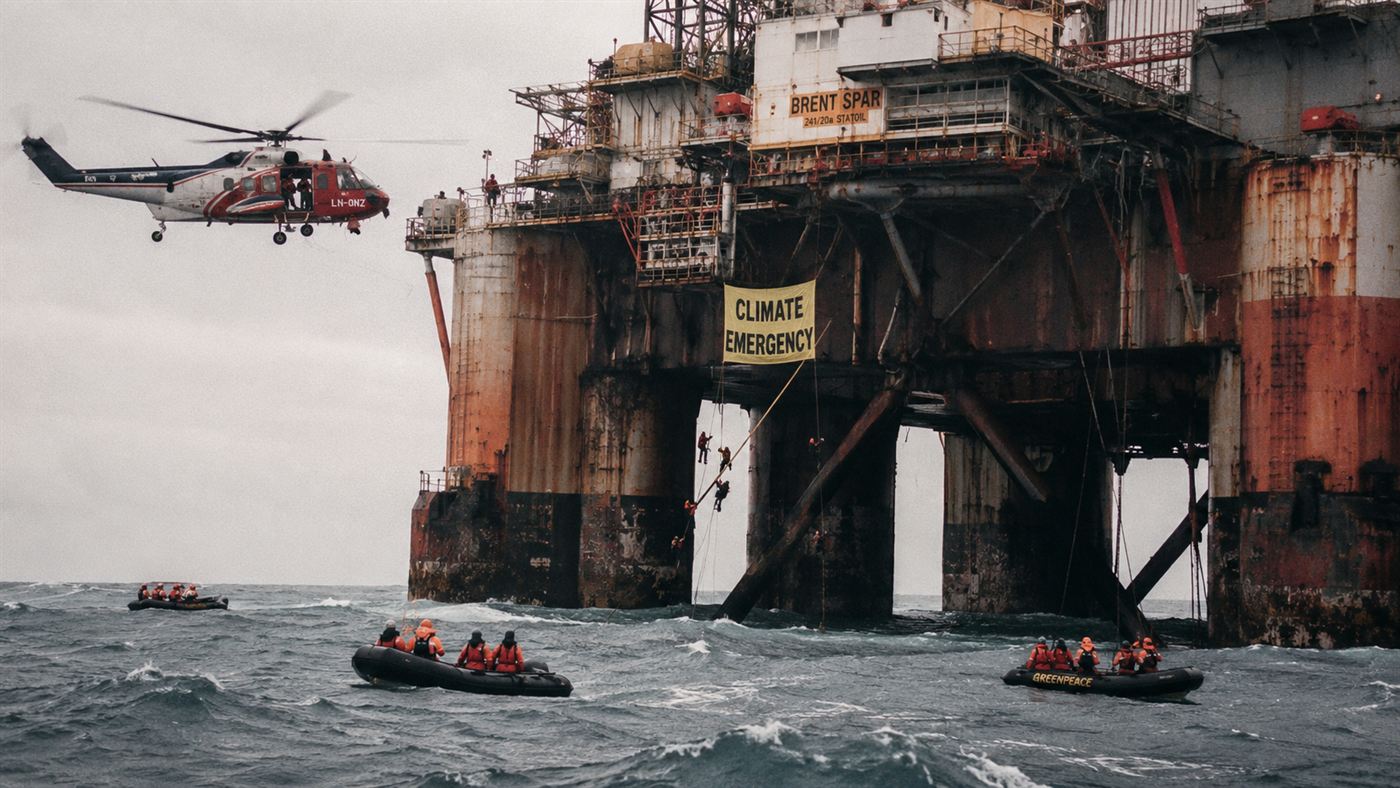
Greenpeace seized on it. In the spring of 1995, activists landed on the Brent Spar by boat and helicopter and occupied it, turning the lonely buoy into a stage for a worldwide media campaign under a simple, powerful slogan: the sea is not a dustbin. The footage was perfect for television, tiny figures clinging to a giant industrial hulk while water cannons tried to blast them off.
Shell and the police removed the protesters, who were briefly jailed, but the images had already gone around the world. The story stopped being a dry argument about disposal methods and became a simple moral picture: a faceless oil company versus brave people trying to protect the sea, and the public knew instantly whose side it was on.
The boycott that made Shell blink
Then the public did something companies truly fear: they stopped buying. Across Europe, and especially in Germany, drivers turned away from Shell petrol stations in protest, and sales at some German Shell stations reportedly fell by around half. A few stations were even attacked, and the German chancellor personally complained to the British prime minister at an international summit.
It worked. On 20 June 1995, after months of mounting fury and falling sales, Shell suddenly reversed course and abandoned the plan to sink the Brent Spar, agreeing to dismantle it on land instead. It was a humiliating climbdown for one of the world's largest corporations, and a stunning victory for a group of activists in inflatable boats. It also left the British government, which had backed Shell to the end, badly embarrassed.
Why the Brent Spar victory came with a catch
Here is the part that complicates the heroic story. During the campaign, Greenpeace had claimed the Brent Spar still held thousands of tonnes of oil, putting the figure at more than 5,000 tonnes. Shell insisted the real amount was around 50. Afterward, Greenpeace discovered that its own sample had been taken wrongly, from a pipe rather than the storage tank, and that its dramatic figure had been a huge overestimate, and it publicly apologised to Shell.
It was an extraordinary admission, and Shell's supporters seized on it. Yet Greenpeace argued that the exact number was beside the point: its real case had always been the principle that the oceans should not become a dumping ground for industry, no matter how much oil was or was not aboard one particular buoy. The campaign had been won on a moral argument, and a wrong statistic did not undo the morality, even if it dented the credibility.

The honest catch
The deepest twist is one that still divides people. In the years since, some scientists have argued that Shell may actually have been right, that carefully sinking the Brent Spar in the deep ocean could well have done less harm than towing it to shore and breaking it up. If so, the great environmental victory may have been a triumph of feeling over fact, a case where the public got the emotionally satisfying answer rather than the cleanest one.
And yet the campaign genuinely changed the world. The outcry helped lead, a few years later, to an international agreement banning the dumping of disused oil and gas installations in the north-east Atlantic, a rule that still stands. The Brent Spar itself ended up dismantled in Norway, with pieces of it reused to build a quay. It is remembered as the moment ordinary consumers discovered they could force a giant to its knees, and as a lasting warning that in a fight like this, the loudest, simplest story usually wins, whether or not it is the whole truth.
A handful of activists and a boycott forced an oil giant to back down, in a fight where the winners may not even have been right. Does it matter that Greenpeace's numbers were wrong, if the principle it stood for changed the rules of the sea? Tell us what you think in the comments.
Related reading: Piper Alpha, the North Sea oil platform disaster that killed 167 men in a single night.