Farmers were told they had to choose between growing food and hosting solar panels, but a Colorado experiment called agrivoltaics is proving the same acre can do both, and better
As solar farms spread across the countryside, they have collided with a hard question: should good farmland grow food or make electricity? A field of research called agrivoltaics answers, why not both, and by 2026 its early results have turned a supposed trade-off into an unexpected partnership.
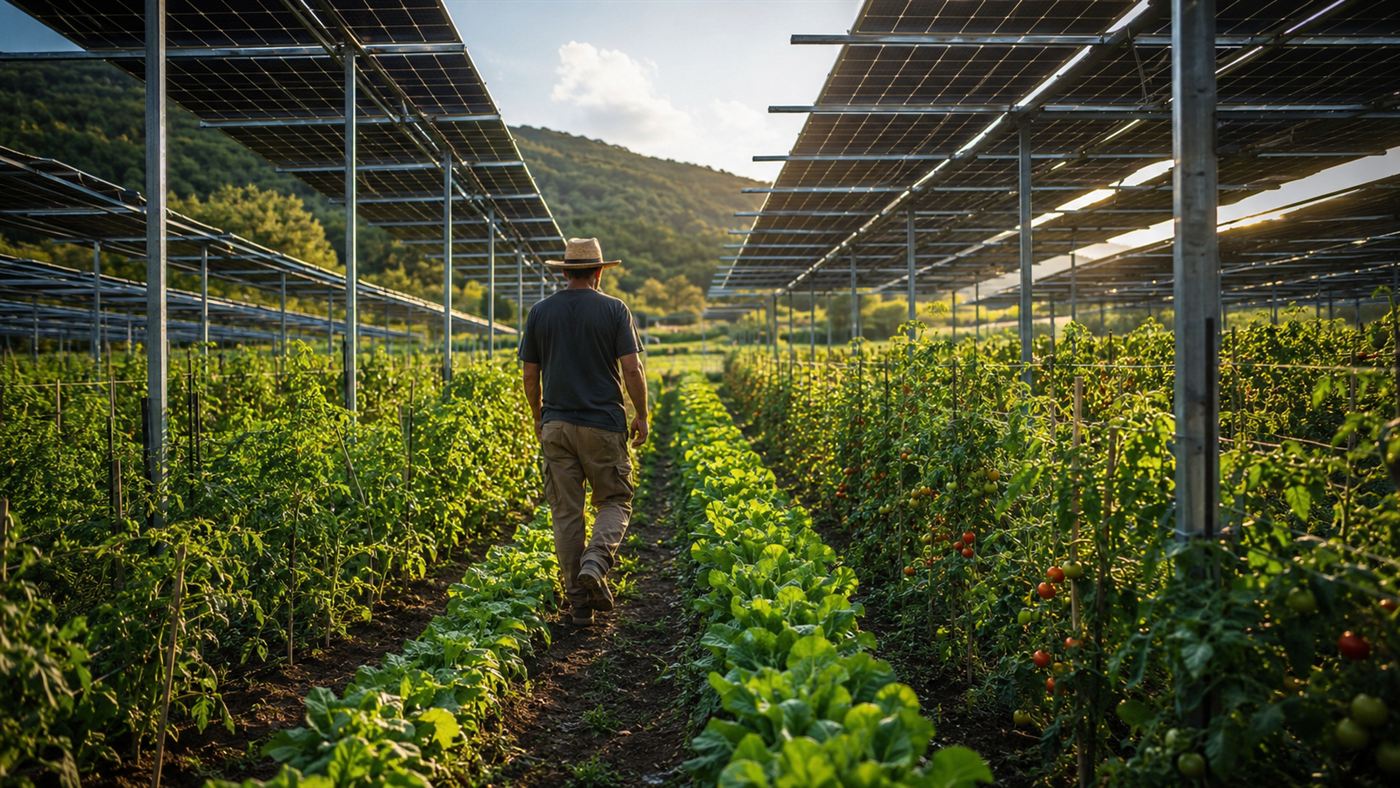
In agrivoltaics, crops grow in the shifting shade beneath raised solar panels. Illustration: Watts & Wild.
agrivoltaics, the idea of raising solar panels high enough to farm underneath them, has been around since a German researcher proposed it in 1981, but for decades it stayed a curiosity. Solar was cheaper to build on bare, scraped-flat land, and farmers understandably worried that leasing a field to a solar company meant giving up on farming it. The two uses seemed to cancel each other out.
Then researchers actually measured what happens when you put plants and panels together, and the numbers were a surprise. Far from fighting for the same sunlight, the panels and the crops turned out to trade favors, each making conditions a little better for the other. It quietly upended the whole food-versus-energy argument.
The short version: Agrivoltaics grows crops or grazes animals under and between solar panels. The panels cast partial shade that cuts evaporation and heat stress on many crops, while the plants below cool the panels and make them slightly more efficient. Research in Colorado and Arizona shows the same acre can produce both food and power, sometimes better than either alone.
How agrivoltaics helps crops and panels at once
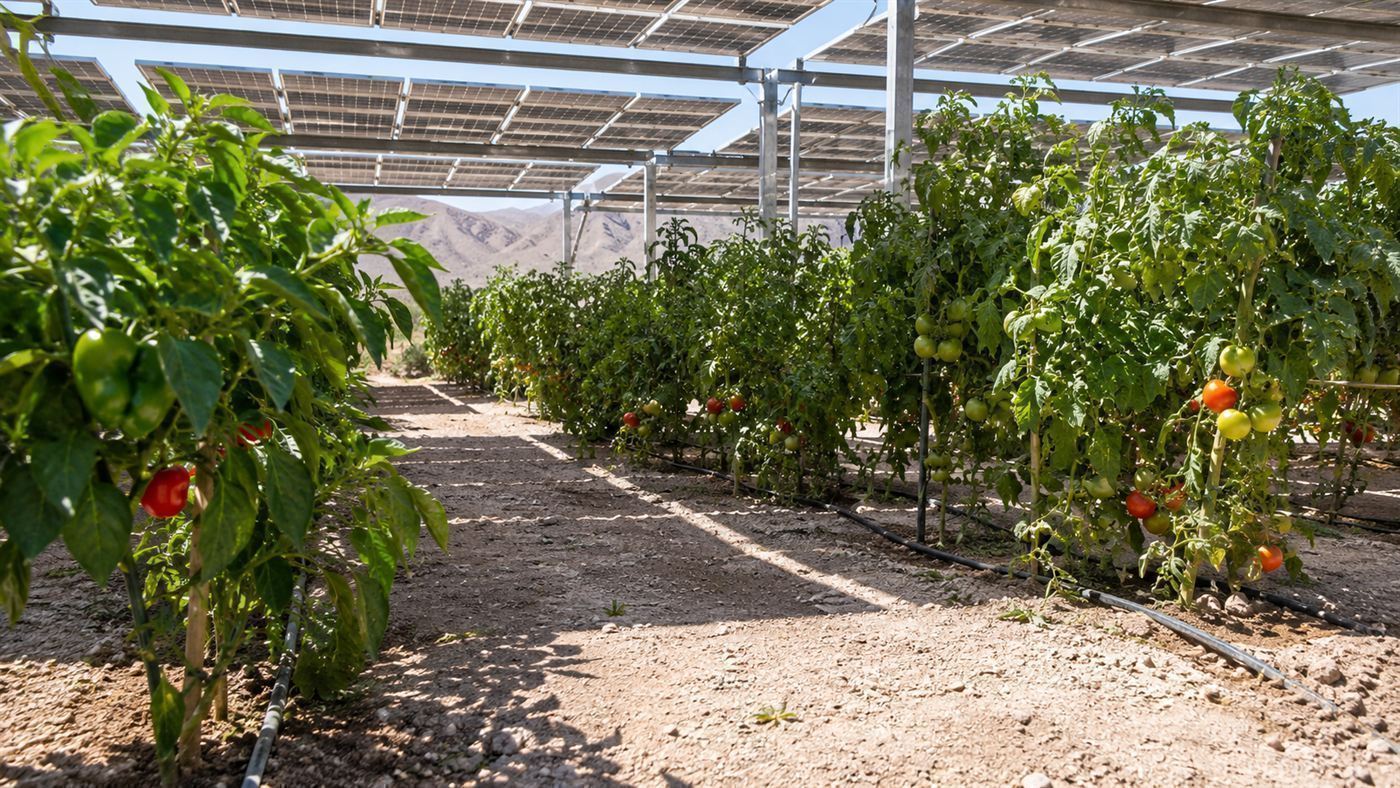
The magic is in the shade, and it runs both ways. As Inside Climate News reported from the sweltering Southwest, planting solar panels over farmland can help both the photovoltaics and the crops. For the plants, the partial shade of the panels means less brutal midday sun, which cuts the rate at which water evaporates from the soil and eases the heat stress that can wilt a crop. Water put down by irrigation lingers in the ground longer instead of boiling off.
The favor is returned from below. As the shaded plants transpire, releasing water vapor, they cool the air around the panels, and solar panels are more efficient when they run cool, so a canopy of crops can actually nudge up the power output overhead. Work by University of Arizona professor Greg Barron-Gafford found that some desert crops grown under panels needed around 50 percent less water while yielding more tomatoes and peppers. In a hot, dry world, that is close to having your cake and eating it, a rare win-win that echoes the logic of putting solar panels over irrigation canals to save water and make power at once.
Jack's Solar Garden, the American test bed
The place turning theory into dirt-under-the-fingernails practice sits in Longmont, Colorado. As NPR described it, Byron Kominek turned his family's old hayfield into Jack's Solar Garden, a farm that literally grows beneath the solar panels. At 1.2 megawatts across about five acres, it is the largest agrivoltaics research site in the United States, a living laboratory run with scientists from the National Renewable Energy Laboratory and Colorado State University.
Under and around its rows of panels, researchers grow tomatoes, peppers, kale, and native grasses and flowers, tracking how each fares in the dappled light. They are learning which plants love the shade and which sulk in it, how much water the setup saves, and how to design racks tall enough to drive a small tractor beneath. It is unglamorous, patient science, the kind that turns a nice idea into something a working farmer can actually copy.
Sheep as solar lawnmowers
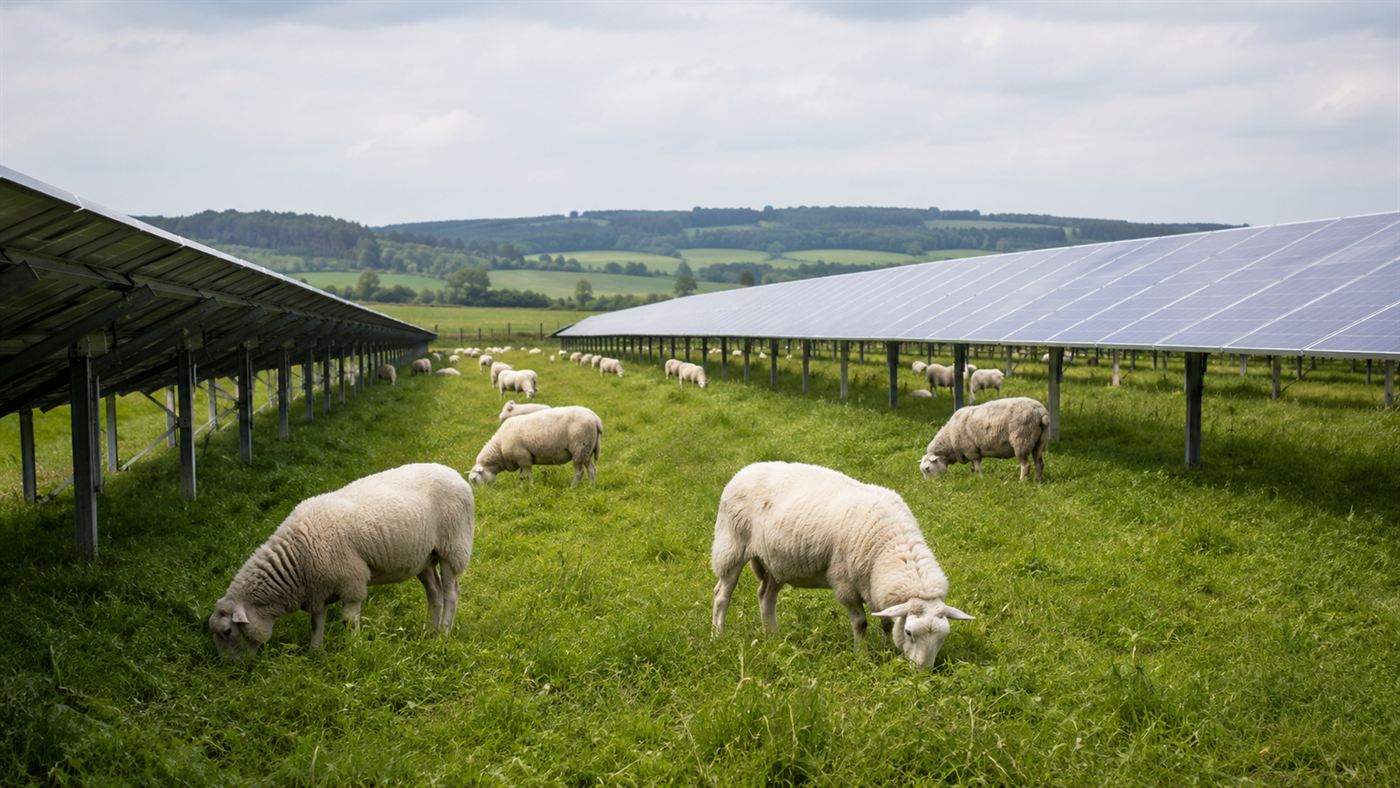
Crops are the tricky, headline-grabbing side of agrivoltaics, but the easy win is animals. Every solar farm has to keep the grass and weeds under its panels from growing up and shading the cells, and the usual answer is fleets of mowers and herbicide. A cheaper, older tool works better: sheep. In the fast-growing practice of solar grazing, flocks are turned loose among the panels to eat the vegetation down, fertilizing the soil as they go.
The arrangement suits everyone. The solar operator gets its grounds trimmed for less than the cost of mowing, the panels stay clear, and a shepherd gets free, shaded pasture for the flock, with the animals sheltered from sun and hail by the very panels they tend. A whole trade group, the American Solar Grazing Association, has sprung up to connect graziers with solar sites, and sheep now work under panels from Texas to New York. It is the simplest form of dual-use solar there is.
Why does agrivoltaics matter now?
The timing is not an accident. Solar is being built faster than ever, and it is hungry for flat, open, sunny land, exactly the ground that also makes good farmland. That collision has sparked real fights in rural communities that do not want to watch their fields vanish under glass. Agrivoltaics offers a way out of the zero-sum framing, letting a county add clean power without subtracting a farm.
It lands at a moment when farmers are also desperate for tools against a harsher climate, with hotter summers and tighter water. A system that shades crops, saves irrigation, and pays the landowner a second income from electricity is not just an environmental nicety, it is a hedge against drought and thin margins. Backed by federal research through the Department of Energy, the field is moving from a handful of demonstration plots toward something a mainstream farm might adopt, a cousin to other clever ways of squeezing two jobs from one place, like the balancing act at California's contested farmland.
The honest catch
Before anyone declares the food-versus-energy war over, the limits deserve their due. Agrivoltaics is not free lunch for every crop. The plants that thrive are mostly shade-tolerant ones like leafy greens, berries, and certain vegetables, while the tall, sun-hungry staples that feed the world, corn, wheat, soybeans, generally produce less in the shade, so this will not cover a Midwest grain belt. And the panels themselves cost more, because raising them high and spacing them for tractors and sunlight uses more steel and land than a bare solar field.
There are practical headaches too, from working machinery around panel posts to the simple fact that it is still a young, niche practice making up a tiny slice of solar. The economics often only pencil out with the right crop, the right climate, or a helping subsidy. But none of that erases the core discovery, which is genuinely hopeful: on the right land, with the right plants, we do not actually have to choose between feeding people and powering them. Sometimes the sun is big enough to do both.
It turns out a field can grow food and electricity at the same time, and on hot, dry land the crops may even prefer it. Would you rather see new solar farms built on bare land, or on working farms that keep growing food underneath the panels? Tell us what you think in the comments.
Related reading: The plan to roof America's canals with solar panels to save water and make power at once.
More from Watts & Wild
More in Energy →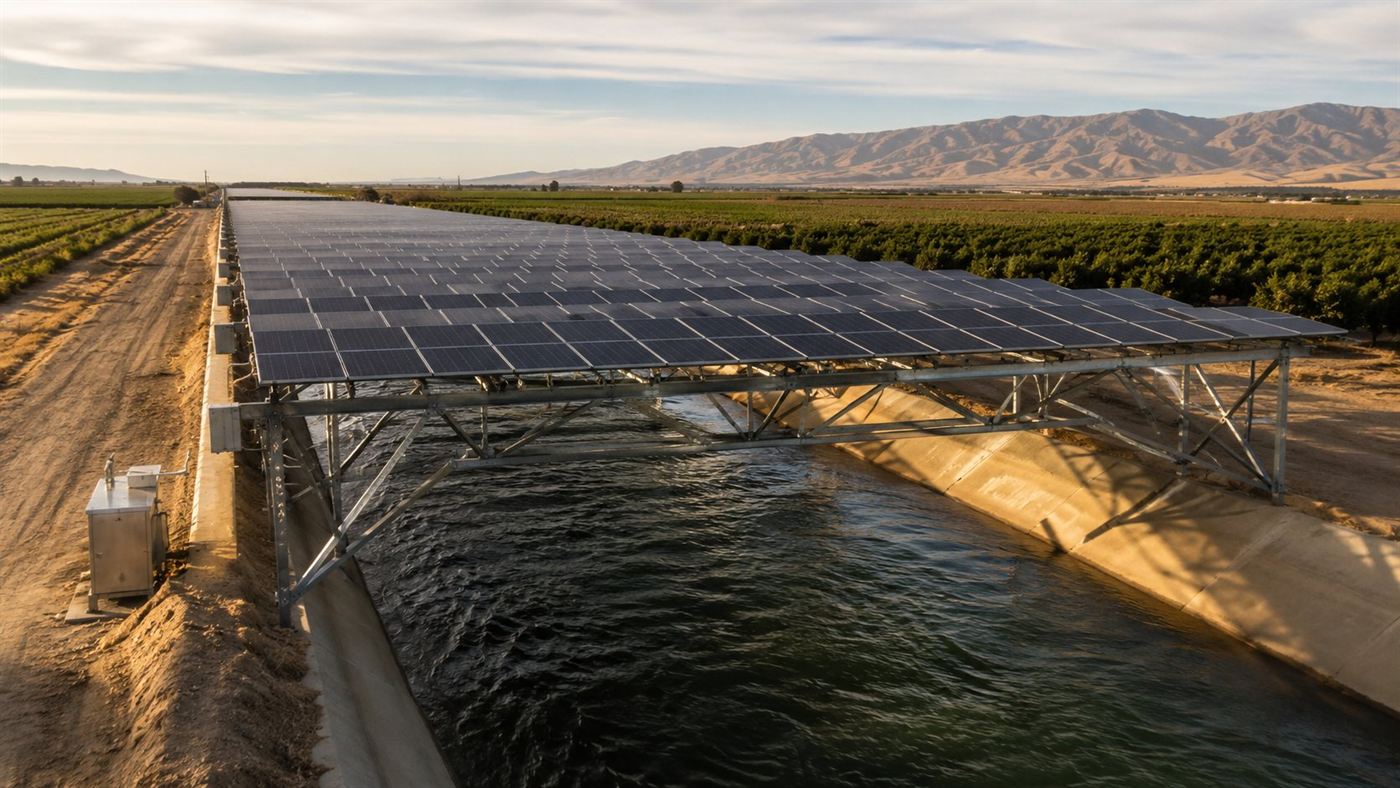

Maria covers heavy industry, mega-builds, and the clever ways energy and the land are learning to share, for Watts & Wild.