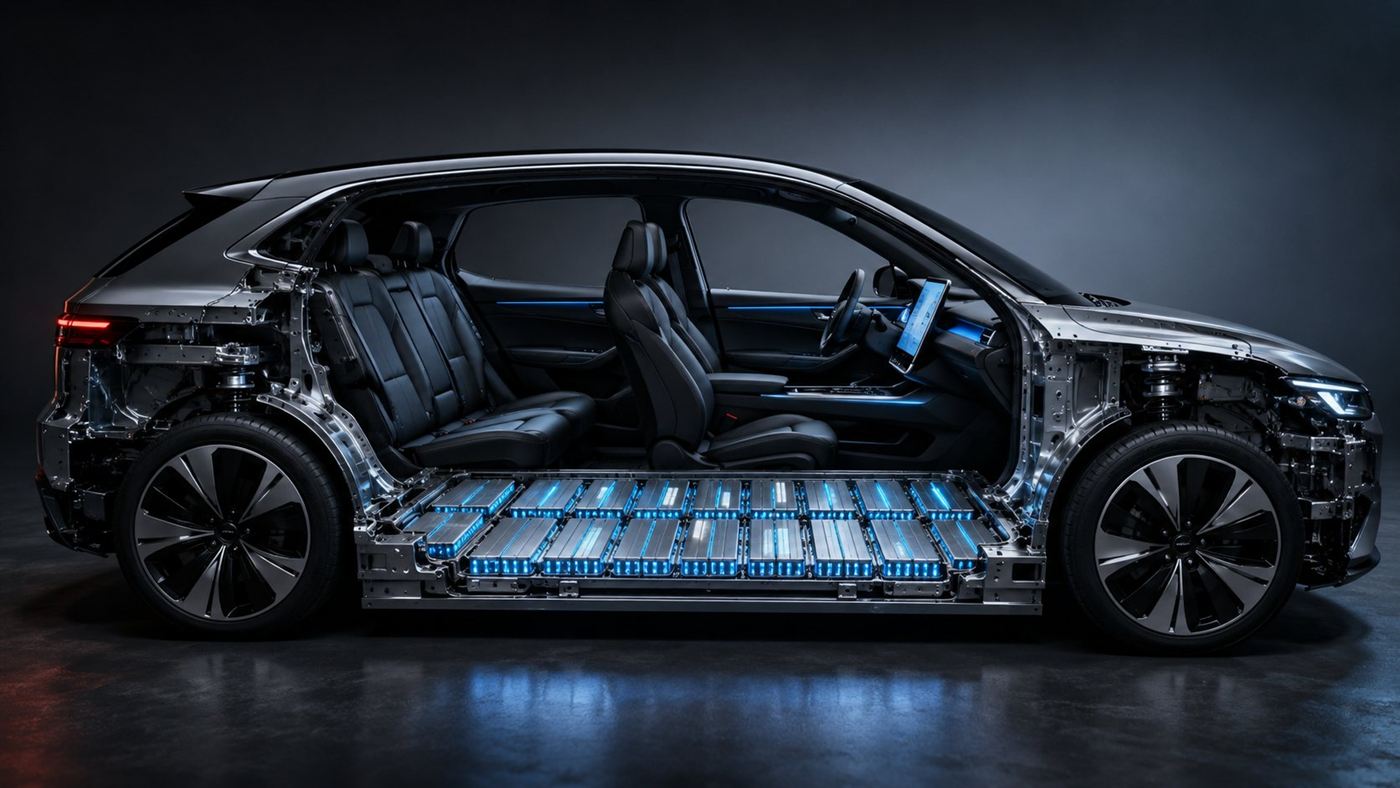
An electric car's biggest weakness is stopping to charge, so a street in Detroit now charges vehicles wirelessly as they drive over it, sending power up through copper coils buried under the asphalt
Almost everything people dislike about electric cars comes down to one thing: the wait. You can fill a petrol tank in five minutes, but charging a battery means stopping, plugging in, and killing time. On a short stretch of road in Detroit, engineers are testing a way to delete that problem entirely with a wireless charging road, turning the road itself into the charger and never asking the car to stop at all.
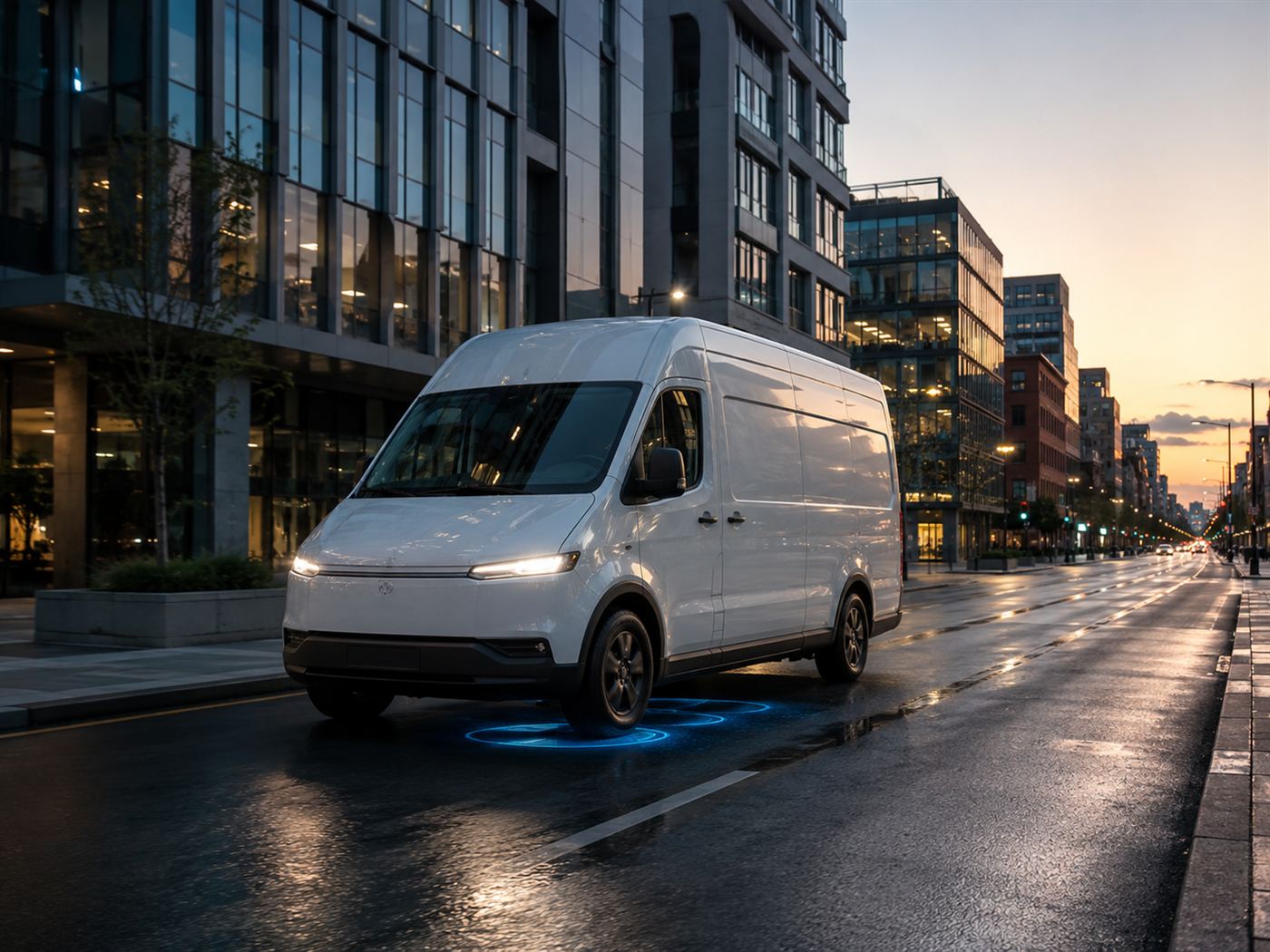
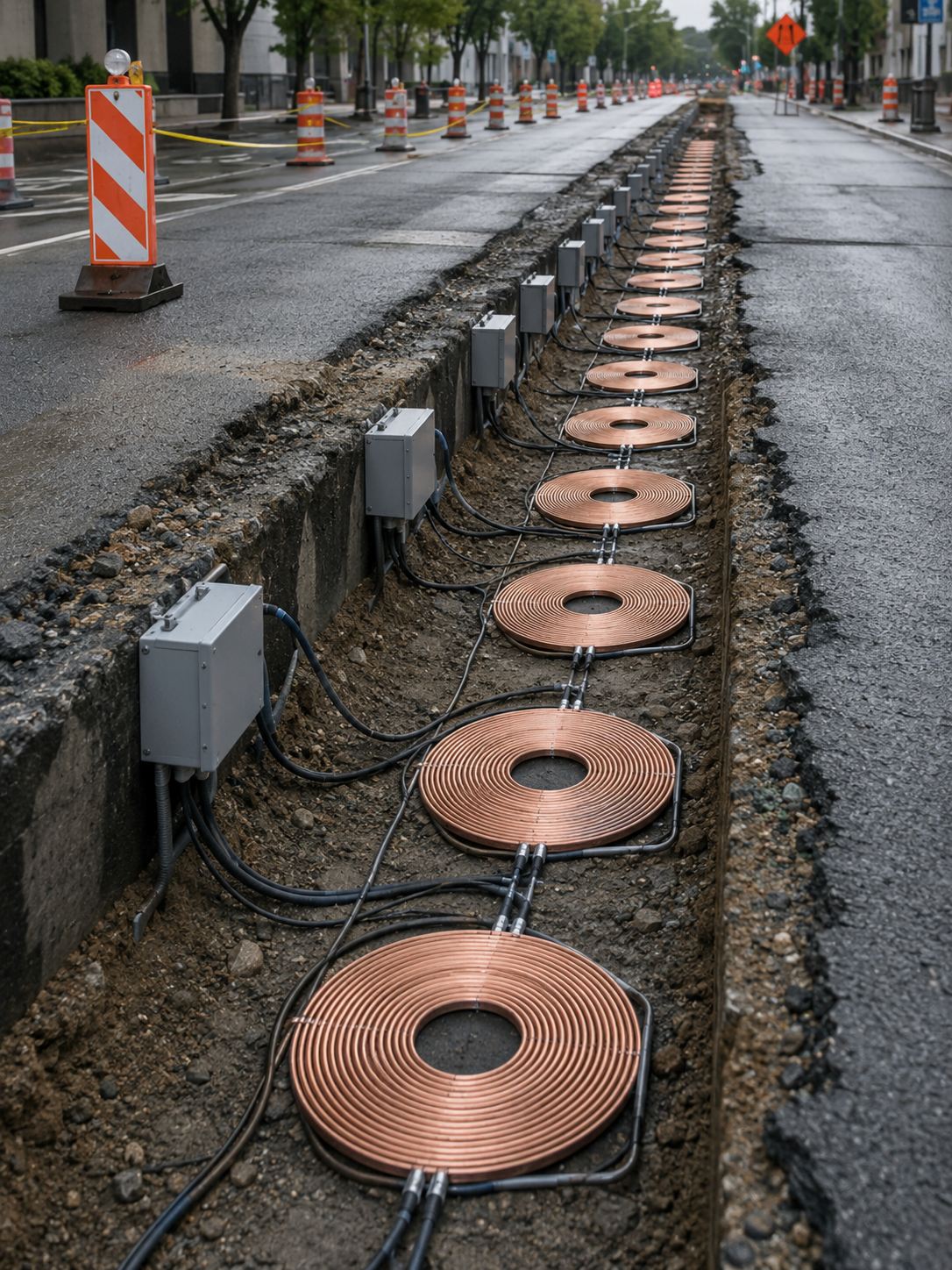
On a Detroit street, coils under the asphalt charge an electric vehicle as it drives. Illustration: Watts & Wild.
The idea sounds like science fiction, but the physics is over a century old. It is the same trick that charges an electric toothbrush on its stand or a phone on a wireless pad: magnetic induction. Run an alternating current through a coil and it throws out a magnetic field; put a second coil in that field and the field pushes a current through it. No wires need to touch. The two coils just have to be close.
Now take that toothbrush charger and bury a long line of those coils under a road, with the matching coil bolted to the underside of a vehicle. As the City of Detroit announced, a quarter-mile of 14th Street has become the first public roadway in the United States that can charge electric vehicles wirelessly while they are moving, built with technology from the company Electreon. Drive over it and the road quietly tops up your battery, no cable, no stop, nothing for the driver to do.
How a road charges a moving car
Underneath the surface sits a series of copper coils wired back to the electricity grid. The system is smart enough to stay asleep until it senses an equipped vehicle passing overhead, then it wakes the coils directly beneath that vehicle and pours energy upward into the receiver under the car. As the vehicle rolls forward, the road hands it off from one coil to the next, like a relay, keeping the power flowing the whole way along the strip.
Because only the coils right under a car ever switch on, the road is not wasting energy lighting up empty asphalt, and there is nothing exposed on the surface for pedestrians or weather to worry about. From the street it looks like completely ordinary tarmac. The magic, quite literally, is underground.
Why bother, when chargers exist
Plug-in chargers already work, so why dig up a road? The answer is that charging while moving changes the maths of an electric vehicle completely. If a car or bus sips power continuously as it drives, it never needs to carry a huge, heavy, expensive battery for range, because it is rarely far from its next top-up. A smaller battery means a lighter, cheaper, cleaner vehicle.
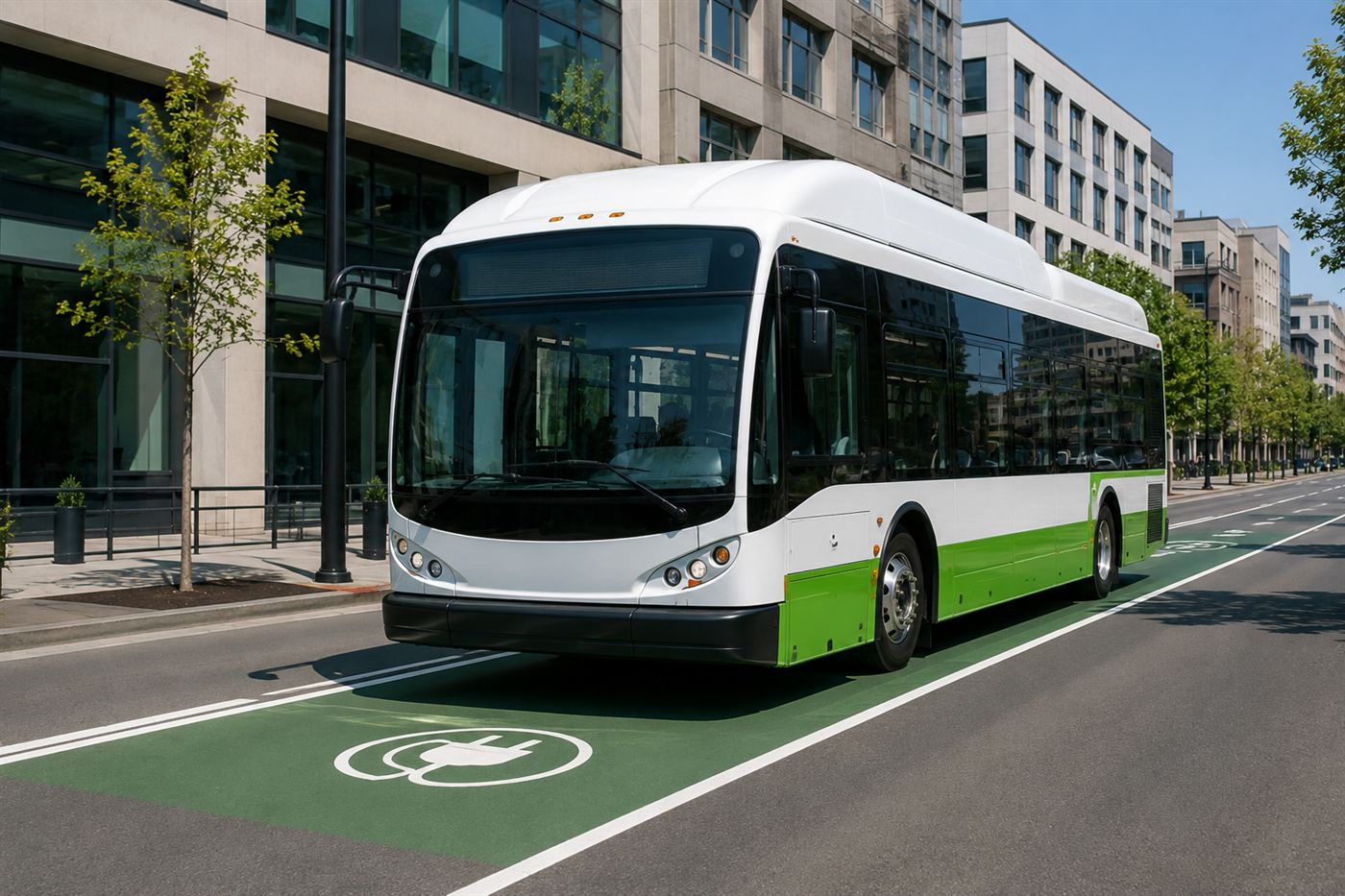
That logic is strongest not for private cars but for vehicles that run the same route all day. As Electreon describes its own deployments, the technology is already being used to power buses and freight trucks on fixed routes in Europe, where a bus that charges a little on every lap of its line can run all day without ever pulling over to plug in. Detroit is testing exactly this with delivery vans, the kind that crawl the same city blocks hour after hour.
The fleets that go first
This is why the early adopters are not commuters but delivery and transit fleets. A parcel company running electric vans out of a depot, a city running electric buses on set lines, a shuttle looping the same campus: all of them spend their day on predictable, repeated routes, which is precisely where a charging road earns its keep. Equip a depot lane or a bus route, and the vehicles drink as they work and almost never sit idle on a charger.
The list of trials is growing for exactly that reason. Beyond Detroit, the same kind of in-road charging is being tested on bus and truck routes in Europe and lined up for shuttle fleets elsewhere, including plans tied to the Los Angeles 2028 Olympics. None of it is about magically charging your own car on the motorway tomorrow; it is about quietly electrifying the workhorse vehicles whose routes we already know by heart.
The honest catch
It would be easy to get carried away, so here is the cold water. These projects are still small, measured in hundreds of metres, not the thousands of kilometres of road a country actually has. Wiring coils under a road is expensive and disruptive, far more so than bolting a charger to a kerb, and it only pays off where enough equipped vehicles will use it for years. Sending power through an air gap also loses a little more energy than a direct cable does.
So nobody serious is claiming charging roads will pave the planet or kill the ordinary charging station. The realistic future is targeted: a bus lane here, a depot road there, a stretch of motorway where electric trucks grind up a long hill. Used like that, in the right places, a charging road is not a gimmick. It is a way to shrink the batteries and erase the downtime of the vehicles that work the hardest.
Why a wireless charging road matters
Step back and the appeal is obvious. The single biggest complaint about going electric is the friction of charging, the planning, the waiting, the range anxiety. A road that charges you as you drive does not patch that problem, it dissolves it, by making the refuelling invisible and continuous instead of an event you have to schedule your life around.
Detroit, of all places, makes a fitting test bed. The city that put the world on wheels and built its identity around the petrol engine is now burying the future of the electric one beneath its streets. It is only a quarter of a mile today, an experiment more than a revolution, but it hints at a world where the most boring part of driving electric simply disappears into the road.
A street that fills your battery while you drive sounds like the end of range anxiety, but it only pays off in the right places. Would you want whole motorways rebuilt to charge cars in motion, or is this only ever going to make sense for buses and delivery fleets on fixed routes? Tell us what you think in the comments.
Related reading: BYD's new megawatt platform charges an EV with about 400 km of range in just 5 minutes at a record 1,000 kW, roughly as fast as a petrol fill-up.