A new kind of thermal battery stores cheap renewable electricity by heating blocks of carbon until they glow white-hot, hotter than lava, then turns that light back into power
Heavy industry runs on heat, and most of that heat still comes from burning fuel. A thermal battery offers another way: use cheap solar and wind power to heat blocks of carbon until they glow white-hot, store the energy as that heat, and release it again as heat or electricity on demand.
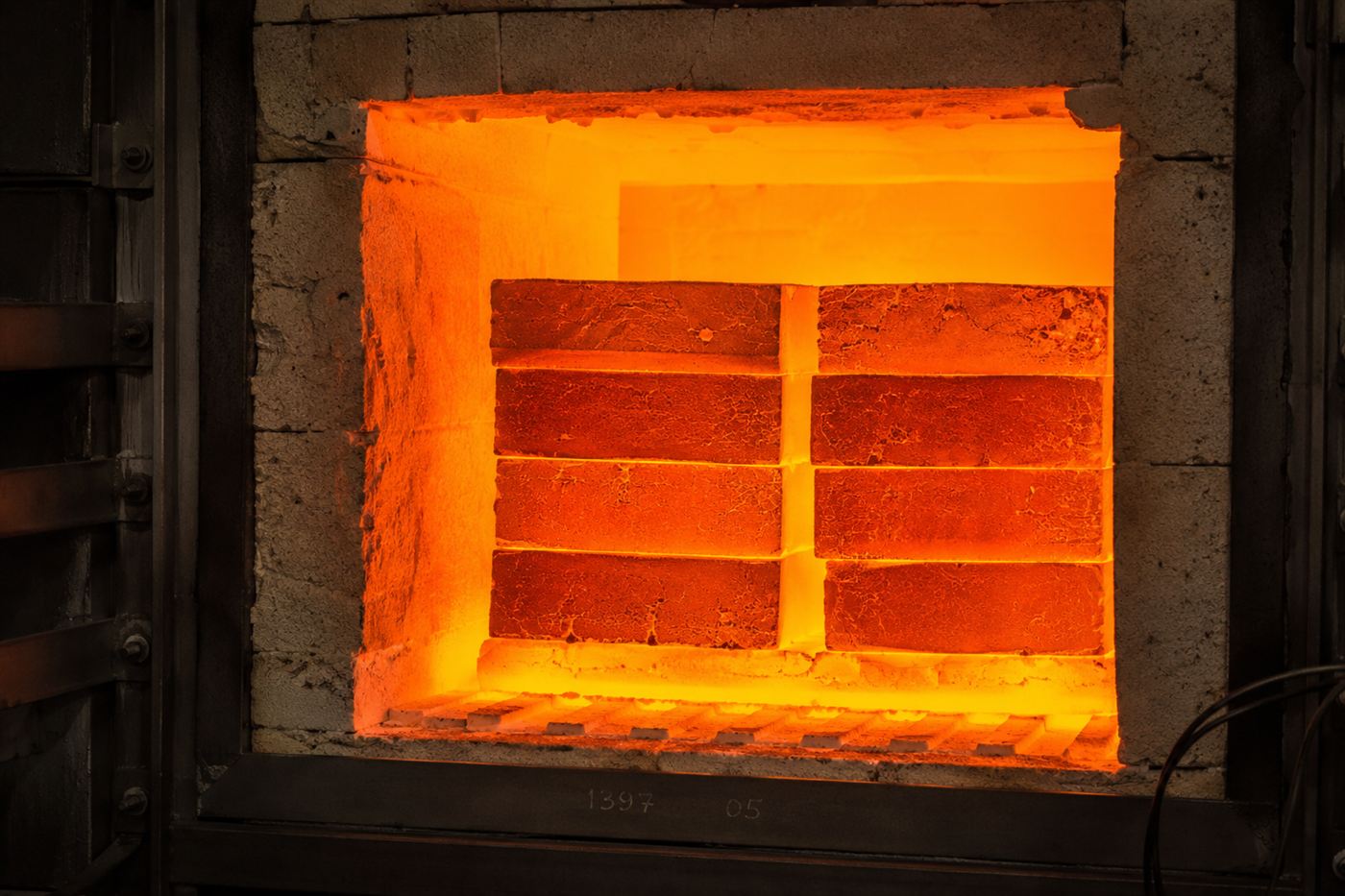
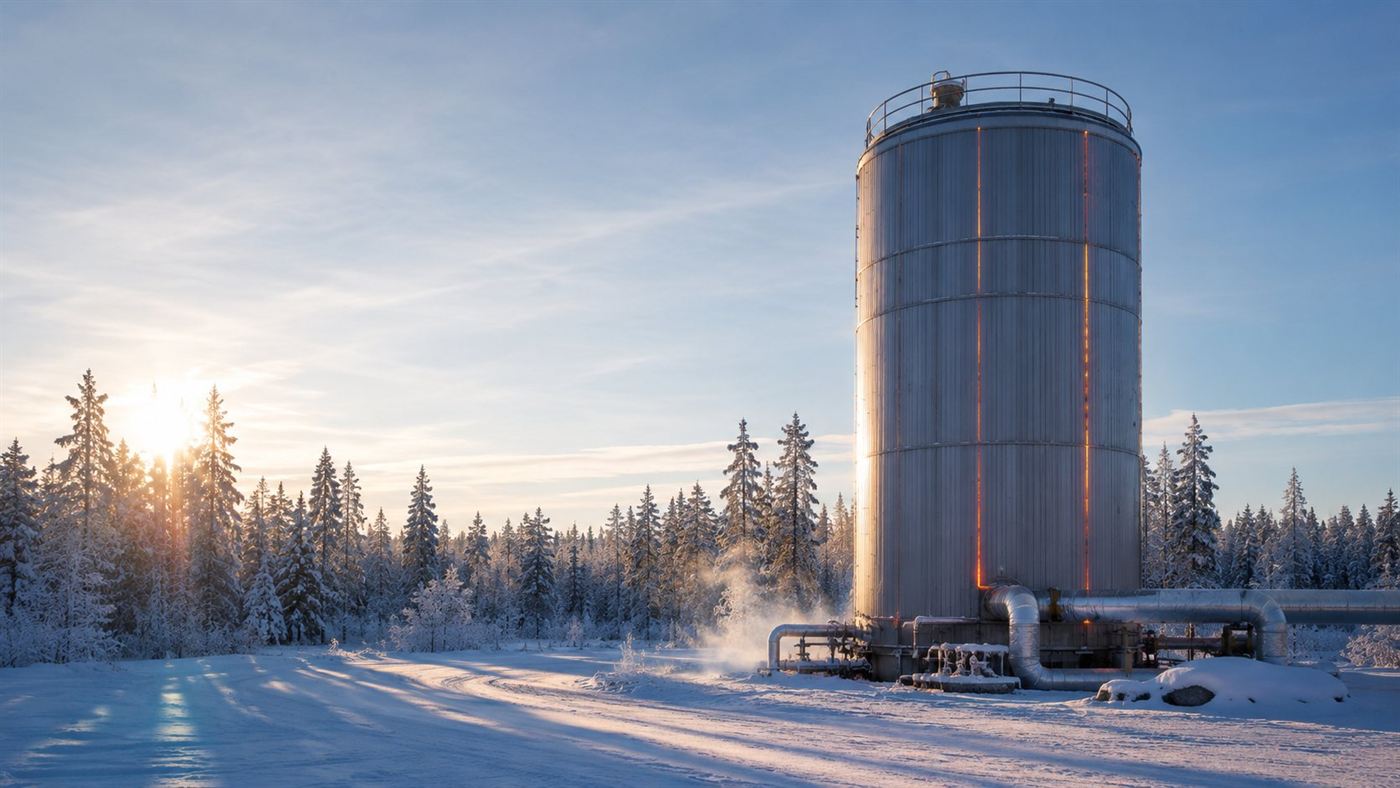
Inside a thermal battery, blocks of carbon glow white-hot, storing energy as heat. Illustration: Watts & Wild.
A thermal battery does something a normal battery cannot. A lithium battery, like the one in your phone, stores energy as chemistry, shuffling particles between two electrodes. This new kind of battery does something far blunter and, in its way, far older: it stores energy simply by getting hot. Run cheap electricity from solar panels or wind turbines into a stack of ordinary carbon blocks, and they heat up, and up, until they are glowing white-hot, holding a huge amount of energy as nothing more than heat.
The idea is being built right now to tackle one of the dirtiest problems in the climate. As MIT reports of one company developing the technology, the carbon blocks are heated to temperatures above 1,800 degrees Celsius using renewable power, and that stored heat can then be used to run the furnaces of heavy industry without burning any fuel at all.
What is a thermal battery? A thermal battery stores electricity as heat. Cheap renewable power heats blocks of carbon to well over 1,800°C, until they glow white-hot, and the energy is held as that heat. It can later be released as high-temperature heat for industry, or turned back into electricity using special cells.
A thermal battery stores heat, not chemistry
The appeal of the thermal battery starts with what it is made of. Where a lithium battery depends on scarce, expensive metals, this one uses solid carbon, one of the cheapest, most abundant and most stable materials on Earth, the same basic stuff as graphite. And carbon has a wonderful quirk for this job: rather than weakening as it gets hotter, the way most materials do, it actually grows stronger, so it can be pushed to extraordinary temperatures without falling apart.
So the charging side is almost crude in its simplicity. When there is cheap, surplus renewable electricity on the grid, you pour it into the blocks and let them heat up. There are no delicate chemical reactions to manage, no rare elements to mine; you are just storing energy the way a brick stores the warmth of a fire, except taken to a furious extreme.
Blocks that glow hotter than lava
That extreme is the spectacular part. Charged up, the carbon inside a thermal battery reaches well over 1,800 degrees Celsius, and some designs aim for around 2,400. Molten lava glows orange at perhaps a thousand degrees; these blocks are far beyond that, shining a brilliant, blinding white, closer to the colour of the sun than of any fire. It is, quite literally, like keeping a small piece of a star in an insulated box, packed with energy and waiting.
Holding that heat is mainly a matter of insulation. Wrap the glowing blocks in enough of the right material and they cool only slowly, so the battery can sit fully charged for hours or days, ready to give its heat back whenever it is needed.
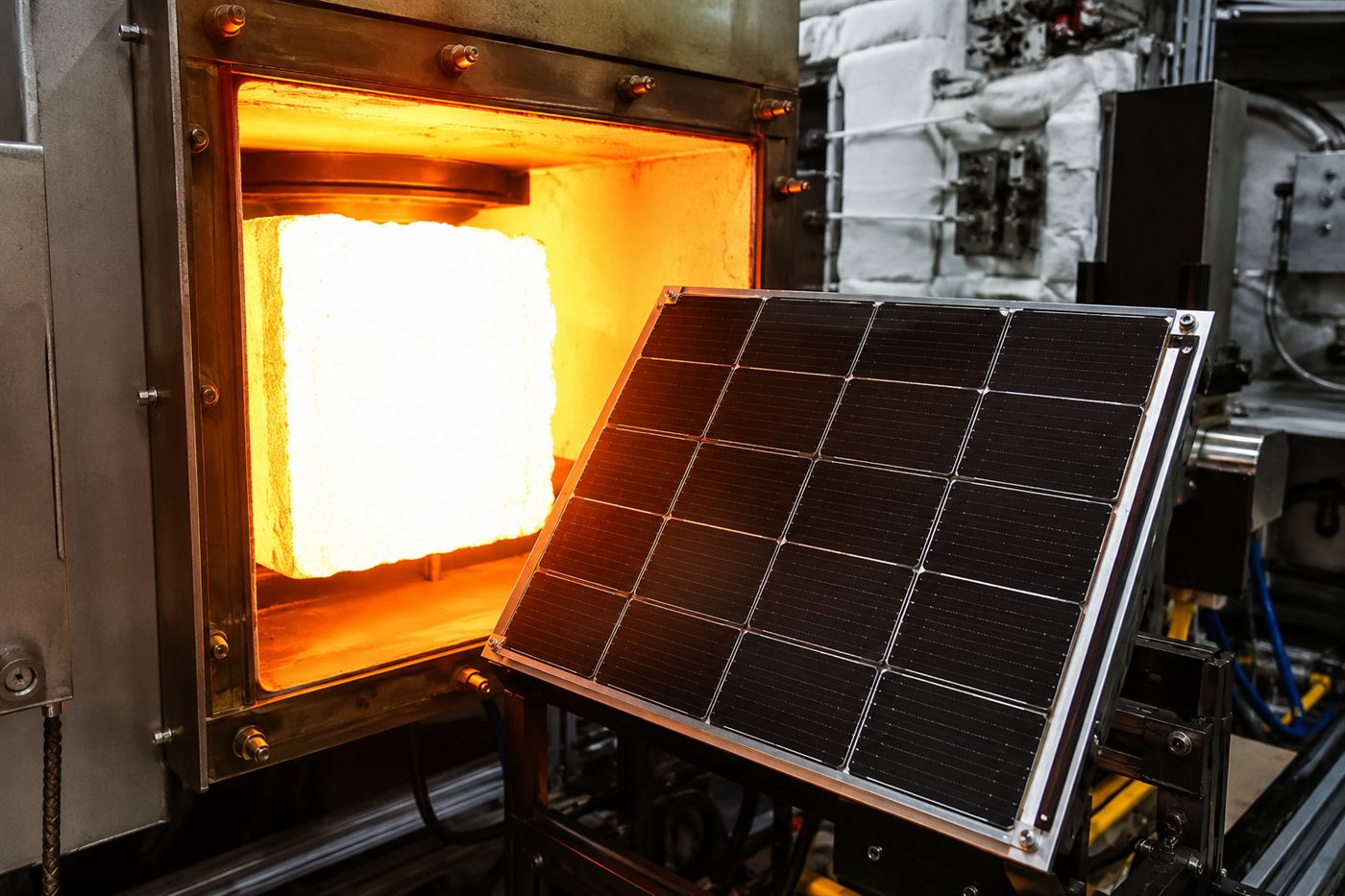
Anti-solar panels: getting the power back
If you want electricity back out of a thermal battery, there is a beautifully neat way to do it. A solar panel makes electricity from the light of the sun; here, engineers use a close cousin called a thermophotovoltaic cell, tuned to capture not sunlight but the infrared glow pouring off the white-hot carbon. Open a shutter in the insulation, let the radiance fall on banks of these cells, and electricity flows within seconds, with no turbines, no steam and no moving parts at all. Researchers have already pushed these cells past 40 percent efficiency at the highest temperatures, comparable to a conventional power station's turbine, which is remarkable for a slab of semiconductor staring at a glowing brick.
Why industry is the real prize
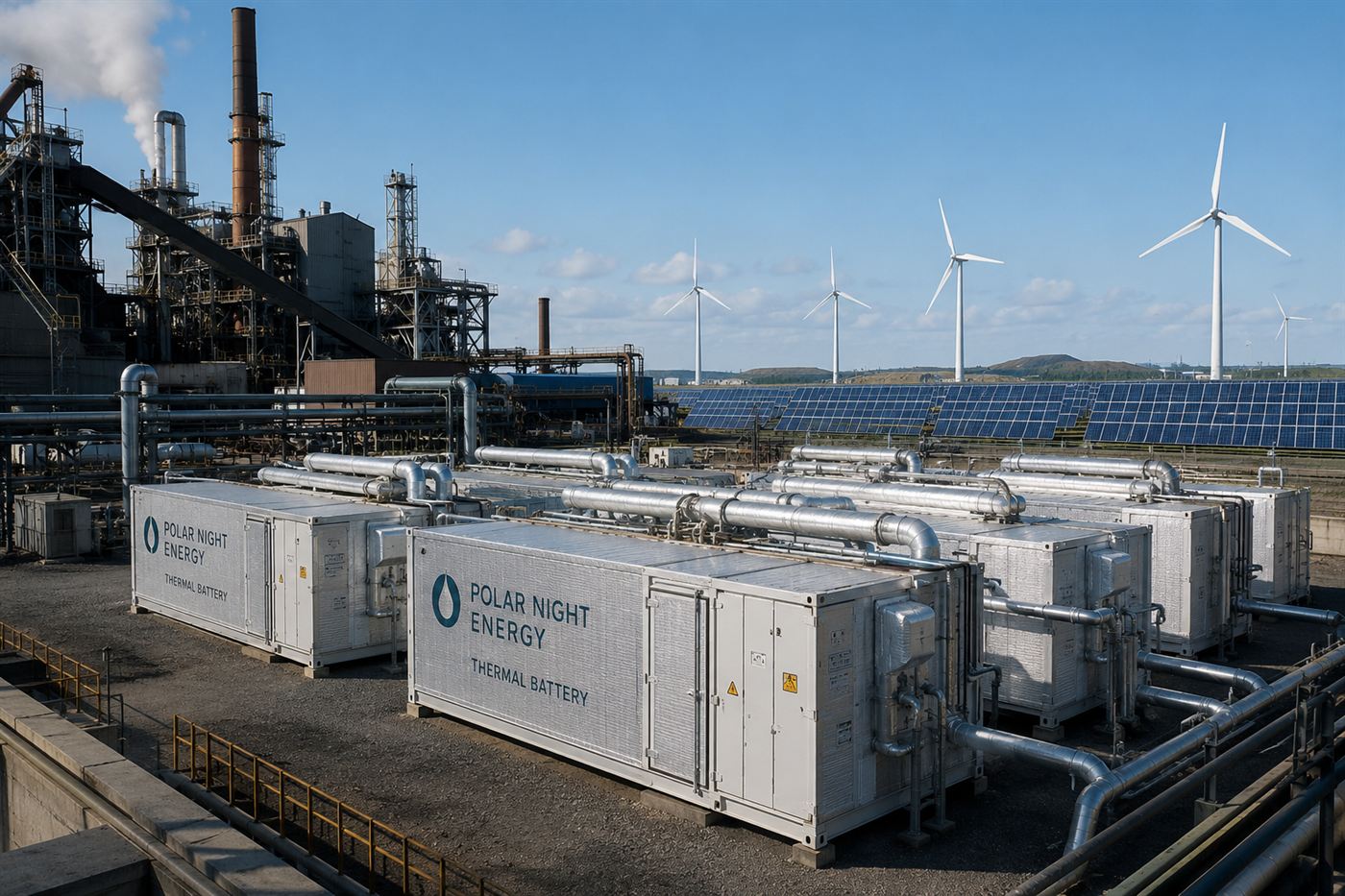
It is tempting to think of the thermal battery mainly as a way to store electricity, but its biggest value lies elsewhere. A vast share of the world's energy, and its emissions, goes not into electricity but into industrial heat: the furnaces that make steel, cement, glass, chemicals and food, almost all of them fired today by burning gas, coal or oil. That heat is one of the hardest things in the whole economy to clean up. A thermal battery attacks it directly, soaking up cheap solar power by day and pouring out searing, fuel-free heat around the clock, exactly the high temperatures those factories need. Turning the stored heat back into electricity is the clever party trick; replacing the furnace's fire is the real job.
From a lab to a factory
The thermal battery has moved quickly from idea to hardware. Much of the underlying science came out of university laboratories, including the record-setting work on those high-temperature cells, and a handful of companies are now building real units, some using solid carbon blocks, others pumping liquid metal through them to move the heat around. The concept has even earned a nickname, the "sun in a box", for the way it bottles up energy as light and heat the way the sun does. First commercial systems are beginning to appear at industrial sites, aimed squarely at factories that want to keep their furnaces hot without keeping a flame burning.
The honest catch
The thermal battery is not a universal answer, and it is important to be clear why. If you measure it purely as a way to store electricity and give electricity back, it is fairly inefficient, losing roughly half the energy on the round trip, far worse than a lithium battery that returns about ninety percent. So it is the wrong tool for smoothing the household grid minute by minute. It is also still young, with only the first commercial units going in, and unproven at the enormous scale that heavy industry would eventually demand.
But judged on its real purpose, the picture changes completely. Delivering vast amounts of clean, high-temperature heat is something batteries simply cannot do, and it is one of the largest unsolved pieces of the climate puzzle. A device that can store cheap sunshine as white-hot heat in blocks of the cheapest material going, and pour it back into a furnace whenever it is wanted, is aimed at exactly that gap. The thermal battery may never power your phone, but it could quietly help take the fire out of making the modern world.
A battery that stores power by glowing hotter than lava, to keep a steel furnace fed on sunshine. Storing energy as cold air, as rust, as squeezed air or as white-hot heat, which idea convinces you most? Tell us in the comments.
Related reading: Finland's sand battery, a gentler way of storing energy as heat.