Compressed air energy storage banks surplus electricity by pumping air into vast underground salt caverns, then lets it rush back out through a turbine when the grid runs short
One way to store electricity is to squeeze air. Compressed air energy storage uses spare power to pump air into a giant cavern dissolved out of an underground salt bed, then releases it to spin a turbine when demand rises. The first plant has been doing this since 1978.
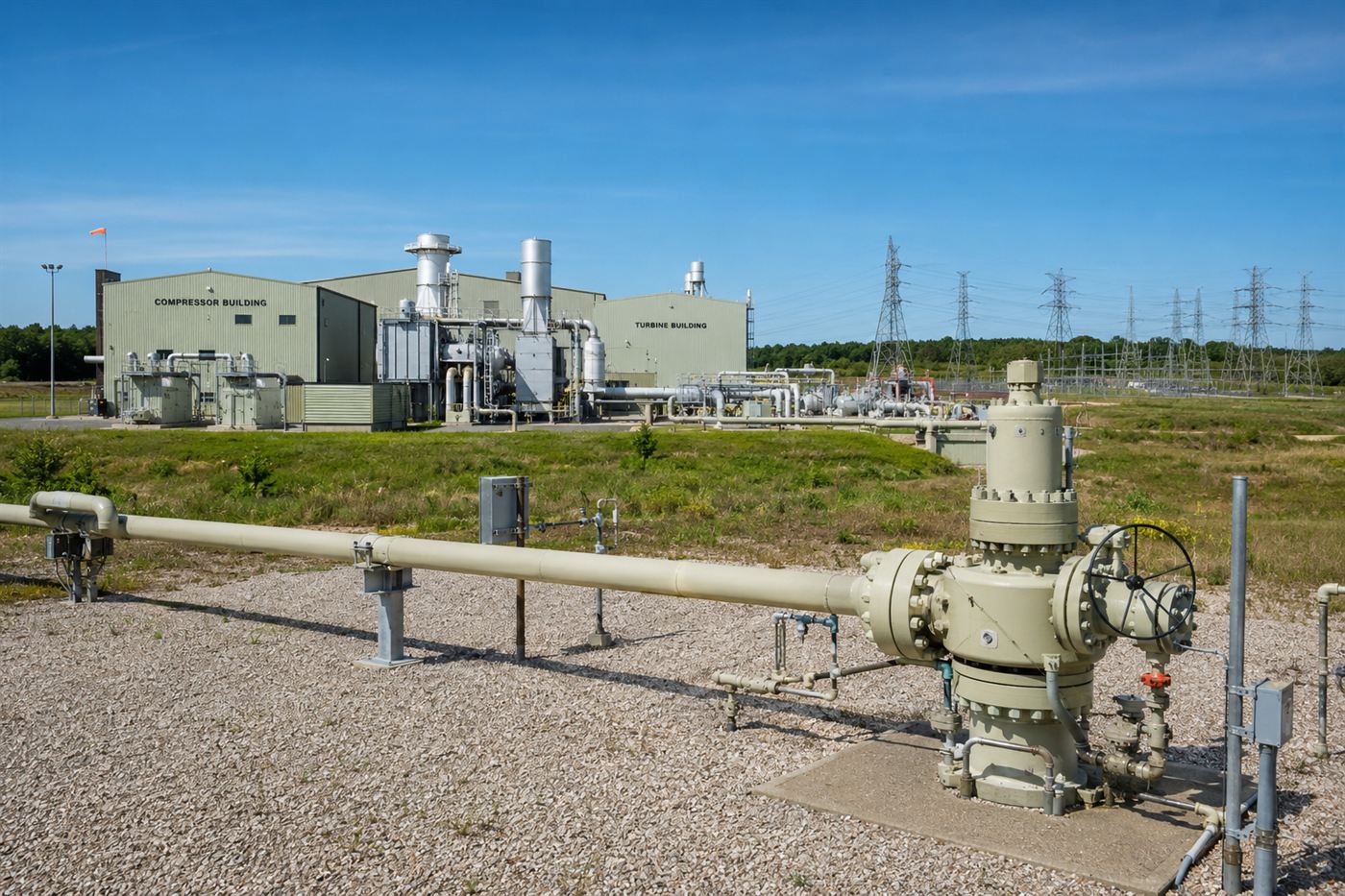
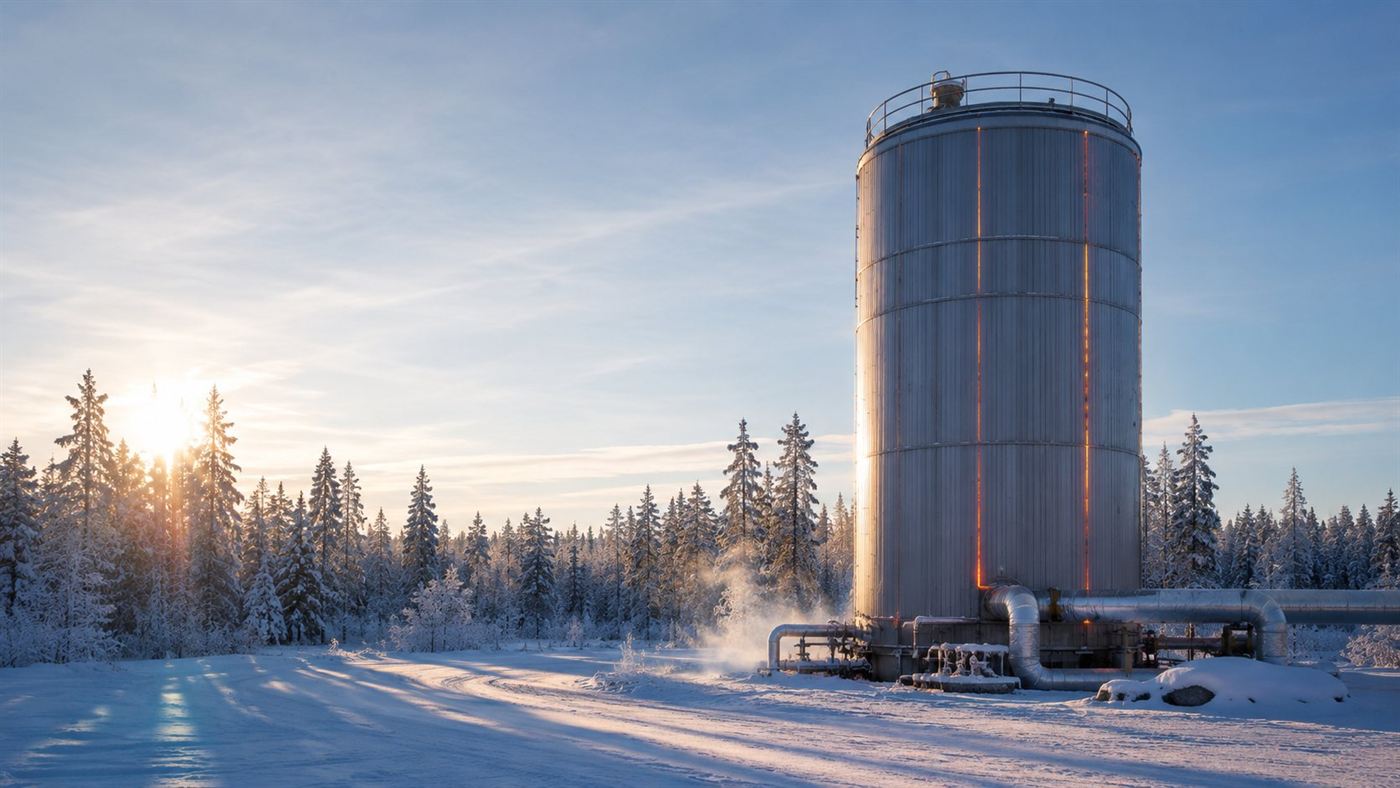
A compressed air energy storage plant stores power as pressurised air in a cavern far below. Illustration: Watts & Wild.
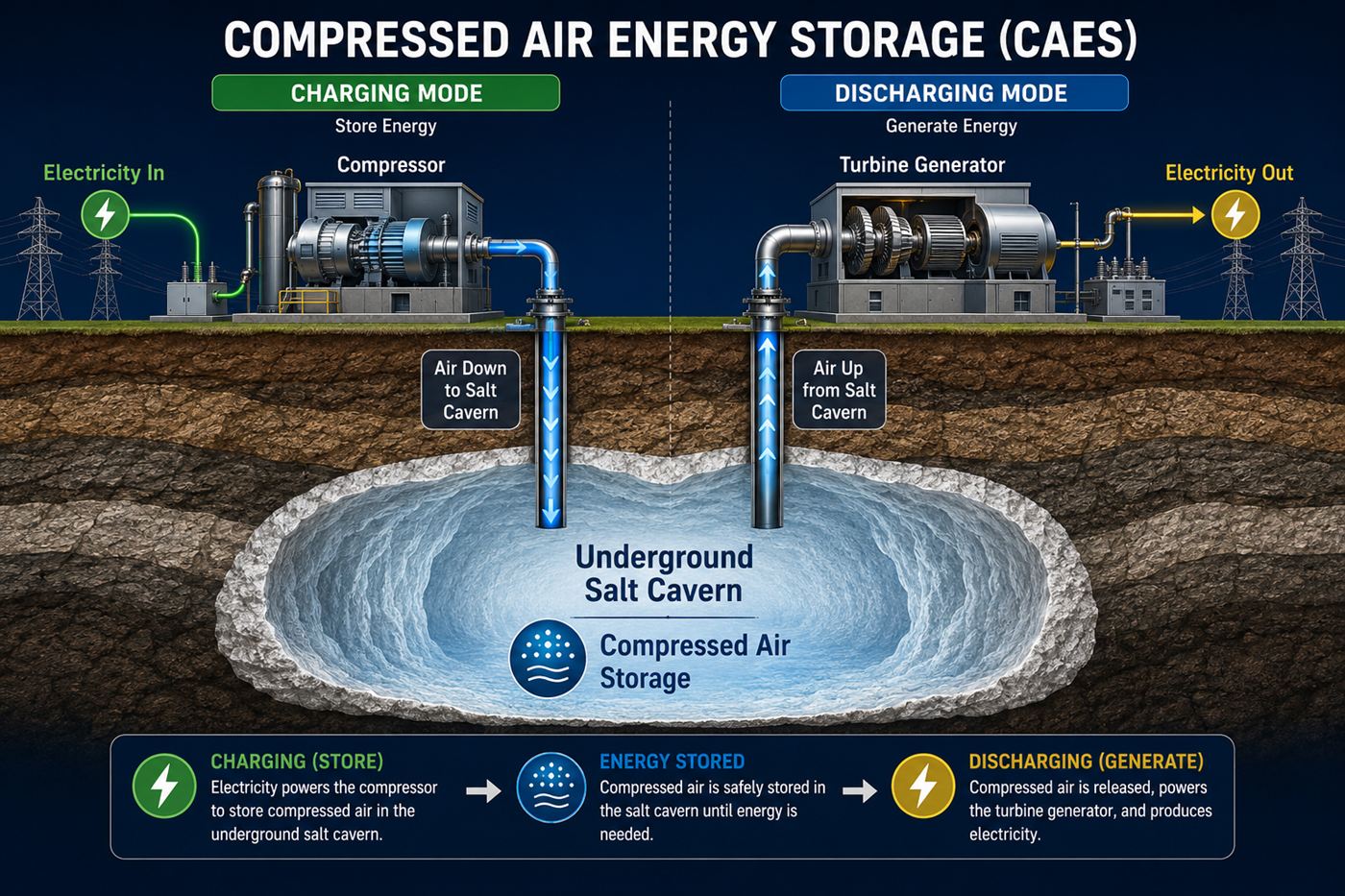
Compressed air energy storage is one of the oldest ideas for storing electricity at large scale, and one of the simplest to describe. When there is spare power on the grid, you use it to run big compressors that squeeze air to high pressure and force it down into a sealed underground space. The air waits there, packed tight, until the grid needs energy back. Then you let it go, and the air rushing out of its cavern is aimed through a turbine, spinning a generator and returning electricity to the wires.
It sounds almost too plain to work, but it has been working for decades. As the technology is documented, the world's first such plant was built at Huntorf in Germany in 1978, and it is still part of the grid. The clever, and tricky, parts are where you keep all that air, and what happens to the heat.
What is compressed air energy storage? Compressed air energy storage uses surplus electricity to compress air and pump it into an underground cavern, usually a salt cavern. When power is needed, the air is released and expands through a turbine to generate electricity. The first plant opened in Germany in 1978.
Compressed air energy storage, power as squeezed air
The appeal of compressed air energy storage is much the same as the appeal of pumped hydro or a tank of liquid air: it can hold a large amount of energy for a long time using cheap, abundant materials rather than scarce metals. There is no lithium to mine and no battery chemistry to wear out, just air, machinery and a big hole in the ground. For balancing a grid full of wind and solar over many hours, that durability and low cost are exactly what is wanted.
The challenge is that air, even squeezed hard, does not pack energy very densely, so you need an enormous volume to store a useful amount. Building a tank that big at the surface would be absurd. The answer is to let the earth provide the container.
A cave dissolved from salt
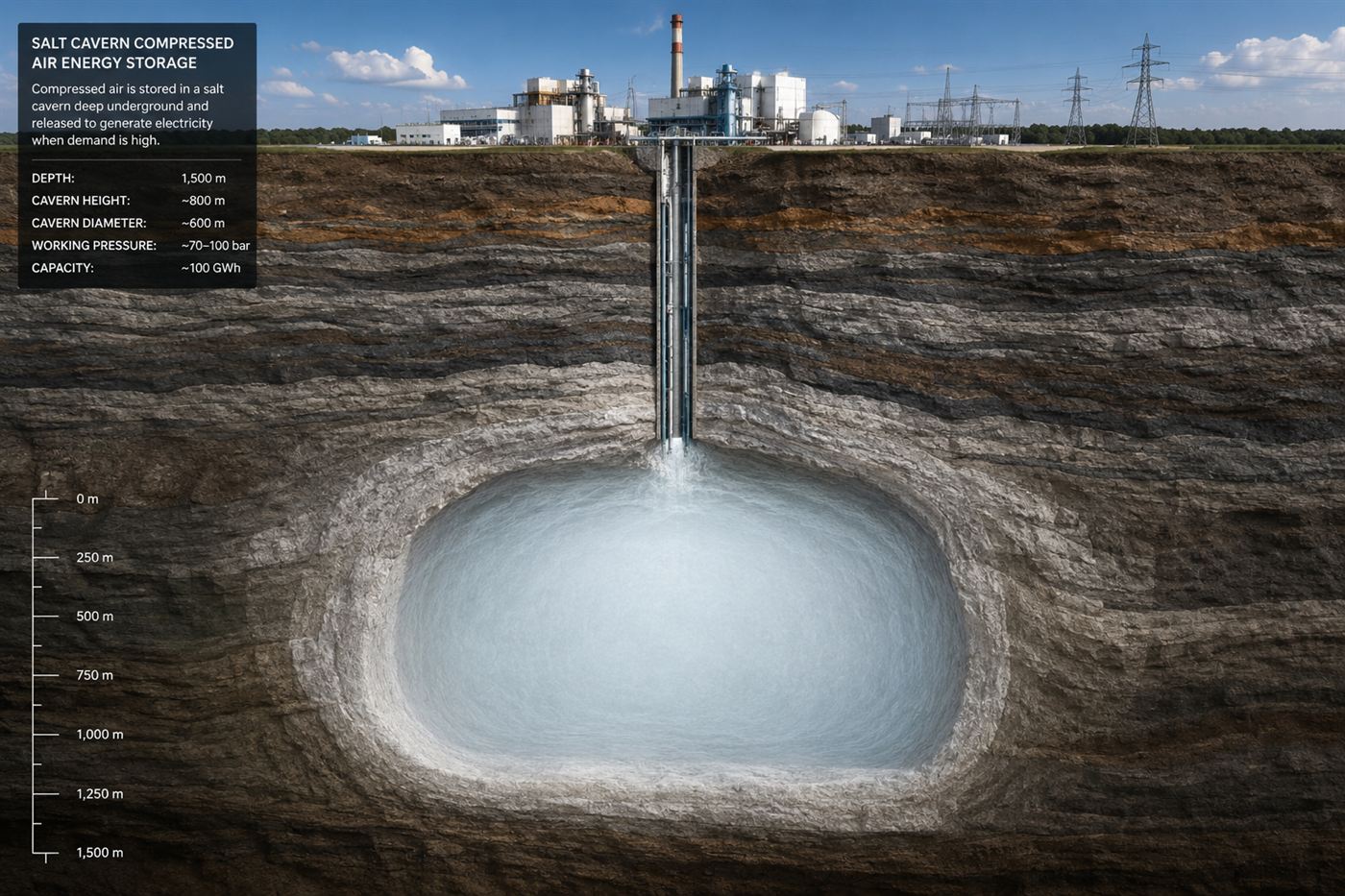
The favourite home for compressed air energy storage is a salt cavern, and the way these caverns are made is wonderfully neat. Deep underground beds of rock salt are common in many places, and to carve a cavity in one, engineers simply drill down and pump in water. The water dissolves the salt and is pumped back out as brine, slowly hollowing out a vast smooth chamber, a process called solution mining. The result can be hundreds of thousands of cubic metres of empty space, and salt has a useful habit: it is naturally gas-tight and tends to seal its own cracks, so it holds pressurised air without leaking.
Into a cavern like that, a plant can pump air at tens of times atmospheric pressure, banking a great deal of energy in a space that cost relatively little to create. The geology does the hardest part of the job.
Huntorf, the 1978 original
The proof that compressed air energy storage works sits in northern Germany. The Huntorf plant, switched on in 1978, was the first of its kind, rated at around 290 megawatts, storing its air in two solution-mined salt caverns of some 310,000 cubic metres between them. It was built to soak up cheap electricity at night and give it back during the day, and to help steady the grid. A second plant followed at McIntosh, in Alabama, in 1991, able to deliver around 110 megawatts for a remarkable 26 hours at a stretch.
These plants have run for decades, quietly proving the principle. But both share a compromise that stops the idea being as clean as it first sounds.
The catch: cold air and burnt gas
Here is the awkward physics at the heart of classic compressed air energy storage. Squeezing air heats it up, and in the old plants that heat is simply allowed to escape and is lost. Later, when the air is released and allowed to expand, the opposite happens: expanding air cools down sharply, and if you ran very cold air straight through a turbine it would perform poorly and could even freeze the works. So Huntorf and McIntosh do something that undercuts their green credentials: they burn natural gas to warm the air back up before it expands. That makes them only about 42 to 54 percent efficient, and not free of emissions.
Catching the heat: the modern revival
The fix is elegant, and it is reviving the whole field. The newer approach, called adiabatic compressed air energy storage, captures the heat produced during compression, stores it in a separate thermal store, and then feeds that same heat back into the air as it expands, instead of burning any gas. Done well, this pushes efficiency up toward 60 or 70 percent and removes the fuel entirely. The company Hydrostor built the first commercial plant of this kind in decades at Goderich, in Ontario, Canada, using a water-filled cavern to keep the air at steady pressure, and is now designing much larger versions. After forty years as a curiosity, squeezed-air storage is being taken seriously again.
The honest catch
A few limits are worth stating plainly. Compressed air energy storage needs the right geology, a suitable salt bed or other mineable rock, so it cannot be built just anywhere the way a battery can. The two long-running plants burn gas and are only middlingly efficient, and the clean adiabatic version, promising as it is, is still young, with very few full-scale plants actually operating. It also competes with cheaper, more flexible options, from lithium batteries to pumped hydro to liquid air.
But the core idea has a sturdy, unglamorous appeal that suits a renewable grid. It uses nothing rare, leans on geology that has been stable for millions of years, and has already proven it can run for decades. As the world looks for ways to store days of wind and solar power cheaply, an old trick, pumping air into a salt cave and letting it back out, is suddenly worth another look. Compressed air energy storage may yet have its best years ahead of it.
Storing the grid's spare power as air squeezed into a salt cave, then letting it blast back out to make electricity. Squeezed air, cold liquid air, rust or stacked weights, which way of storing power convinces you most? Tell us in the comments.
Related reading: Liquid air energy storage, which freezes the air instead of squeezing it.