The biggest battery in America is not made of lithium but of two lakes on a Virginia mountain, and the Bath County pumped storage plant has quietly powered millions for forty years
Everyone worries about how to store enough electricity for a clean grid, as if it were an unsolved problem. But since 1985, tucked in the Allegheny Mountains, the Bath County pumped storage station has been doing it at a scale no lithium battery comes close to, using nothing more exotic than water and gravity.
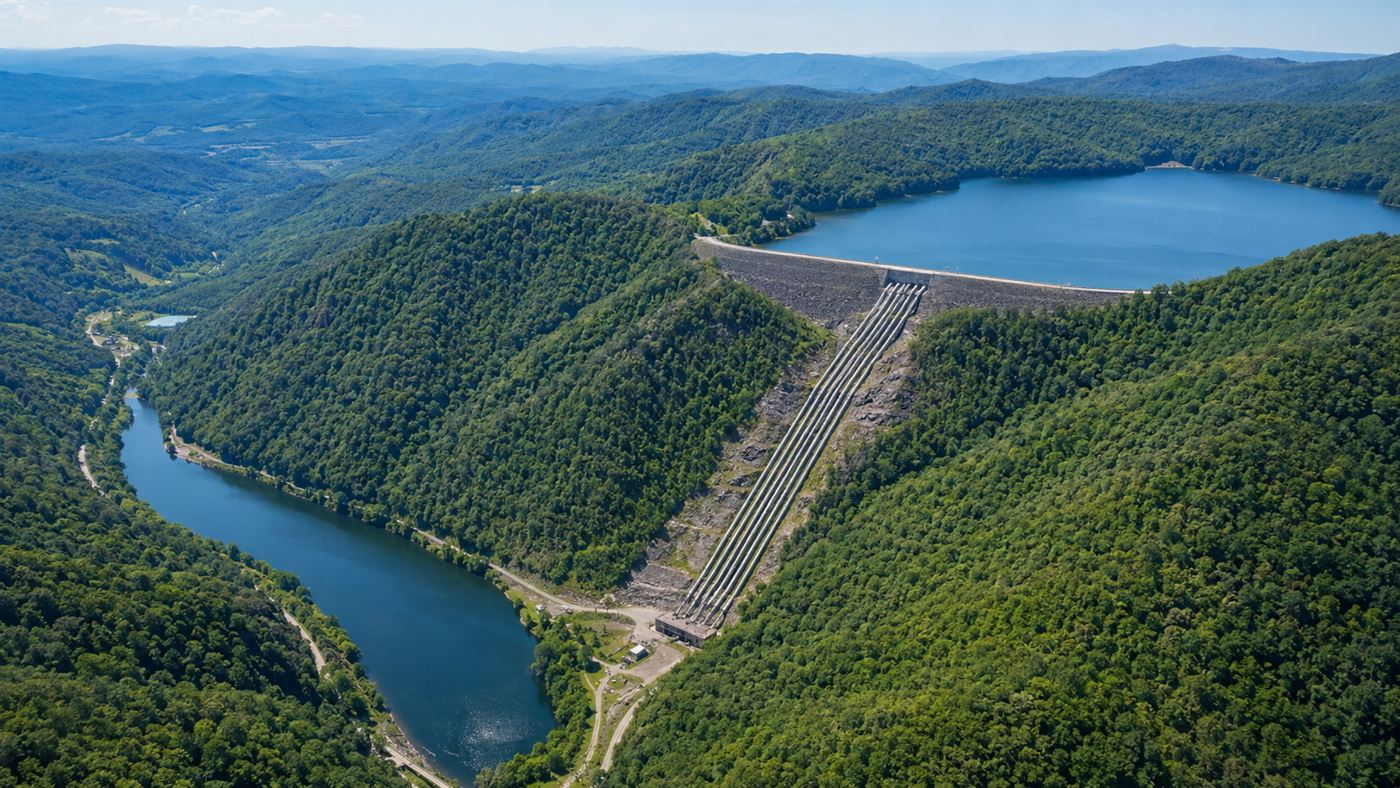
The Bath County plant's upper reservoir sits 1,260 feet above the lower, the heart of the world's biggest water battery. Illustration: Watts & Wild.
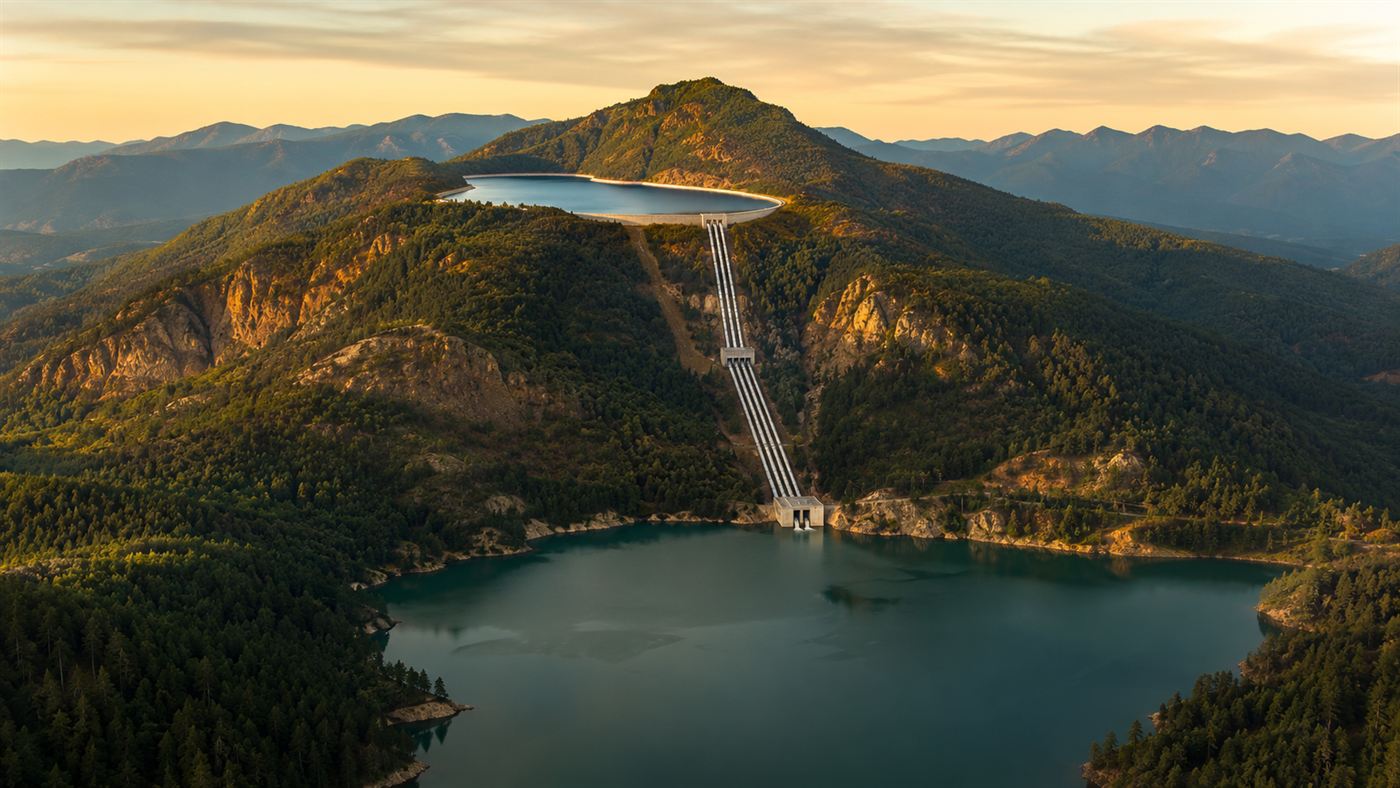
The Bath County pumped storage station in western Virginia does not look like a battery. It looks like two lakes, one perched near the top of a forested mountain and one in the valley below, separated by 1,260 feet of elevation. As the plant's record shows, it can generate about 3,000 megawatts and holds roughly 24,000 megawatt-hours of energy, a figure that dwarfs the biggest chemical battery farms on the planet. And it has been doing it quietly, safely, for forty years.
The short version: The Bath County Pumped Storage Station, opened in 1985, stores energy by pumping water from a lower reservoir up to a higher one when power is cheap, then releasing it back down through turbines when the grid needs it. It holds 24,000 MWh, was the world's largest pumped-storage plant until 2021, and remains the biggest energy store in the US.
How the Bath County pumped storage works
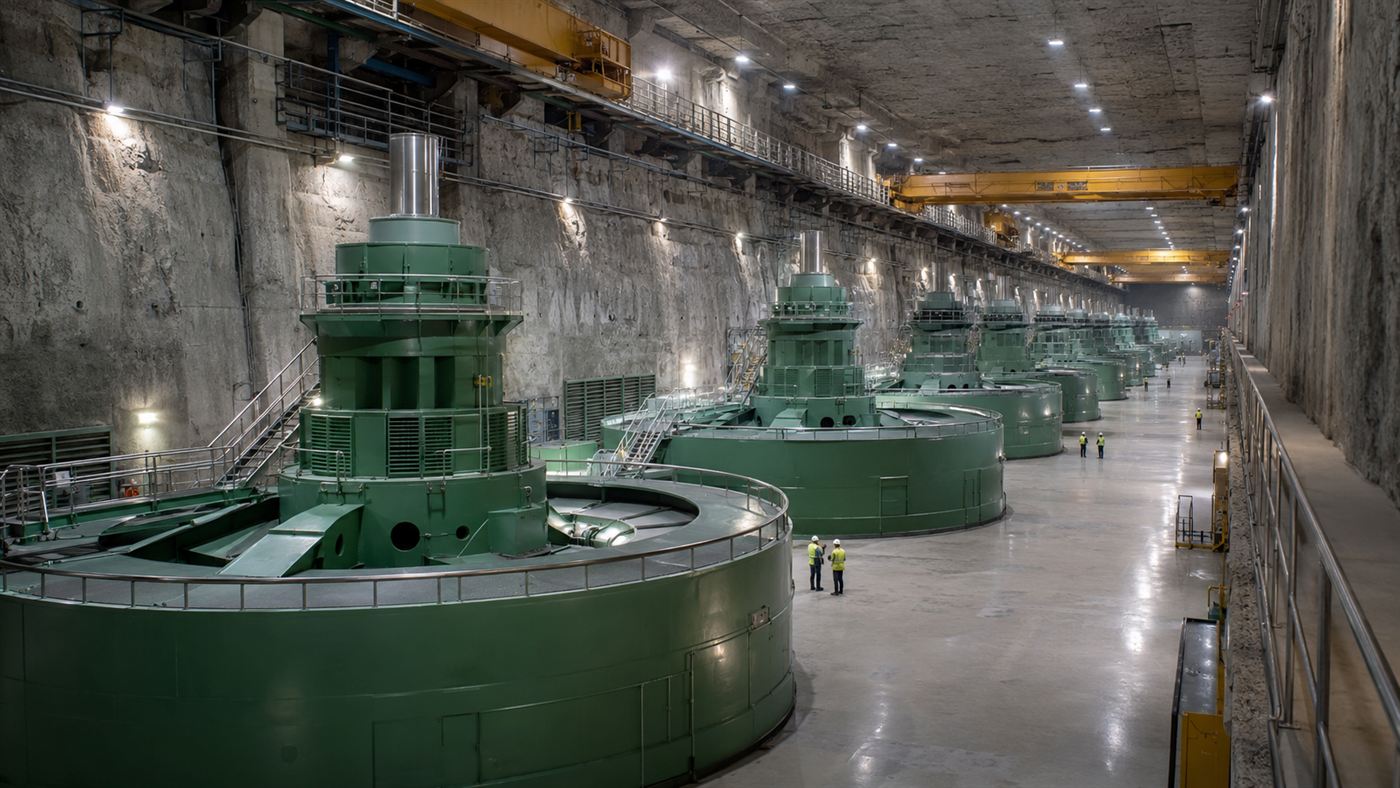
The idea is almost childishly simple, which is part of its genius. When electricity is cheap and abundant, usually in the small hours of the night, the plant runs its giant machines as pumps, hauling billions of gallons of water up the mountain from the lower reservoir to the upper one. That water, now sitting high up, is stored energy, like a wound-up spring or a raised weight.
When the grid is straining during the day and power is valuable, the plant opens the gates and lets that water thunder back down, up to 13.5 million gallons a minute, spinning the same machines in reverse as turbines to pour electricity onto the grid. The whole cycle is about 79 percent efficient, meaning you get back roughly four-fifths of the power you put in. The mountain itself is the hydroelectric power equivalent of a battery, and it never wears out.
Why water beats lithium at scale
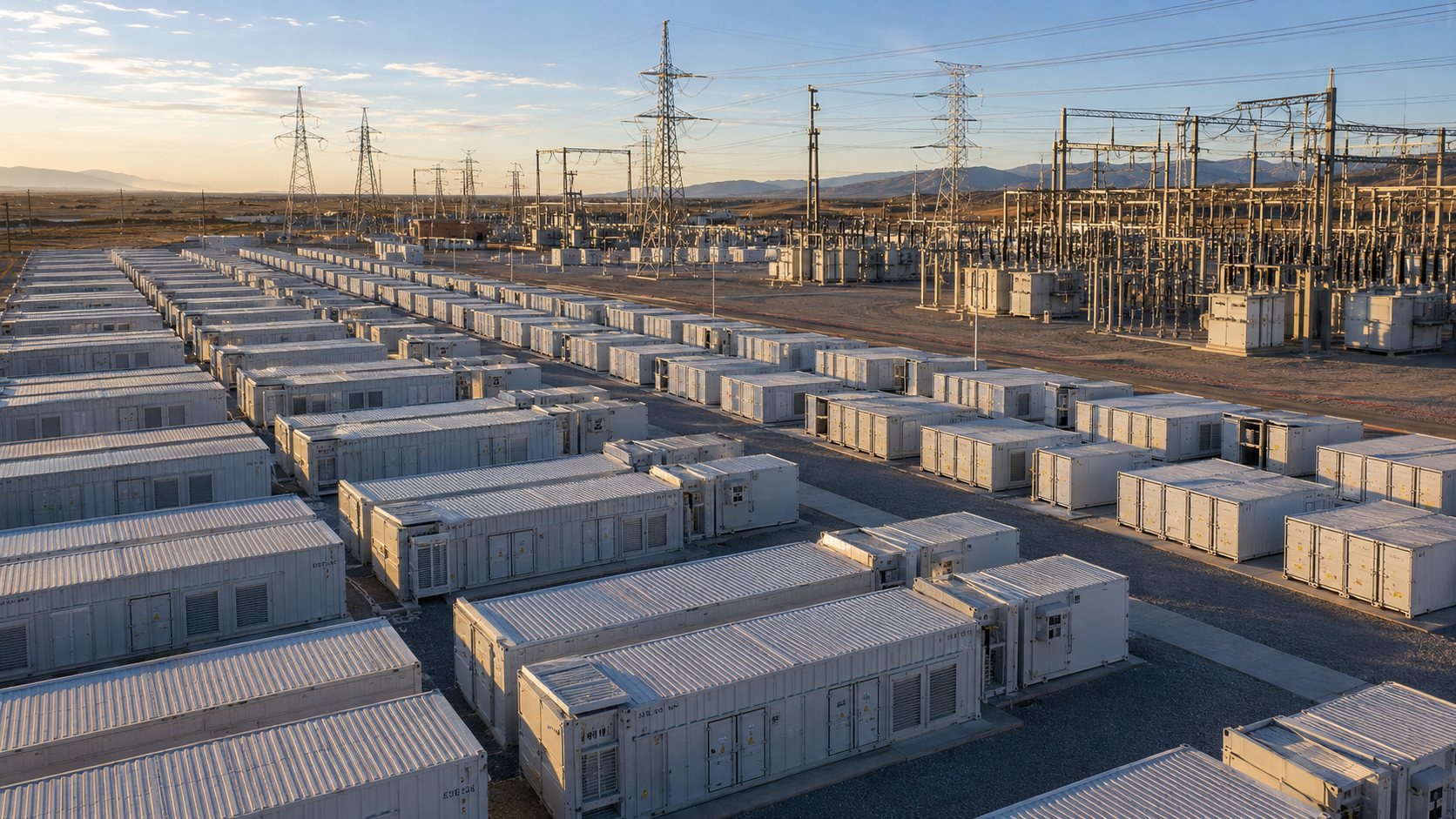
To feel how big this is, compare it to the batteries that make headlines. A large lithium battery farm, the kind that makes news when it is switched on, might store a few hundred megawatt-hours. Bath County holds 24,000. It is not a little bigger than a lithium installation, it is in a different universe, and it does the job without a scrap of lithium, cobalt, or any chemistry that can degrade over the years or, as at other sites, catch fire.
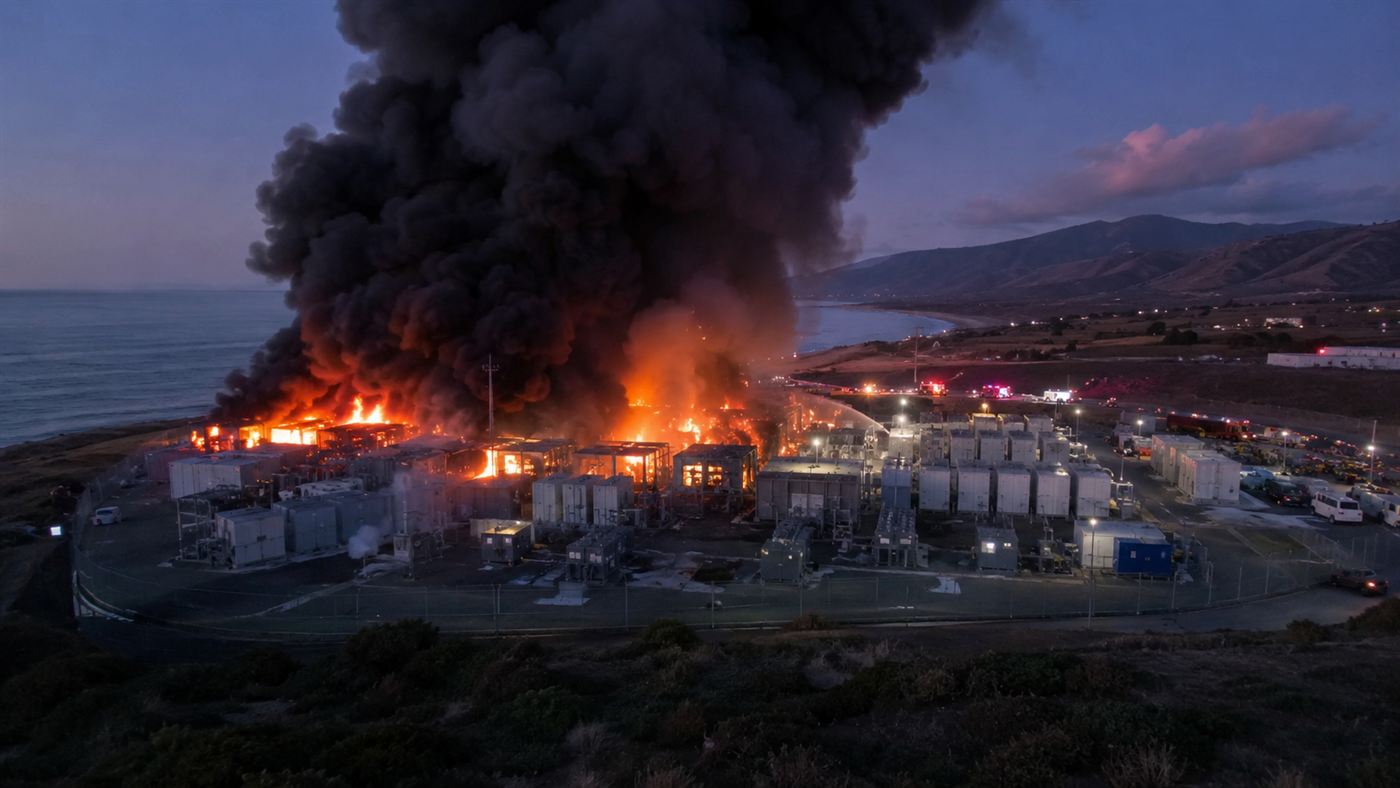
This is why, despite all the attention lithium gets, the overwhelming majority of the world's grid energy storage is still exactly this: water pumped uphill. Pumped hydro is cheap per unit of energy stored, it lasts half a century or more with basic maintenance, and its capacity is measured in the shape of the land rather than in cells that fade. Next to the fragile intensity of a giant lithium battery that burned in California, a lake on a mountain looks almost boringly reliable.
Built for coal, perfect for solar
Here is the twist history handed this plant. When Bath County was designed in the 1970s and finished in 1985, it was built to store the cheap, steady power of coal and nuclear plants that could not easily switch off overnight. It would soak up their unwanted midnight electricity and sell it back at the expensive evening peak, a straightforward money machine for its owner, Dominion Energy and its partners.
Then the grid changed underneath it, and the old plant turned out to be built for the future. A grid flooded with solar power has a new problem, a glut of cheap electricity in the middle of the day and a shortfall after sunset, which is precisely the imbalance pumped storage exists to smooth. A machine designed to time-shift coal power is now ideal for time-shifting the sun, storing the noon surplus of renewable energy to release it into the evening. The forty-year-old giant has been quietly reborn.
Why don't we just build more of them?
If pumped storage is this good, the obvious question is why the country is not dotted with Bath Counties. The answer is geography, and it is unforgiving. You need two large spots to put reservoirs, one high and one low, close together but far apart in height, with enough water to fill them and the right geology to hold them. Very few places on earth offer that combination, and many that do are national parks, inhabited valleys, or otherwise off limits.
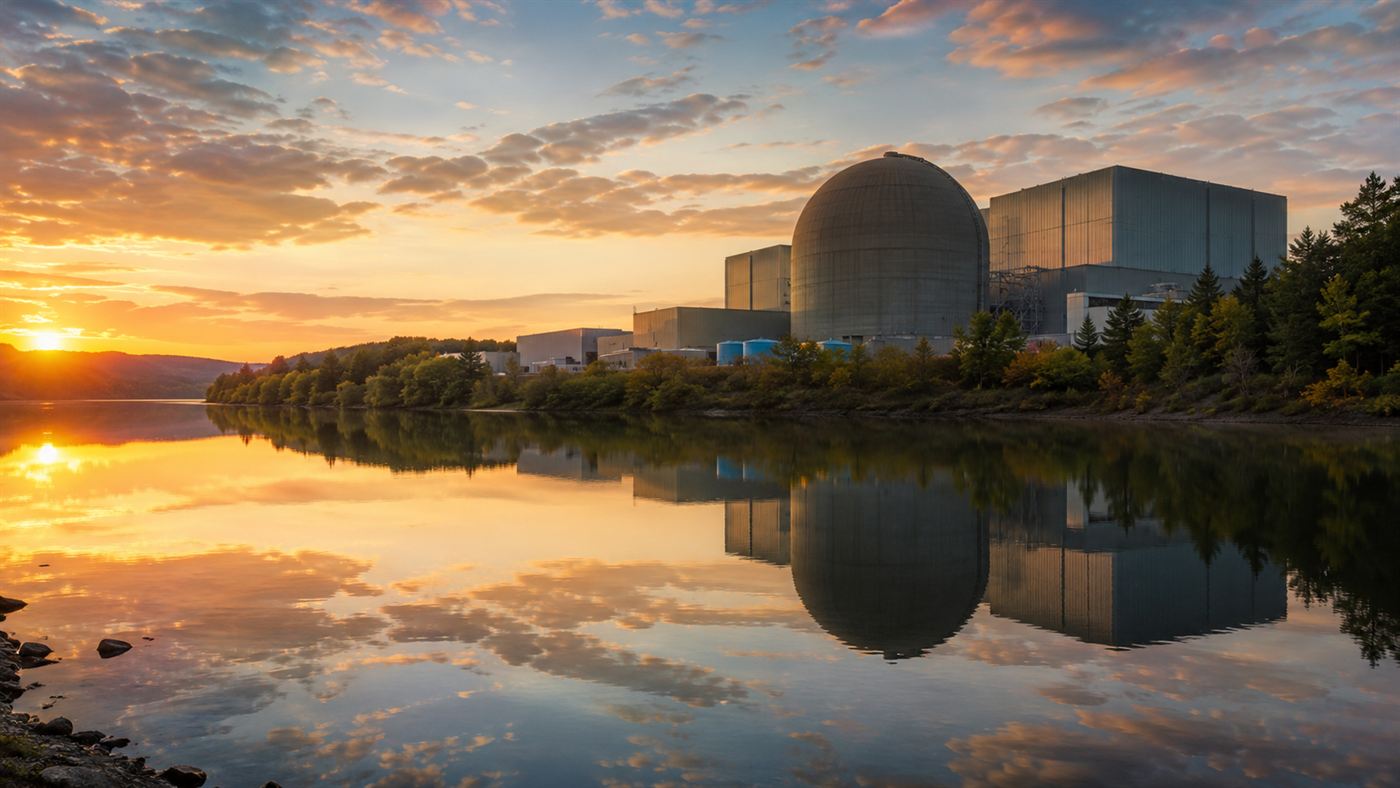
On top of the geography sits the cost and the calendar. Bath County took nearly a decade to build and cost about $1.6 billion in its day, well over four billion in today's money, and drowning two mountain valleys under new lakes is not something a community accepts lightly. That heavy upfront price and long wait are exactly why lithium, quick to build anywhere, keeps winning new projects even though water stores energy far more cheaply once it exists. It is the same hard tradeoff that shadows every big piece of energy infrastructure, from dams to reviving old nuclear plants.
The honest catch
Bath County deserves its admiration, but the crown has slipped a little. It was the largest pumped-storage plant in the world only until 2021, when an even bigger one opened in China, so the honest title today is the largest in the United States rather than the planet. And it is not free energy: that 79 percent efficiency means about a fifth of the power that goes in is lost, the price of hauling water up a mountain and letting it fall.
Building it also meant flooding valleys and reshaping a landscape, the same environmental cost that comes with any big dam. Pumped storage is not a magic wand, and it cannot be dropped just anywhere the grid needs it. But it is a powerful reminder that the storage problem everyone frets about is, at heart, already solved, if only the land cooperates. For four decades a couple of lakes and a mountain in Virginia have been the biggest, calmest, most stubbornly reliable battery in the country, and almost nobody has noticed.
The biggest battery in America is not a wall of lithium but two lakes and a mountain that have quietly balanced the grid for forty years. Should the US pour money into building more pumped-storage giants like Bath County, or bet on lithium that can go anywhere but costs more to store the same power? Tell us what you think in the comments.
Related reading: Inside the Welsh mountain hollowed out to hide a pumped-storage power station that can wake in seconds.
More from Watts & Wild
More in Energy →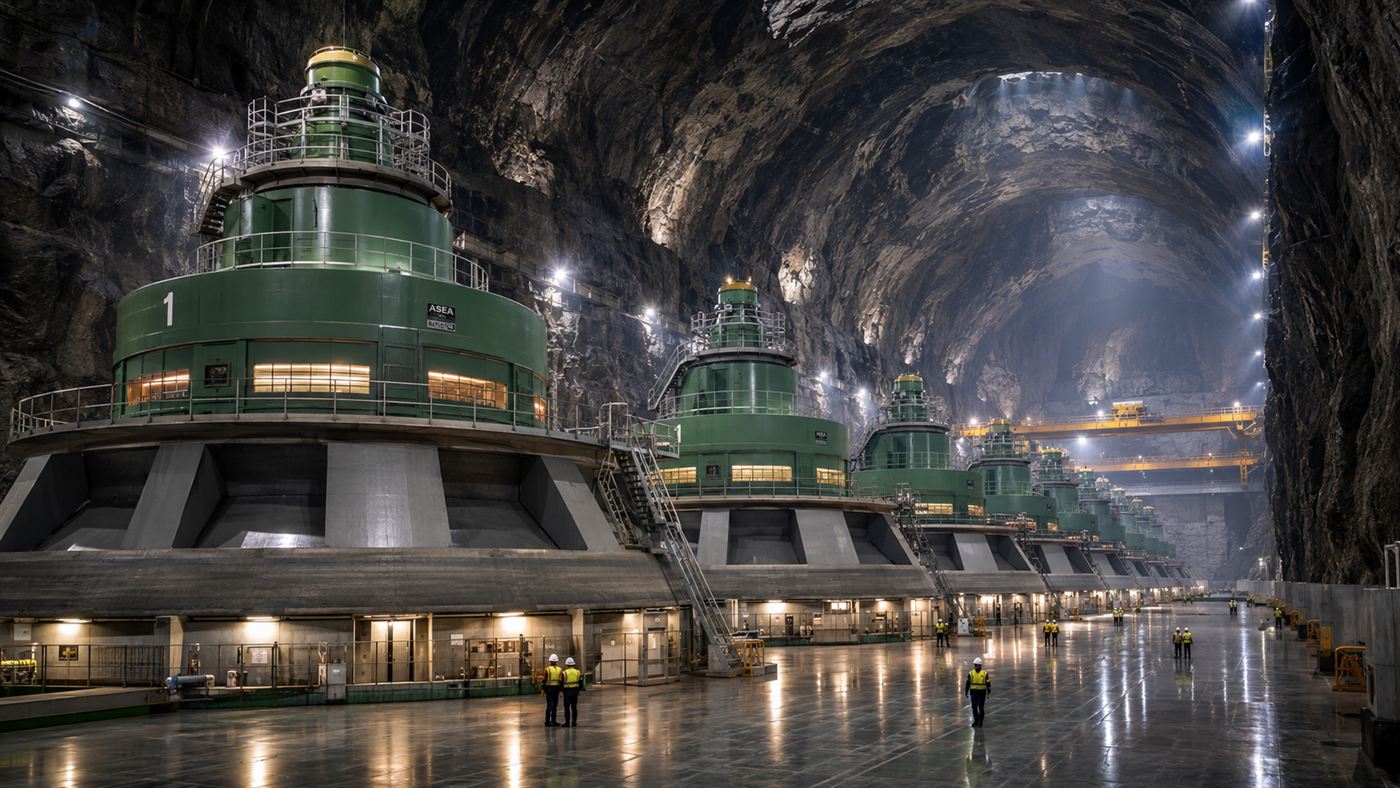

Bruno writes about energy history, industrial disasters, and the people who shaped the technologies we take for granted. He is based in Brazil.