Solid-state batteries promising up to 1,000 kilometres of EV range just hit a real pilot line in 2026, and the catch is not the chemistry
For years, solid-state batteries were the lab promise that never shipped. In early 2026 QuantumScape lit up a real pilot line, and Toyota and Samsung SDI locked in 2027 production targets with cells up to 900 watt-hours per litre. The catch is not the chemistry.
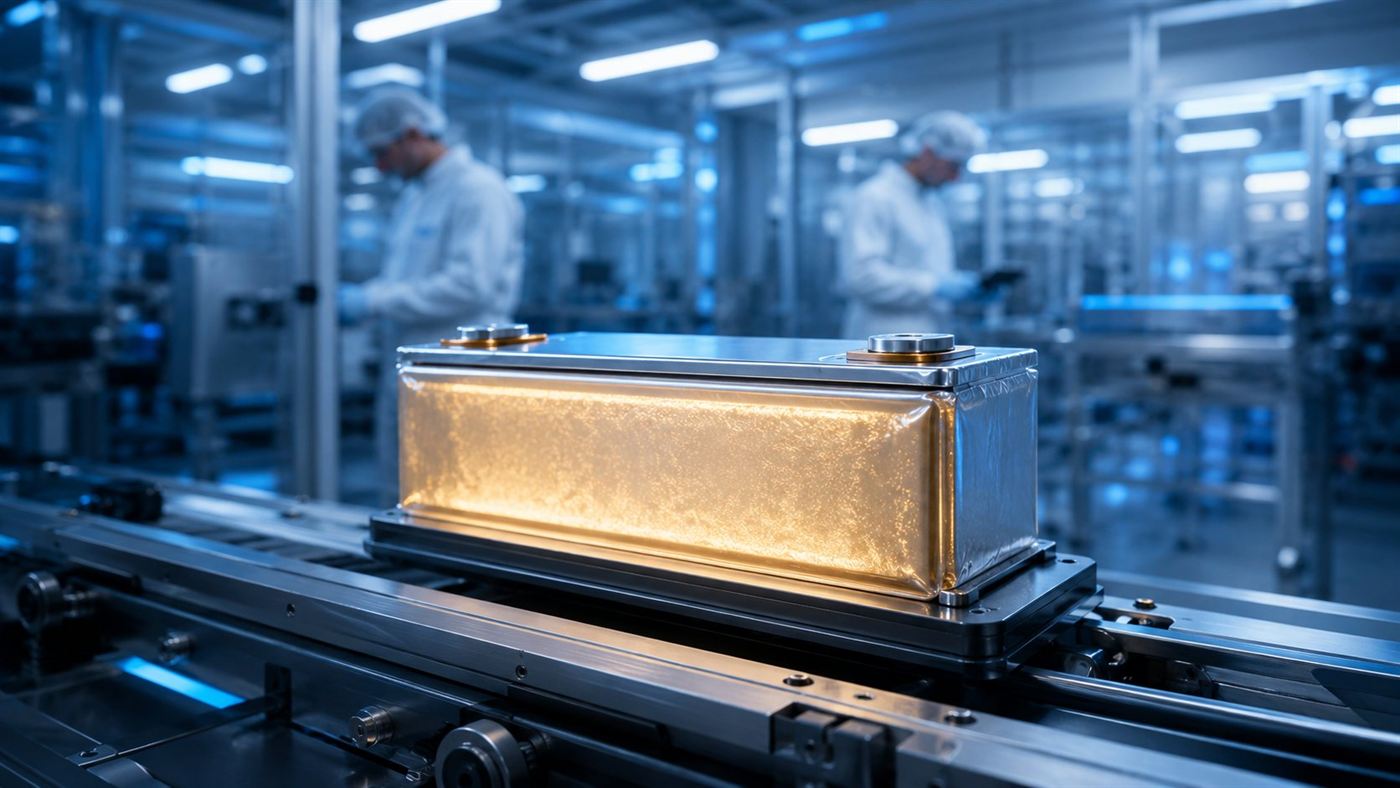
QuantumScape's Eagle pilot line in San Jose, where the QSE-5 cell moved from samples to a repeatable process. Illustration: Watts & Wild.
The solid-state battery has been the EV world's favourite five-years-away technology for more than a decade, the cell that would end range anxiety and kill battery fires in one stroke. On February 4, 2026, it finally walked out of the slide deck and onto a real factory floor. QuantumScape inaugurated its Eagle Line pilot production line in San Jose, the first time its QSE-5 lithium-metal cell has moved onto a repeatable pilot line, built on its new "Cobra" separator process, with carmakers including Volkswagen Group in the room.
This is the reversal worth understanding before the hype carries you off. The cells are real, the pilot line is real, and Toyota and Samsung SDI have both pinned 2027 mass-production targets to solid-state. But what is actually shipping in 2026 are samples, not cars you can buy, and the headline number, "double the range," belongs to targets that have not yet been built at scale. As Electrek reported on the Eagle Line inauguration, this is a pilot stage milestone, the start of a slow road, not the finish line.
What solid-state actually changes
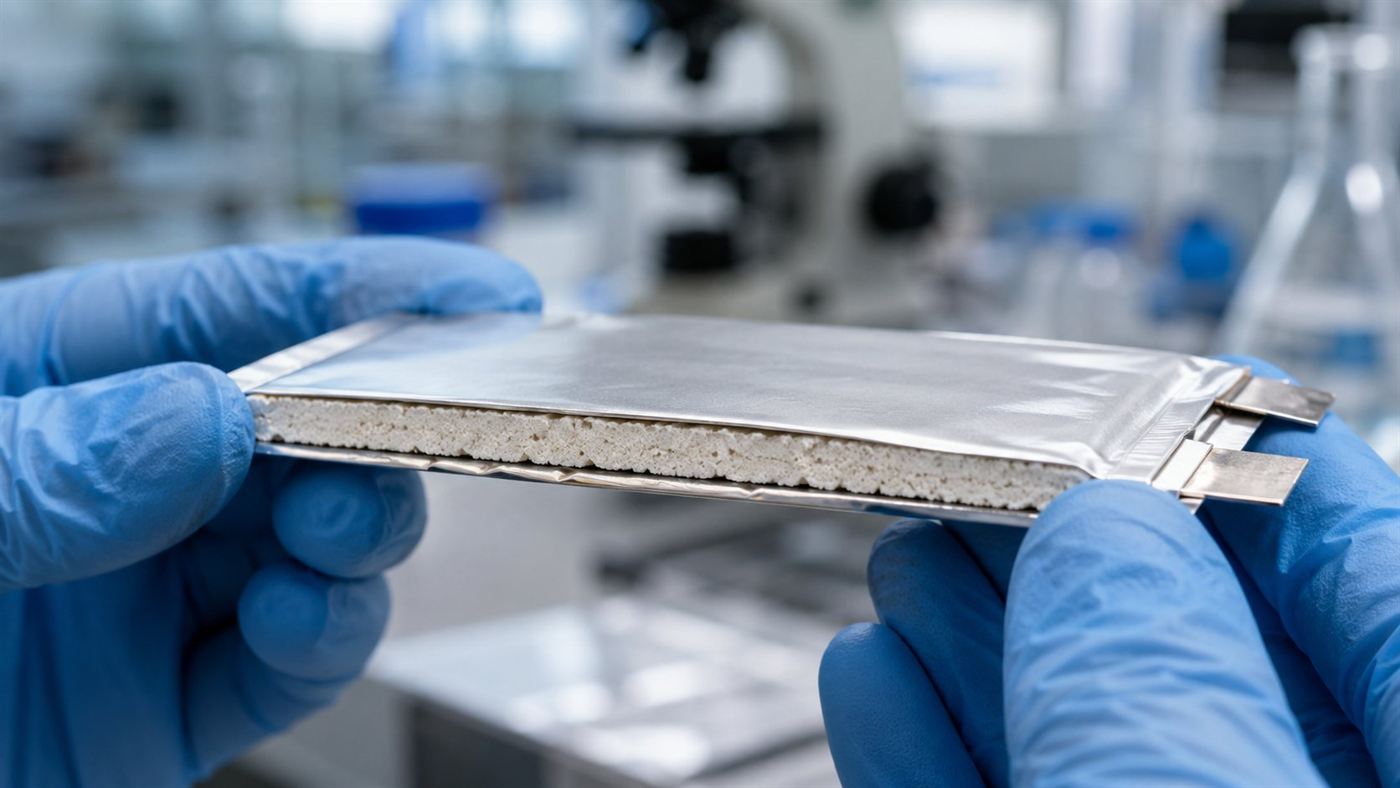
A normal lithium-ion cell carries its lithium ions through a flammable liquid electrolyte, the soaked separator that lets charge shuttle between the electrodes. Solid-state swaps that liquid for a solid one, usually a ceramic sulfide or oxide. That single change does two things the entire industry is chasing at once.
First, the solid layer is sturdy enough to let engineers use a lithium-metal or anode-free design, packing far more energy into the same volume than the graphite anodes in today's cells. Second, with no liquid solvent to catch fire, the cell is far harder to ignite, attacking the thermal-runaway risk that drives EV fire fears. More range and less fire from the same swap is exactly why every major battery maker is pouring billions into it.
That is the promise. The reason it has taken so long is that solids are unforgiving. Getting ions to move cleanly across a solid boundary, millions of times, without the structure cracking or shorting, is one of the hardest materials problems in modern engineering, which is why a working pilot line counts as news at all.
QuantumScape's QSE-5, the cell actually shipping samples
QuantumScape is the one company with hardware in customers' hands today. It shipped B1 samples of its QSE-5 cell to automotive customers during the third quarter of 2025, its most advanced cells to date, made with separators from the new Cobra heat-treatment process. The Eagle Line inaugurated in February 2026 is the pilot line that turns those one-off samples into a repeatable build.
The QSE-5 is an anode-free lithium-metal design rated at 844 watt-hours per litre and 301 watt-hours per kilogram, charging from 10 to 80 percent in about 12 minutes. As Interesting Engineering detailed in its breakdown of the Cobra-based cell, that energy density is roughly a 20 to 30 percent gain over today's commercial cells. QuantumScape itself frames this as meaningfully more range in the same pack, not a literal doubling.
That distinction matters, because "double the range" is the phrase attached to solid-state in most headlines, and it is not what the QSE-5 delivers. A 20 to 30 percent density gain translates to roughly 25 percent more range in the same pack size, a real improvement, but a different animal from the 1,000-kilometre claims floating around the sector. The earlier B1 sample shipments were also confirmed by Electrek when QuantumScape began sending Cobra-based samples in late 2025.
Toyota and Samsung SDI chase the doubling
The "double the range" figure comes from the next tier of targets. Toyota has reaffirmed a 2027 to 2028 timeline for its first solid-state EV, citing sulfide cells at 450 to 500 watt-hours per kilogram, more than double the energy density of current ternary lithium cells. The company talks about ranges near 1,000 to 1,200 kilometres, charging in roughly 10 minutes, and battery life it claims could stretch far longer than today's packs, with early volumes going into low-volume halo models first.
Samsung SDI is on a similar clock. It completed its S-Line solid-state pilot line, is shipping prototype samples to automakers, and targets mass production in 2027. As Samsung SDI laid out in its own newsroom, the cell aims for 900 watt-hours per litre, about 40 percent denser than its current prismatic cells, pointing at roughly 600 miles of range and a 9-minute charge.
Both companies are aiming at the same milestone, and both call 2027 a mass-production year. The trade press has tracked Samsung's plan closely, with electrive confirming the 2027 mass-production target and S-Line sample shipments. These are the numbers that justify the "double" framing. They are also targets, not products on a dealer lot.
The honest catch: scaling, not chemistry, is the wall
Here is the part the headlines skip. The cells work. What does not yet work is making them by the million at a price people will pay. Pilot lines in 2026 produce a tiny fraction of mass-market EV demand, with fragile yields, exotic materials like high-purity sulfides, oxides and lithium metal, and finicky dry-room processing that punishes the smallest contamination.
Then there is cost. Solid-state packs run roughly 3 to 5 times today's lithium-ion, around 350 to 500 dollars per kilowatt-hour against 90 to 110 dollars for advanced lithium-ion. That gap does not close on a pilot line. It closes, if it closes, only once volume and yield climb for years. Most experts put genuinely high-volume, cost-competitive solid-state in the early 2030s, not 2027.
And the central technical risk has not vanished. Dendrites, microscopic lithium filaments, can grow through a pinhole in the solid electrolyte and short the cell, which is exactly why separator quality is treated as make-or-break and why QuantumScape built an entire heat-treatment process, Cobra, around getting it right. One flaw in a million-cell run is a problem you do not have when the line is still small.
Toyota's timeline is the cautionary tale
If you want a single reason to read 2027 as a target rather than a date, it is Toyota's own history. The company promised solid-state production by 2020, then 2023, then 2026, and now 2027 to 2028. As EVXL chronicled in laying out the 2027-2028 target and the long-life claims, the pattern of slipping deadlines is now part of the story itself.
None of which means it is vapourware. The difference in 2026 is that there is a real pilot line and real samples in carmakers' hands, which there was not before. But the gap between a working sample and an affordable car is measured in years and billions, and treating the 2027 wave of targets from Toyota, Samsung SDI and others as a shipped product is how you get disappointed.
It is also a crowded race. Chinese makers CATL and BYD, along with Mercedes, are chasing the same solid-state milestone, so the question is less whether it arrives and more who reaches affordable scale first, and when. Some of the splashiest figures, like Toyota's 1,200 kilometres in 10 minutes, are company claims relayed by secondary outlets and have not been independently lab-verified.
What this means for your next EV
For a buyer in 2026 and 2027, solid-state changes nothing you can drive home. The first cells will land in low-volume halo cars, not mainstream models, and the cost penalty keeps them out of affordable EVs for years. If you are shopping now, today's lithium-ion cells are what you will actually be choosing from.
What changed in 2026 is the trajectory. A technology that lived entirely in research papers now has a pilot line, named customers, and hard production targets from three of the biggest names in batteries. That is real progress. It is just progress on a slow road to scale, and the honest version of the story keeps both halves: the chemistry is arriving, the factory is not, yet.
The battery that fixes both range anxiety and fire risk is finally walking out of the lab, just slower and pricier than the headlines suggest. The cells are real, the pilot line is real, and the wall ahead is a factory, not a formula. Would you wait a few extra years and pay more for an EV that could go nearly twice as far on a charge, or take the cheaper battery you can buy today? Tell us what you think in the comments.
Related reading: China won the electric car race, but now it faces a wave of worn-out batteries.