China just built a 26 MW offshore wind turbine with a 310-metre rotor, smashing the old 20 MW record while Western makers stalled near 18 MW
For years engineers argued whether a 15 MW offshore turbine was even physically buildable. China's Dongfang Electric just answered with a 26 MW machine, a 310-metre rotor and 153-metre blades, a record-breaking giant hoisted for testing while Western rivals quietly stopped near 18 MW.
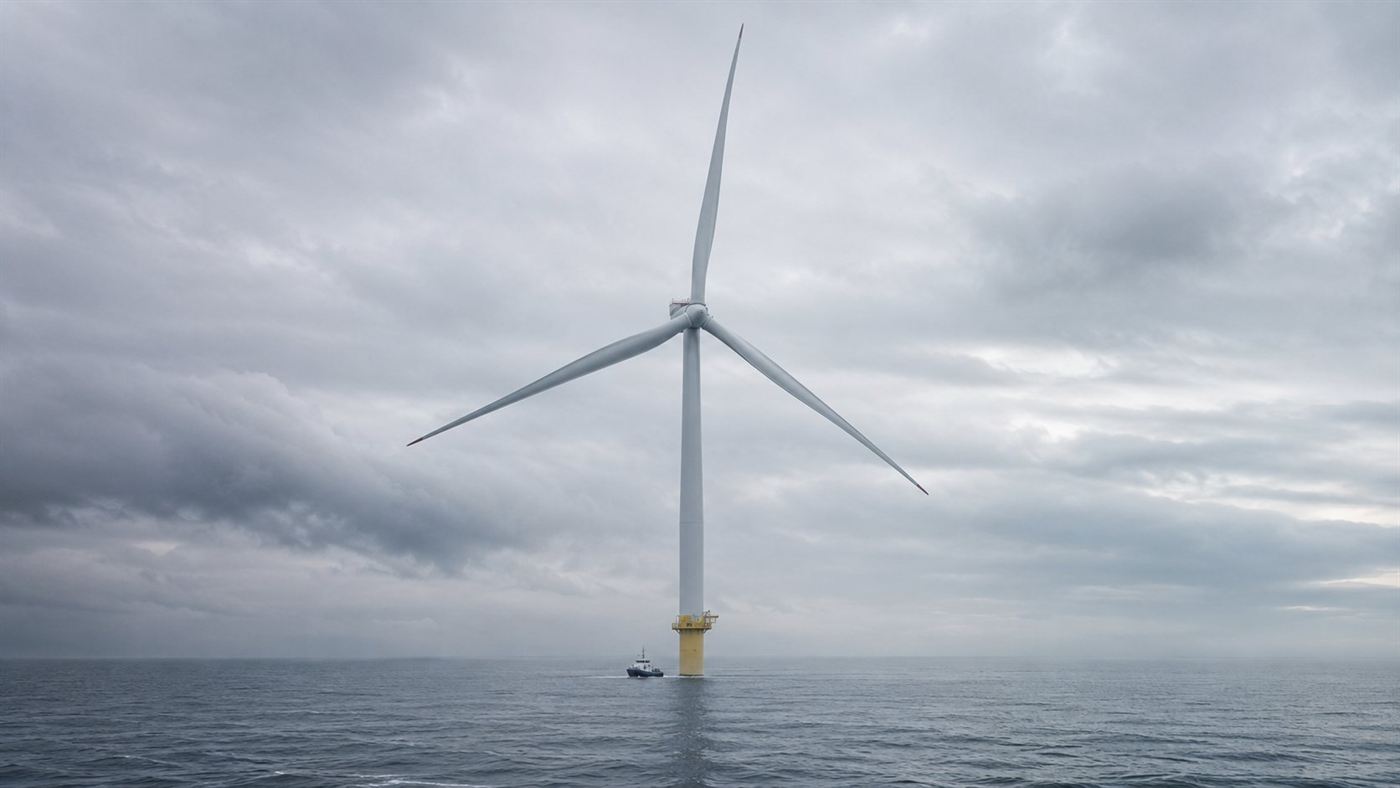
A 310-metre rotor, wider than three football fields end to end, sweeps roughly 77,000 square metres each turn. Illustration: Watts & Wild.
A decade ago, the biggest offshore wind turbines turning in the sea were stuck around 8 to 10 megawatts, and engineers openly debated whether a 15 MW machine was even physically buildable. The blades would be too long, the loads too brutal, the tower too tall to hold steady in a storm. That was the consensus. So what China unveiled in 2025 reads less like an upgrade and more like a leap over the entire argument.
On September 3, 2025, the state-owned Dongfang Electric Corporation finished hoisting a single offshore wind turbine rated at 26 megawatts, the most powerful in the world, at its testing base in Dongying, Shandong province. The nacelle, the great box of machinery at the top, had first rolled off the production line in Fuzhou back in October 2024. As OffshoreWIND.biz reported, the machine carries a 310-metre rotor with 153-metre blades and sweeps an area of about 77,000 square metres, and it stands nearly 200 metres tall. It is, by single-unit capacity, the largest wind turbine humans have ever assembled.
The numbers that break the scale
Start with the rotor. At 310 metres across, it is wider than three football fields laid end to end, and the swept area of roughly 77,000 square metres is larger than ten full pitches. The model designation is H26-313, and a few outlets cite a 312-metre diameter, but most reporting settles on 310 metres for the disc the blades carve through the air.
Then the output. At an average wind speed of 10 metres per second, Dongfang says a single unit can generate about 100 million kilowatt-hours a year, which is 100 gigawatt-hours. As Interesting Engineering detailed, that is enough to power roughly 55,000 households and offset around 80,000 tonnes of carbon dioxide each year, displacing about 30,000 tonnes of coal in the process. One turbine, doing the work of a small power station.
The detail that sticks, though, is the per-rotation figure. Each single full turn of those three vast blades produces about 62 kilowatt-hours at full capacity, roughly what an average home uses in two days. The machine is built from more than 30,000 components and runs on a third-generation, fully integrated semi-direct-drive system that fuses the shaft, gearbox and generator into one unit, the trick that lets it stay relatively compact for its monstrous power.
Why it was hoisted on land, not at sea
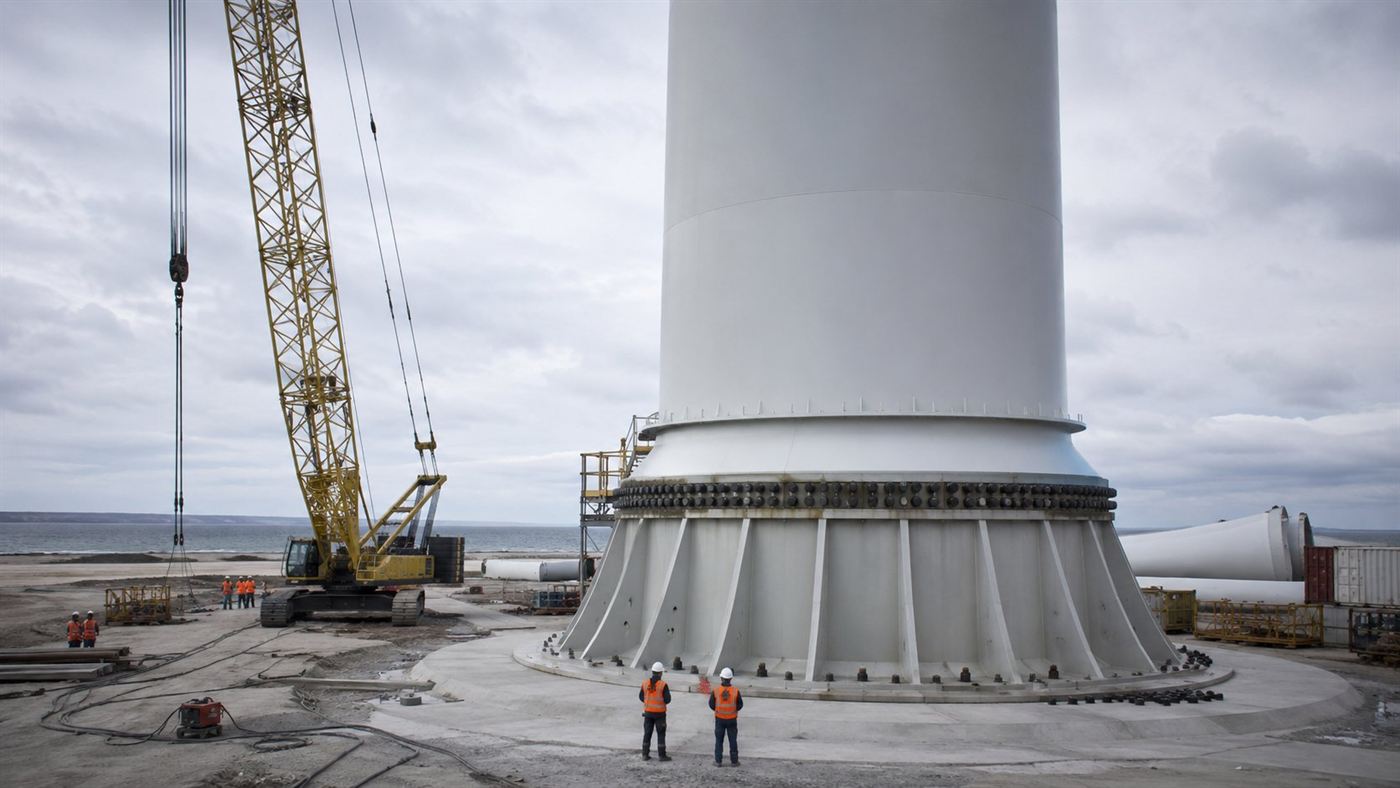
Here is a wrinkle that matters. This record-setter is not standing offshore at all. It is mounted onshore at the Wind Power Equipment Testing and Certification Innovation Base in Dongying, a deliberate choice that lets engineers monitor, instrument and certify the prototype far more easily than they ever could in open water.
The prototype was grid-connected for testing in late October 2025. As reNews confirmed, the unit is an installed prototype undergoing testing at Dongying, a proving ground before sister units are shipped out to face the genuinely hostile conditions of the sea. Onshore, a fault is a problem you can drive a crane to. Offshore, in a typhoon, it is a different order of difficulty entirely.
Engineered to survive a typhoon
The whole reason this machine exists is the kind of water China wants to put it in. The South China Sea and the Taiwan Strait are among the most typhoon-battered stretches of ocean on the planet, and a turbine planted there has to take a beating that would tear a lesser structure apart.
So Dongfang built in anti-corrosion treatment against the salt air and what it calls active typhoon-resistance technology, systems designed to let the turbine ride out extreme storms rather than simply brace against them. For deployment off the Chinese coast, this is not a luxury feature. It is the entry ticket. A 26 MW giant that cannot survive a category-five storm is worthless in those seas, and the engineering reflects that.
How it leapt past the old record
The crown Dongfang took did not belong to some distant Western firm. It belonged to another Chinese company. As OffshoreWIND.biz reported, Mingyang Smart Energy completed its 20 MW MySE offshore turbine, with a rotor up to 292 metres, in August 2024, and that machine, installed in Hainan, was the previous world's largest.
Dongfang did not nudge past it. It jumped from 20 MW to 26 MW in a single generation, a 30 percent gain in capacity in barely a year. As The Maritime Executive noted, the hub sits more than 600 feet above the water, and Western manufacturers have largely stopped pushing their offshore designs above 18 MW. That contrast is the real story. While Chinese firms race each other ever larger, the established European names have held near 15 to 18 MW, wary of the cost and risk of going bigger.
Where these giants are headed next
The test unit at Dongying is a single prototype, but Dongfang has a clear destination in mind for the production fleet. The company plans to deploy this turbine class at the Changle Offshore I (North) wind farm, roughly 60 kilometres off the coast of Fujian in the Taiwan Strait, exactly the typhoon-prone water the machine was hardened for.
Further units are targeted for sites in Guangdong and Fujian as early as 2026. If those projects come together, the 26 MW class stops being a record on a test pad and becomes working hardware feeding the grid, the point at which a headline number turns into actual electricity for actual homes.
The honest catch
Now the part that the breathless coverage tends to skip. This is one onshore test prototype, not a commercial wind farm, and it is not powering 55,000 homes today. It was hoisted in late summer 2025 and grid-connected only for testing, and Dongfang says it faces up to a year of fatigue testing and certification before it is cleared for real offshore deployment.
The output figures deserve the same caution. The 100 GWh a year and 55,000 households are the manufacturer's modelled estimates at an optimistic 10 metres per second average wind, not measured field results, and real offshore sites rarely deliver textbook wind every hour of the year. The label "world's largest" is itself Dongfang's own claim, ranked by single-unit capacity and rotor diameter. None of that makes the engineering less remarkable. It just means the brochure number and the proven number are not yet the same number.
A scale that engineers dismissed as impossible a decade ago is now bolted together and turning on a test pad in Shandong, and the firms that wrote the rulebook on offshore wind are the ones playing catch-up. Would you trust a 26 megawatt turbine built to ride out a typhoon, or is bigger finally getting too big to be safe? Tell us what you think in the comments.
Related reading: the world's largest battery will run on rust.