An EV battery loses only 2.3 percent of capacity a year across 22,700 real cars, so it still holds more than 80 percent after eight years on the road
For years the EV battery was treated as a fragile consumable that would die like an old phone. Then fleet data on more than 22,700 real cars settled it: packs lose barely 2.3 percent a year, costs have collapsed, and 800V cars now refill in minutes.
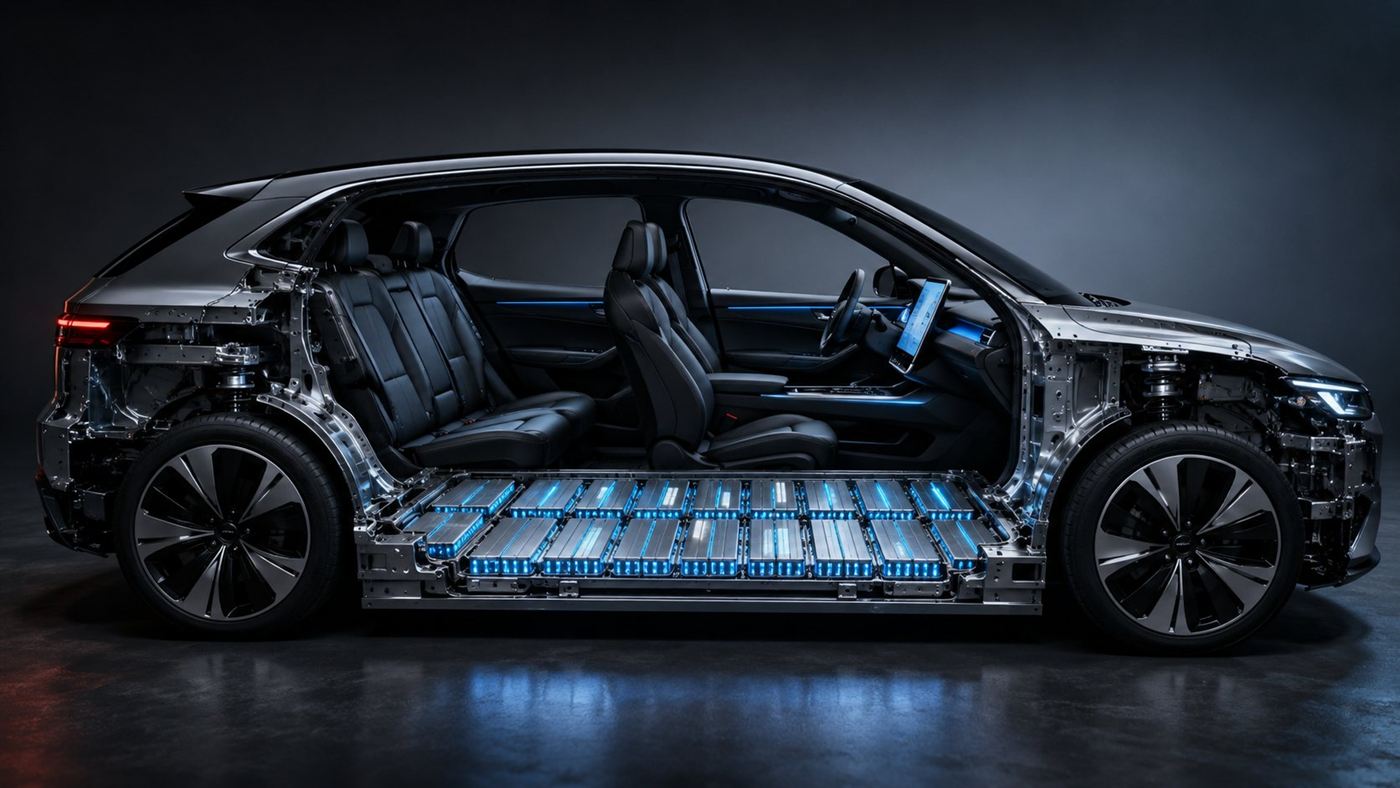
The pack that runs the car, and the part drivers used to fear most. Illustration: Watts & Wild.
The most common worry about going electric has always pointed at one place: the battery. Buyers imagined it as a giant phone cell, fading fast and facing a five-figure replacement bill before the loan was even paid off. That fear shaped a decade of hesitation. On January 13, 2026, a piece of hard data finally pushed back, and it pushed back hard.
Telematics firm Geotab studied more than 22,700 real-world electric vehicles and found their batteries lose only about 2.3 percent of capacity per year, which leaves a typical pack holding 81.6 percent of its original capacity after eight years. According to Electric Autonomy's reporting on the Geotab study of 22,700-plus vehicles across 21 models, the part everyone feared has quietly become the most durable component in the car. Here is how it actually works, and why the anxiety is fading.
What is actually inside the pack
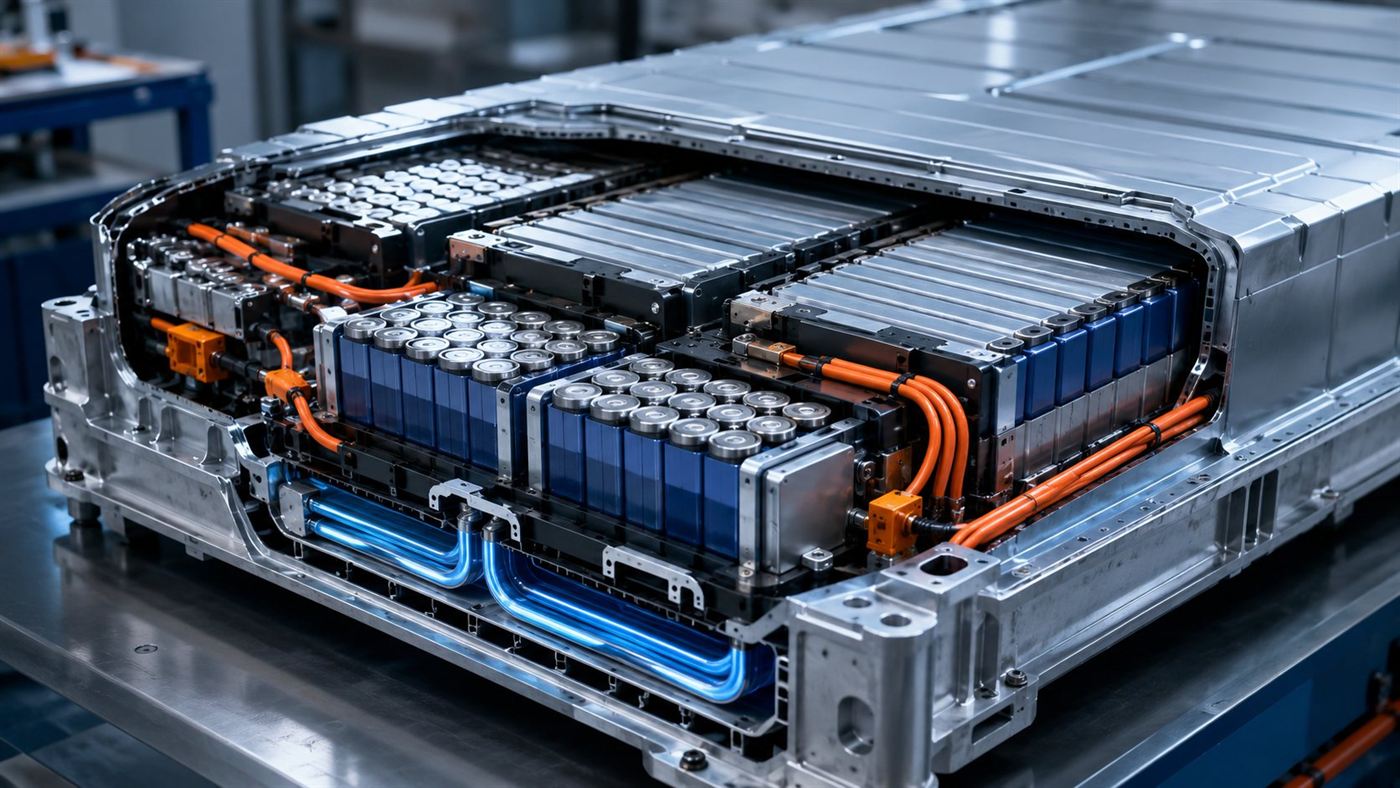
An EV battery is not one giant cell. It is built in layers. Individual lithium-ion cells, the small units that store the charge, are grouped into modules, and those modules are bolted together into a single pack that usually sits flat under the floor of the car. This cells-to-modules-to-pack structure is the verified industry standard, and it is what lets engineers swap or repair a section without scrapping the whole thing.
Overseeing all of it is the Battery Management System, or BMS, the quiet brain of the pack. It balances the charge across every cell so none is overworked, controls temperature, and manages how fast the battery charges and discharges. When you hear that an EV "protects" its battery, the BMS is what is doing the protecting, second by second.
That architecture matters because it explains the durability. A phone has one cell and crude software. An EV pack has thousands of cells and a dedicated computer whose entire job is to keep them healthy, which is a large part of why the two age so differently.
NMC versus LFP, the two chemistries that run the road
Almost every EV battery uses one of two cathode recipes, and the choice shapes the whole car. NMC, built from nickel, manganese and cobalt, packs more energy into less weight, so it tends to power longer-range and premium models. LFP, lithium iron phosphate, holds slightly less energy but is cheaper, runs cooler, is more thermally stable and survives more charge cycles.
The balance of power has shifted fast. According to the International Energy Agency's Global EV Outlook 2025, LFP reached nearly half of the global EV battery market in 2024, up from under 10 percent in 2020, led by China where it met roughly three-quarters of domestic battery demand. The cheap, rugged chemistry once dismissed as second-rate now carries a huge share of the world's electric cars.
That rise is not a step backward. LFP's tolerance for being charged to 100 percent without stress, and its long cycle life, is precisely what makes a modern affordable EV both cheaper to build and easy to live with day to day.
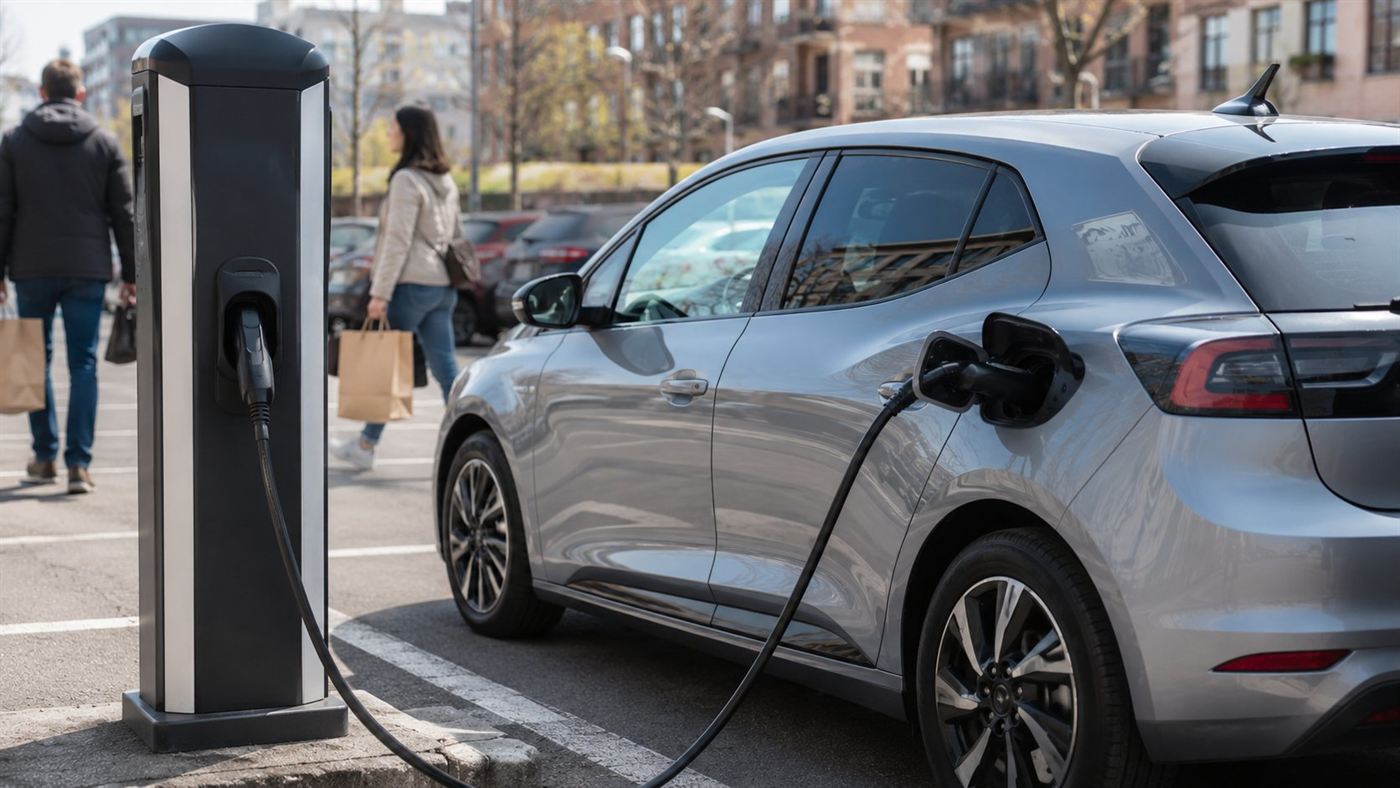
Charging has changed just as fast. The old image of standing around for the better part of an hour came from 400-volt systems. The newer leap is architecture. Cars built on 800-volt platforms, including the Hyundai Ioniq 6, Kia EV6 and Lotus Emeya, can accept up to 350kW of DC power and refill from 10 to 80 percent in roughly 18 minutes. Higher voltage means the same energy moves with less heat and less loss, so the pack can drink faster without cooking itself. The point is not that every car charges this quickly yet. It is that the ceiling has lifted sharply, and the cars sitting at that ceiling make the long-stop stereotype look dated.
The degradation data that broke the myth
This is the heart of it. Geotab's January 2026 analysis of more than 22,700 vehicles found that 2.3 percent average annual capacity loss, projecting 81.6 percent retention after eight years. For most drivers, that means a car that still does the overwhelming majority of its original range long after the warranty ends.
Thermal management is the deciding factor. Liquid-cooled packs hold up dramatically better than the early air-cooled designs: a Tesla Model S degrades around 2.3 percent a year, while an early air-cooled Nissan Leaf shed closer to 4.2 percent. The lesson the industry learned, and engineered around, was simple. Keep the cells at a steady temperature and they last.
One honest footnote sits inside the same data. The figure ticked up slightly from a lower number as ultra-fast charging spread, so degradation is slow but not zero. It is wear, not decay, and it is now measured across tens of thousands of real cars rather than guessed at.
Costs are falling through the floor
Durability is one half of the confidence story. Price is the other, and it has moved faster than almost anyone forecast. According to BloombergNEF, battery pack prices fell 20 percent in 2024 to a record-low average of 115 dollars per kilowatt-hour, with pure-EV packs dropping below 100 dollars for the first time at 97 dollars per kilowatt-hour.
That collapse is driven partly by the same cheap LFP chemistry now flooding the market. Since the battery is the single most expensive part of an electric car, a price falling below the long-watched 100-dollar threshold reshapes what carmakers can build and sell, and it pulls the cost of replacement, the very thing buyers dreaded, steadily downward.
Range climbed, and so did the network to feed it
The numbers that fuel range anxiety have moved too. Median EPA-rated range for new model-year-2024 EVs reached about 283 miles, or roughly 455 km, more than four times the 2011 figure, and over 15 production models now exceed 400 miles. Most drivers cover a fraction of that in a day.
The places to refill have multiplied alongside. The IEA reports that global fast chargers grew from 1.2 million in 2023 to 1.6 million in 2024, with 150kW-plus ultra-fast units up about 50 percent in a single year; Europe passed 1 million public points and the United States passed roughly 200,000. With over 17 million EVs sold globally in 2024 at a sales share above 20 percent, per the IEA, the infrastructure is thickening to match the cars on the road.
Put range and charging together and the anxiety has a hard time finding fuel. A 455 km median, refilled to 80 percent in under 20 minutes on the best cars, at a station that is far more likely to exist than it was three years ago, is a very different daily reality from the one the fear was built on.
The honest catch
The headline numbers are mild-weather, ideal-condition figures, and it would be dishonest to pretend otherwise. Cold weather still cuts real range by around 20 percent at freezing, and by 40 to 50 percent in extreme cold with heavy heater use. According to Kelley Blue Book's coverage of a large real-world Recurrent study, EVs keep on average about 80 percent of their rated range in freezing conditions, which is reassuring but not nothing.
Towing or sustained high-speed highway driving can slash range further and roughly double the rate of fast-charging degradation. And the lab ratings flatter reality: EPA figures are already optimistic, while the European WLTP standard runs about 12 to 20 percent higher and China's CLTC runs 30 to 35 percent higher, so a quoted range depends heavily on which test produced it. The comfortable 455 km figure shrinks meaningfully in winter or with a trailer.
The clearest proof that the fear is fading is in the buyers themselves. According to InsideEVs reporting on owner concerns, range anxiety drops from about 48 percent of prospective buyers to roughly 22 percent once people actually own an EV, and the vast majority of battery-EV owners say they would buy another. The fear, it turns out, is largely a fear of the unknown that ownership dissolves. The fast-charger growth carries a caveat worth naming, though: it is overwhelmingly concentrated in China, which added the bulk of the world's new units. The US and European networks are growing quickly but from a far smaller base, so the experience of refilling on a long trip still varies a lot by country.
Stack the evidence and the reversal is plain. The battery, long the source of the anxiety, is now the most durable and most rapidly improving part of the car, losing barely 2.3 percent a year while its price falls and the cars around it gain range and charging speed.
The fragile, fast-fading consumable everyone braced for turned out to be the toughest thing in the car, holding more than 80 percent of its capacity after eight years on real roads. Would the 2.3 percent figure be enough to talk you out of range anxiety, or does winter still worry you? Tell us what you think in the comments.
Related reading: China is putting a battery made from salt into cars.