Finland switched on the world's largest sand battery in June 2025, a 100 MWh store holding 2,000 tonnes of soapstone that cuts a town's heating emissions by nearly 70 percent
The cheapest way to store a town's worth of renewable energy may not be lithium cells but a silo of crushed rock. In June 2025 Finland switched on the world's largest sand battery, a 100 MWh heap of soapstone that soaks up surplus wind and solar electricity as heat and releases it for weeks.
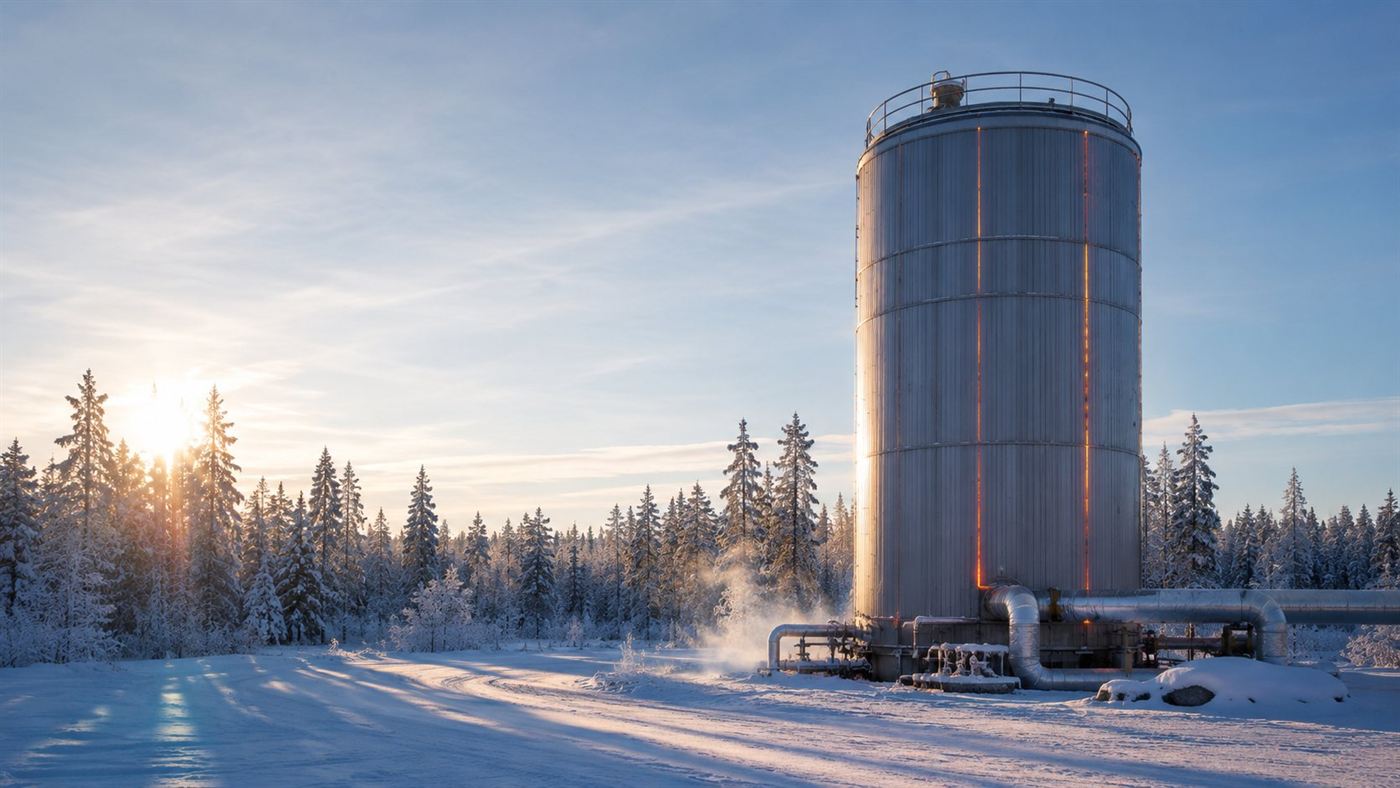
A silo of crushed soapstone now heats a whole Finnish town through the winter. Illustration: Watts & Wild.
For years the answer to storing renewable power has been the same: more batteries, more lithium, more cells stacked in cabinets. But on 11 June 2025 a Finnish company switched on something that looks nothing like a battery and works nothing like one. In the town of Pornainen, developer Polar Night Energy commissioned a steel silo packed with crushed rock that now serves as the main heat source for the local district heating network.
It is, the company says, the largest sand battery in the world to date, rated at 1 megawatt of thermal power and 100 megawatt-hours of storage, built for district heating company Loviisan Lampo. There is no lithium inside, no chemistry to degrade, just 2,000 tonnes of hot stone. The idea is almost absurdly simple, which is exactly why engineers are paying attention.
What a sand battery actually is
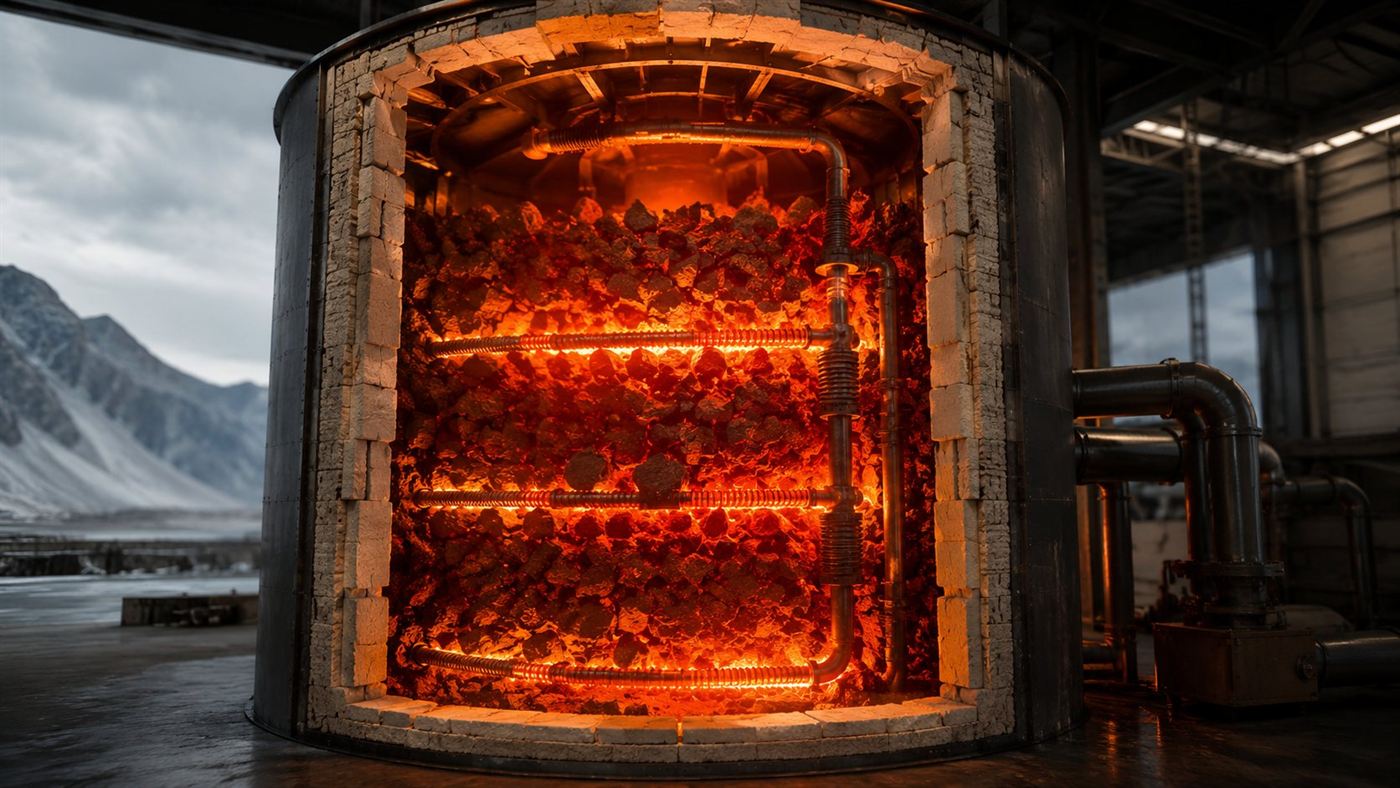
The name is a little misleading, and the company knows it. A sand battery does not store electricity. It stores heat. The Pornainen unit charges by running cheap renewable electricity through resistive heating elements, turning that power into warmth and raising the storage medium to high temperatures, where it can hold the heat for days or even months.
As Euronews explained, the device captures wind and solar electricity as heat through resistive heating, then keeps it for anything from days to months before releasing it into the district heating loop. Sources cite a storage temperature of up to about 600 degrees Celsius, several hundred degrees of stored warmth sitting quietly inside an insulated tower.
The structure itself is unglamorous. It stands roughly 13 metres tall and 15 metres wide, a grey insulated drum that would not look out of place beside any industrial heating plant. What makes it remarkable is not the engineering flash but the absence of it. The most complicated part of a sand battery is the insulation that keeps the heat from leaking out.
Why it is filled with soapstone, not sand
Here is the detail most headlines skip. The Pornainen store is not filled with ordinary beach sand. It holds about 2,000 tonnes of crushed soapstone, a by-product of Finnish fireplace maker Tulikivi's production line. Polar Night Energy says the soapstone retains heat better than generic rock, and because it is a manufacturing leftover, it folds the project into a circular-economy supply chain.
That choice matters for cost and for emissions. Instead of quarrying fresh material, the project takes a waste stream from a company that has spent generations learning how stone holds heat, since soapstone is the traditional material of Nordic masonry heaters. The medium is essentially free thermal mass, sourced from an industry built on exactly this property.
Polar Night Energy still calls it a sand battery, because the principle is identical whether the medium is sand or stone: cheap, abundant, fireproof solid material that soaks up heat and gives it back slowly. The branding stuck from the company's first unit, but the Pornainen build shows the concept works just as well with crushed soapstone.
What it does for Pornainen
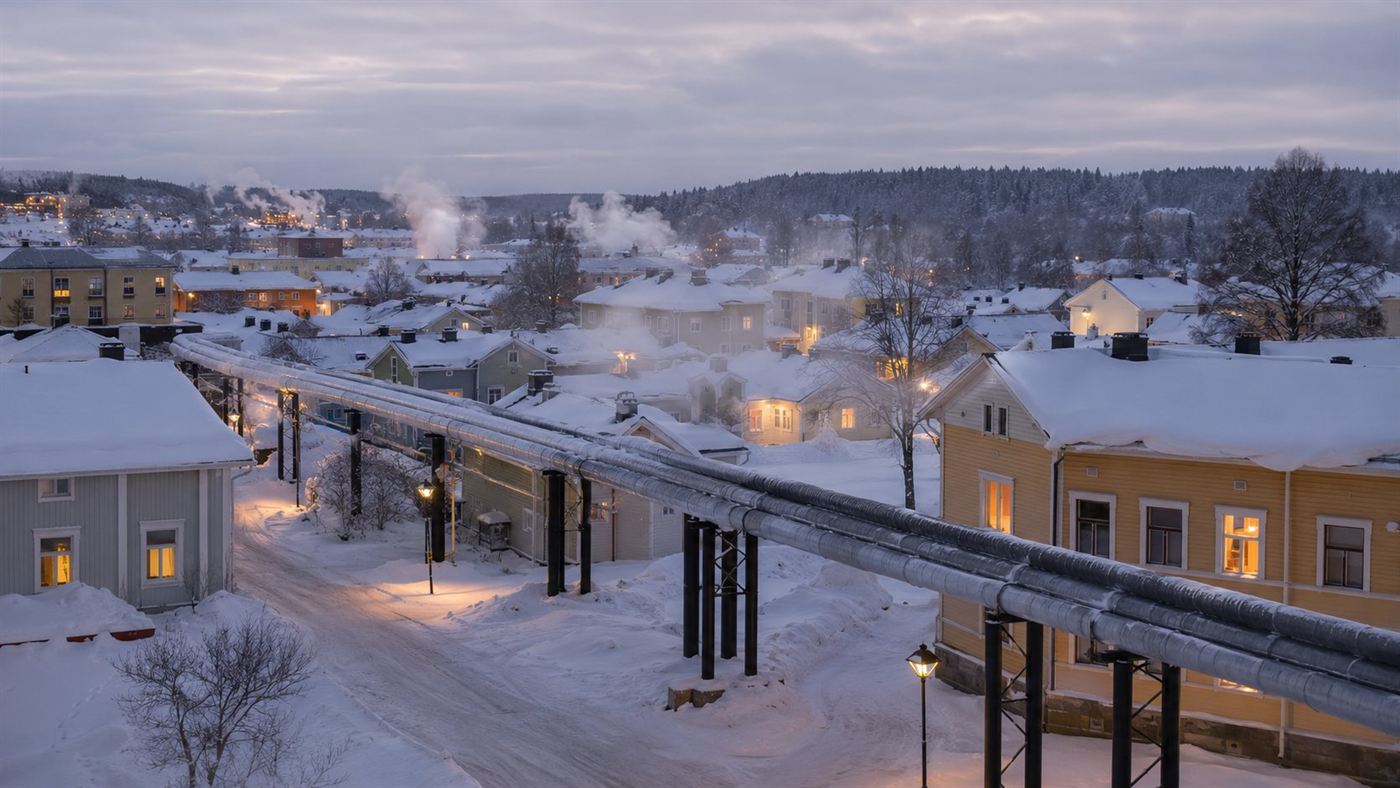
The store is not a backup or a side experiment. It now acts as the main production facility for Pornainen's district heating network. According to Polar Night Energy, the unit covers nearly a month of the town's heat demand in summer and close to a week in winter, and the network's old oil boiler has not had to run.
The emissions math is the headline most people remember. The project cuts the town's district heating emissions by nearly 70 percent, around 160 tonnes of CO2-equivalent a year. It removes oil from the network entirely and reduces the burning of wood chips by roughly 60 percent. A town that used to lean on oil and biomass now leans on stored wind and solar.
That is the quiet revolution here. District heating is one of the hardest corners of the energy system to clean up, because it needs steady warmth through long dark northern winters. A sand battery answers that need directly, storing summer and shoulder-season surplus and pushing it out when the cold sets in.
The economics that make it work
A sand battery only pays for itself because of how electricity prices move. The store charges when power is cheap or abundant, soaking up low-price wind and solar, and discharges heat when demand and prices are high. It can even earn money from grid balancing and reserve markets, helping steady the network while it sits there full of heat.
This is the part that makes the simple silo financially serious. The medium is a free industrial by-product, the conversion from electricity to heat is nearly lossless, and the operator profits by timing its charging to the cheapest hours on the grid. Polar Night Energy frames the whole system as an electricity-price optimization play wrapped around a pile of warm rock.
It also scales in an unfussy way. Pornainen is roughly ten times larger than the company's first commercial unit, yet the underlying technology did not have to change. You make a sand battery bigger mostly by adding more stone and more insulation, not by inventing new chemistry.
From a first try in 2022 to ten times the size
Polar Night Energy did not arrive at 100 MWh overnight. Its first commercial sand battery has been running since 2022 in Kankaanpaa for the utility Vatajankoski. As the company's own reference page records, that pioneering unit is rated at 200 kilowatts and 8 megawatt-hours, holding about 100 tonnes of sand.
Set those numbers beside Pornainen and the jump is obvious. The new store carries 2,000 tonnes of medium against 100, and 100 megawatt-hours of capacity against 8, making it roughly ten times larger than the world's first sand battery. In late 2025 the company announced a next project sized at 250 MWh, larger still.
That trajectory is the real story. Each build is bigger than the last, and the design keeps proving out at scale. A concept that started as a curiosity in a small Finnish town is now the main heat source for another one, with a bigger version already on the drawing board.
The honest catch
None of this makes lithium obsolete, and it is important to be clear about why. A sand battery is a heat store, not a power battery. In this configuration it gives back heat, not electricity, so its value is limited to thermal uses like district heating. You cannot run your phone or your car off a silo of hot soapstone.
Its standout efficiency comes precisely from skipping the conversion back to electricity. Polar Night Energy says large GWh-scale sand batteries can reach over 90 percent round-trip efficiency for heat output, because turning electricity into heat with resistors is close to 100 percent efficient and the main losses, roughly 5 percent from circulation and 5 percent over weeks of storage, stay small. Try to convert that stored heat back into power and the efficiency would collapse.
One more honest note. That 90 percent figure describes large gigawatt-hour-scale heat output, not this specific 100 MWh unit. The Pornainen store is impressive on its own terms, but the eye-catching efficiency headline belongs to a bigger class of machine than the one heating Pornainen today.
Why a pile of warm rock matters
The lesson of Pornainen is that the lowest-tech option can sometimes be the smartest one. The grid does not always need a clever electrochemical cell to store renewable energy. For heat, a low-tech insulated heap of crushed stone, charged on surplus wind and solar, does the job for a fraction of the cost and with none of the supply-chain pressure of lithium.
That reframes part of the storage problem. Not everything we want from stored energy is electricity. A huge share of what towns and industry consume is simply heat, and heat is exactly what a sand battery hands back, cheaply, for weeks at a time. The element nobody thought to scale, plain hot rock, turns out to be a serious tool for the energy transition.
A silo of crushed soapstone just took over heating a whole Finnish town, cut its emissions by nearly 70 percent, and shut off the oil boiler for good, with not a single lithium cell inside. Would you trust a pile of hot rock to heat your town through the winter instead of a gas or oil boiler? Tell us what you think in the comments.
Related reading: the world's largest battery will run on rust.