In the Gobi Desert China just got the only reactor on Earth to breed uranium-233 from thorium, six decades after the US built the idea and walked away in 1969
For years the thorium molten-salt reactor was a half-finished American dream, switched off in 1969 and left in a filing cabinet. Now a 2-megawatt machine in the Gobi Desert has done the one thing Oak Ridge never finished: turn thorium into usable nuclear fuel inside a running reactor.
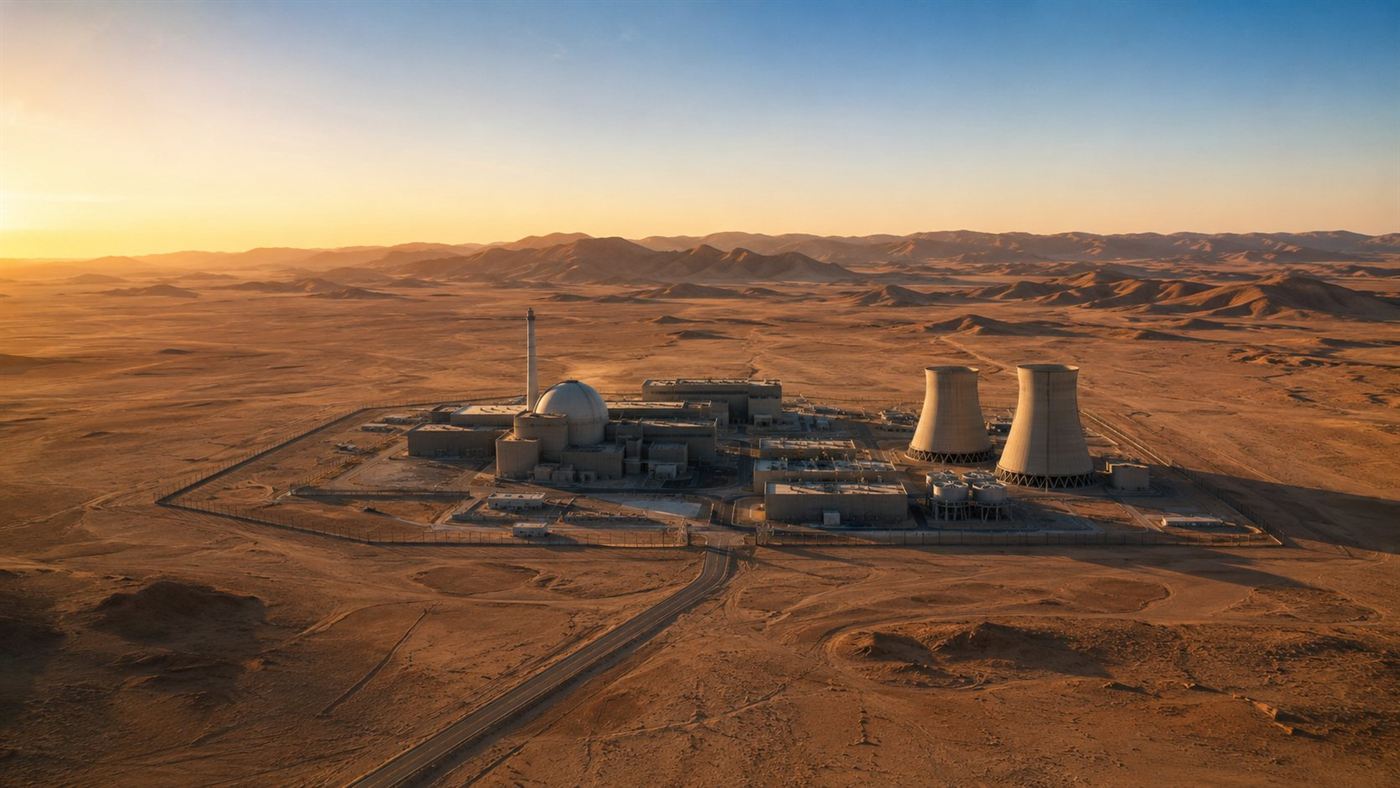
TMSR-LF1 sits alone in the Gobi Desert near Wuwei, Gansu, far from any city. Illustration: Watts & Wild.
The most interesting reactor on Earth is not a giant power station. It is a small box of hot salt sitting in a sealed building in the Gobi Desert, and the idea behind it is an American one that the United States threw away. On 1 November 2025, the Shanghai Institute of Applied Physics announced that its experimental reactor, TMSR-LF1, had done something no working reactor had ever done before: it turned thorium, a metal far more abundant than uranium, into usable nuclear fuel while it ran.
Here is the reversal that makes the story sting. This is not a Chinese invention. American scientists at Oak Ridge National Laboratory built the world's first and only previous molten-salt reactor, ran it from 1965 to 1969, then shut it down and let the whole program lapse, leaving the research in the public domain. Six decades later China picked up that abandoned blueprint, built the only operating molten-salt reactor on the planet, and pushed it past the exact point where Oak Ridge stopped. As World Nuclear News reported on the SINAP announcement, the reactor has now produced the first experimental data on thorium fuel conversion in an operating machine.
A reactor in the middle of nowhere
The machine is called TMSR-LF1, short for Thorium Molten Salt Reactor, Liquid Fuel 1. It is operated by the Shanghai Institute of Applied Physics (SINAP), part of the Chinese Academy of Sciences, and it does not sit anywhere near Shanghai. It was built in a remote stretch of the Gobi Desert near the city of Wuwei, in Minqin County, Gansu Province, the kind of empty place a country chooses when it wants room and quiet for a nuclear first.
It is small. The reactor is rated at just 2 megawatts thermal, a fraction of a percent of a normal power station, and that number matters because it tells you what this thing is for. It is not a power plant. It generates no electricity at all. According to Nuclear Engineering International, the 2 MW reactor in the Gobi Desert is purely a research platform for one specific question: can the thorium-uranium fuel cycle actually be made to work.
The fuel that is dissolved in the coolant
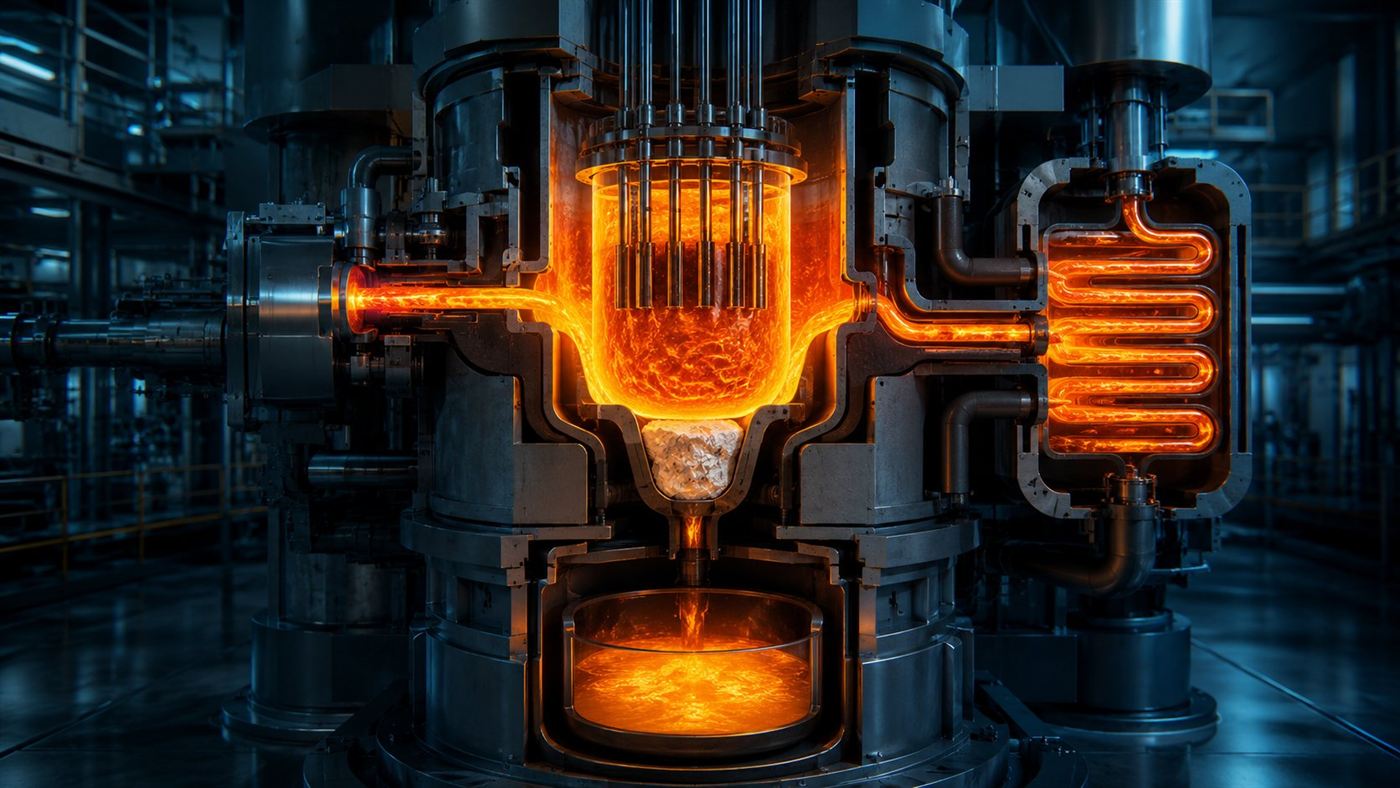
What makes a molten-salt reactor strange is that the fuel is not solid. In an ordinary reactor the uranium sits in sealed metal rods, and to refuel you shut the whole thing down and swap them out. In TMSR-LF1 the nuclear fuel is dissolved directly into the molten salt that also serves as the coolant, so the fuel and the liquid that carries the heat are one and the same flowing mixture.
That single design choice unlocks everything else. Because the fuel is a liquid, you can add more of it, or pull contaminants out of it, without ever switching the reactor off. The fuel circulates, gets topped up, gets cleaned, all while the reactor keeps running. It is the difference between a sealed battery you replace and a tank you can keep filling.
It also changes the safety picture in a way engineers find genuinely elegant. The reactor's last line of defence is a passive frozen salt plug, a deliberately solid blockage kept cool at the bottom of the system. If the reactor overheats or loses power, that plug melts on its own, and gravity drains the entire molten-fuel mixture down into a holding tank where it spreads out and cools. No pumps, no operators, no decisions. The physics does the work and a meltdown becomes very hard to arrange.
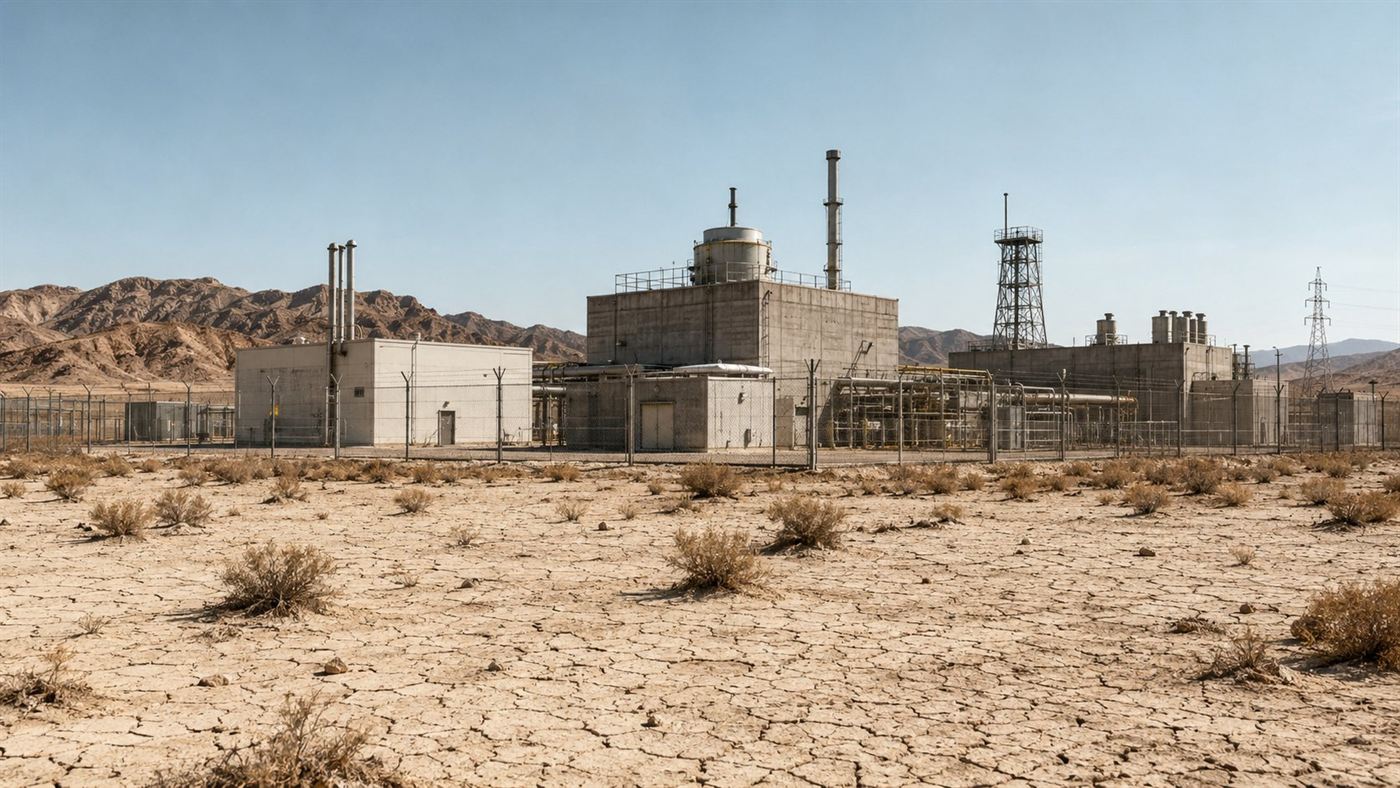
How it got here, step by step
The timeline is short and fast. Construction began in 2018, and on 11 October 2023 TMSR-LF1 first went critical, meaning it sustained a nuclear chain reaction for the first time. The full chronology, from groundbreaking through every milestone, is laid out on the TMSR-LF1 entry that tracks construction from 2018, criticality on 11 October 2023 and full power on 17 June 2024.
On 17 June 2024 the reactor reached its full rated power of 2 megawatts thermal. Then came the milestone that grabbed headlines around the world. In October 2024 SINAP performed the world's first reloading of fuel into a molten-salt reactor while it was still running, the so-called online refueling, and it added thorium to an operating reactor for the first time. That live-refueling breakthrough was the headline of 2024, and it was confirmed independently, with Hackaday reporting in April 2025 on the live refueling of the 2 MW experimental reactor built on 1960s US research.
It is worth being precise here, because the dates get muddled in a lot of coverage. The live refueling and the first thorium loading both happened in October 2024. The November 2025 news was a different and bigger thing. Loading thorium is not the same as turning it into fuel.
The breakthrough that breeds fuel from a rock
Thorium is not directly usable as reactor fuel. It is what physicists call fertile, not fissile, meaning it will not split and release energy on its own. To make it useful you have to breed it, bombarding thorium so it absorbs a neutron and transmutes, through an intermediate stage, into uranium-233, which is genuinely fissile and can power a reactor.
That intermediate stage is the proof. On 1 November 2025 SINAP announced it had detected protactinium-233 inside the running reactor, the unmistakable fingerprint that thorium was converting into uranium-233. For the first time anywhere, a working reactor was breeding new nuclear fuel from thorium and producing real experimental data on how the conversion behaves. This is the step that matters, because thorium is far more abundant than uranium, and a reactor that can breed its own fuel from it points at a far larger and more evenly distributed resource base.
A blueprint the West left behind
None of the underlying physics is new, and that is the part Western engineers find hard to swallow. The molten-salt reactor was invented in America. The Oak Ridge National Laboratory built the Molten-Salt Reactor Experiment, the MSRE, and ran it from 1965 to 1969, even demonstrating operation on uranium-233 bred from thorium, before the program was shelved. As the American Nuclear Society recounts, the MSRE operated from 1965 to 1969 and was shut down in December 1969 as the United States chose to pursue other reactor designs.
The US did not lose the knowledge. It published it. SINAP built TMSR-LF1 on that declassified American research, picking up a thread the original authors had dropped. As SINAP's program lead framed it, the United States left its research waiting for the right successor, and six decades later that successor turned out to be a desert lab in Gansu rather than a follow-on in Tennessee.
China is not stopping at a 2-megawatt experiment either. The country has broken ground on a larger demonstration reactor near Wuwei, rated around 10 megawatts electric and 60 megawatts thermal, aimed at roughly 2030, with an even bigger 100 megawatt-thermal demonstration targeted for 2035. The experiment in the desert is meant to be the seed of an actual industry.
The honest catch
Now the cold water, because this is where a lot of coverage gets carried away. TMSR-LF1 is a tiny 2-megawatt-thermal experiment, not a power plant. It produces no electricity, lights no homes, and feeds nothing into a grid. Every milestone here is genuine, but every one of them is an early, lab-scale proof of concept.
The October 2024 online refueling and the November 2025 detection of bred uranium-233 are first experimental data points, not evidence that a thorium fuel cycle is economically or industrially viable. The reactors that are actually supposed to generate power, the roughly 10-megawatt demonstration around 2030 and the 100-megawatt demonstration by 2035, are years away and still unbuilt. Plans on paper are not plants on the grid.
And the hard engineering problems that helped scare off Oak Ridge in the first place have not vanished. Molten salts are highly corrosive and chew at the metals that contain them. Handling the radioactive fission products that build up in a liquid fuel is genuinely difficult. And bred uranium-233 carries real proliferation concerns, because it is weapons-usable material. Oak Ridge never fully solved these problems, and China has not proven it has either. What it has proven is that the machine can be built and run, which is not nothing, but is not the finish line.
Why a box of hot salt matters
Strip away the hype and a real shift remains. For sixty years the molten-salt thorium reactor was a road not taken, a promising design the country that invented it chose to abandon. The cost of walking away was that nobody on Earth had an operating example to learn from, and the whole concept stayed frozen at where the Americans left it in 1969.
That is what changed in the Gobi. There is now a real reactor, running, generating data nobody else has, and inching the technology forward one verified first at a time. Whether thorium ever becomes a mainstream fuel is still an open question with serious obstacles in the way. But the experiment is no longer hypothetical, and for the first time in six decades the next chapter is being written, in a desert, by the country that read someone else's abandoned notes.
The United States invented the molten-salt reactor, ran it for four years, then filed the idea away and let it gather dust, and now the only working example on the planet is breeding fuel in a Chinese desert. Should the West have ever walked away from a reactor design it invented, and is it too late to catch up now? Tell us what you think in the comments.
Related reading: China is putting a battery made from salt into cars.