China's "artificial sun" held a 100-million-degree plasma steady for 1,066 seconds, almost 18 minutes, becoming the first reactor ever to break the 1,000-second wall
Fusion has been the joke that stays 30 years away for half a century. Then China's EAST reactor held a plasma hotter than the Sun's core steady for almost 18 minutes, the first machine ever to cross the 1,000-second wall, and the timeline stopped feeling like a joke.
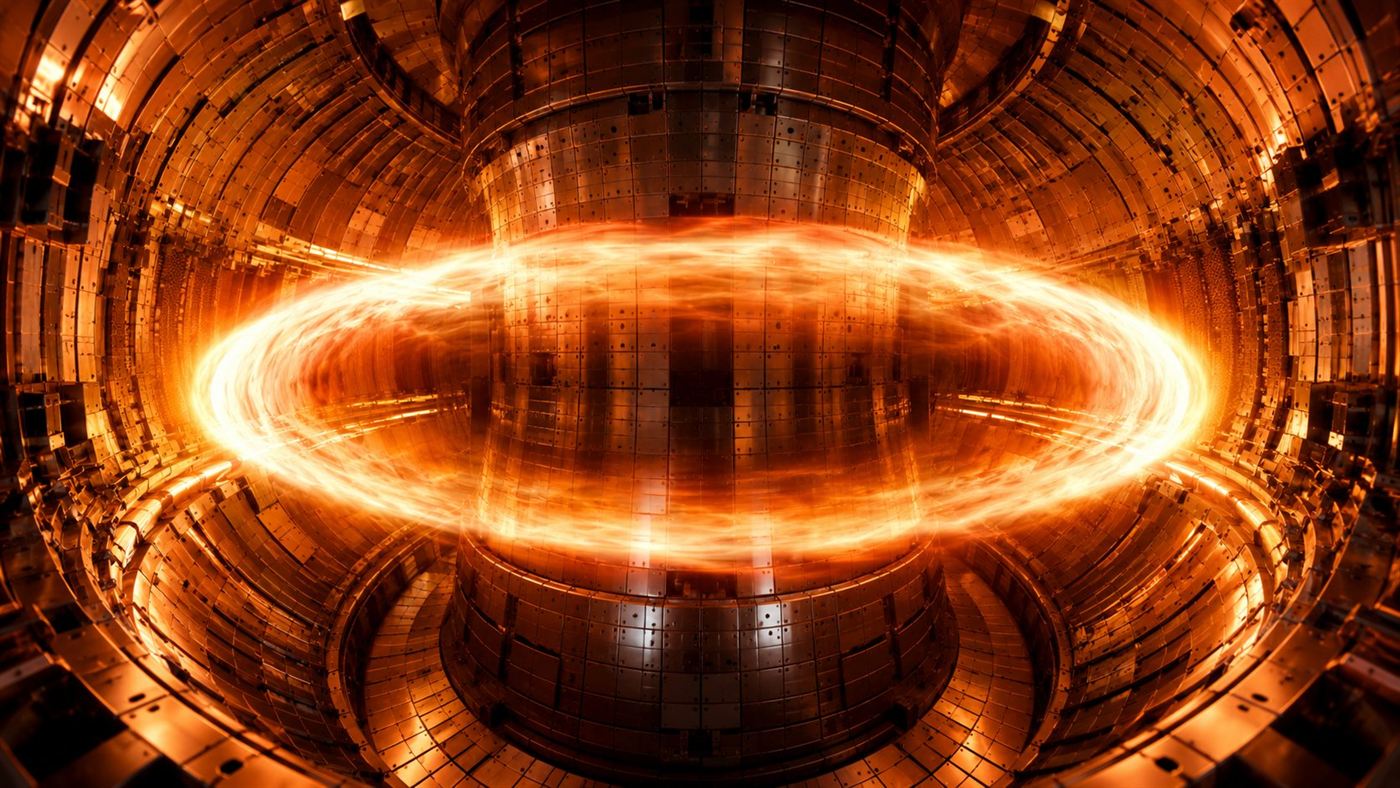
Inside a tokamak, a magnetic cage holds a ring of plasma hotter than the core of the Sun. Illustration: Watts & Wild.
For fifty years the standing joke about nuclear fusion was that it would always be thirty years away, the energy source that lived permanently in the future. That joke got harder to tell on January 20, 2025. On that day, in a lab in eastern China, a doughnut-shaped reactor called EAST trapped a cloud of gas heated to over 100 million degrees Celsius and held it steady, in its hardest-to-control operating mode, for 1,066 seconds. That is just under 18 minutes of a controlled star sitting inside a metal vessel.
The announcement landed the next day, on January 21, 2025, from the Chinese Academy of Sciences, which confirmed the 1,066-second run at over 100 million degrees and noted it nearly tripled EAST's own previous record of 403 seconds set in 2023. The machine, nicknamed China's "artificial sun," became the first tokamak in the world to break the symbolic 1,000-second threshold in this regime. The reason that number matters, and the reason it is not the whole story, is what the rest of this is about.
What EAST actually is
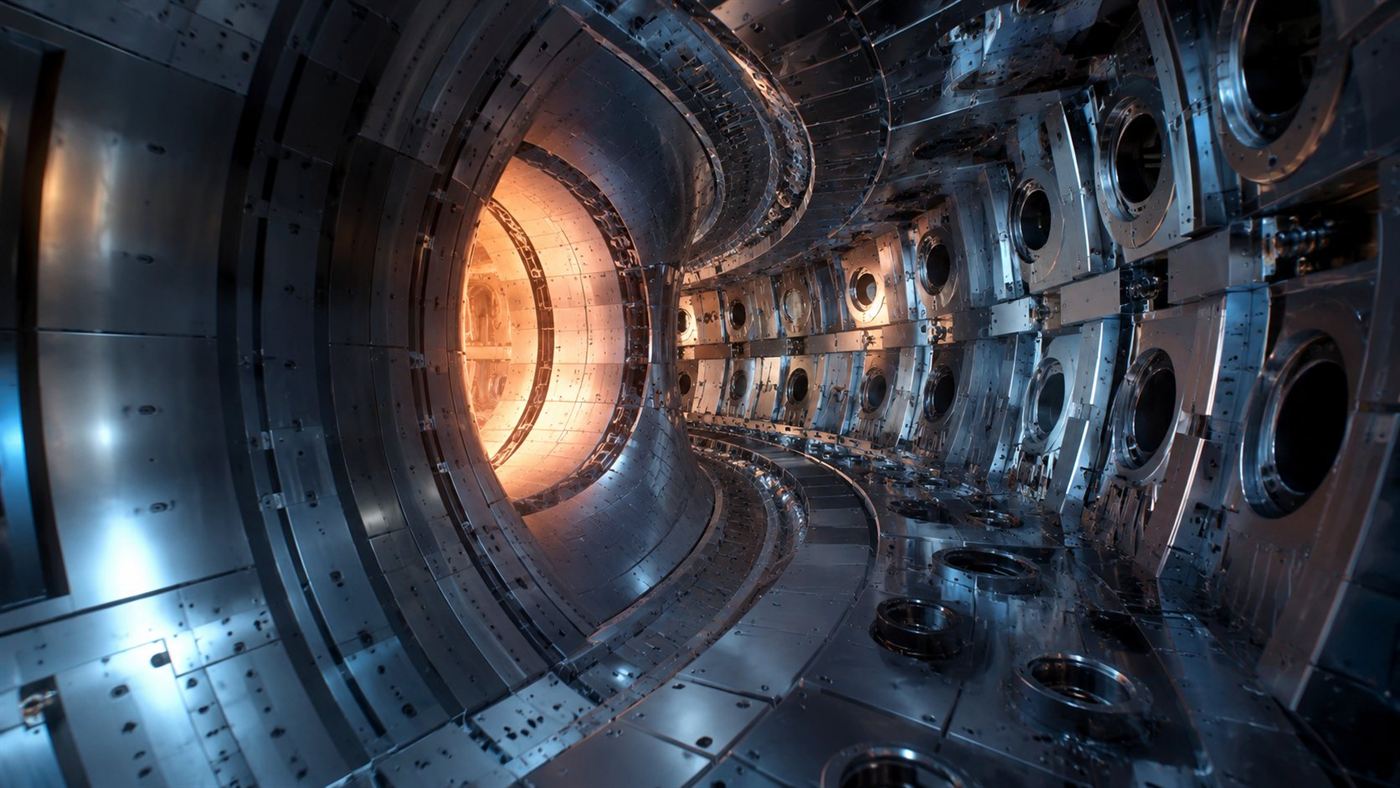
EAST stands for the Experimental Advanced Superconducting Tokamak, and it has been running since 2006. It sits at the Institute of Plasma Physics, known as ASIPP, part of the Chinese Academy of Sciences, in Hefei, the capital of Anhui Province. A tokamak is a doughnut-shaped chamber that uses powerful magnetic fields to hold a ring of plasma, the fourth state of matter, away from the walls that no solid material could survive touching.
The goal is the same reaction that powers the Sun: force light atomic nuclei together so hard that they fuse and release energy. To do that on Earth you need temperatures many times higher than the Sun's core, because the Sun cheats with crushing gravitational pressure that no machine can match. EAST's 100-million-degree plasma is roughly seven times hotter than the center of the Sun, and holding something that hot, that stable, for that long is the entire engineering challenge.
None of this is China going it alone. EAST is a testbed feeding directly into ITER, the giant international fusion reactor under construction in southern France, of which China is a member. What EAST learns about keeping plasma steady becomes engineering reference data for ITER and for China's own planned next-generation machine, CFETR.
Why 1,066 seconds is the number that counts
A plasma duration record only means something if you know which kind of plasma. EAST's milestone was set in high-confinement mode, almost always written as H-mode, and that detail is the whole point. H-mode is the operating regime that suppresses the turbulence at the plasma's edge and roughly doubles how well the machine holds onto its energy compared to the messier low-confinement mode.
That matters because H-mode is the reference operating mode planned for both ITER and CFETR. As CGTN reported, the run confirmed 1,066 seconds at 100 million degrees and marked the kind of high-performance confinement a real power plant would need. A reactor that can only hold a clean plasma for a few seconds is a curiosity. One that can hold the good kind of plasma for almost 18 minutes is starting to look like a prototype.
The jump itself tells the story. EAST went 30 seconds in 2012, 60 seconds in 2016, 101 seconds in 2017, then 403 seconds in 2023, and now 1,066 seconds in 2025. Physics World, covering the result independently, framed it as a confinement record that pushes the field toward continuous operation. The gaps between milestones used to creep. Now they leap by hundreds of seconds at a time.
How they pulled it off
Holding a plasma steady for 17 minutes is not about brute force, it is about balance. To sustain the run, the EAST team injected up to about 3.05 gigajoules of total energy and fed in roughly 3 megawatts of radio-frequency heating power, split between 1.1 megawatts of lower hybrid current drive and 1.9 megawatts of electron cyclotron resonance heating. Those systems do two jobs at once: they keep the plasma hot, and they drive the electrical current that helps the magnetic cage hold its shape.
The hard part is that everything has to stay in equilibrium for the full duration. Heating, current, fuel and the magnetic field all have to be managed continuously, because the plasma is constantly trying to wobble out of confinement or cool down. A run that lasts almost 18 minutes is really a system that resisted thousands of chances to fail, second after second, without a human able to nudge it back by hand.
What the people running it say it means
The team behind the record is blunt that the duration is a means, not the goal. Song Yuntao, director of ASIPP, framed the target plainly: a fusion device has to run stably and efficiently for thousands of seconds to enable the self-sustaining circulation of plasma that continuous power generation in a future plant would require. In other words, 1,066 seconds is impressive, and it is also still short of where the physics needs to land.
That framing keeps the achievement honest. Live Science, explaining the result for a general audience, described it as a steady loop of plasma sustained past 1,000 seconds and tied it directly to the ITER roadmap. The value is not the headline minute count by itself. It is proof that a superconducting machine can keep the difficult, high-performance plasma running long enough to start asking the next set of questions.
The honest catch
Here is the part that the word "breakthrough" tends to bury. This is a confinement and duration record, not an energy breakthrough. EAST held a hot, stable plasma for more than 17 minutes, but it consumed far more energy than it produced. It ran on hydrogen plasma rather than the fuel-grade deuterium and tritium a real reactor would burn, and it achieved nothing close to net energy gain, the milestone physicists call ignition.
Keeping a plasma stable and getting more energy out than you put in are two entirely different mountains. A commercial power plant needs to climb both, and then add a third, running continuously for hours or days rather than minutes. So the record proves the machine can run long. It does not prove that fusion can yet pay for itself, and anyone telling you this means cheap fusion power is near is skipping several very large steps.
The twist that came weeks later
There is a wrinkle that makes the headline easy to overstate, so it is worth being precise. Just weeks after EAST's run, France's WEST tokamak, operated by the French atomic energy commission CEA, sustained a plasma for an even longer 1,337 seconds on February 12, 2025. On raw duration, France edged past China within the same season.
But the two records are not the same record. The CEA confirmed WEST held plasma for 1,337 seconds, at around 50 million degrees Celsius, roughly half EAST's temperature, and crucially not in the demanding H-mode regime. So EAST keeps the record for sustained high-confinement plasma, the regime that matters most for future reactors, while WEST holds the record for the longest plasma of any kind. Both are real, and conflating them is the most common mistake in coverage of this story.
What the back-to-back records really show is the shape of the curve. Burn and confinement times that crept up over a decade are now jumping by hundreds of seconds per milestone, and China has said it plans to push EAST toward demonstrating ignition-relevant conditions later this decade, with CFETR as the step beyond it. The "always 30 years away" energy is suddenly being measured in minutes that keep multiplying.
Why this matters beyond one machine
For decades, fusion progress was slow enough that skepticism was the rational position. The numbers coming out of Hefei and Cadarache change the texture of that skepticism. When a confinement record nearly triples in two years, and a rival lab beats the raw duration mark within weeks, the field is no longer crawling. It is moving fast enough that the engineering questions are starting to outrun the old jokes.
That does not make a fusion power station imminent. It does mean the gap between a physics experiment and a continuously operating machine is closing in measurable, repeatable steps. EAST is not a power plant and never will be. It is the rehearsal hall where the moves that ITER and CFETR will have to perform are being tried, timed and recorded, one record at a time.
A machine in eastern China just held a fragment of an artificial star steady for almost 18 minutes, hotter than the Sun's core, and became the first reactor ever to cross the 1,000-second line. It is still a long way from powering a single lightbulb, but the timeline is no longer standing still. Do you think we will see fusion put real electricity on the grid within our lifetime, or is it still chasing the horizon? Tell us what you think in the comments.
Related reading: the world's largest battery will run on rust, an iron-air design that holds a charge for 100 hours.