Painting just one of a wind turbine's three blades black cut bird collision deaths by an average of 71.9 percent in a field experiment at a Norwegian wind farm
Wind turbines kill birds because spinning blades blur into a near-invisible disc. At Norway's Smola wind farm, researchers painted one of three blades black, and bird collision deaths fell by an average of 71.9 percent, with no eagles killed at the painted machines at all.
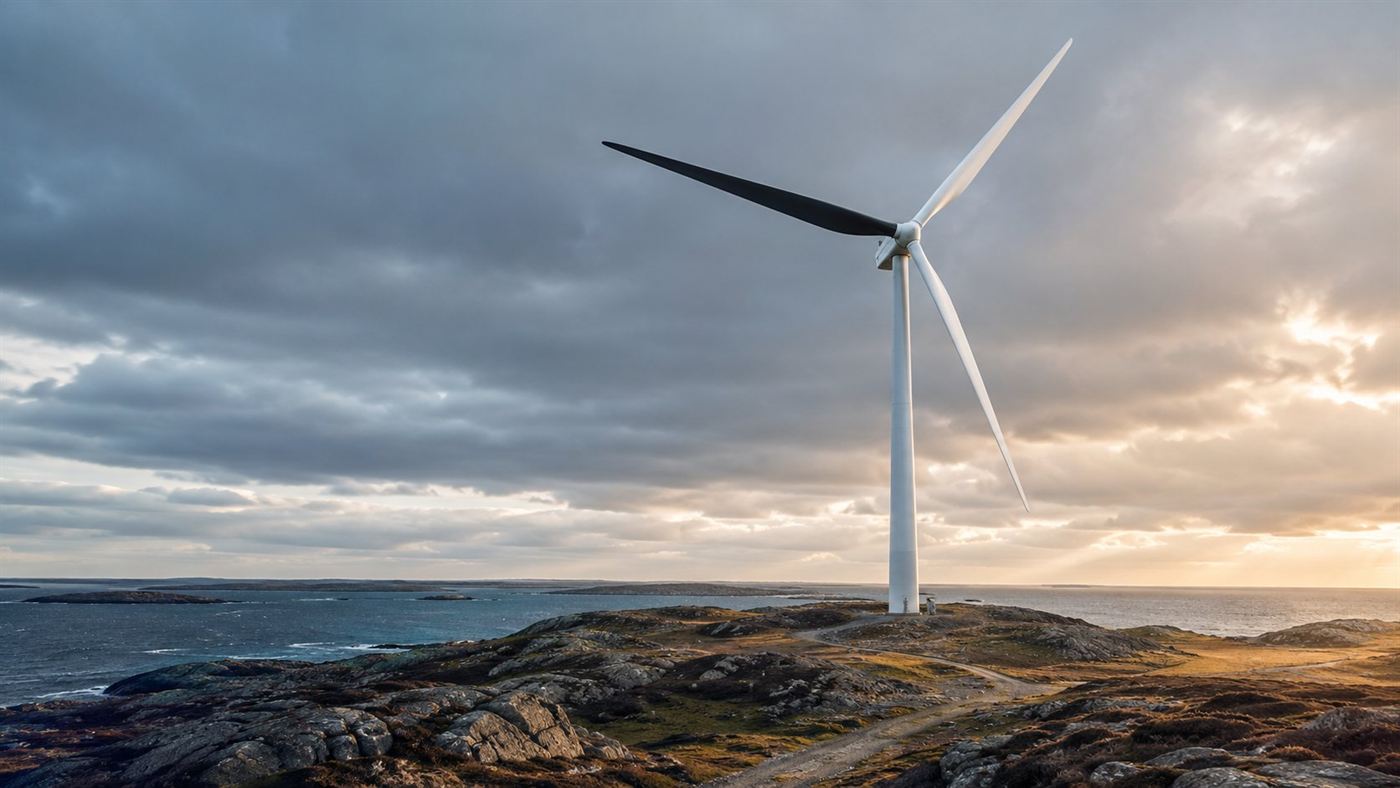
One black blade out of three, the entire fix, at the Smola wind farm in Norway. Illustration: Watts & Wild.
Wind power is supposed to be the clean energy that birds can live with, yet the spinning blades have always carried a quiet cost, and on a bird-rich island off Norway's northwest coast that cost had a name: the white-tailed eagle. Statkraft's Smola wind power plant opened in 2002 in the middle of one of Europe's densest eagle populations, and the giant raptors kept flying straight into the rotors. But now there is a fix so cheap it sounds like a joke, and the data behind it is real.
In a wave of coverage around August 26, 2020, the Norwegian Institute for Nature Research (NINA) reported that painting just one of a turbine's three blades black cut the annual bird fatality rate by an average of 71.9 percent at the painted machines compared with unpainted controls. The result came from a peer-reviewed field experiment that ran for roughly eleven years on the island, and it pointed to something counterintuitive: the problem was never that birds could not avoid turbines, it was that they could not see them.
Why a spinning blade is nearly invisible
The core insight is about how a bird's eye handles fast motion. When a rotor spins, the blades sweep so quickly that they smear across the retina into a faint, near-transparent disc, a phenomenon researchers call motion smear. To the bird, the deadly arc of the rotor reads as open air rather than a solid obstacle, so it flies in without slowing.
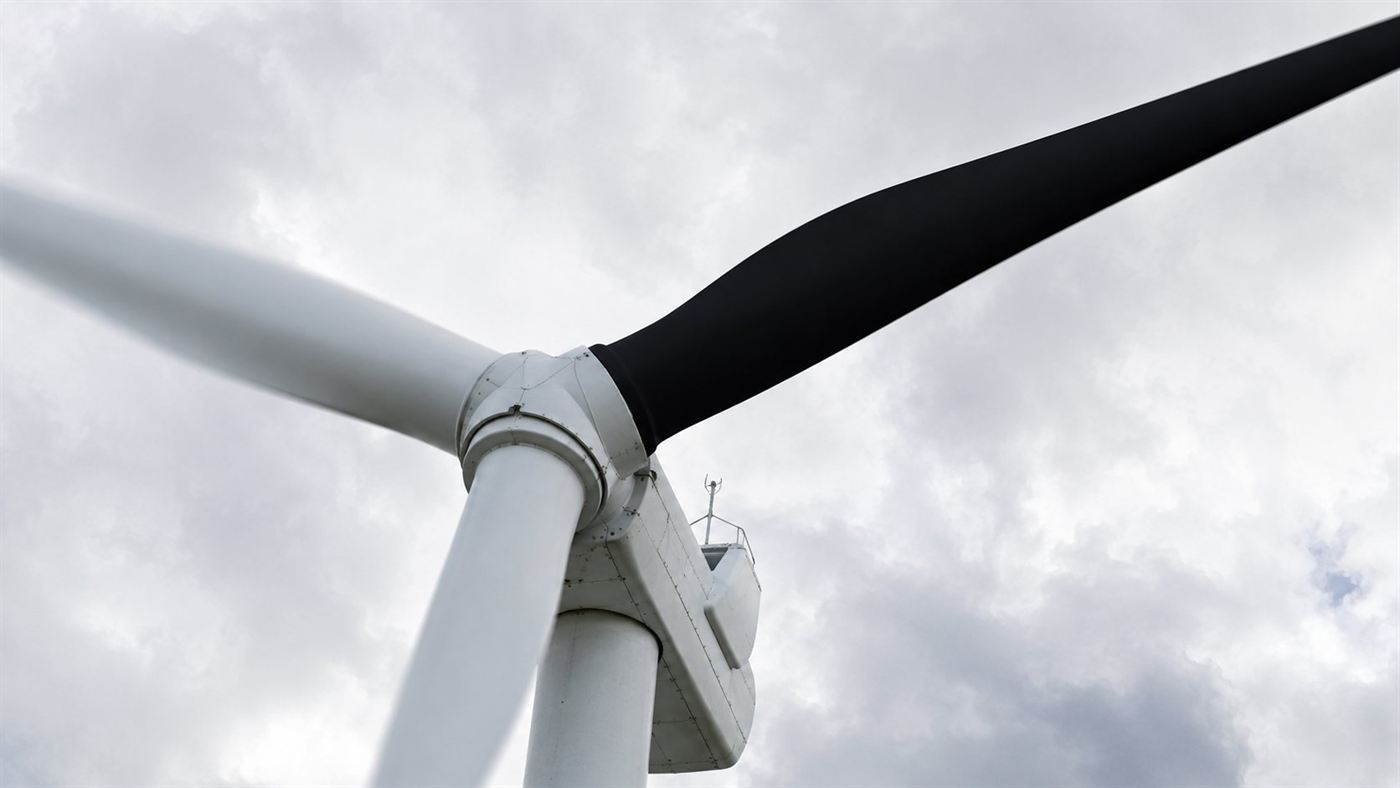
Painting one blade black interrupts that blur. As Smithsonian Magazine explained when the Smola results landed, the single dark blade breaks the uniform smear and gives the bird a hard visual cue that something solid is turning there. The eye catches the contrast, the brain registers an obstacle, and the bird has time to change course.
It is a fix that targets perception rather than the bird itself. There is no noise, no flashing light, no signal to learn. The turbine simply becomes easier to see, and that small change in visibility is what drives the whole effect.
What the Norwegian experiment actually measured
The study was deliberately built as a before-and-after comparison. Researchers worked with eight turbines at Smola, painting one blade black on four of them as the treatment group and leaving four unpainted as controls. They had already been searching for carcasses under all eight for years, so they could measure how fatalities changed at the same machines once the paint went on.
The timeline matters. According to the peer-reviewed paper in Ecology and Evolution, the data span 2006 to 2016, with 7.5 years of monitoring before treatment and 3.5 years after the blades were painted in 2013. Across that window, the painted turbines recorded an average 71.9 percent drop in the annual fatality rate relative to the controls, with a 95 percent confidence interval running from 61.8 to 79.1 percent.
The paper, titled "Paint it black: Efficacy of increased wind-turbine rotor blade visibility to reduce avian fatalities," appeared in August 2020 (Vol. 10, Issue 16, pp. 8927 to 8935; DOI 10.1002/ece3.6592). It was led by Roel May of NINA, with co-authors Torgeir Nygard, Ulla Falkdalen, Jens Astrom, Oyvind Hamre and Bard G. Stokke, the kind of detailed authorship that marks a formal field result rather than a press release.
The eagles the project set out to save
The headline percentage hides the single most striking number in the whole study. The effect was strongest for raptors, and for the bird the project was originally built to protect, the result was absolute: zero white-tailed eagle carcasses were recorded at the painted turbines after treatment.
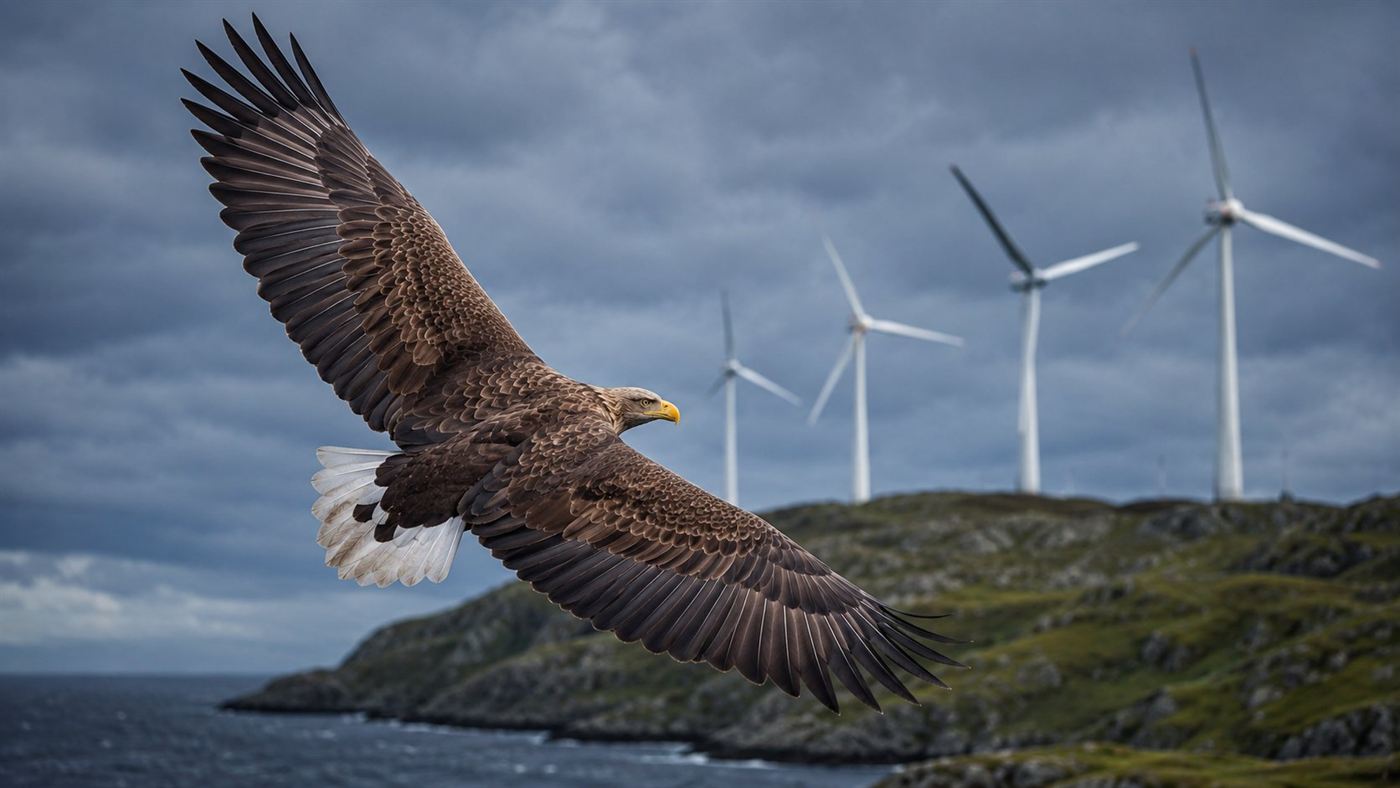
That is the species Smola became infamous for killing. White-tailed eagles are large, heavy birds that soar and hunt across exactly the airspace the rotors occupy, and they had been turning up dead at the base of the turbines for years. After one blade went black, that particular toll, at those particular machines, fell to nothing in the monitored period.
A tin of paint against a wall of high tech
What makes the result land so hard is the contrast in cost. The wind industry has spent heavily on high-tech ways to keep birds away from turbines: radar-triggered shutdowns, camera arrays, and AI detection systems that try to spot an approaching eagle and stop the blades in time. All of it is expensive, and all of it is complicated to install and maintain.
The black-blade fix is the opposite. It is a tin of black paint applied to one blade, a roughly 70 percent reduction in bird deaths from an intervention with almost no moving parts, as Fast Company put it. A single low-tech change, working with the biology of the bird's eye, outperformed engineering that costs orders of magnitude more.
That is the reversal at the heart of the story. The clever solution turned out not to be a smarter machine but a better-seen one, and the cheapest possible material did the work that radar and cameras were built to do.
The honest catch: one small study is not settled science
Here is where the excitement needs a brake. The 71.9 percent figure comes from a tiny experiment, just eight turbines, four painted and four controls, at a single Norwegian site, with a small absolute number of carcasses behind the statistics. A result that strong from a sample that small demands caution before anyone treats it as a universal law.
Lead author Roel May has said so himself. As Audubon Magazine reported, May cautioned that the finding is "surely not a golden egg" and that the effect "may well be site- and species-specific," with the results best read as preliminary. The motion-smear mechanism that works for a soaring eagle on a windy island may not transfer cleanly to different birds, different terrain, or different turbine layouts.
The crucial limitation is that, as of now, the Smola study remains the only peer-reviewed result of its kind. No large-scale confirmatory trial has been published yet, which means the black-blade fix is a very promising lead, not a proven standard. That gap is precisely why bigger replications are being run.
The bigger trials now under way
The most watched replication is in the United States. Wyoming Public Media reported that utility PacifiCorp is painting one blade black on 36 turbines at Glenrock, Wyoming, working with the Renewable Energy Wildlife Institute and the U.S. Geological Survey, a far larger sample than Smola. Field crews and detection dogs search the ground for carcasses to measure whether the Norwegian effect holds up at scale.
Oregon State University is part of that effort, and its researchers are candid about the timeline. As Oregon State's newsroom noted, the study builds on the roughly 72 percent reduction seen in Norway and runs across 36 Wyoming turbines, but final results are still years away. The Oregon State work is funded in part by the Oregon Legislature, and U.S. teams point out that aviation visibility rules from the FAA have historically complicated painting blades black on American turbines, one reason real-world results there are still pending.
Europe is testing it too. In the Netherlands, Vattenfall and RWE have run a black-blade trial at Eemshaven on around seven turbines, with the research organization TNO adding sensors, cameras and radar to capture exactly what the birds do. Related visibility experiments include painted blades in Spain led by Iberdrola and red-striped blades trialed in South Africa, a sign that the basic idea of making rotors easier to see is being pressed from several directions at once.
For the price of a tin of paint, a single black blade may have done what radar arrays and AI cameras were built to do, and the eagles at Smola stopped dying. The bigger trials will tell us whether that holds everywhere, but the idea that we just needed to help birds see the danger is hard to forget. Should every wind farm be required to paint a blade black while the larger trials run, or is it too soon to mandate a fix proven at only eight turbines? Tell us what you think in the comments.
Related reading: inside the world's largest solar farm, where 20,000 sheep keep the grass down.